
Gaku: Minna no Yama Review: The Mountain Rescue Manga That Will Change How You See Mountains
by Shin'ichi Ishizuka
Read the first volume. If it doesn't hook you, put it down. It'll hook you.
Buy Gaku: Minna no Yama on Amazon →*Affiliate link — I earn a small commission at no extra cost to you.
Quick Take
- The mountain rescue manga — deeply knowledgeable about both mountaineering and the psychology of disaster
- Habu Gaku is one of manga's most purely likeable protagonists: competent, cheerful, and utterly committed
- Will make you want to go to the mountains and also terrify you about going to the mountains
Who Is This Manga For?
- Outdoor and mountaineering enthusiasts who want their activity depicted with genuine respect and knowledge
- Drama manga readers who want episodic stories with real emotional stakes
- Readers who appreciate genuinely positive protagonists whose positivity is earned rather than naive
- Anyone interested in Japan's mountain culture — the Japanese Alps as a place and a community
Content Warnings & Age Rating
Age Rating: T (Teen) Content Warnings: Mountain accidents and deaths are realistic and occasionally graphic — rescue manga requires honest depiction of what happens when things go wrong
The deaths are not gratuitous but they are real. The series takes mountain safety seriously.
Yu's Rating
| Category | Score |
|---|---|
| Story Depth | ★★★★★ |
| Art Style | ★★★★★ |
| Character Development | ★★★★☆ |
| Accessibility for Non-Japanese Readers | ★★★★★ |
| Reread Value | ★★★★★ |
Story Overview
Habu Gaku spent years climbing mountains around the world — the Himalayas, the Andes, every significant peak he could reach. He came back to Japan and became a volunteer with the mountain rescue team in the Northern Japanese Alps. He seems happy about this in a way that people find either inspiring or slightly unnerving.
Each arc follows a different group of climbers who have gotten into trouble: the experienced alpinist whose experience led to overconfidence, the beginner who underestimated the mountain, the ordinary day-hiker who found themselves in conditions beyond their preparation. Gaku finds them, or searches for them, or carries them down when they can no longer carry themselves.
The mountain rescue knowledge is accurate. Ishizuka knows these mountains and these emergencies. The series is not just drama — it is education about why the mountains require respect and what happens when they don't receive it.
Characters
Habu Gaku: A character so consistently cheerful in the face of extreme danger and profound sadness that lesser fiction would make him annoying. Ishizuka knows the trick: Gaku's positivity is not denial. He has seen what the mountains do when things go wrong, he knows it, and he chooses to go back anyway because the mountains themselves are worth it. The cheerfulness comes after the knowledge, not instead of it.
The climbers: Each episode's central figures — different backgrounds, different levels of experience, different reasons for being on this particular mountain on this particular day. The series' compassion extends to everyone, including the people whose choices led to their situation.
Art Style
Exceptional. Ishizuka's depiction of the Japanese Alps — the specific quality of alpine light, the texture of snow and rock at altitude, the visual scale of the mountains against the human figures — is among the finest outdoor landscape art in manga. The rescue sequences are technically precise. The mountains are genuinely beautiful and genuinely dangerous in the same panels.
Cultural Context
Japan has an extraordinary mountain culture — the Japanese Alps, Fuji, the extensive network of alpine routes — and a well-developed mountain rescue infrastructure. Volunteering in mountain rescue is a specific calling, and the series depicts the community around it with affection and accuracy.
The mountains in the series are real places — named peaks with specific characters and specific dangers — which gives the series a documentary quality alongside its drama.
What I Love About It
I love Gaku's relationship to death.
He loses people. The series does not protect its characters or its readers from this. People come to the mountains and do not come back, and Gaku carries them down the mountain, and then he goes back up again.
What I love is how the series understands that this is not a tragedy but an acceptance. The mountains are not safe. People who go to them knowing this and choosing to go anyway — and Gaku, who knows this better than anyone and goes anyway — are making a specific decision about what life is worth doing. Gaku's consistent positivity is the result of having already made that decision and found it right.
What English-Speaking Fans Say
Deeply admired by English-speaking readers who have found it — consistently described as emotionally overwhelming in the best possible sense. The universal accessibility of the mountain setting means the cultural specificity doesn't create barriers. One of the most consistently recommended manga for readers new to the medium who want to understand what manga can do.
Memorable Scene ⚠️ Spoiler Warning
A sequence where Gaku finds a climber who has survived in conditions that should have been fatal, and the rescue that follows — and then the conversation afterward where the climber asks him why he does this work. Gaku's answer is the series' thesis statement, given to someone who has just lived through the thing he's been preparing for.
Similar Manga
- Sanpei the Fisherman: Similar contemplative relationship to the natural world, very different activity
- Silver Spoon: Rural Japan and its specific relationship between humans and environment
- Grand Blue: Mountains as pure adventure without the rescue drama
Reading Order / Where to Start
Volume 1. Each rescue arc is complete, but the character relationships build across the series.
Official English Translation Status
Gaku had 1 volume published in English. The series is currently unlicensed for complete English publication.
Pros & Cons
Pros
- Exceptional art depicting the Japanese Alps
- One of manga's most likeable protagonists
- Genuinely educational about mountain safety and rescue
- Complete at 18 volumes
Cons
- English translation did not complete
- The episodic deaths can be emotionally heavy across long reading sessions
- Some mountaineering technical detail benefits from prior knowledge
Format Comparison
| Format | Notes |
|---|---|
| Physical | Japanese editions available; 1 English volume out of print |
| Digital | Available in Japanese |
| Omnibus | Not available |
Where to Buy
No English release yet. That just means you find it before everyone else does.
*Affiliate link — I earn a small commission at no extra cost to you.
More Manga You Might Like
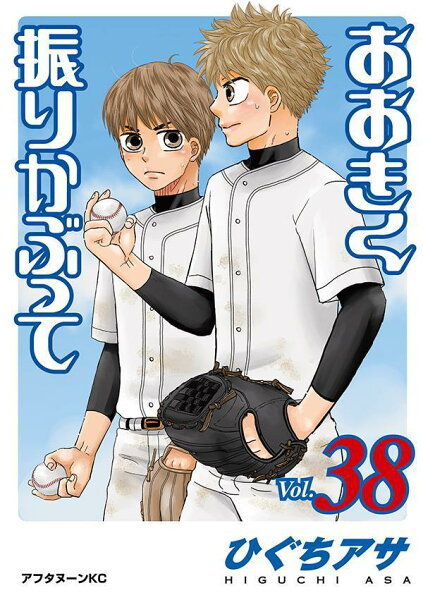
Sports / Drama
Big Windup!
Yu's review of Big Windup! (Ookiku Furikabutte) — a control pitcher with crippling anxiety joins a brand-new high school team and learns to trust the catcher calling his pitches. By Asa Higuchi.

Sports / Drama
Battle Studies
A review of Battle Studies, Nakibokuro's brutally honest baseball manga set at DL Gakuen, a powerhouse high school modeled on the author's real years inside PL Gakuen's notorious baseball dorm.
Sports / Drama
One Pound Glass
A boxer with a glass jaw decides to keep fighting anyway — and discovers the cost of refusing to quit.
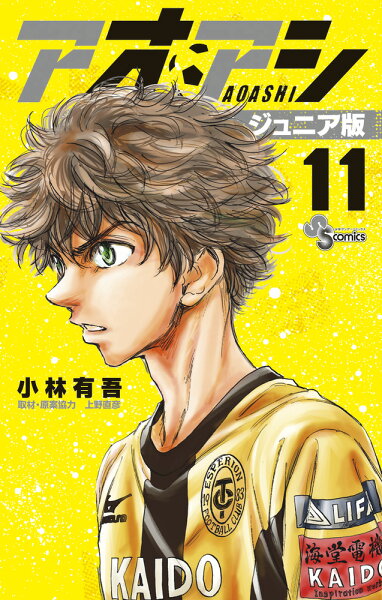
Sports / Drama
Aoashi
A review of Yuugo Kobayashi's Aoashi — ongoing in Weekly Big Comic Spirits. Ashito Aoi, a rough soccer talent from rural Ehime, is scouted into Tokyo's FC Tokyo youth academy. The series is about learning what modern soccer actually is — through a boy who sees the entire field and has to be taught how to use what he sees. Titan Comics' English edition is ongoing.
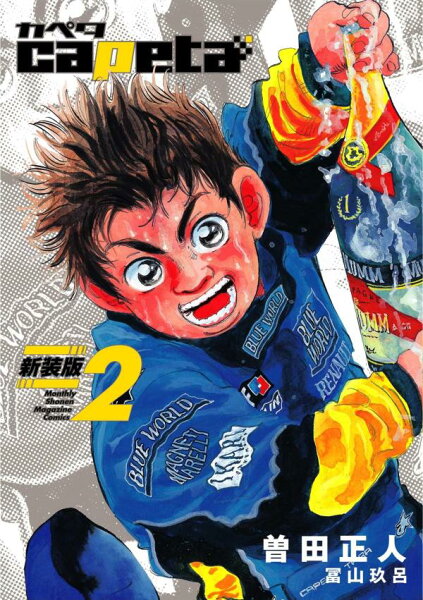
Sports / Drama
Capeta
A review of Capeta, Masahito Soda's 32-volume motorsports manga about a poor boy whose road-paving father builds him a kart from scrap, and the lifelong rivalry that pushes him from karting toward Formula racing.
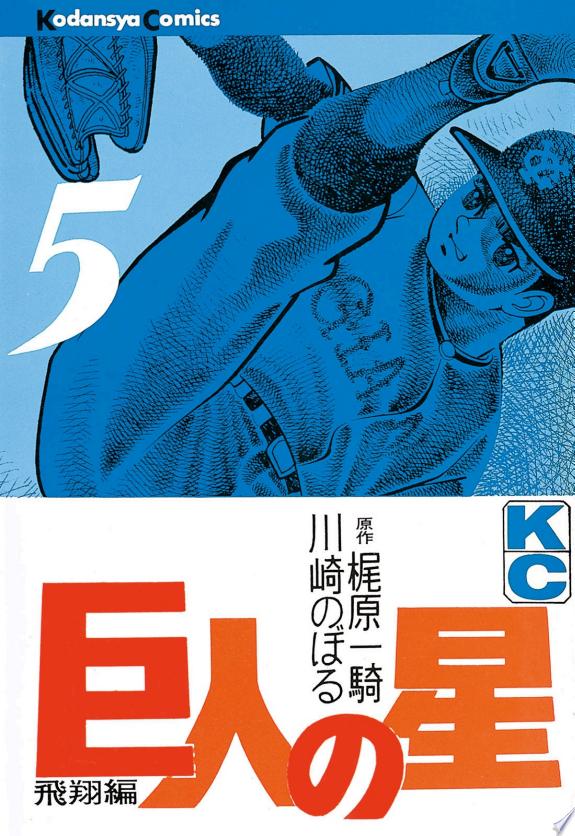
Sports / Drama
Kyojin no Hoshi
Kyojin no Hoshi follows Hyuma Hoshi, whose father — a former baseball player who never achieved his dream — has raised him from childhood to be a star pitcher for the Yomiuri Giants, through training that borders on abuse and produces a player who may be the greatest — at tremendous personal cost.
Written by
Yu
Manga Enthusiast from Japan
I grew up in Japan and manga literally saved me during a tough time in elementary school. My English isn't perfect, but my love for manga is real — and I want to share it with you.