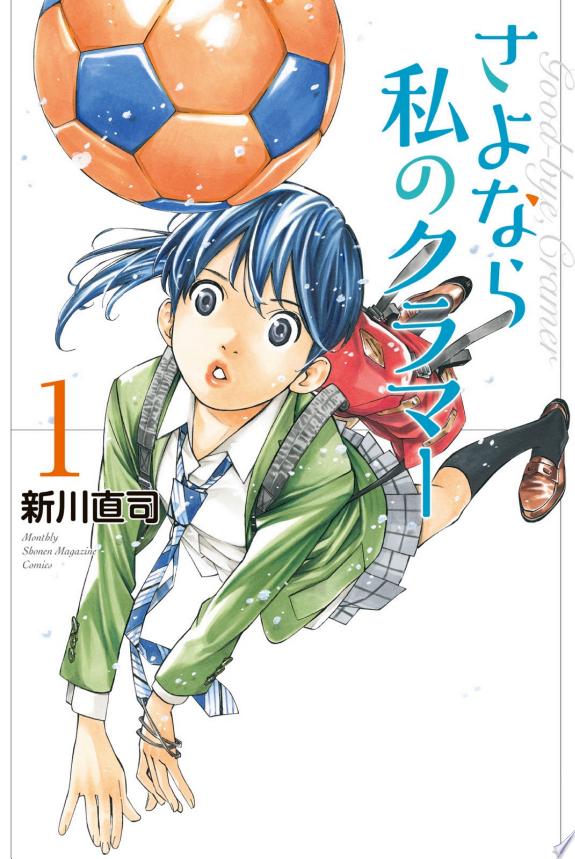
Farewell My Dear Cramer Review: A Girls' Soccer Manga That Starts With a 21-Goal Defeat and Refuses to Look Away
by Naoshi Arakawa
Read the first volume. If it doesn't hook you, put it down. It'll hook you.
Buy Farewell My Dear Cramer on Amazon →*Affiliate link — I earn a small commission at no extra cost to you.
I grew up watching boys' soccer manga where the hero scores in the last minute and the crowd goes wild. I loved those. But I never saw anyone like the girls in my own town — the ones who practiced on the worst corner of the field, the ones nobody came to watch. When I read the opening of Farewell My Dear Cramer, where a talented middle-schooler fires a perfect shot and it gets stuffed at the line, I felt something I did not expect. This was a soccer manga that started not with a goal, but with the moment a goal is denied. I kept reading because Naoshi Arakawa — the same man who broke my heart with Your Lie in April — was clearly treating these girls as athletes first, and I had been waiting my whole life for that.
Quick Take
- Naoshi Arakawa (Your Lie in April) turns to girls' high-school soccer, and treats the sport and its players with total seriousness — no fanservice, no condescension, just the game
- 14 volumes, complete in English from Kodansha Comics; it is a sequel to his earlier short work Sayonara Football and reads fine on its own
- Rated T (Teen) — competitive intensity and some rough emotional moments, but nothing graphic
Story Overview
It opens on a middle-school match. Sumire Suo, fifteen, is the kind of player who can beat a whole defense with one dribble — and she does, right up until a twin-tailed defender named Midori Soshizaki reads her and blocks the shot at the last instant. That single blocked shot sets the whole series in motion. The two rivals end up choosing the same high school: Warabi Seinan, a school in Saitama whose girls' soccer team is, frankly, terrible.
The turning point comes early and it is brutal. Warabi Seinan plays Kunogi Academy, the strongest girls' team in the country, and loses 0-21. Most sports manga would never let its heroes get humiliated like that in the first act. Arakawa does, on purpose. The rest of the series is about what you do after a score like that — how a roster of talented but overlooked girls (including Nozomi Onda, the standout from Sayonara Football who had been playing on boys' teams because no girls' team could keep up with her) learns to become an actual team under a new coach, the former Nadeshiko Japan World Cup winner Naoko Nomi.
Across 14 volumes, Warabi Seinan claws upward through prefectural and national competition. It is not a fairy tale where they suddenly win everything. It is the slower, truer story of a group becoming good enough to deserve the matches they are losing.
Characters
Sumire Suo — The closest thing the series has to a lead. She is fast and impatient, a forward who wants to win on her own and slowly, painfully learns she cannot. Her whole arc is about converting raw individual talent into something that fits inside a team — and forgiving the teammates who are not yet at her level.
Nozomi Onda — Carried over from Sayonara Football, she is the gifted midfielder who spent years playing with boys because the girls around her could not keep up. She is not a goal-scorer; she is the player who makes everyone else better. Her presence is the bridge between the two works.
Midori Soshizaki — The defender who blocked Suo's shot in the opening. Rival turned teammate, one of the most positionally intelligent players in the country. She is the calm to Suo's fire.
Naoko Nomi — The coach, a legend of Japanese women's soccer and a World Cup champion. She is the adult who has seen the ceiling these girls are trying to break through, and she coaches them with a hard honesty that the story never softens.
What I Love About It
The 0-21 loss to Kunogi Academy. I keep coming back to it. In almost any other sports manga, a defeat that lopsided would be a throwaway gag or a wake-up call wrapped up in two pages. Arakawa lets it sit. The scoreboard climbs and climbs, and you feel every goal land on these girls. There is no music swell, no last-minute consolation goal to make the reader feel better. They just lose, completely, in front of everyone.
What got me was what it says about the whole project. Arakawa is telling you, right at the start, that this is not a story about winning — it is a story about the right to keep playing after you have been crushed. As someone who spent a lot of my childhood feeling outmatched and overlooked, that hit a nerve I did not know was still raw. The girls do not respond to 0-21 with a dramatic speech. They respond by showing up the next day. That quiet stubbornness, drawn by the same hand that made Your Lie in April so devastating, is the thing I love most about this manga.
Memorable Scene ⚠️ Spoiler Warning
The opening sequence — Suo's middle-school match — stays with me because of how it ends. She executes a beautiful dribble and a clean shot on goal, the kind of play that should be the highlight of a normal sports manga. And Soshizaki blocks it. The game ends there. Arakawa frames the whole thing so that the "hero moment" belongs to the defender, not the striker. It quietly tells you that in this series, the player who stops the goal matters exactly as much as the one who scores it. Pairing that with the later 0-21 wipeout, you understand the manga's spine: talent alone is not enough, and the game does not owe you a happy ending. It earns its emotion the hard way.
Pros & Cons
Pros
- Arakawa's art gives the matches real spatial clarity — you can read formations and movement, not just isolated heroics
- Treats girls' soccer as a serious sport, with genuine tactical content and no fanservice
- Complete at 14 volumes in English, covering a full competitive arc
- The emotional restraint (no cheap victories) makes the real moments land harder
Cons
- The team-building setup takes time before the competition truly heats up
- Some basic familiarity with soccer positions helps you appreciate the tactics
- It deliberately denies the easy, crowd-pleasing wins that many sports manga deliver — which means this one won't work for everyone.
Is Farewell My Dear Cramer Worth Reading?
Yes — especially if you have ever wanted a sports manga that takes women athletes completely seriously. It is patient, technically honest, and emotionally restrained, with art from one of the best in the business. If you need every arc to end in triumph, the deliberate losses may frustrate you. But if you want a soccer story with a spine, this is one of the finest in English.
Where to Buy
Read the first volume. If it doesn't hook you, put it down. It'll hook you.
This post contains affiliate links. If you purchase through these links, I may earn a small commission at no extra cost to you. As an Amazon Associate, I earn from qualifying purchases.
*Affiliate link — I earn a small commission at no extra cost to you.
More Manga You Might Like
Sports / Drama
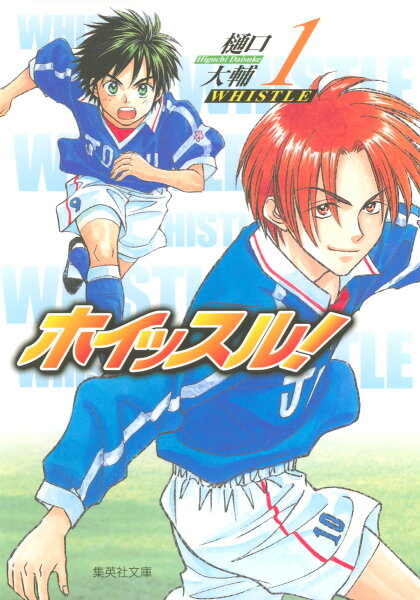
Whistle!
Yu's review of Whistle! — Sho Kazamatsuri was cut from his elite school's soccer team for lacking talent; he transfers to a school where he can actually play and works relentlessly to become a real player; the series follows his growth from the team's weakest member to something more.

Sports
Knight in the Area
Yu's review of Knight in the Area (Area no Kishi) — Kakeru Aizawa is a timid soccer boy who manages his school's soccer team while his older brother Suguru is a genuine prodigy; after a life-changing accident, Kakeru discovers that the potential his brother always believed in was real; a long-running soccer manga with genuine emotional stakes and technical depth.
Sports
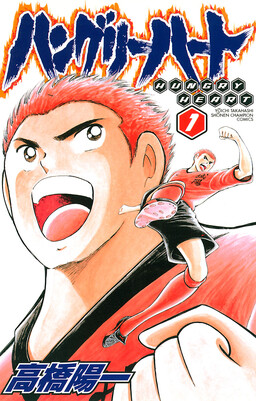
Hungry Heart Wild Striker
Yu's review of Hungry Heart Wild Striker — Kyōsuke Kanou is a soccer prodigy who quit the sport because of his older brother's overwhelming talent; when he joins a struggling team and meets a dedicated coach, he rediscovers his hunger for the game; a return to pure soccer manga from the Captain Tsubasa creator.
Sports
Captain Tsubasa
Yu's review of Captain Tsubasa — Yoichi Takahashi's 37-volume soccer classic that sparked Japan's football boom, following prodigy Tsubasa Ozora from a schoolyard duel to the national stage.
Sports
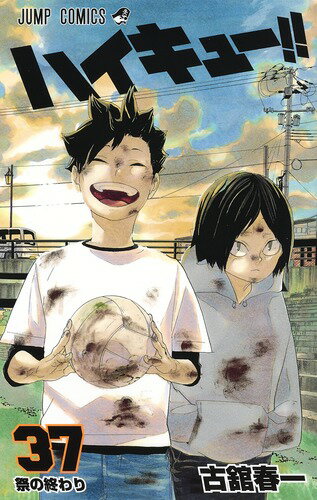
Haikyuu!!
Haikyuu!! follows Hinata Shoyo, a volleyball-obsessed boy who is short for the sport, and his journey from disastrous first tournament through the complete arc of high school volleyball with the Karasuno High team — one of the most celebrated sports manga of its generation.
Sports / Drama
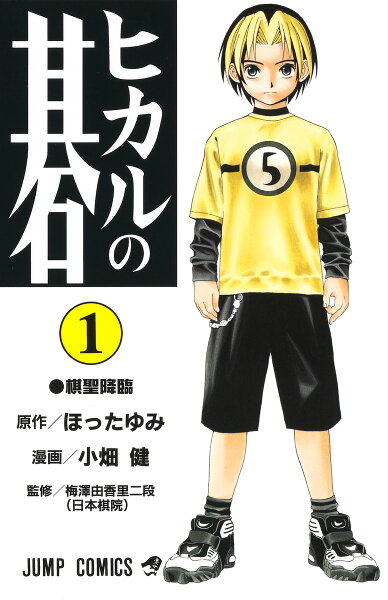
Hikaru no Go
Yu's review of Hikaru no Go — Hikaru Shindo discovers a haunted Go board inhabited by the spirit of a Heian-era master; the spirit possesses him during games; Hikaru gradually discovers his own passion for Go and his desire to surpass the ghost that started everything.
Written by
Yu
Manga Enthusiast from Japan
I grew up in Japan and manga literally saved me during a tough time in elementary school. My English isn't perfect, but my love for manga is real — and I want to share it with you.
Disclosure: This post contains affiliate links. As an Amazon Associate, I earn from qualifying purchases at no extra cost to you.