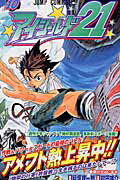
Eyeshield 21 Review: The Fastest Kid in School Was Just Running From Bullies
by Riichiro Inagaki (story) / Yusuke Murata (art)
Read the first volume. If it doesn't hook you, put it down. It'll hook you.
Buy Eyeshield 21 on Amazon →*Affiliate link — I earn a small commission at no extra cost to you.
I almost skipped this one. American football was the most foreign thing I could imagine — I grew up in Japan, I'd never watched a single down, and the rules looked like a math test. But I'd loved Yusuke Murata's art on One-Punch Man, and someone online told me this is where he learned to draw bodies in motion. So I picked up volume 1 thinking I'd flip through it for the art. I ended up reading all 37 volumes and, somewhere in the middle, accidentally learning what a running back does and why I cared.
What got me wasn't the sport, though. It was Sena. A small, scared kid who'd spent his whole childhood running — not toward anything, just away — and who didn't even know the thing he was running from had made him fast. I was a kid like that. So this one snuck up on me.
Quick Take
- A timid errand boy named Sena, the fastest runner in his school without realizing it, gets blackmailed onto a near-empty American football team by a quarterback who hides his identity behind a green eyeshield.
- The manga that taught a whole generation of Japanese readers what American football even is — while being genuinely, loudly funny about it — drawn by the future artist of One-Punch Man.
- 37 volumes, complete in English from VIZ, rated T (Teen): contact-sport violence and some early bullying, nothing graphic.
Story Overview
Sena Kobayakawa enters Deimon High as the kind of kid who apologizes for existing. He was bullied all through elementary school, and his way of coping was to become useful — the fastest errand-runner anyone had ever seen. He doesn't realize that years of fleeing and fetching have given him a 40-yard dash most varsity athletes would kill for. A childhood friend, Riku Kaitani, was the one who taught him to run in the first place.
Yoichi Hiruma, the demonic quarterback of the three-man Deimon Devil Bats, spots Sena's speed in about two seconds and press-gangs him onto the team before he can refuse. To keep rival schools from poaching him and to keep Sena's nerves intact, Hiruma slaps a green-tinted eyeshield on him and invents a secret identity: Eyeshield 21, a mystery runner nobody can catch.
The turning point comes early, in the spring tournament, when inexperienced Sena faces Seijuro Shin, the spear-tackling linebacker of the Ojou White Knights. Deimon loses badly — but Sena outruns Shin once before collapsing from exhaustion, and in that moment he realizes football is the first thing he's ever done that he actually wants to do. That hunger drives the rest of the series: the brutal "Death March" training trip to America, the run through the Tokyo tournament, and finally the Christmas Bowl, where the Devil Bats face the never-once-scored-on Teikoku Alexanders, led by Takeru Yamato — the original Eyeshield 21. Deimon wins the national title, and Yamato hands Sena the name for good.
Characters
Sena Kobayakawa — The heart of the whole thing. His speed is the fossil of his fear: years of running from bullies, calcified into a gift he didn't ask for. The arc is him learning to run toward something. By the end he's not the kid who apologizes — he's the runner the strongest defenders in Japan plan their entire game around.
Yoichi Hiruma — One of the great chaos agents in sports manga. Quarterback, founder of the team (with Kurita and Musashi), and a tactical genius who keeps blackmail files on basically everyone in Japan and waves around guns that mostly fire blanks. He cheats, he threatens, he schemes — and his loyalty to his team is total. A villain who happens to be on your side.
Ryokan Kurita — The enormous, gentle lineman and Hiruma's oldest friend. He's the emotional ballast: the one who cries easily, loves the game purely, and held onto the dream of a real team through years when it was just him and Hiruma.
Tarō "Monta" Raimon — A wide receiver who washed out of baseball because catching was the only thing he was good at. Hiruma gives him the nickname and a position where "the only thing he's good at" is the whole job. He becomes Sena's best friend and the team's hands.
Seijuro Shin — The Ojou White Knights linebacker whose Spear Tackle is the wall Sena keeps throwing himself against. He's the rival who respects Sena before anyone else does, and their matchups are the spine the early arcs are built on.
What I Love About It
The Death March. After Deimon loses, the team's drunkard coach Doburoku drags them to America for a training trip that is honestly insane: a 2,000-kilometer march across the desert, walking all day, sleeping at night, supposedly worth three years of training crammed into forty days. It's the kind of shonen training arc that should feel like filler, and instead it's where the whole manga clicked for me.
What I love is that it's not montage. Each player gets broken down and rebuilt in a way specific to their position — Hiruma carries the playbook in his head, Kurita and the linemen learn to move that bulk, Monta drills his catching until his hands are wrecked. And Sena, who could only hit his top speed in short bursts before tiring out, gets chased across the desert by Hiruma's literal hellhound Cerberus until that 4.2-second burst stops being a stunt and becomes something he can do on command. Out of that march comes the Devil Bat Ghost — the cut he invents to slip past a defender without losing a fraction of speed, leaving an afterimage where his body used to be. Watching a scared kid build his signature move out of forty days of suffering, in a desert, because he finally wants something — that's the scene I reread. It's the moment the running stops being about escape.
Memorable Scene ⚠️ Spoiler Warning
The Christmas Bowl, against the Teikoku Alexanders. Before Deimon, no team had ever even scored on them — they'd won the national title every single year since the tournament began. Their ace is Takeru Yamato, the genuine original Eyeshield 21, the runner whose legend Hiruma borrowed when he stuck that green visor on Sena.
So the final isn't just a championship — it's Sena running against the real thing, the name he's been wearing as a costume the whole series. Murata draws the Devil Bat Ghost at full power here, the afterimages multiplying until Sena seems to split into copies, and it lands because we watched him build that move stride by stride in the desert. Deimon wins. And Yamato — the original — acknowledges Sena as the true Eyeshield 21. The borrowed name becomes his. For a kid who started the series with no name worth knowing, that's the whole story paying off in one handoff.
Pros & Cons
Pros
- Hiruma is one of the most entertaining wild-card characters in any sports manga.
- Murata's art makes speed, collisions, and the physics of running feel real on the page.
- It teaches you American football painlessly while never stopping being funny.
- A complete 37-volume run with a genuinely satisfying ending.
Cons
- 37 volumes is a real commitment to start.
- The early volumes have rougher art and broader comedy than the back half.
- Some mid-series tournament arcs sag under the sheer number of opposing teams to introduce — a long, tournament-shaped shonen like this just won't work for everyone.
Is Eyeshield 21 Worth Reading?
Yes — if you like sports manga with strong comedy and don't mind a long haul. You get Murata's spectacular art at its formative best, a lead whose arc (running from fear to running toward purpose) actually pays off, and a complete story that sticks the landing at the Christmas Bowl. The cost is length and a slightly rough start. Push past the first few volumes and it earns the commitment.
Where to Buy
Read the first volume. If it doesn't hook you, put it down. It'll hook you.
This post contains affiliate links. If you purchase through these links, I may earn a small commission at no extra cost to you. As an Amazon Associate, I earn from qualifying purchases.
*Affiliate link — I earn a small commission at no extra cost to you.
More Manga You Might Like
Sports
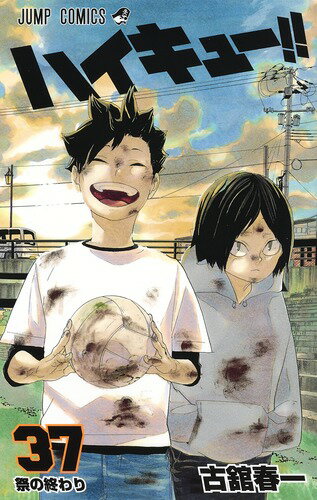
Haikyuu!!
Haikyuu!! follows Hinata Shoyo, a volleyball-obsessed boy who is short for the sport, and his journey from disastrous first tournament through the complete arc of high school volleyball with the Karasuno High team — one of the most celebrated sports manga of its generation.
Sports / Drama
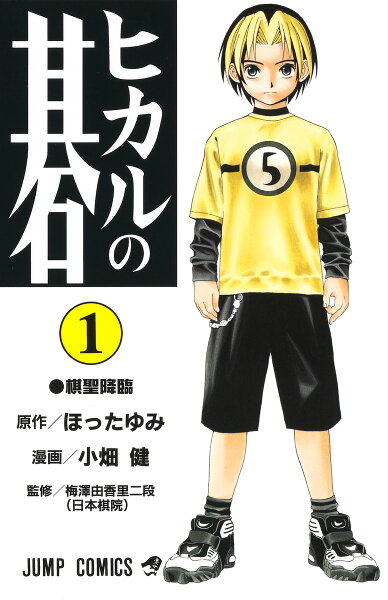
Hikaru no Go
Yu's review of Hikaru no Go — Hikaru Shindo discovers a haunted Go board inhabited by the spirit of a Heian-era master; the spirit possesses him during games; Hikaru gradually discovers his own passion for Go and his desire to surpass the ghost that started everything.
Sports / Drama
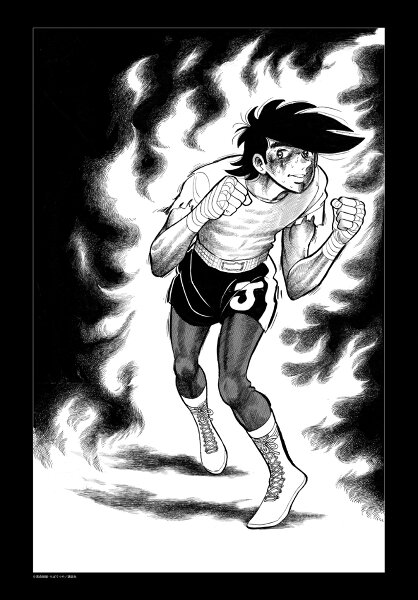
Ashita no Joe
Yu's review of Ashita no Joe — Joe Yabuki claws out of the postwar Tokyo slums, is found by a broken-down trainer, and turns boxing into a way to burn himself completely. From Rikiishi's fatal weight cut to the white-ash final scene, this is the manga that taught the whole genre what cost means.
Sports / Drama
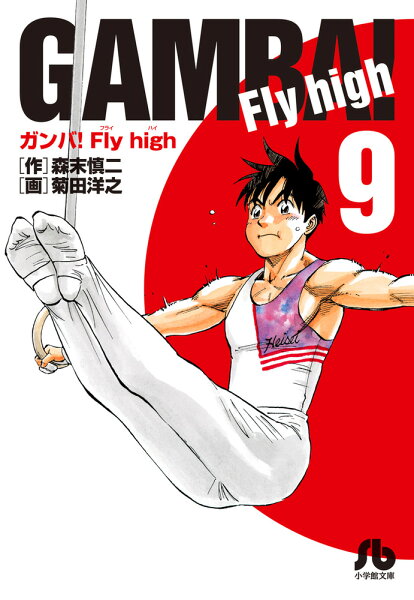
Gamba! Fly High
Gamba! Fly High follows Takeru Fujimaki, a boy with extraordinary natural talent who joins a gymnastics club and discovers that natural ability, without discipline and the right people around you, is not enough to reach the Olympics.
Sports / Comedy
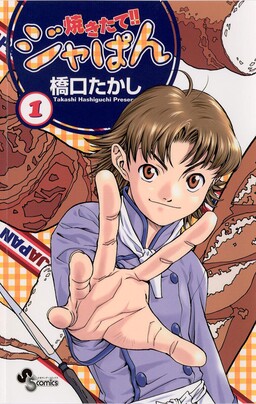
Yakitate!! Japan
Yu's review of Yakitate!! Japan — Kazuma Azuma has supernatural hands warm enough to activate yeast perfectly, and his dream is to create a national bread for Japan; the series applies shonen battle manga structure to competitive bread-baking with completely committed absurdist comedy.
Sports / Drama
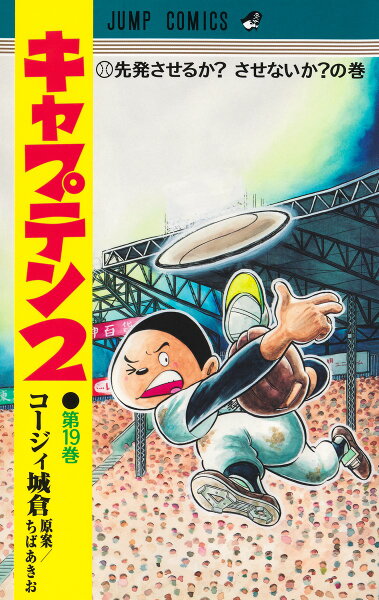
Captain
Captain follows four generations of captains at a weak downtown middle school baseball team — starting with Takao Taniguchi, a former bench player mistaken for a star, who trains himself half to death rather than admit the truth.
Written by
Yu
Manga Enthusiast from Japan
I grew up in Japan and manga literally saved me during a tough time in elementary school. My English isn't perfect, but my love for manga is real — and I want to share it with you.
Disclosure: This post contains affiliate links. As an Amazon Associate, I earn from qualifying purchases at no extra cost to you.