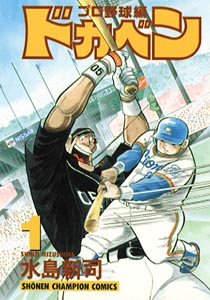
Dokaben Pro Yakyuhen Review: When the High School Hero Punches a Real NPB Time Clock
by Shinji Mizushima
Read the first volume. If it doesn't hook you, put it down. It'll hook you.
Buy Dokaben Pro Yakyuhen on Amazon →*Affiliate link — I earn a small commission at no extra cost to you.
I grew up hearing my grandfather talk about Dokaben the way some people talk about an old friend. He read the high school stuff as a kid, and when I finally asked him which part of the whole giant saga he liked best, he didn't say the famous Koshien arcs. He said the pro one — "the part where the real teams show up." I didn't understand that until I read it myself. There's something strange and wonderful about watching Yamada Taro, the chubby catcher you've followed since he was a teenager, suddenly putting on a real Seibu Lions uniform and crouching behind the plate against players whose names I'd seen on actual baseball cards.
Quick Take
- The professional continuation of Dokaben — Yamada and his old rivals enter the real NPB through the 1994 draft and scatter across actual teams (Seibu, Daiei, Orix, Lotte, Giants)
- Mizushima blends fictional heroes with real 1990s Japanese baseball so tightly that one real pitcher actually took him to a mock trial over it
- 52 volumes, rated T (Teen) — clean sports drama, no content concerns beyond intense competition
Story Overview
The series opens at the 1994 NPB draft. The high school cast that fans followed for decades finally graduates into the pros, but instead of inventing a fantasy league, Mizushima drops them straight into the real Nippon Professional Baseball world of the mid-1990s. Yamada Taro, the catcher, is reportedly courted by ten of the twelve teams and signs with the Seibu Lions. Iwaki Masami goes to the Fukuoka Daiei Hawks. Tonba Kazuto lands with the Orix BlueWave — making him a teammate of a young Ichiro. Satonaka joins the Chiba Lotte Marines, and Bishou Santaro ends up with the Yomiuri Giants under Nagashima's management. The friends who once shared a dugout are now opponents in different uniforms.
The turning point of the whole arc isn't a single game — it's the way the story commits to real time. The seasons advance year by year alongside the actual NPB calendar, so the manga ages with reality. Real results, real rosters, and real personalities bleed into the fiction. The most infamous example became the spine of the early volumes: a real pro pitcher objected to how he was drawn, and Mizushima wrote that objection directly into the manga (more on that below).
By the end, nine in-story years have passed, the core characters have earned free-agency rights, and to keep the stars together Mizushima invents two new expansion clubs — the Tokyo SuperStars and the Shikoku IronDogs. That setup hands directly off into the sequel, Dokaben Super Stars-hen. The pro arc doesn't so much "end" as graduate its heroes one more time.
Characters
Yamada Taro — the same wide-bodied catcher and slugger, now a Seibu Lion. His arc here is about translation: the game-reading brain that dominated high school has to survive against grown professionals who've seen everything. He's no longer the strongest person on the field by default, and the manga is honest about that adjustment.
Iwaki Masami — Yamada's old foil, the wild free-swinger, now batting for the Daiei Hawks. His very first professional at-bat against Seibu's ace becomes the most consequential single panel in the series — the one that triggered a real lawsuit.
Tonba Kazuto — placed on the Orix BlueWave specifically so he shares a clubhouse with the real Ichiro, which lets Mizushima play fiction and reality off each other directly.
Watanabe Hisanobu — and this is the wild part: a real Seibu Lions pitcher who appears as himself, and whose real-world reaction to being drawn in the manga got folded back into the story. He may be the only "character" here who sued his own author.
What I Love About It
What I love most is the Watanabe lawsuit storyline, because I've never seen a manga eat its own controversy so gleefully. In volume 1, Mizushima draws real Seibu ace Watanabe Hisanobu serving up a home run to Iwaki on an opening pitch. The real Watanabe was not amused — he objected publicly, insisting there was no way he'd ever give up a homer to Iwaki of all people. Instead of quietly retconning it, Mizushima leaned all the way in. The dispute was staged as a mock trial on a TBS variety program in 1996, with Watanabe "demanding" that the manga make it right.
And it did. The court ruled for Watanabe, so Mizushima gave his drawn self a brand-new signature pitch — the "Blue Sky Fork" — and, by volume 8, had the manga-Watanabe throw a perfect game against the Hawks. What gets me is what happened next in reality: on June 11, 1996, the real Watanabe pitched an actual no-hitter against Orix. Mizushima reportedly walked down to the stadium with a bouquet of flowers, twice — once for the fictional feat, once for the real one. That blurry line between the page and the pitcher's mound is exactly the thing my grandfather was trying to describe to me. It's a sports manga that reached out and touched the sport, and the sport answered back.
Memorable Scene ⚠️ Spoiler Warning
The image that sticks with me is Iwaki's opening-game home run off Watanabe in volume 1 — the single panel that started everything. On its own it's a classic Mizushima moment: the brash slugger from the old high school cast announcing he belongs in the pros by taking the real Seibu ace deep on the first real pitch he sees. But knowing the aftermath transforms it. That one drawn swing dragged a living professional athlete into the comic, into a televised trial, and eventually into a storyline where his manga-self threw a perfect game to settle the score. One panel of fiction rippling out into real Japanese baseball history — I can't think of another swing of the bat in any manga that did that.
Pros & Cons
Pros
- The fusion of real 1990s NPB and the beloved Dokaben cast is genuinely unique
- The Watanabe lawsuit storyline is a once-in-a-medium piece of manga history
- Real-time seasonal structure makes the world feel alive and grounded
- Mizushima's art and character designs carry over seamlessly from the originals
Cons
- No official English release, so you need Japanese to read it
- Heavily rewards prior investment in the original Dokaben and Dai Koshien
- 52 volumes is a huge commitment on top of an already enormous franchise
- It's deeply tied to specific 1990s Japanese baseball context — if you don't care about real NPB names and history, that whole layer is lost, so this one genuinely won't work for everyone.
Is Dokaben Pro Yakyuhen Worth Reading?
For committed Dokaben fans who can read Japanese, yes. The professional arc gives you something almost no other sports manga can: your fictional heroes standing shoulder to shoulder with real ballplayers, in real seasons, with at least one storyline that spilled out of the page and into actual baseball history. If you've never met Yamada Taro before, though, start with the original — this is a continuation built for people who already love these characters, not a doorway in.
Where to Buy
No English release yet. That just means you find it before everyone else does.
If you read Japanese, the original Japanese print and digital editions are the only legitimate way to read it: Search on Amazon.co.jp
This post contains affiliate links. If you purchase through these links, I may earn a small commission at no extra cost to you. As an Amazon Associate, I earn from qualifying purchases.
*Affiliate link — I earn a small commission at no extra cost to you.
More Manga You Might Like
Sports / Drama
Dokaben Super Stars
Dokaben Super Stars-hen is Shinji Mizushima's professional-baseball continuation of Dokaben, sending Yamada Taro and his generation of free agents into two brand-new Pacific League expansion teams in 2004 — and pulling characters from across Mizushima's whole baseball universe onto the same diamond.
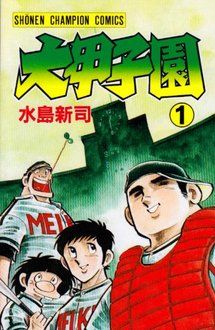
Sports
Dai Koshien
Dai Koshien is Shinji Mizushima's dream crossover — a sequel to Dokaben that pulls Yamada Taro and heroes from his other baseball manga into one summer Koshien tournament, climaxing in an 18-inning semifinal for the ages.
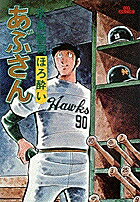
Sports / Slice of Life
Absan
Absan follows Yasutake Kageura, a sake-drinking slugger for the Nankai / Daiei / SoftBank Hawks who entered as an undrafted pinch-hitter and retired 37 years later at 61, a 107-volume baseball manga by Shinji Mizushima that ran for over four decades.
Sports
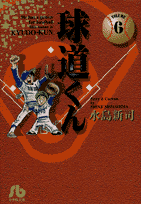
Kyudo-kun
Kyudo-kun follows Kyudo Narao, a young pitcher from Osaka with natural talent and a deep connection to the game through his father — a baseball story about inheritance, pressure, and what it means to throw yourself completely into what you love.
Sports
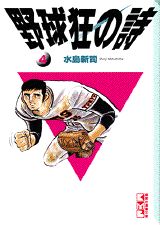
Yakyuukyo no Uta
Yakyuukyo no Uta follows an aging pitcher for a fictional Tokyo team as he fights to stay in the game, but the series is best remembered for introducing Yuki Mikami — Japan's first fictional female professional baseball pitcher — into a sport that had never imagined her.
Sports / Drama
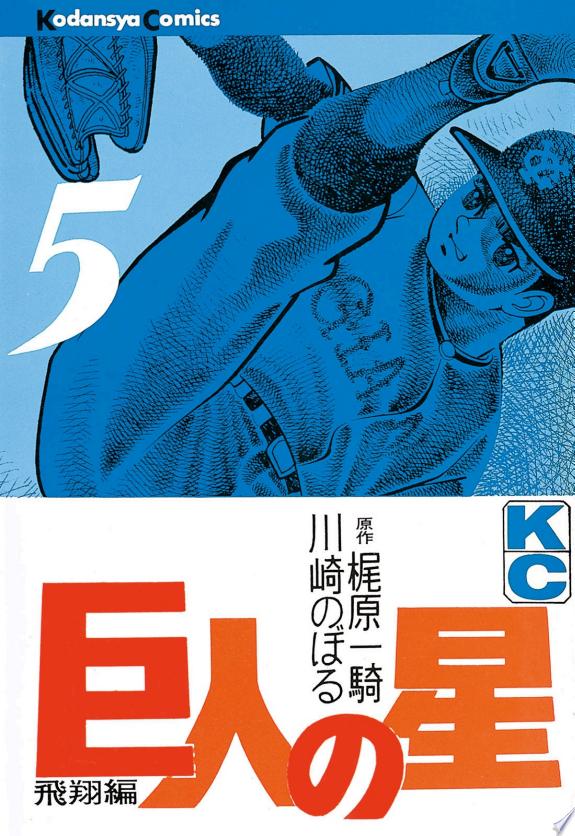
Kyojin no Hoshi
Kyojin no Hoshi follows Hyuma Hoshi, whose father — a former baseball player who never achieved his dream — has raised him from childhood to be a star pitcher for the Yomiuri Giants, through training that borders on abuse and produces a player who may be the greatest — at tremendous personal cost.
Written by
Yu
Manga Enthusiast from Japan
I grew up in Japan and manga literally saved me during a tough time in elementary school. My English isn't perfect, but my love for manga is real — and I want to share it with you.