
Dear Boys Review: Five Players, No Bench, and One Transfer Who Refuses to Let the Team Die
by Hiroki Yagami
Read the first volume. If it doesn't hook you, put it down. It'll hook you.
Buy Dear Boys on Amazon →*Affiliate link — I earn a small commission at no extra cost to you.
When I was in middle school I used to stay at the gym after everyone left, just shooting free throws by myself because going home meant nobody was waiting for me there either. I was bad at basketball. I want to be honest about that. But the gym was warm and the sound of the ball on the floor was the only company I needed. Years later when I read Dear Boys, the very first volume showed a basketball team that had almost nothing left — and I felt that empty gym all over again. That is what pulled me into this manga and would not let go.
Dear Boys is an old series. It started in 1989, before I was even born, and Hiroki Yagami drew it for almost eight years. The art looks its age now. But the heart of it has not aged at all.
Quick Take
- A basketball manga from Kodansha's Monthly Shōnen Magazine that begins where most sports stories already gave up — a banned team with exactly five players and no substitutes at all
- The original series runs 23 volumes and is complete; it focuses as much on rebuilding a broken team culture as on winning matches, and the two leads Aikawa and Fujiwara carry the whole thing
- Rated T (Teen) — competitive sports, some shouting and rough edges, nothing graphic
Who Is This Manga For?
- Readers who want basketball manga from before Kuroko's Basketball, with no special powers — just bodies, sweat, and tactics
- People who like sports stories where the team is half-broken at the start and has to be put back together
- Anyone curious about the manga behind the Hoop Days anime
- Readers who do not mind older art and are okay reading Japanese (the manga was never licensed in English)
Story Overview
Mizuho High School's basketball team is a wreck when the story opens. The year before, the team's ace and captain, Takumi Fujiwara, got into an altercation and punched the coach. The coach was transferred away and the team was hit with a one-year tournament ban. By the time we arrive, only five players remain, with no substitutes and no real coach — a club barely clinging to existence.
Then Kazuhiko Aikawa transfers in. He was the captain and trump card of Tendoji High, a basketball powerhouse, and now he has moved to a new town and walked into this dying little club. Through nothing but his stubborn, almost ridiculous love of the game, he reignites the five remaining players. They convince the coach of the girls' team to coach them too, and slowly the team starts to function again.
The turning point of the early arcs is the moment these five — Fujiwara, Miura, Ishii, Dobashi, and Aikawa — stop seeing themselves as the leftovers of a punished team and start playing like a team that actually wants something. What they want is the Inter-High, the national high school stage. The original 23-volume series follows their climb through the prefectural tournaments toward that goal, against far deeper, better-equipped schools. The series later continued in several sequels (Act 2, Act 3, and more), but the original run is a complete competitive arc on its own.
Characters
Kazuhiko Aikawa — The transfer student and the engine of the whole story. He was the captain and ace of powerhouse Tendoji before moving towns. He is a small forward who is not tall, yet he dunks and plays well above his size, and he is openly called a genius. What makes him work is that he is not a quiet prodigy — his love of basketball is loud, contagious, and a little annoying, and that is exactly what a half-dead team needed.
Takumi Fujiwara — Mizuho's captain and point guard, and the reason the team was banned in the first place. He is the one who punched the coach. He carries that history through the whole series, and he plays through a bad knee. The relationship between Fujiwara and Aikawa — two leaders, two very different temperaments — is the spine the manga is built on.
Ranmaru Miura — The shooting guard, known for his steals and his three-point shooting. He is the player who delivers some of the series' biggest momentum-swinging shots from outside.
Tsutomu Ishii and Kenji Dobashi — Ishii is the short-tempered power forward, all aggression and friction; Dobashi is the center who anchors them underneath. Together with the three above, they are the entire roster — which is the whole point. With no bench, every single one of them has to be on the floor, every minute, every game.
What I Love About It
What I love is that Dear Boys does not start with a hopeful underdog. It starts with a team that was punished and deserved it. Fujiwara hit a coach. The ban was real. The empty club room and the missing players are the consequence of something the team did, not just bad luck. Most sports manga hand you a clean-hearted protagonist and a team that just needs a spark. This one hands you damaged people who burned their own bridge, and then asks whether they can be worth rooting for anyway.
And the answer comes through basketball, not speeches. Aikawa never lectures anyone into changing. He just plays so hard and loves the game so openly that staying bitter becomes impossible around him. The five-man roster is what made my chest tight — there is no rotating in fresh legs, no hiding a tired player on the bench. If one of them quits, the team literally cannot field a game. So every practice, every refusal to give up, carries this quiet weight: we are all there is. I read that and thought about the empty gym, about how sometimes the people who show up are the only people, and that has to be enough. Dear Boys understood that feeling decades before I ever opened it.
Memorable Scene ⚠️ Spoiler Warning
The match against Kadena Nishi gave me the scene I still picture. In the middle of that game, Miura pulls up and drains a three-pointer with NBA-range distance — a shot from way outside that the team had no business making against a stronger opponent. It is the kind of moment Dear Boys does so well: not a magic technique, just a player you have watched grind through a banned, broken season finally letting a shot fly with total confidence.
What sticks with me is not the points on the board. It is what the shot means coming from this specific five-man team. A few volumes earlier these were the leftovers of a punished club. Here, one of them launches a shot like he belongs on a national stage — and it goes in. The gap between who they were and who they are becomes visible in a single arc of the ball. That is the whole series compressed into one shot.
Pros & Cons
Pros
- Starts from a genuinely broken team with a real reason to be broken, which gives the rebuild actual stakes
- The five-player, no-substitute setup makes every game feel like everything is on the line
- Aikawa and Fujiwara's relationship gives the series a strong emotional spine
- A complete 23-volume competitive arc that reaches the goal it sets up
Cons
- The art is genuinely old (1989 start) and looks dated next to modern sports manga
- The story is very long, and the sequels extend it far beyond the original run
- There is no licensed English manga, so you need to read it in Japanese — that alone means this one won't work for everyone.
Is Dear Boys Worth Reading?
If you want a basketball manga that takes the "rebuild a dead team" premise seriously, with no special powers and a roster too small to hide anyone, Dear Boys is worth it. The catch is real: the art is old and there is no official English version, so it asks more of you than a modern, licensed title. But for a complete underdog story built on five players who have nothing but each other, it earns the effort.
Where to Buy
No English release yet. That just means you find it before everyone else does.
The Dear Boys manga has never been licensed in English — only the anime adaptation reached the West, under the title Hoop Days. If you read Japanese, the original tankōbon volumes are the real way in.
Search Dear Boys on Amazon.co.jp →
This post contains affiliate links. If you purchase through these links, I may earn a small commission at no extra cost to you. As an Amazon Associate, I earn from qualifying purchases.
*Affiliate link — I earn a small commission at no extra cost to you.
More Manga You Might Like
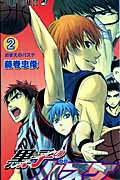
Sports / Action
Kuroko's Basketball: Extra Game
Yu's review of Kuroko's Basketball: Extra Game — the sequel to Kuroko's Basketball follows the Generation of Miracles as they face Jabberwock, an American street basketball team, in an exhibition that becomes genuinely dangerous; the reunion story for the main series cast.
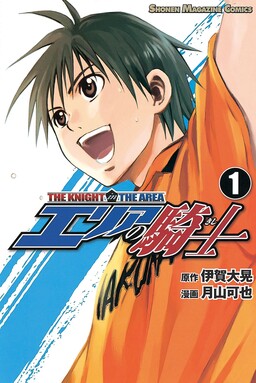
Sports
Knight in the Area
Yu's review of Knight in the Area (Area no Kishi) — Kakeru Aizawa is a timid soccer boy who manages his school's soccer team while his older brother Suguru is a genuine prodigy; after a life-changing accident, Kakeru discovers that the potential his brother always believed in was real; a long-running soccer manga with genuine emotional stakes and technical depth.
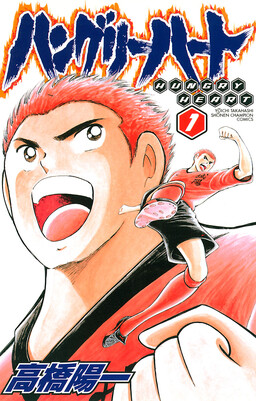
Sports
Hungry Heart Wild Striker
Yu's review of Hungry Heart Wild Striker — Kyōsuke Kanou is a soccer prodigy who quit the sport because of his older brother's overwhelming talent; when he joins a struggling team and meets a dedicated coach, he rediscovers his hunger for the game; a return to pure soccer manga from the Captain Tsubasa creator.
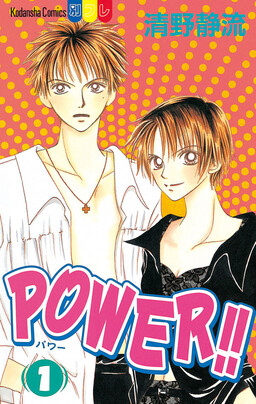
Sports / Romance
Girl Got Game (Power!)
Yu's review of Girl Got Game (Power!) — Kyo Aizawa's father enrolled her as a boy in an all-boys school to fulfill his basketball dreams for her; forced to room with the team's ace player Chiharu, she tries to maintain her disguise while genuine basketball ability and complicated feelings complicate everything.
Sports
Cross Manage
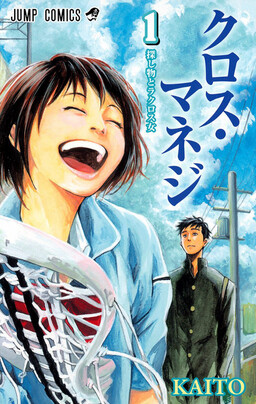
Yu's review of Cross Manage by KAITO — Sakurai is a burned-out former soccer prodigy with a leg injury who gets dragged into managing his school's girls lacrosse team by the relentless Misora Toyoguchi. A short, warm Weekly Shonen Jump sports manga about finding your place when you can no longer be the star.
Sports
Burning Kabaddi
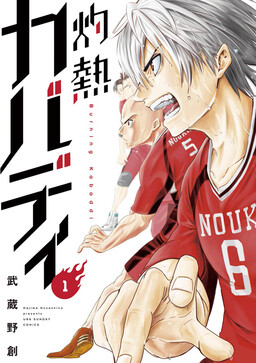
Yu's review of Burning Kabaddi (Shakunetsu Kabaddi) — Tatsuya Yoigoshi, a soccer prodigy who swore off sports, loses a bet and gets dragged into the kabaddi club, where one player holds their breath, raids the enemy half, and has to escape before they run out of air.
Written by
Yu
Manga Enthusiast from Japan
I grew up in Japan and manga literally saved me during a tough time in elementary school. My English isn't perfect, but my love for manga is real — and I want to share it with you.
Disclosure: This post contains affiliate links. As an Amazon Associate, I earn from qualifying purchases at no extra cost to you.