
Days Review: The Soccer Manga Where the Kid With Zero Talent Outruns Everyone Who Has It
by Tsuyoshi Yasuda
Read the first volume. If it doesn't hook you, put it down. It'll hook you.
Buy Days on Amazon →*Affiliate link — I earn a small commission at no extra cost to you.
When I was a kid, I was the one picked last. Not for soccer specifically — for everything. PE was a slow public humiliation, and I learned to make myself small so nobody would notice me failing. So when I opened the first volume of Days and met Tsukushi Tsukamoto — a boy who apologizes for existing, who shrinks at the back of every room, who has been bullied so long that he flinches at kindness — I felt something tighten in my chest. I knew that kid. I had been that kid.
What got me wasn't that Tsukushi gets good at soccer. It's that the manga is honest about how far he has to climb, and how little natural ability he starts with. I read all of it, and I want to tell you why this slow, stubborn underdog story stayed with me.
Quick Take
- The most honest "hard work beats talent" sports manga I've read — Tsukushi has no hidden gift waiting to be unlocked; everything he gains, he grinds for over years
- Tsuyoshi Yasuda pairs Tsukushi with Jin Kazama, a genuine soccer genius, so the contrast between earned ability and natural ability is right there on every page
- Age rating is T (Teen) — bullying, hard physical sports injury, and themes of feeling worthless, but nothing graphic
Story Overview
It starts on the last spring break before high school. Tsukushi Tsukamoto — timid, clumsy, the kind of boy who runs from his own bullies — has a chance encounter with Jin Kazama, a long-haired, aloof kid who happens to be a soccer prodigy. Kazama invites him to fill an empty spot in a futsal game that night.
The turning point is that game. Tsukushi has never played soccer. He runs miles through heavy rain to get there, losing a shoe on the way, and he is genuinely bad on the court. But he refuses to stop moving for a single second, plays through pain, and at the very end throws his whole body at the ball to score the winning goal. Kazama, who had lost his own love of the sport years earlier, sees something in that desperation. Both of them enroll at Seiseki High School and join its soccer club — one of the strongest programs in the country.
From there it's the long haul: 42 volumes of Tsukushi building, almost from zero, the stamina, the positioning, and the basic technique of an actual player, while Kazama rediscovers why he ever loved the game. The series follows them through brutal training, the club's internal pecking order, and the national high school tournament that every Japanese soccer manga lives and dies by. The ending pays off the years of work — Tsukushi is never the most skilled player on the pitch, but he becomes the heart the team can't function without.
Characters
Tsukushi Tsukamoto — A first-year at Seiseki, playing forward. He's been bullied for years and apologizes constantly, with almost no confidence in himself. His defining quality isn't talent — it's an absolute inability to give up on a play. His arc is the whole series: he goes from a boy who can barely keep up to a player whose effort drags his teammates forward, without ever becoming a "secret genius." Everything he earns stays earned.
Jin Kazama — A first-year forward and a recognized soccer genius; in pure technique he's arguably the best at Seiseki. But his carefree, rule-breaking front hides a complicated past — his mother left when he was young, and in middle school he walked off the pitch mid-game and abandoned his team, which killed his love of the sport. Meeting Tsukushi rekindles it. He's the talent that makes Tsukushi's lack of talent legible.
Hisahito Mizuki — Seiseki's captain and star, a hard-working left-winger who built his game around his height and leaping ability rather than relying on raw gifts. He's the standard the first-years measure themselves against, and proof that even at the top of this team, the work never stops.
What I Love About It
The first futsal match is the scene I keep coming back to. Tsukushi, who has agreed to play out of sheer politeness, runs miles through pouring rain to get to the court after another run-in with his bullies. He loses a shoe somewhere on the way and just keeps running. When he finally arrives, he is hopeless — he doesn't know the rules, his body won't do what soccer asks of it — but he never stops chasing the ball. He plays the back half of the game with a bloodied foot after a toenail comes off, and in the final stretch he hurls himself at the goal so hard he collides headfirst with the post to score the winner.
What hit me about that scene is that it's not framed as cool. There's no slow-motion hero shot of a natural athlete. It's framed as desperate and a little pathetic and completely sincere — a boy who has been told his whole life that he's worthless, refusing for once to make himself small. That's the difference between Days and a lot of sports manga. The drama isn't "will the talented kid win," it's "will this kid who has nothing keep getting up." I've been the kid with nothing. Watching Kazama — the genius — be the one who's moved by Tsukushi, instead of the other way around, undid me a little. It says the thing I needed to hear when I was twelve: effort isn't a consolation prize for people without talent. It's the thing talent quietly respects.
Memorable Scene ⚠️ Spoiler Warning
The goalpost collision at the end of that first futsal game is the image that defines the whole series for me. Tsukushi has been outclassed for the entire match. In the final moment, instead of trying a skill he doesn't have, he just throws his entire body at the ball — and slams his head into the goalpost finishing the play. It should be ridiculous. Instead it's the moment Kazama, the one with all the talent and none of the drive, decides this kid is worth playing alongside. Yasuda sets up the rest of 42 volumes in that one collision: Tsukushi's only weapon is that he will spend his body completely, every time, and that turns out to be enough to change the people around him.
Pros & Cons
Pros
- The "work beats talent" premise is played completely straight, with no hidden-genius cheat
- Tsukushi's development is documented honestly across the full run — you feel the years
- Kazama is a great foil; the talent-versus-effort contrast never gets old
- 42 volumes (43 in English) is a complete, fully resolved story
Cons
- It's long — 42 volumes is a serious commitment
- The early chapters lean hard on how pathetic Tsukushi is, which some readers find grating before he grows
- It's a slower, less flashy ride than talent-driven soccer manga — that steady, earnest pace is either the whole appeal or a dealbreaker, so it won't work for everyone
Is Days Worth Reading?
If you want a soccer manga about a protagonist discovering he was secretly gifted all along, this isn't it. But if you want the most sincere version of the underdog story — a kid with genuinely no talent who earns every inch through stubbornness and inspires the people around him — Days is one of the best, and it sticks the landing across its full 42-volume run. For me it was personal. For you it might just be a really good, really earnest sports manga.
Where to Buy
Read the first volume. If it doesn't hook you, put it down. It'll hook you.
This post contains affiliate links. If you purchase through these links, I may earn a small commission at no extra cost to you. As an Amazon Associate, I earn from qualifying purchases.
*Affiliate link — I earn a small commission at no extra cost to you.
More Manga You Might Like

Sports
Knight in the Area
Yu's review of Knight in the Area (Area no Kishi) — Kakeru Aizawa is a timid soccer boy who manages his school's soccer team while his older brother Suguru is a genuine prodigy; after a life-changing accident, Kakeru discovers that the potential his brother always believed in was real; a long-running soccer manga with genuine emotional stakes and technical depth.
Sports
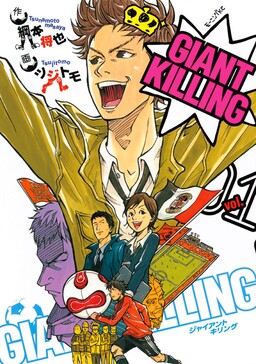
Giant Killing
Yu's review of Giant Killing — Takeshi Tatsumi, a player who disappeared from Japanese professional soccer and became a legend coaching a small English team, is hired to rescue East Tokyo United from the bottom of the J-League; a soccer management drama that treats the tactical and human sides of sports organization with equal seriousness.
Sports
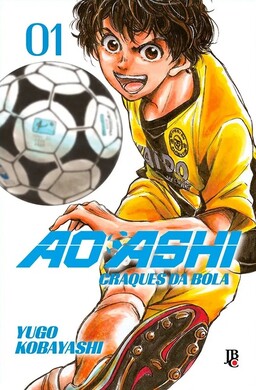
Ao Ashi
Yu's review of Ao Ashi — Ashito Aoi is recruited to the Tokyo City Esperion youth academy with a rare gift: he can see every player on the field simultaneously. But his coach already knows he is not a striker. The best soccer manga in English.
Sports
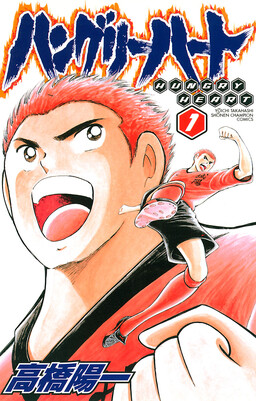
Hungry Heart Wild Striker
Yu's review of Hungry Heart Wild Striker — Kyōsuke Kanou is a soccer prodigy who quit the sport because of his older brother's overwhelming talent; when he joins a struggling team and meets a dedicated coach, he rediscovers his hunger for the game; a return to pure soccer manga from the Captain Tsubasa creator.

Sports / Comedy
Yakitate!! Japan
Yu's review of Yakitate!! Japan — Kazuma Azuma has supernatural hands warm enough to activate yeast perfectly, and his dream is to create a national bread for Japan; the series applies shonen battle manga structure to competitive bread-baking with completely committed absurdist comedy.
Sports / Drama
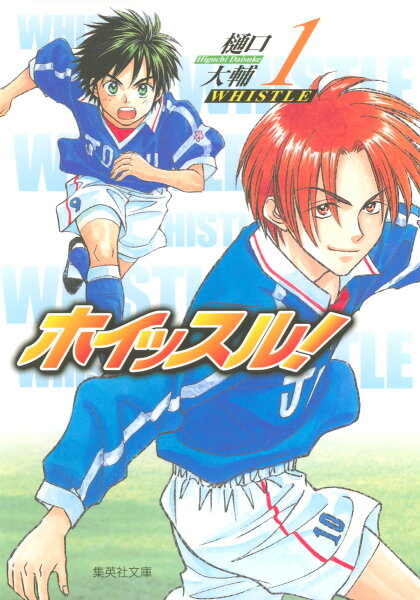
Whistle!
Yu's review of Whistle! — Sho Kazamatsuri was cut from his elite school's soccer team for lacking talent; he transfers to a school where he can actually play and works relentlessly to become a real player; the series follows his growth from the team's weakest member to something more.
Written by
Yu
Manga Enthusiast from Japan
I grew up in Japan and manga literally saved me during a tough time in elementary school. My English isn't perfect, but my love for manga is real — and I want to share it with you.
Disclosure: This post contains affiliate links. As an Amazon Associate, I earn from qualifying purchases at no extra cost to you.