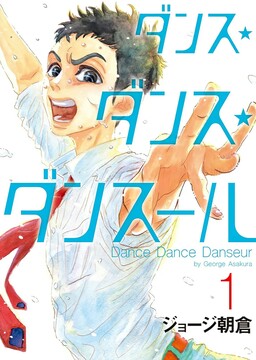
Dance Dance Danseur Review: The Ballet Manga Where Being a Boy Is the Whole Problem
by George Asakura
Read the first volume. If it doesn't hook you, put it down. It'll hook you.
Buy Dance Dance Danseur on Amazon →*Affiliate link — I earn a small commission at no extra cost to you.
When I was small I had things I loved that I learned to hide. Nothing as big as ballet — small things, drawings, a way of talking — but I knew the feeling of pushing a part of myself down because the other kids made it clear that part was wrong. So when I read the first chapter of Dance Dance Danseur, where a little boy watches a male dancer step onto a stage and feels his whole chest light up, and then I watched that same boy spend years pretending he never felt it, I understood him completely. I read this one slowly. It hurt in a good way.
Quick Take
- A seinen ballet story by George Asakura that treats dance with real weight and treats masculinity as the actual obstacle — not a side theme, the whole engine of the plot
- The three leads (Junpei, Miyako, Luou) are written with enough honesty that even the "rival" feels like a wounded real person, not a trophy
- Rated T (Teen): grief, bullying, and off-page past child abuse, but nothing graphic
Story Overview
Junpei Murao is a kid who, as a small boy, gets dragged to his sister's ballet recital and nearly falls asleep — until a grown male dancer takes the stage. Muscular, powerful, nothing like the girls in tulle, this man moves in a way Junpei has never imagined. For the first time he understands ballet isn't only for girls, and he's hooked.
Then his father dies. His dad was a martial-arts man, and suddenly Junpei is "the man of the house." The casual things — his father once worrying that with long hair people "mistake Junpei for a girl" — harden into a rule he builds himself around: not manly equals not cool. He throws himself into looking tough and buries the ballet completely.
The turning point is a transfer student, Miyako Godai, daughter of a ballet teacher. She sees through the act, spots his hidden talent, and drags him to her mother's studio. There he meets Luou Mori — Miyako's cousin, a delicate, timid, almost unearthly gifted dancer. Junpei, who started years too late, has to chase a prodigy while admitting out loud that he loves the thing he spent his childhood pretending to despise. The series is ongoing in Japan (32 volumes as of 2026) and follows the three of them from a tiny local studio toward real, serious ballet — through jealousy, training, and the question of what each of them is even dancing for.
Characters
Junpei Murao — The protagonist, and honestly kind of a mess in the best way. He's rash, selfish, and his self-esteem problems come out as aggression. He has raw physical talent but no foundation, so every bit of progress is bought with humiliation. His real arc isn't "learn to dance" — it's letting himself want something the world told him a boy shouldn't want.
Luou Mori — The prodigy and Junpei's rival, but the manga refuses to make him a simple wall to climb. He's feminine, soft-spoken, terrified at school, and brilliant on stage — because his grandmother raised him in isolation and forced his body into a dancer's shape through brutal childhood training. He's a victim being shaped into someone else's dream, and watching him try to find his own reason to dance is one of the series' deepest threads.
Miyako Godai — Far more than the girl who restarts the plot. She's warm, stubborn, and fiercely protective, especially of Luou, whose rough childhood she carries with her. She's also a serious dancer herself with her own ambitions, and she ends up at the center of the emotional triangle between the two boys without ever being reduced to a prize.
What I Love About It
The thing I keep coming back to is how the manga refuses to let "be yourself and you'll win" be true. Junpei starts late. In ballet, late is close to fatal — Luou has had his body trained since he was a child, and you can't cram a decade of foot and turnout work into a couple of years of willpower. Asakura draws this honestly. Junpei's feet are wrong, his lines are wrong, and the people who started young are simply ahead of him in ways effort alone won't erase. As someone who grew up on shonen manga where hard work flattens every gap, reading a sports story that says "no, the gap is real, now what?" felt almost shocking. It made every small thing Junpei actually earns feel like it weighs something.
And what I love most is that the manga locates Junpei's edge somewhere strange. His messy, late-starting, emotionally raw self isn't a handicap he overcomes — it becomes the content of his dancing. The anger, the grief over his father, the years of pretending, the rage at being told what a boy can be: that's what he pours onto the stage, and it's something the cleaner technicians can't reach. The story argues that what you are, including the broken parts, can be the art itself. That landed on me hard, because I've spent a lot of my own life thinking the hidden, embarrassing parts of me were things to fix rather than things to use.
Memorable Scene ⚠️ Spoiler Warning
The Swan Lake performance at the ballet festival is the moment the whole series had been building toward for me. The Godai studio students stage their version, with Miyako as Odette and Junpei as the Prince — but the scene belongs to Luou, cast as Rothbart, the demon. For most of the story Luou has been the gentle, hollowed-out boy molded into someone else's ideal, dancing because he was made to. Here, instead of staying the victim, he pours every bit of his anger and pain into the role and becomes genuinely terrifying — beautiful and monstrous at once, the avatar of the demon. He casts down Odette and the Prince, and at the height of his power he's left utterly alone on the stage.
What stayed with me is that this is the first time Luou's dancing is his. For chapters he's been an instrument of his grandmother's ambition. Becoming the demon — claiming the rage instead of swallowing it — is how he finally dances as himself, even if "himself" turns out to be something dark and bereft. It reframes the rivalry too: Junpei isn't just chasing a better technician, he's watching another wounded kid find his own voice through the same art. I closed the volume and just sat there for a while.
Pros & Cons
Pros
- Ballet drawn with real anatomical and physical honesty, not vague sparkle
- Masculinity and gender pressure handled as the core conflict, with surprising nuance
- Luou's arc keeps the rival from being a cardboard obstacle
- The "talent and timing actually matter" realism gives the wins real weight
Cons
- It's long and ongoing, with no ending available yet
- The emotional content (grief, past abuse, self-loathing) gets genuinely heavy
- It asks you to care about ballet technique as much as the drama — that's either the appeal or a chore, and it won't work for everyone.
Is Dance Dance Danseur Worth Reading?
Yes — if you want a sports/arts manga with the emotional honesty of real literary fiction. It's a beautifully drawn, painfully honest story about a boy choosing the thing he was taught to be ashamed of, with a rival whose own wounds run just as deep. The only real catches are its length, its weight, and the fact that you have to genuinely engage with ballet to get the most out of it.
Where to Buy
No English release yet. That just means you find it before everyone else does.
There's no licensed English print edition — the Japanese release is currently the only legitimate way to read the manga. If you read Japanese, you can find it on Amazon Japan.
Search Dance Dance Danseur on Amazon.co.jp →
This post contains affiliate links. If you purchase through these links, I may earn a small commission at no extra cost to you. As an Amazon Associate, I earn from qualifying purchases.
*Affiliate link — I earn a small commission at no extra cost to you.
More Manga You Might Like
Sports
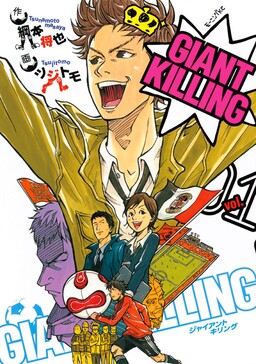
Giant Killing
Yu's review of Giant Killing — Takeshi Tatsumi, a player who disappeared from Japanese professional soccer and became a legend coaching a small English team, is hired to rescue East Tokyo United from the bottom of the J-League; a soccer management drama that treats the tactical and human sides of sports organization with equal seriousness.

Sports / Drama
Welcome to the Ballroom
Yu's review of Welcome to the Ballroom — Tatara Fujita has no goals and no passions until he stumbles into a ballroom dance studio, sees what competitive dance actually looks like, and decides this is the thing he has been missing.
Sports / Music
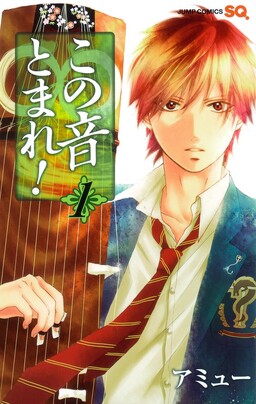
Kono Oto Tomare! Sounds of Life
Yu's review of Kono Oto Tomare! — Chika Kudou joins the nearly-disbanded koto club to honor his grandfather's legacy; the club recruits unlikely members and works toward national competition; a music sports manga that treats competitive traditional instrument performance with the same structure as competitive athletics.
Sports
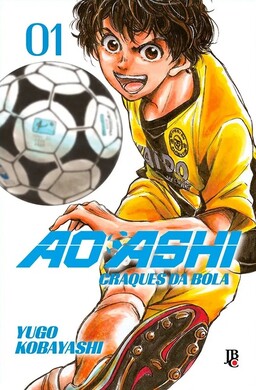
Ao Ashi
Yu's review of Ao Ashi — Ashito Aoi is recruited to the Tokyo City Esperion youth academy with a rare gift: he can see every player on the field simultaneously. But his coach already knows he is not a striker. The best soccer manga in English.

Sports / Drama
Tsurune
Yu's review of Tsurune — Minato Narumiya was an archer until target panic (a release disorder) ended his ability to compete; in high school, he joins the kyudo club and works through his anxiety with a new coach and teammates, trying to find the clean release again.

Sports / Game
Saki
Yu's review of Saki — a high school girl named Saki Miyanaga has an uncanny ability to always score exactly zero in mahjong, and when a mahjong club recruits her, the national high school mahjong tournament becomes the backdrop for increasingly supernatural competitive drama.
Written by
Yu
Manga Enthusiast from Japan
I grew up in Japan and manga literally saved me during a tough time in elementary school. My English isn't perfect, but my love for manga is real — and I want to share it with you.
Disclosure: This post contains affiliate links. As an Amazon Associate, I earn from qualifying purchases at no extra cost to you.