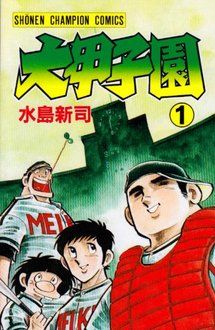
Dai Koshien Review: When Every Baseball Hero Mizushima Ever Drew Meets at Koshien
by Shinji Mizushima
Read the first volume. If it doesn't hook you, put it down. It'll hook you.
Buy Dai Koshien on Amazon →*Affiliate link — I earn a small commission at no extra cost to you.
My grandfather kept a battered Dokaben volume on top of the TV, and when I was small I used to flip through it without really understanding the rules of baseball yet. I just liked Yamada Taro's round, calm face. Years later, when I finally read Dai Koshien, I felt something strange and warm: the kid I was, sitting on the tatami pretending to read, had grown up enough to understand what Mizushima was actually doing here. He took every hero he had ever drawn and let them stand on the same dirt at the same time. It is a victory lap and a love letter, and I did not expect it to make me as emotional as it did.
Quick Take
- Shinji Mizushima's grand crossover — a direct sequel to Dokaben that gathers characters from his other baseball series (Otoko Doahou Koshien, Ikkyu-san, Kyudo-kun, Yakyukyo no Uta) into one summer Koshien
- The 18-inning semifinal against Aota High is one of the great pitcher duels in baseball manga
- Rated T (Teen) — clean competitive sports drama, nothing graphic, safe for most readers
Story Overview
Dai Koshien picks up with Yamada Taro in the summer of his third year at Meikun High in Kanagawa, chasing a fourth national title. The early arc is the prefectural qualifier. Ace Satoru Sato has been away from the team because his mother fell ill and needed surgery; once her operation succeeds, he returns, and he grinds through the rain to pitch Meikun into the national tournament.
The turning point is the tournament itself. This is where the "crossover" promise pays off — schools and players from Mizushima's other manga converge at Koshien. The semifinal against Aota High, led by the fireballer Nakanishi Kyudo (from Kyudo-kun), turns into an 18-inning scoreless deadlock that ends in a draw and forces a replay the next day. Nakanishi pitches the entire replay alone and loses by the narrowest margin, sending Meikun to the final.
The ending is the championship game against Shigijuku, a Kyoto school that famously switched over from being a kendo club to a baseball club. Their pitcher Mibu Kyoshiro throws a signature "Munen-ryu" forkball at Yamada. Meikun's experience and depth win out, and they take the championship.
Characters
Yamada Taro — Meikun's catcher and cleanup hitter, the heart Mizushima built this whole world around. By Dai Koshien he is a senior carrying the weight of three previous title runs, a hitter so feared his Koshien batting average is absurd. What I love is that he is never drawn as a flashy ace type; he is the steady, slightly heavyset center of gravity that the entire team orbits.
Satoru Sato — The undersized submarine ace (he is short, and his sidearm delivery is his whole identity). His arc in this series is the most human one: he leaves baseball to be near his sick mother, comes back when she pulls through, and then has to prove his arm still belongs at this level. His comeback start in the rain is the emotional foundation of the early volumes.
Iwaki Masami — The captain and third baseman, a wild "bad-ball hitter" who swings at pitches no sane batter would touch and somehow drives them out. He is the chaos to Yamada's calm, and the two of them together are why Meikun has always felt like a real team rather than one star.
Nakanishi Kyudo — The opposing ace of Aota High, imported from Kyudo-kun. A pure power pitcher who lives and dies on his straight fastball. His 18-inning solo war against Meikun, pitching even through pain, is the rival performance the whole series is remembered for.
What I Love About It
The semifinal against Aota High is the thing I keep coming back to. Eighteen innings, no score, two teams refusing to break — and at the center of it, Nakanishi Kyudo throwing nothing but fastballs at the best hitting lineup in the country and daring them to catch up. Mizushima draws baseball like a man who genuinely loves the sport's slow accumulation of pressure, and here he lets that pressure build past the point any normal manga would resolve it. The game ends in a tie. They have to come back and do it again the next day.
What got me was the second day. Nakanishi goes back out and pitches the entire replay by himself, arm already spent, and still only loses by the thinnest possible margin. There is no cheap miracle, no sudden power-up. Meikun wins because they are deeper and more experienced, and Nakanishi loses while doing the most heroic thing in the whole book. Mizushima respects his rivals enough to let them be magnificent in defeat, and that is the exact quality I fell in love with as a kid flipping through my grandfather's Dokaben without even knowing the rules. The hero of this scene is the boy who lost.
Memorable Scene ⚠️ Spoiler Warning
The image that stays with me is Nakanishi walking back to the mound for the replay. After eighteen scoreless innings the day before, after his team's whole season comes down to whether his arm can do it one more time, he goes out and throws the entire game himself again — and loses by a sliver. Meikun advances to the final, but the page does not feel like a Meikun triumph. It feels like a tribute to a pitcher who emptied himself completely. That is the soul of Mizushima's baseball: the scoreboard says one thing, but the manga makes sure you remember the one who came up short.
Pros & Cons
Pros
- The Aota semifinal is a genuinely great pitcher's duel — 18 innings and a replay, all earned
- Mizushima's baseball craft is at its peak; the games feel like real contests, not scripted drama
- The crossover concept delivers real payoff if you know his other series
- Complete at 26 volumes with a clear tournament structure
Cons
- No official English release
- Far richer if you have read Dokaben first; cold readers will miss the crossover weight
- The final opponent (Shigijuku) is a brand-new school rather than a returning rival, which even fans found a little anticlimactic after Aota — that's either a minor letdown or no problem at all depending on you, so this one won't work for everyone
Is Dai Koshien Worth Reading?
If you have any history with Dokaben or Mizushima's baseball world, yes — it is the celebration his whole career was building toward, and the Aota semifinal alone justifies the read. If you are brand new to him, start with Dokaben first; Dai Koshien rewards the investment far more than it works as a standalone.
Where to Buy
No English release yet. That just means you find it before everyone else does.
There's no licensed English edition, so the Japanese print and digital release is the only legitimate way to read it.
Search for Dai Koshien on Amazon.co.jp →
This post contains affiliate links. If you purchase through these links, I may earn a small commission at no extra cost to you. As an Amazon Associate, I earn from qualifying purchases.
*Affiliate link — I earn a small commission at no extra cost to you.
More Manga You Might Like
Sports / Slice of Life
Absan
Absan follows Yasutake Kageura, a sake-drinking slugger for the Nankai / Daiei / SoftBank Hawks who entered as an undrafted pinch-hitter and retired 37 years later at 61, a 107-volume baseball manga by Shinji Mizushima that ran for over four decades.
Sports / Drama
Dokaben Super Stars
Dokaben Super Stars-hen is Shinji Mizushima's professional-baseball continuation of Dokaben, sending Yamada Taro and his generation of free agents into two brand-new Pacific League expansion teams in 2004 — and pulling characters from across Mizushima's whole baseball universe onto the same diamond.
Sports
Kyudo-kun
Kyudo-kun follows Kyudo Narao, a young pitcher from Osaka with natural talent and a deep connection to the game through his father — a baseball story about inheritance, pressure, and what it means to throw yourself completely into what you love.
Sports
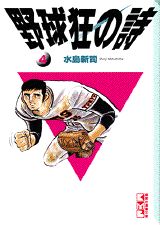
Yakyuukyo no Uta
Yakyuukyo no Uta follows an aging pitcher for a fictional Tokyo team as he fights to stay in the game, but the series is best remembered for introducing Yuki Mikami — Japan's first fictional female professional baseball pitcher — into a sport that had never imagined her.
Sports
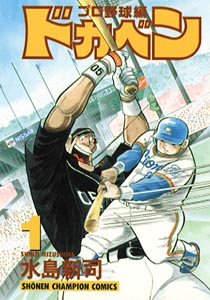
Dokaben Pro Yakyuhen
Dokaben Pro Yakyuhen takes Yamada Taro and his old high school rivals into the real NPB — Seibu, the Hawks, Orix, Lotte, the Giants — and famously got Shinji Mizushima sued by an actual pro pitcher over one panel.
Sports / Drama
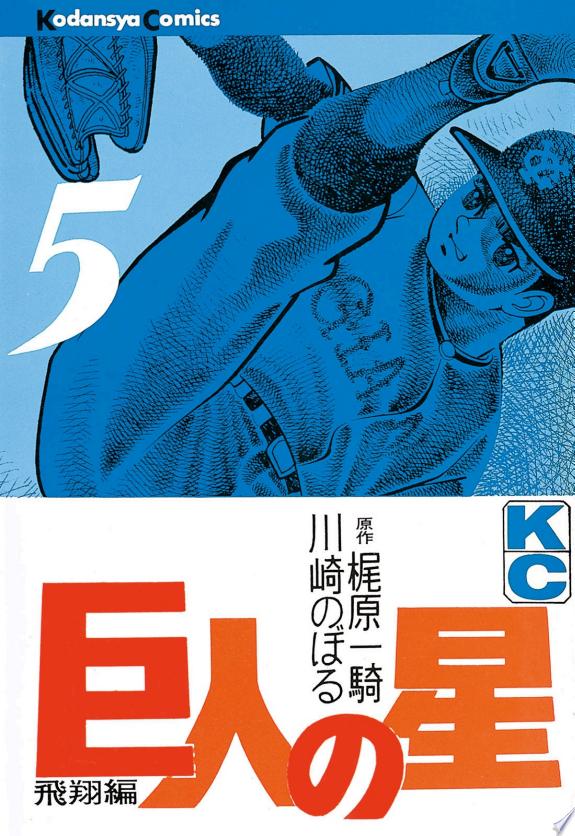
Kyojin no Hoshi
Kyojin no Hoshi follows Hyuma Hoshi, whose father — a former baseball player who never achieved his dream — has raised him from childhood to be a star pitcher for the Yomiuri Giants, through training that borders on abuse and produces a player who may be the greatest — at tremendous personal cost.
Written by
Yu
Manga Enthusiast from Japan
I grew up in Japan and manga literally saved me during a tough time in elementary school. My English isn't perfect, but my love for manga is real — and I want to share it with you.