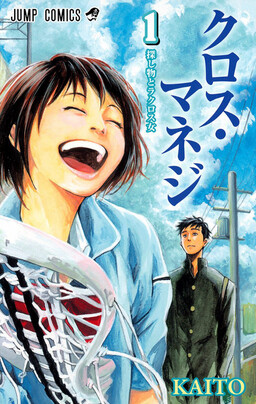
Cross Manage Review: The Sports Manga Where the Hero Never Steps on the Field
by KAITO
Read the first volume. If it doesn't hook you, put it down. It'll hook you.
Buy Cross Manage on Amazon →*Affiliate link — I earn a small commission at no extra cost to you.
When I was a kid, I was on a soccer team for about two years, and I was never the best player — not even close. I spent a lot of matches on the bench, watching the kids who could actually do things I couldn't. I remember how badly I wanted to be useful, even just a little, and how I didn't know how. So when I found Cross Manage, a Shonen Jump sports manga where the main character is not the ace but the manager — the guy who can't play anymore and has to figure out what he's worth from the sidelines — it hit a soft spot I forgot I had.
It's a short one. Only five volumes, because Weekly Shonen Jump cut it before KAITO could really stretch it out. But I'm glad I read it, and I think there's a reason its author later went on to draw Blue Flag, which a lot more people know. The kindness in this series is the same.
Quick Take
- A lacrosse sports manga told entirely from the manager's chair, not the star player's — the hero is a boy who lost his own athletic dream and has to rebuild himself by helping a girls team chase theirs
- Only 5 volumes, ended early by Jump, but it tells a complete arc and the warmth never feels rushed
- Rated T (Teen): some mild language and a bit of fanservice, nothing graphic — comfortable for most teen readers and up
Story Overview
Sakurai was a soccer prodigy in middle school — talented enough that everyone expected big things from him — until he overtrained and wrecked his leg. By the time he reaches high school he's drifting, no club, no drive, just a kid who used to matter and now doesn't know what to do with himself.
The turning point is a clumsy collision with Misora Toyoguchi, an airheaded but ferociously dedicated girl who's pouring everything into the school's girls lacrosse team. After he shows her how to fix a pass, she decides he's exactly what her team needs and refuses to let go. He says no. He says no a lot. But watching her throw her whole self at a sport she barely understands shakes something loose in him, and he finally agrees to be the team's manager — the strategist, the supporter, the guy doing the work nobody claps for.
From there the series follows the team's climb, anchored by their rivalry with the powerhouse Choran High and its ace Namine, regarded as the best lacrosse player in Japan. The story builds toward a rematch between Sakurai's school and Choran, framed around a real argument: do you play for fun and craft, or do you play as hard as you possibly can to win? Because Jump cancelled it at five volumes, the ending lands faster than KAITO clearly planned, but it does close the loop on that final match rather than just stopping.
Characters
Sakurai — The former soccer star who can't be a star anymore. His arc is the heart of the book: a kid who tied his entire identity to being good at a sport, lost it to injury, and has to learn that contributing from behind the scenes — scouting, planning, believing in other people — is its own kind of worth. He goes from refusing to even watch lacrosse to obsessively researching it.
Misora Toyoguchi — The captain and engine of the team. She's a bit of an airhead and not a natural tactician, but her athletic talent and her sheer refusal to give up are what pull Sakurai out of his slump in the first place. Her growth is in learning the game, not just the running and throwing, with Sakurai's help.
Namine — Choran High's ace and the rival the whole back half of the series orbits. She's positioned as the top lacrosse player in Japan and represents the opposite philosophy from Toyoguchi's team — a colder, win-at-all-costs approach that forces Sakurai's side to define what they're actually playing for.
What I Love About It
What I love is that Cross Manage takes seriously a question most sports manga skip: what do you do when you're the one who can't play? Almost every Jump sports story is about the kid with the gift, the late bloomer who trains until he's superhuman. Sakurai already had the gift. He already lost it. The manga starts after the dream is over, and then asks whether there's still a place for him in the thing he loves.
That premise is why his slow turn from "no" to "yes" got me. He doesn't agree to manage the team because of a big speech or a sudden burst of passion. He agrees because he watches Toyoguchi work — fail, fall, get up, fail again — and he can't stand on the sidelines of her effort the way he's been standing on the sidelines of his own life. The moment he starts actually researching lacrosse, reading about it, caring about it, I felt that. It's the feeling of someone deciding to give a damn again after deciding it wasn't worth it. As a kid who sat on the bench wanting to be useful, that's the exact ache this manga understood.
Memorable Scene ⚠️ Spoiler Warning
The scene that stays with me is the final stretch against Choran High and Namine. The whole series has been quietly arguing two ways to love a sport — Toyoguchi's team plays because they love the game and want to grow, while Namine's side plays to crush everything in front of them. The rematch is where Sakurai's value as a manager finally pays off: all his scouting, all his planning, all the studying he did on a sport he didn't even like at the start, gets put on the field through players he can only direct, not replace.
What makes it land for me isn't who wins — it's that the boy who thought his usefulness died with his leg gets to watch his thinking become real, carried out by people who trusted him with it. Because Jump ended the series early, the climax comes quicker than it should and you can feel KAITO compressing. But the emotional point of the whole manga is right there in that match, and it doesn't get fumbled.
Pros & Cons
Pros
- A genuinely fresh angle for a sports manga — the manager, not the ace, is the protagonist
- Sakurai's injured-prodigy arc has real emotional weight for such a short series
- Lacrosse is a sport you almost never see in manga, and it's treated with care
- A complete 5-volume story you can finish in an afternoon
Cons
- It was cancelled by Jump, so the ending is clearly compressed and arcs get cut short
- Toyoguchi can read as a flat "ever-perky girl" compared to Sakurai's depth
- The early-2010s Jump fanservice and the quick, truncated finish mean this one won't work for everyone
Is Cross Manage Worth Reading?
If you want a short, warm sports manga with an unusual heart — the kid who lost his dream learning to matter from the sidelines — yes, it's worth the few hours. Just go in knowing Jump ended it early, so the back half moves fast. For its length, it gives you more feeling than it has any right to.
Where to Buy
Read the first volume. If it doesn't hook you, put it down. It'll hook you.
Note: VIZ released all five volumes in English as a digital-only Shonen Jump title, so you'll find it on Kindle rather than in print.
This post contains affiliate links. If you purchase through these links, I may earn a small commission at no extra cost to you. As an Amazon Associate, I earn from qualifying purchases.
*Affiliate link — I earn a small commission at no extra cost to you.
More Manga You Might Like
Sports
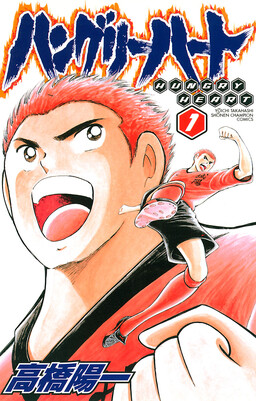
Hungry Heart Wild Striker
Yu's review of Hungry Heart Wild Striker — Kyōsuke Kanou is a soccer prodigy who quit the sport because of his older brother's overwhelming talent; when he joins a struggling team and meets a dedicated coach, he rediscovers his hunger for the game; a return to pure soccer manga from the Captain Tsubasa creator.
Sports / Comedy
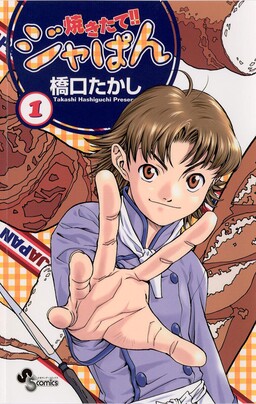
Yakitate!! Japan
Yu's review of Yakitate!! Japan — Kazuma Azuma has supernatural hands warm enough to activate yeast perfectly, and his dream is to create a national bread for Japan; the series applies shonen battle manga structure to competitive bread-baking with completely committed absurdist comedy.

Sports / Comedy
One Pound Gospel
Yu's review of One Pound Gospel — Kōsaku Hatanaka is a genuinely talented featherweight boxer with one catastrophic flaw: he can't stop eating, constantly missing weight for his fights; Sister Angela, a young nun, becomes his most unlikely source of encouragement; Rumiko Takahashi's compact boxing comedy with a warm central relationship.

Sports
Knight in the Area
Yu's review of Knight in the Area (Area no Kishi) — Kakeru Aizawa is a timid soccer boy who manages his school's soccer team while his older brother Suguru is a genuine prodigy; after a life-changing accident, Kakeru discovers that the potential his brother always believed in was real; a long-running soccer manga with genuine emotional stakes and technical depth.

Sports
Dear Boys
Yu's review of Dear Boys by Hiroki Yagami — a basketball team suspended after its captain punched the coach, down to five players, gets one stubborn transfer named Aikawa who drags them back toward the Inter-High. The manga is unlicensed in English; only the anime ran as Hoop Days.
Sports
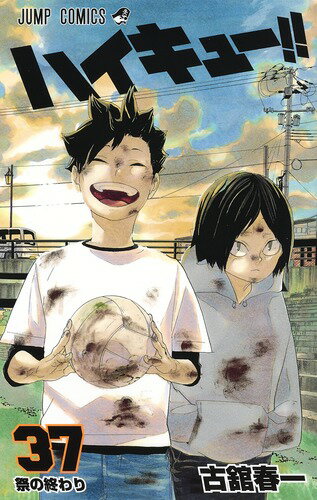
Haikyuu!!
Haikyuu!! follows Hinata Shoyo, a volleyball-obsessed boy who is short for the sport, and his journey from disastrous first tournament through the complete arc of high school volleyball with the Karasuno High team — one of the most celebrated sports manga of its generation.
Written by
Yu
Manga Enthusiast from Japan
I grew up in Japan and manga literally saved me during a tough time in elementary school. My English isn't perfect, but my love for manga is real — and I want to share it with you.
Disclosure: This post contains affiliate links. As an Amazon Associate, I earn from qualifying purchases at no extra cost to you.