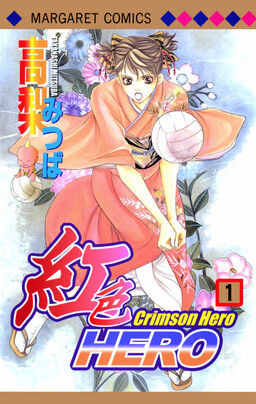
Crimson Hero Review: The Girl Who Ran Away From the Family Restaurant to Chase a Sport No One Would Let Her Play
by Mitsuba Takanashi
Read the first volume. If it doesn't hook you, put it down. It'll hook you.
Buy Crimson Hero on Amazon →*Affiliate link — I earn a small commission at no extra cost to you.
I grew up watching sports manga where the hero just had to be good. Talent plus guts, and the world made room. So when I first picked up Crimson Hero in a used bookstore in Tokyo — a thin Bessatsu Margaret tankobon with a girl in a crimson jersey on the cover — I expected something light. A girl, volleyball, maybe a cute boy. What I got instead was a girl who had to run away from her own family before she was even allowed to step onto a court. That stopped me. I read the whole first volume standing up, and then I bought every one I could find.
Quick Take
- A girls' volleyball shojo manga that treats the sport with real weight, and treats the cost of choosing it even more seriously — Nobara doesn't just want to play, she has to fight her own mother for the right to
- Mitsuba Takanashi draws the matches with genuine understanding of volleyball's positions and rallies, not as backdrop for romance
- Rated T (Teen): some mild romantic content and emotional family conflict, but nothing graphic — it's safe for most teen readers
Story Overview
Nobara Sumiyoshi is the eldest daughter of a family that runs a traditional Japanese ryotei — a high-end restaurant — and as the firstborn she's expected to inherit it. Her mother, Shizuko, wants nothing to do with volleyball; she compares Nobara unfavorably to her graceful younger sister, Soka, and pressures her toward the family business. The breaking point comes when Shizuko's influence shuts down the girls' volleyball club at Nobara's new school, Crimson Field High. There is now no team for Nobara to play on at all.
So Nobara runs away. With her aunt's help she ends up as the live-in "dorm mother" for four boys on the Crimson Field boys' volleyball team — cooking, cleaning, and doing housework she never had to do before, just to cover her tuition and keep a roof over her head. From there the series runs on two engines at once: Nobara clawing a girls' team back into existence at a school that never cared about girls' athletics, and her slow, painful renegotiation of what she owes her family.
The turning point arrives when her sister Soka finally sees how alive volleyball makes Nobara, and steps up to manage the ryotei herself. That cracks the wall their mother built. The eventual compromise: Nobara is allowed to play through high school, after which she'll still inherit the inn. The romance and the volleyball both pay off, but the family thread is the one that gives the whole thing its spine.
Characters
Nobara Sumiyoshi — The engine of the series. What makes her work isn't raw talent — it's that every step forward costs her something real. She leaves home, learns to keep house for four boys, and rebuilds a team from zero, all while never quite escaping the pull of her family's expectations. Her stubbornness reads as believable because the obstacles in front of her are structural, not just dramatic.
Yushin Kumagai — A first-year star on the boys' team living in the same dorm. He recognizes Nobara's drive early, but when she confesses he rejects her — and she fires back that he's a coward. Their relationship develops the slow way, through the sport, before she eventually becomes his girlfriend.
Keisuke Haibuki — Another first-year in the dorm, a former childhood-asthma kid who carries quiet, long-standing feelings for Nobara. He's the other point of the love triangle, and the kindness in his arc keeps the romance from being a simple two-person thing.
Shizuko and Soka Sumiyoshi — Nobara's mother and younger sister. Shizuko isn't a cartoon villain; she's a woman protecting a family legacy the only way she understands. Soka, the "perfect" daughter, ultimately becomes the one who frees Nobara by choosing the inn for herself.
What I Love About It
The scene that hooked me for good is the bet match against the boys' team. Nobara doesn't have a girls' team yet — she barely has players — so to prove the club deserves to exist, she challenges the boys to a three-on-three. The terms are brutal in their simplicity: if the girls can score even a single point, the team gets to live. Not win the set. Not win the match. One point. The boys take it seriously enough to play out all the sets and bring out their ace, and Nobara grinds for that lone point like her whole future depends on it — because it literally does.
What gets me about this is how honest it is about scale. So many sports manga open with a miracle tournament run. Takanashi opens with a girl begging the universe for one point. That reframing told me exactly what kind of story I was reading: one where the first victory isn't a trophy, it's permission to keep existing. When that point finally lands, Nobara's reaction isn't a fist-pump triumph — it's the quiet, breathless relief of someone who just bought herself a little more time. I've reread that sequence more than any tournament arc in the series, because it's the moment the whole manga's worldview snaps into focus: you don't get to chase the big dream until you've earned the right to even try.
Memorable Scene ⚠️ Spoiler Warning
The training-camp confession wrecked me, but not in a sweet way. Nobara, talking with a friend, accidentally blurts out that she likes Yushin — out loud, in a hallway, exactly as Yushin and the other boys come around the corner. He hears it. Everyone hears it. It's the kind of mortifying moment shojo usually plays for blushing comedy.
What I didn't expect was Yushin's flat rejection, and even less what Nobara does with it. Instead of crumpling, she turns it around and calls him a coward — tells him she doesn't want him to do anything about it at all. It's defiant and a little reckless and completely in character for a girl who has already burned down her safe future once. The fallout deepens when Haibuki kisses her, tangling the whole thing into a real love triangle. I remember sitting there thinking that most heroines would have dissolved after that hallway. Nobara just plants her feet and dares the world to make something of it. That's the moment I stopped seeing her as a sports-manga lead and started seeing her as a person.
Pros & Cons
Pros
- Treats girls' volleyball with the same seriousness most manga reserve for male athletes
- Nobara is one of the most stubborn, believable female sports leads in shojo
- The family conflict gives the volleyball real stakes instead of being decoration
- The art reads the sport well — positions, rallies, and the physical toll all land
Cons
- The romance and the love triangle eat into the sports focus more as the series goes on
- The family resolution takes a long time to arrive and asks for patience
- The English release stops at volume 14 of 20, so VIZ readers never get the official ending — a real frustration that won't work for everyone
Is Crimson Hero Worth Reading?
Yes, if you want a sports manga where the heroine has to fight just for the right to compete, and you don't mind a strong romantic subplot riding alongside the volleyball. The big asterisk is the incomplete English run: VIZ published 14 of the 20 Japanese volumes and never finished, so if a guaranteed official ending is a dealbreaker for you, go in knowing that.
Where to Buy
Read the first volume. If it doesn't hook you, put it down. It'll hook you.
This post contains affiliate links. If you purchase through these links, I may earn a small commission at no extra cost to you. As an Amazon Associate, I earn from qualifying purchases.
*Affiliate link — I earn a small commission at no extra cost to you.
More Manga You Might Like

Sports
Attack No. 1
A review of Attack No. 1 — Chikako Urano's 1968 volleyball manga that founded the sports-shoujo genre, gave Japan the line 'tears come, because I'm a girl,' and turned a recovering transfer student into a national team ace.
Sports / Drama
Aoashi
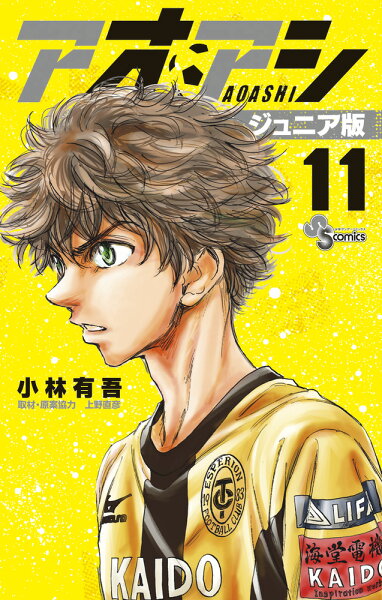
A review of Yuugo Kobayashi's Aoashi — ongoing in Weekly Big Comic Spirits. Ashito Aoi, a rough soccer talent from rural Ehime, is scouted into Tokyo's FC Tokyo youth academy. The series is about learning what modern soccer actually is — through a boy who sees the entire field and has to be taught how to use what he sees. Titan Comics' English edition is ongoing.
Sports / Drama
Capeta
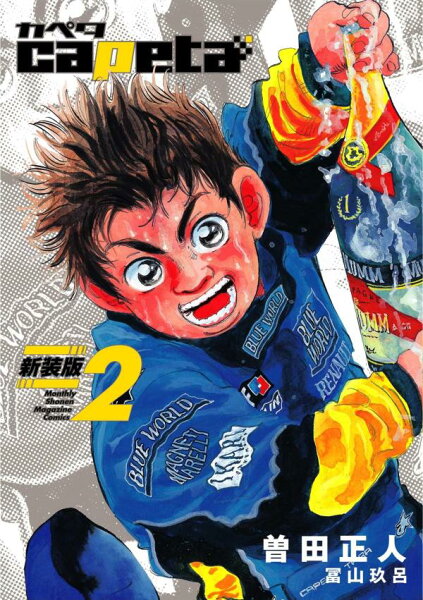
A review of Capeta, Masahito Soda's 32-volume motorsports manga about a poor boy whose road-paving father builds him a kart from scrap, and the lifelong rivalry that pushes him from karting toward Formula racing.

Sports / Drama
Gaku: Minna no Yama
Gaku: Minna no Yama follows Habu Gaku, a volunteer mountain rescue worker in the Japanese Alps, and the climbers he saves — or tries to save — as he demonstrates the specific combination of skill, knowledge, and relentless positivity that his work requires.
Sports / Drama
Kyojin no Hoshi
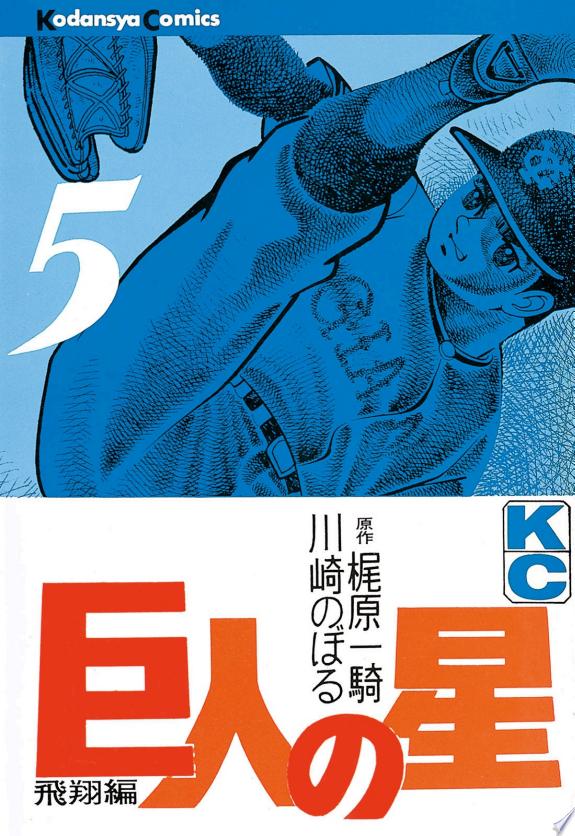
Kyojin no Hoshi follows Hyuma Hoshi, whose father — a former baseball player who never achieved his dream — has raised him from childhood to be a star pitcher for the Yomiuri Giants, through training that borders on abuse and produces a player who may be the greatest — at tremendous personal cost.
Sports / Drama
Rookies
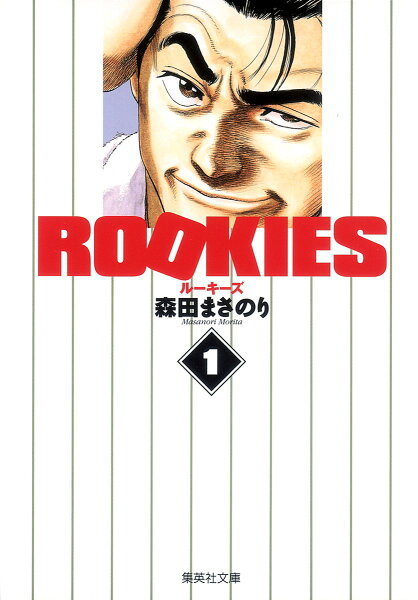
Rookies follows Koichi Kawato, a young teacher transferred to Futakotamagawa High School who discovers a baseball club suspended after a violent incident — and decides, against all institutional advice, to coach them back to the Koshien.
Written by
Yu
Manga Enthusiast from Japan
I grew up in Japan and manga literally saved me during a tough time in elementary school. My English isn't perfect, but my love for manga is real — and I want to share it with you.
Disclosure: This post contains affiliate links. As an Amazon Associate, I earn from qualifying purchases at no extra cost to you.