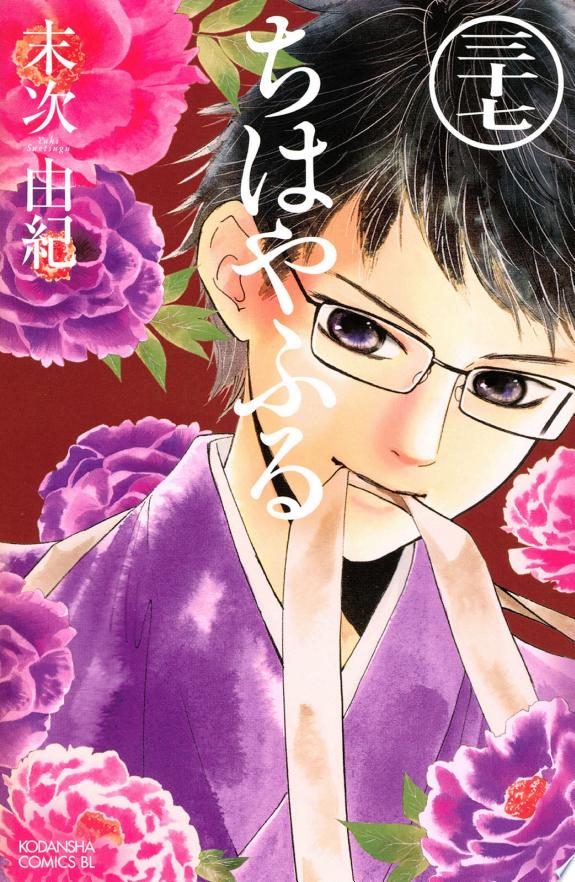
Chihayafuru Review: The Sports Manga Where a Card Game and a 1,000-Year-Old Poem Become the Same Heartbeat
by Yuki Suetsugu
Read the first volume. If it doesn't hook you, put it down. It'll hook you.
Buy Chihayafuru on Amazon →*Affiliate link — I earn a small commission at no extra cost to you.
I have a confession that probably disqualifies me from writing about this manga: before I read Chihayafuru, I thought competitive karuta sounded like the most boring thing a person could turn into a sport. Memorize 100 old poems, then slap cards off a tatami mat? I grew up on Naruto throwing fireballs. A card game where the most violent thing that happens is a hand moving fast did not sound like my kind of fight.
Then I read the chapter where eleven-year-old Chihaya plays a match she was never supposed to win, and I sat there on my floor with the volume open, not moving, the way I used to sit when I was a lonely kid and a manga was the only thing in the room that felt alive. Yuki Suetsugu had taken a poem written more than a thousand years ago and made me feel like grabbing a card off a mat was the most important thing in the world. I have never trusted my first impressions since.
Quick Take
- The best sports manga ever written about a traditional Japanese game — competitive karuta, where the 100 classical poems of the Hyakunin Isshu are the playing field
- 50 volumes, complete in Japan (2008–2022), and one of the most celebrated josei manga of its era — winner of the Manga Taishō and the Kodansha Manga Award
- Age rating: T (Teen). Competitive pressure, an unrequited-love subplot that aches, and a lot of crying — but nothing graphic
Story Overview
In sixth grade, Chihaya Ayase is a girl with no dream of her own — she lives for her older sister's modeling career. Then a quiet transfer student from Fukui, Arata Wataya, arrives, and she watches him play competitive karuta with an obsession she's never seen in anyone. Karuta is built on the Hyakunin Isshu: 100 classical poems. A reader recites a poem, and players race to grab the matching card off the mat before their opponent. Arata tells Chihaya she has a natural gift — and for the first time, she has a goal of her own: to become the best karuta player in Japan, the Queen.
The series' first gut-punch comes early. Their classmate Taichi Mashima, jealous and terrified of losing to the grandson of an eternal Master, hides Arata's glasses before a match. Arata can't play without them — so Chihaya steps in to play in his place, and wins. That childhood triangle, with Taichi's guilt buried inside it, becomes the engine of the whole 50 volumes. The three are separated when Arata moves away, and Chihaya makes a promise: they'll meet again at the national tournament in Omi Jingu.
In high school, Chihaya and Taichi reunite and found the Mizusawa karuta club from scratch, recruiting a ragtag set of teammates. The bulk of the series follows their team's rise, Chihaya's climb toward challenging the reigning Queen Shinobu Wakamiya, Arata's parallel path toward the Master title, and the slow, painful unraveling of the love triangle. By the end, Chihaya finally faces Shinobu for the crown, Taichi has had to walk away from the club and rebuild himself, and Suetsugu lands a resolution — romantic and competitive — that the fandom is still arguing about years later.
Characters
Chihaya Ayase — She starts as a girl borrowing someone else's dream and becomes a player defined by her terrifying "ears": she hears the poem and reacts before her brain finishes processing it. That gift is also her ceiling — she plays on instinct and speed where her rivals play on strategy, and the series' central tension is whether raw sensory talent can carry her to the Queen's seat against a calculating champion. She is loud, single-minded, and a little oblivious about everything that isn't karuta, which is exactly what makes the romance around her so painful.
Taichi Mashima — The most complicated person in the book. He's handsome, smart, good at everything — and he started karuta out of jealousy, hiding Arata's glasses as a child, carrying that cowardice for years. He founds the club for Chihaya's sake, loves her in silence, and eventually confesses — only to be answered with a "sorry." He quits the club, refuses to quit karuta, and disappears to grind matches against the reigning Master, Suo, to finally become a player on his own terms rather than Chihaya's shadow.
Arata Wataya — The boy who started it all. After his grandfather, an eternal Master, dies, Arata abandons karuta in grief and guilt, until Chihaya and Taichi's passion pulls him back. He spends much of the series geographically apart from the duo, which lets Suetsugu deploy him like a held breath — his returns always mean something. His own arc drives toward challenging for the Master title.
Shinobu Wakamiya — The reigning Queen, untouchable to everyone except Arata, and Chihaya's ultimate wall. She's not a villain; she's a lonely girl who loves the poems and the cards more than people, and her bond with the Hyakunin Isshu mirrors and contrasts Chihaya's. The final stretch hinges on Chihaya finally reaching her across the mat.
Dr. Hideo Harada — The club elder and coach figure, head of the Shirahaki society, who teaches Chihaya and Taichi and proves the sport isn't only for the young by mounting his own challenge in the Master qualifiers against Suo. He's the warmth that keeps the competition human.
What I Love About It
The poems. Suetsugu doesn't treat the Hyakunin Isshu as set dressing — she makes a thousand-year-old anthology into the emotional infrastructure of a sports manga. Each player has "their" card, a poem that belongs to them, and the meaning of that poem keeps bleeding into the meaning of the match. Chihaya's card is "Chihayaburu" — the very poem that hides her own name inside its opening syllables, the line that gives the series its title. When the reader's voice begins it and her hand is already moving, you understand that she is, in a literal sense, reaching for herself.
What floors me is how Suetsugu uses this to turn a card game into genuine sports tension. Karuta has no ball, no net, no obvious drama — two people kneel on a mat and move fast. And yet she renders the speed, the gambit of which card to defend, the way a single mis-grab can collapse a six-point lead, with the clarity of a great fight manga. She found drama in stillness. A series about memorizing poetry has no business being this exciting on a panel-by-panel level, and the fact that it is, for fifty volumes, is the thing I keep coming back to.
Memorable Scene ⚠️ Spoiler Warning
The childhood glasses match. Taichi, sick with fear of losing to Arata, hides the boy's glasses so he can't see the cards. Arata tries to play half-blind and falls apart — and Chihaya, furious and protective, sits down in his place to play the match herself, and beats Taichi.
What makes it unforgettable isn't the win. It's what happens after: Chihaya never finds out Taichi did it. While she's off hunting for Arata's missing glasses, Taichi quietly admits to Arata that he was the thief, and hands them back. Arata's response — that Taichi is a coward, but a coward he can understand — is the seed of everything. Three kids, one buried act of jealousy, one promise to meet again. Suetsugu plants the entire 50-volume love triangle in this one childhood cruelty, and then makes you watch it grow for the next two decades of their lives. I didn't realize until much later how much weight that small, ugly moment was carrying.
Pros & Cons
Pros
- The karuta matches are genuinely, panel-by-panel exciting — a real feat for a game with no ball
- The poetry isn't decoration; it's the emotional spine of the whole series
- Every member of the ensemble, not just the leads, gets a complete arc
- 50 volumes, fully complete, with the same quality from start to finish
Cons
- 50 volumes is an enormous commitment — this is a years-long read, not a weekend
- The love triangle's resolution is genuinely divisive; some readers never forgave it
- The karuta rules and poem context take a few volumes to fully click for non-Japanese readers
- The slow, intricate pacing is either the whole point or a wall — that depends entirely on you
Is Chihayafuru Worth Reading?
If you want a sports manga where the subject matters as much as the scoreboard — where a card game and a classical poem become the same heartbeat — there is nothing else like it, and yes, it's worth every one of the 50 volumes. If you need fast payoff and bristle at slow-burn romance, this long, patient series may test you. For everyone else, it's one of the finest things josei manga has ever produced.
Similar Manga
| Title | Its Approach | How Chihayafuru Differs |
|---|---|---|
| Hikaru no Go | A traditional Japanese game (Go) carried by a supernatural rivalry | Chihayafuru is grounded and real — no ghosts, just talent, poetry, and a club |
| March Comes in Like a Lion | A traditional game (shogi) used as a lens for loneliness and healing | Chihayafuru is an ensemble team sport at heart, with romance woven through |
| Haikyu!! | A high-energy team sport built on an ensemble of distinct players | Chihayafuru's "field" is silence and memory, and its drama is internal as often as physical |
Official English Translation Status
All 50 volumes are available in English digitally from Kodansha — on the K Manga app and as Kindle / digital purchases. There is no English print edition; this is a digital-only release in the West, but it is fully complete, so you can read the entire series start to finish in English.
Where to Buy
Read the first volume. If it doesn't hook you, put it down. It'll hook you.
This post contains affiliate links. If you purchase through these links, I may earn a small commission at no extra cost to you. As an Amazon Associate, I earn from qualifying purchases.
*Affiliate link — I earn a small commission at no extra cost to you.
More Manga You Might Like
Sports / Romance
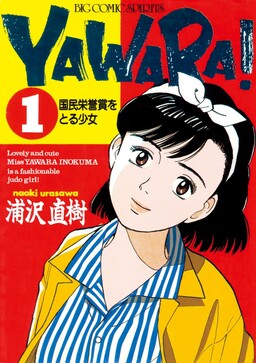
Yawara! A Fashionable Judo Girl
Yu's review of Yawara! — Yawara Inokuma is the granddaughter of a legendary judo master who has trained her since childhood to be a world champion; she has extraordinary talent and absolutely no desire to compete; what follows is her journey toward the Barcelona Olympics despite her own resistance.
Sports / Drama
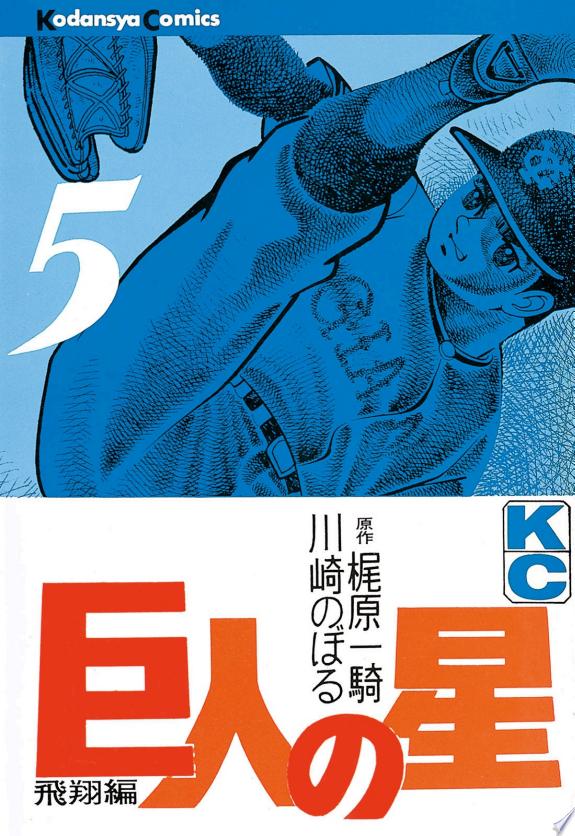
Kyojin no Hoshi
Kyojin no Hoshi follows Hyuma Hoshi, whose father — a former baseball player who never achieved his dream — has raised him from childhood to be a star pitcher for the Yomiuri Giants, through training that borders on abuse and produces a player who may be the greatest — at tremendous personal cost.
Sports / Drama
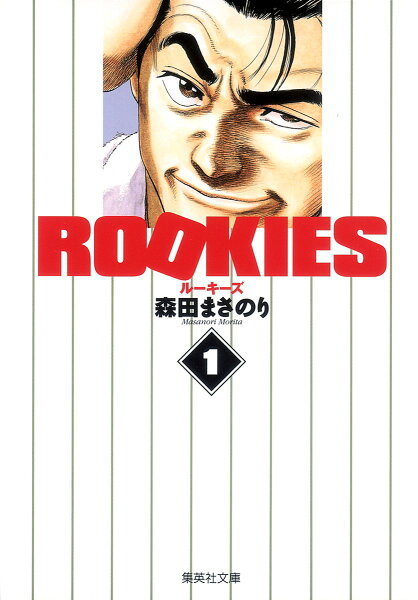
Rookies
Rookies follows Koichi Kawato, a young teacher transferred to Futakotamagawa High School who discovers a baseball club suspended after a violent incident — and decides, against all institutional advice, to coach them back to the Koshien.
Sports / Drama
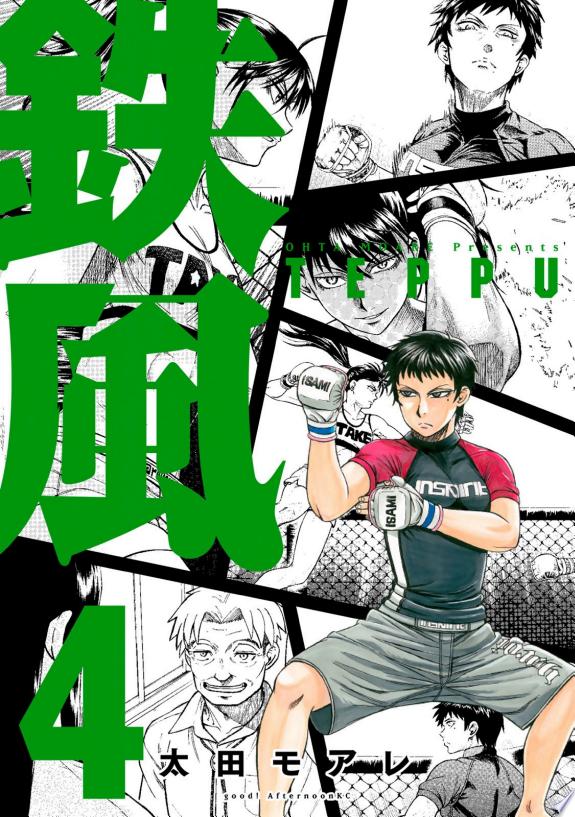
Teppu
Yu's review of Teppu — Natsuo Ishido is a natural athlete who has won everything she has tried without effort and resents every second of it; when she meets a girl who fights MMA with genuine passion despite not being naturally gifted, Natsuo joins an MMA gym to find out what it means to want something.
Sports / Shojo
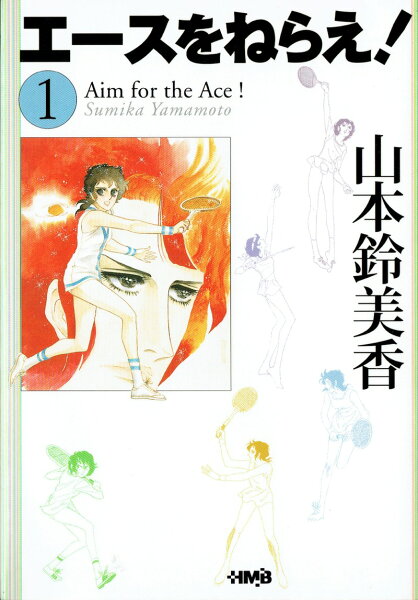
Ace wo Nerae!
Ace wo Nerae! follows Hiromi Oka, an ordinary first-year who falls in love with tennis and gets pulled into the brutal, devoted coaching of Jin Munakata — a 1970s shojo classic about a coach who is dying, a player he refuses to let stay ordinary, and what it costs to be the one person someone believes in.
Sports
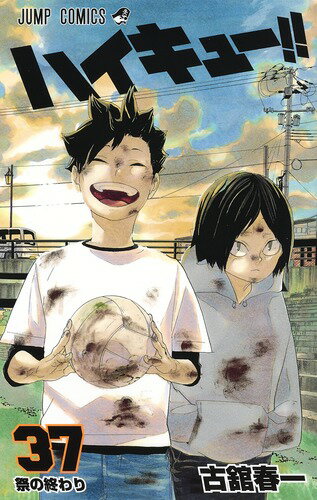
Haikyuu!!
Haikyuu!! follows Hinata Shoyo, a volleyball-obsessed boy who is short for the sport, and his journey from disastrous first tournament through the complete arc of high school volleyball with the Karasuno High team — one of the most celebrated sports manga of its generation.
Written by
Yu
Manga Enthusiast from Japan
I grew up in Japan and manga literally saved me during a tough time in elementary school. My English isn't perfect, but my love for manga is real — and I want to share it with you.
Disclosure: This post contains affiliate links. As an Amazon Associate, I earn from qualifying purchases at no extra cost to you.