
The Cherry Project Review: Naoko Takeuchi's Figure Skating Manga About a Girl Who Could Skate Perfectly and Feel Nothing
by Naoko Takeuchi
Read the first volume. If it doesn't hook you, put it down. It'll hook you.
Buy The Cherry Project on Amazon →*Affiliate link — I earn a small commission at no extra cost to you.
I found out about The Cherry Project the way most non-Japanese readers do: backwards. I was a Sailor Moon kid first, and years later I went looking for everything Naoko Takeuchi made before the Moon Princess. This is the one almost nobody talks about — a three-volume figure skating manga she ran in Nakayoshi in 1990, two years before Usagi ever tripped over her own feet. I expected a curiosity. What I got was the first time I saw Takeuchi build a whole story around an idea that still sticks with me: a girl who is technically perfect and completely empty inside, and what it costs her to finally feel something on the ice.
Quick Take
- Naoko Takeuchi's early shojo sports romance — three volumes, complete, serialized in Nakayoshi (1990–1991), two years before Sailor Moon
- Built around a sharp central idea: a skater who can copy any move flawlessly but has no expression, no artistry, nothing to perform with
- All Ages — clean shojo with skating, school festivals, and a slow-burn first crush; nothing graphic or mature
Story Overview
Asuka Chieri — nicknamed Cherry — is a middle school class president who happens to be skating royalty without using it. Her father is a former All-Japan figure skating champion, and she grew up on the ice learning shoulder lifts, back flips, and triple jumps as casual play. She has a freakish gift: she can watch a move once and reproduce it perfectly, including high-difficulty skills like the Biellmann spin. But she skates for fun. She doesn't compete, and she doesn't think of it as anything serious.
Then she crosses paths with Tsuzuki Masanori, a former junior men's singles champion her own age. Tsuzuki's family pressures him to quit skating when he enters high school, so he hatches a counter-move: he'll go after the top of pair skating instead. He and his teammates transfer into Chieri's class and launch what he calls the "Cherry Project" — publicly, a plan to build a skating rink and put on a pair show at the school festival. Privately, it's a scheme to develop Chieri into the partner who can carry him to the world stage.
The turning point is the thing the whole manga is really about. Chieri can land everything. Her jumps are clean, her copies flawless — and her face is blank. Empty. She has the body of a champion and the expression of a mannequin, and on the ice that emptiness reads as nothing at all. The rival skater Kanti Akiyama, the "Princess," is everything Chieri isn't: polished, expressive, and also gunning to be Tsuzuki's pair partner. The competition crystallizes into a single rule — whoever wins the All-Japan Junior Championship earns the right to skate with Tsuzuki. Chieri's breakthrough comes off the ice, when Tsuzuki hands her a ticket to a Swan Lake ballet performance, and she finally understands the difference between executing a movement and meaning it.
Characters
Asuka Chieri (Cherry): The heart of the manga and its most interesting idea. She is a prodigy with a fatal flaw — perfect technique, zero expression. She copies, she lands, she replicates, and none of it says anything. Her arc is the slow, painful work of finding something to skate about, and the thing she finds is her growing feelings for Tsuzuki. By the All-Japan Junior, she skates a program driven entirely by emotion aimed at him — the opposite of the blank girl from volume one.
Tsuzuki Masanori: Former junior men's champion, cornered by a family that wants him to give up the sport. He's the strategist — the "Cherry Project" is his idea, his manipulation, his bet that this expressionless girl has more in her than she knows. He's also the romantic axis Chieri's growth orbits around, which makes his coaching and his feelings impossible to fully separate.
Kanti Akiyama (the "Princess"): The rival, and a smart one — accomplished, expressive, and openly competing both for the championship and for Tsuzuki as a partner. She's everything Chieri lacks at the start, which makes her the perfect measuring stick for how far Chieri has to grow.
Chieri's father: A former All-Japan champion himself, and the source of Chieri's foundation. He taught her the hard skills as a child, which is why she can do so much without ever having competed.
What I Love About It
What I love is how clean the central idea is. "A skater who is technically perfect but emotionally empty" is a genuinely good hook, and what makes it land is that it's not a metaphor laid on top of the sport — it's the sport itself. In figure skating the technical mark and the artistic mark are two different scores, and Chieri maxes one and flatlines the other. Takeuchi turns a real structural fact about the sport into a character flaw, and then makes the cure emotional. That's a more sophisticated piece of storytelling than I expected from a 1990 Nakayoshi serial.
And once you've read Sailor Moon, you can feel the instincts forming here. The expressive faces, the warmth, the way romantic feeling and personal growth get welded together so you can't tell where one ends and the other begins — Chieri learning to feel her skating is the same engine that later drives Usagi. The Cherry Project is where you can watch Takeuchi practicing the move before she landed it at full scale.
Memorable Scene ⚠️ Spoiler Warning
The scene that stays with me is the Swan Lake turning point. Tsuzuki gives Chieri a ticket to a ballet performance of Swan Lake, and watching it is what finally cracks her open — she sees the difference between a body executing steps and a performance that means something. It pays off at the All-Japan Junior Championship, where the blank, copying girl from the start of the manga skates a program full of genuine emotion, all of it pointed at Tsuzuki, in front of the crowd. After two volumes of watching her land perfect jumps with a dead face, seeing her finally perform — with the title and the right to be his pair partner riding on it — is the whole story arriving at once. It works because Takeuchi spent the entire manga establishing exactly what was missing, so when it appears, you feel the gap close.
Pros & Cons
Pros
- A genuinely sharp central idea — the technically perfect, emotionally empty skater
- Takeuchi's character-design and romance instincts are already recognizable two years before Sailor Moon
- Short and complete at three volumes — a clean, contained read
- The figure skating is used with real structural understanding of the sport
Cons
- No licensed English edition — you'll need Japanese
- Three volumes is tight; the supporting cast and rivalry don't get much room
- The frame is conventional shojo sports romance — the central idea elevates it, but doesn't reinvent the formula
- If you're coming for Sailor Moon-scale ambition, this is a smaller, quieter thing — that's either charming or underwhelming depending on you
Is The Cherry Project Worth Reading?
For Sailor Moon fans and shojo completionists, yes. The "perfect but empty" hook is better than the manga's reputation suggests, the Swan Lake breakthrough genuinely lands, and at three volumes it asks very little of you. It's not the entry point to Takeuchi — that's still Sailor Moon — but as an early work with one strong idea executed cleanly, it delivers more than a curiosity.
Similar Manga
| Title | Its Approach | How The Cherry Project Differs |
|---|---|---|
| Sailor Moon | Magical-girl epic with cosmic scope (same creator) | Small-scale skating romance — the same instincts at an earlier, quieter stage |
| Ginban Kaleidoscope | Figure skating romance with a supernatural twist | Straight sports romance, no supernatural element — the drama is purely artistic and emotional |
| Codename: Sailor V | Takeuchi's other pre-Sailor Moon shojo work | Sport instead of superhero action — ice and emotion instead of villains |
Official English Translation Status
The Cherry Project has no licensed English edition. There's no official translation in print or digital — the Japanese release (three volumes from Kodansha) is the only legitimate way to read it.
Where to Buy
No English release yet. That just means you find it before everyone else does.
If you read Japanese, the three-volume Kodansha edition is the only legitimate way to get it.
Find The Cherry Project on Amazon.co.jp →
This post contains affiliate links. If you purchase through these links, I may earn a small commission at no extra cost to you. As an Amazon Associate, I earn from qualifying purchases.
*Affiliate link — I earn a small commission at no extra cost to you.
More Manga You Might Like
Sports / Romance
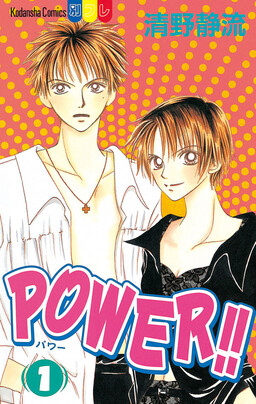
Girl Got Game (Power!)
Yu's review of Girl Got Game (Power!) — Kyo Aizawa's father enrolled her as a boy in an all-boys school to fulfill his basketball dreams for her; forced to room with the team's ace player Chiharu, she tries to maintain her disguise while genuine basketball ability and complicated feelings complicate everything.
Sports / Romance
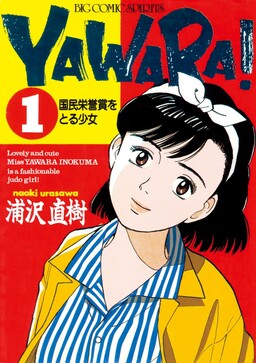
Yawara! A Fashionable Judo Girl
Yu's review of Yawara! — Yawara Inokuma is the granddaughter of a legendary judo master who has trained her since childhood to be a world champion; she has extraordinary talent and absolutely no desire to compete; what follows is her journey toward the Barcelona Olympics despite her own resistance.
Sports / Shojo
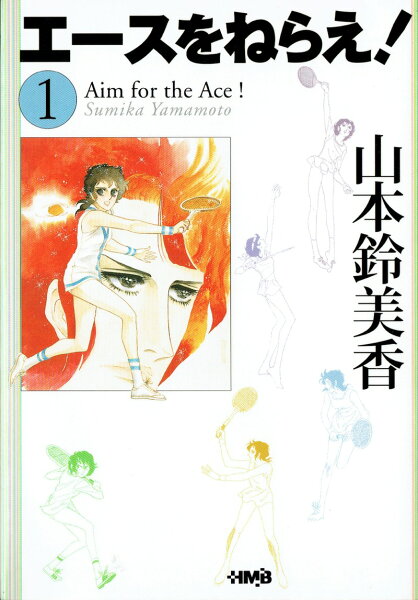
Ace wo Nerae!
Ace wo Nerae! follows Hiromi Oka, an ordinary first-year who falls in love with tennis and gets pulled into the brutal, devoted coaching of Jin Munakata — a 1970s shojo classic about a coach who is dying, a player he refuses to let stay ordinary, and what it costs to be the one person someone believes in.
Sports / Romance
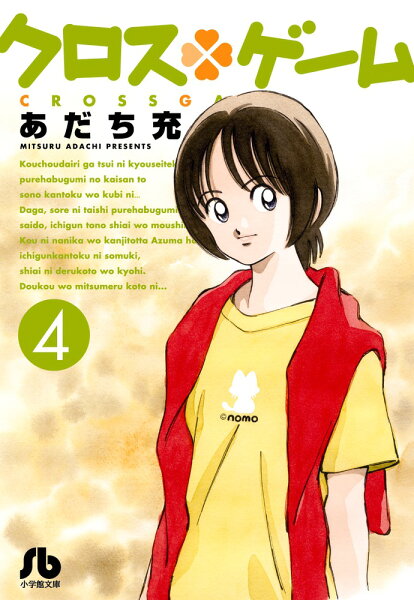
Cross Game
Yu's review of Cross Game — Ko grows up next to the four Tsukishima sisters, loses Wakaba in fifth grade, and spends seventeen volumes chasing the dream she left behind at Koshien.
Sports / Romance
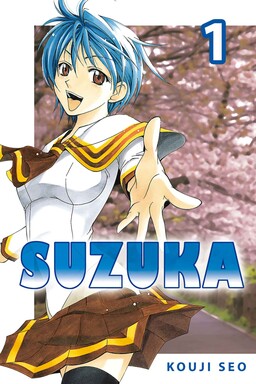
Suzuka
Yu's review of Suzuka — Yamato Akitsuki moves to Tokyo to live at his aunt's apartment complex and immediately falls for his neighbor Suzuka Asahina, a high school track prodigy who is completely closed off emotionally; the series is a romantic sports manga about the difficulty of loving someone who isn't ready to be loved.
Sports / Comedy
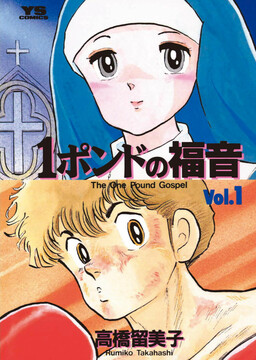
One Pound Gospel
Yu's review of One Pound Gospel — Kōsaku Hatanaka is a genuinely talented featherweight boxer with one catastrophic flaw: he can't stop eating, constantly missing weight for his fights; Sister Angela, a young nun, becomes his most unlikely source of encouragement; Rumiko Takahashi's compact boxing comedy with a warm central relationship.
Written by
Yu
Manga Enthusiast from Japan
I grew up in Japan and manga literally saved me during a tough time in elementary school. My English isn't perfect, but my love for manga is real — and I want to share it with you.
Disclosure: This post contains affiliate links. As an Amazon Associate, I earn from qualifying purchases at no extra cost to you.