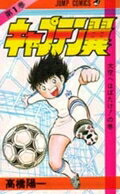
Captain Tsubasa Review: The Manga That Taught a Country to Love Soccer
by Yoichi Takahashi
Read the first volume. If it doesn't hook you, put it down. It'll hook you.
Buy Captain Tsubasa on Amazon →*Affiliate link — I earn a small commission at no extra cost to you.
When I was a kid, I didn't play any sport. I was the boy who got picked last, or not at all, so I stopped showing up to the field entirely. But there was one manga that made me wish I had a ball at my feet, even though I knew I'd never be good at it. That manga was Captain Tsubasa.
I didn't read it as it came out — it finished in Weekly Shonen Jump before I was even born, in 1988. I came to it later, working backwards through the classics that everyone older than me talked about with a kind of reverence. And what struck me wasn't the soccer. It was a boy who loved one thing so completely that the rest of his life just arranged itself around it. I never had that kind of certainty about anything. Reading Tsubasa, for a few hundred pages, I borrowed his.
Quick Take
- The manga credited with igniting Japan's soccer boom in the 1980s — real professionals around the world name it as their inspiration
- Follows prodigy Tsubasa Ozora, who says "the ball is my friend," from a schoolyard duel to the national elementary championship
- All-Ages, family-friendly shonen sports — no licensed English print edition exists, though it's now readable in English digitally
Story Overview
Eleven-year-old Tsubasa Ozora moves to Nankatsu City and goes looking for the local field on day one. He finds the town's genius goalkeeper, Genzo Wakabayashi of Shutetsu Elementary, beating every older challenger that comes at him. Tsubasa, instead of being intimidated, is thrilled — finally, a wall worth breaking down.
What follows is one of the great opening arcs in sports manga. Tsubasa kicks a ball carrying a written challenge all the way from a hilltop to Wakabayashi's house. They square off in the street, where Tsubasa repels the keeper's shot by rolling the ball under a moving bus and into Wakabayashi's arms. Then Roberto Hongo — a retired Brazilian pro who has quietly taken Tsubasa under his wing — feeds him a pass, and Tsubasa's diving header finds the net. Wakabayashi refuses to accept it because it wasn't a real match. That rejection is the engine of the whole early series: Tsubasa abandons his plan to join the powerhouse Shutetsu and enrolls at little Nankatsu Elementary instead, just to beat Wakabayashi on a real pitch.
From there the manga builds toward the All-Japan Boys' tournament. Tsubasa pairs with Taro Misaki to form the "Golden Combi," a passing partnership so fluid the two seem to read each other's minds. The series climbs from that first Nankatsu–Shutetsu showdown to a national final against Kojiro Hyuga's team, and eventually points its hero toward the dream that frames everything: winning the World Cup for Japan.
This is not realistic soccer. Tsubasa's shots stagger keepers; the logic is pure shonen — heart plus training equals the physically impossible. Accepting that is the price of admission, and it's worth paying.
Characters
Tsubasa Ozora — The "heaven-sent child of football." His defining trait isn't talent, it's the totality of his love for the game: "the ball is my friend," he says, and he means it literally. His arc is less about internal change than about pulling everyone around him up to his level. He turns a weak school team into national contenders by sheer gravitational force.
Genzo Wakabayashi — The elite-trained goalkeeper with a personal code: never let a shot in from outside the penalty area. He's introduced as an arrogant prodigy, and his refusal to accept Tsubasa's street goal is what sets the whole rivalry in motion. Over the series he goes from antagonist to rival to one of Tsubasa's most trusted allies.
Taro Misaki — The drifting transfer student whose ball control mirrors Tsubasa's so perfectly that the two instantly click into the Golden Combi. He becomes Tsubasa's closest friend and the other half of Nankatsu's attack.
Kojiro Hyuga — The power forward driven by financial hardship and raw competitive fury. He trains against ocean waves in a storm to forge the Tiger Shot, a straight-line blast of pure power. He's the dark mirror of Tsubasa's joyful play — all teeth and hunger — and their clashes are the emotional peaks of the tournament arcs.
Roberto Hongo — The former Brazil national-team player who became Tsubasa's mentor after a retinal detachment ended his career. He's the one who shapes Tsubasa's technique and worldview, and the man who returns that hilltop ball with a pass at exactly the right moment.
What I Love About It
The opening duel with Wakabayashi is, for me, the soul of the whole thing. Tsubasa doesn't beat the genius keeper with a special move he was born with — he beats him by rolling the ball under a bus and by trusting a pass from Roberto. It's absurd. It's also exactly what the series believes: that imagination and connection beat raw talent. Wakabayashi refusing the goal because "it wasn't a real match" is such a perfect, prideful, kid response that it tells you everything about who he is before he's said three sentences.
What gets me, looking back, is the historical weight of it. When this ran from 1981 to 1988, soccer was not Japan's sport. Baseball was. And yet a generation of children read about a boy and his ball and decided that was what they wanted to do with their lives. Players around the world — the manga is cited as inspiration by names as big as Hidetoshi Nakata, Fernando Torres, and Andrés Iniesta — grew up on Tsubasa. Very few comics can claim they changed what a nation, and then half the world, chose to play. I find that genuinely moving in a way the goalposts-shattering shots could never be.
Memorable Scene ⚠️ Spoiler Warning
The All-Japan Boys' final between Nankatsu and Hyuga's Meiwa. At the end of regular time it's 2–2 — and the symmetry is the whole point: Tsubasa and Hyuga have each scored twice, the two captains mirroring each other goal for goal. Tsubasa's second comes in injury time, dragging his team back from the edge of defeat.
What sticks with me isn't the scoreline, it's the way the manga frames these two boys as equals carved from opposite materials. Hyuga's Tiger Shot is a thing he built out of hardship, hammered into shape against storm waves. Tsubasa's play comes from joy. Watching them cancel each other out, blow for blow, you understand that the series isn't really about winning — it's about two kids who push each other to become more than they could alone. That's the page I think about when people dismiss Captain Tsubasa as just a kids' soccer cartoon.
Pros & Cons
Pros
- A foundational text — it genuinely reshaped Japanese, and global, soccer culture
- The Tsubasa–Wakabayashi rivalry is one of shonen's great opening hooks
- Uncomplicated, sincere love for the game as its emotional core
- All-Ages and completely accessible
Cons
- The physics-defying techniques demand genre buy-in
- 1980s art looks dated next to modern sports manga
- Less psychological depth than something like Blue Lock
- A maze of sequel series of varying quality can confuse newcomers — the over-the-top spectacle is either the charm or the dealbreaker depending on you
Is Captain Tsubasa Worth Reading?
If you want grounded, tactical soccer, look elsewhere. But if you want to read the manga that started the genre — the one Iniesta and Torres grew up on — and you can embrace a boy who treats the ball like a best friend and shots that knock keepers backwards, it's absolutely worth it. Read it as the origin point of every soccer manga that came after.
Official English Translation Status
There is no licensed English-language print edition of the Captain Tsubasa manga, and the much-cited "VIZ" English release is the anime, not the comic. The manga itself has only recently become officially readable in English: Shueisha put out a complete digital bilingual edition in 2020, and the series was added to the free MANGA Plus app in April 2025. So while you can now read it in English digitally, there are no official English paperbacks to buy — the Japanese tankobon remain the way to own it on a shelf.
Where to Buy
No English release yet. That just means you find it before everyone else does.
The Japanese print and digital volumes are the only legitimate way to own Captain Tsubasa on your shelf.
Find the Japanese volumes on Amazon →
This post contains affiliate links. If you purchase through these links, I may earn a small commission at no extra cost to you. As an Amazon Associate, I earn from qualifying purchases.
*Affiliate link — I earn a small commission at no extra cost to you.
More Manga You Might Like
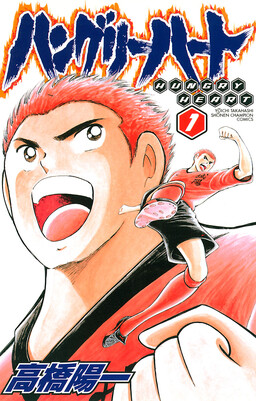
Sports
Hungry Heart Wild Striker
Yu's review of Hungry Heart Wild Striker — Kyōsuke Kanou is a soccer prodigy who quit the sport because of his older brother's overwhelming talent; when he joins a struggling team and meets a dedicated coach, he rediscovers his hunger for the game; a return to pure soccer manga from the Captain Tsubasa creator.
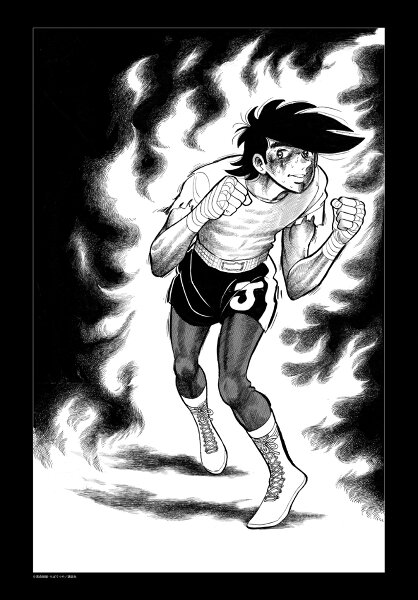
Sports / Drama
Ashita no Joe
Yu's review of Ashita no Joe — Joe Yabuki claws out of the postwar Tokyo slums, is found by a broken-down trainer, and turns boxing into a way to burn himself completely. From Rikiishi's fatal weight cut to the white-ash final scene, this is the manga that taught the whole genre what cost means.
Sports / Drama
Shoot!
Shoot! follows Toshihiko Tanaka, who joins a high school soccer team to fulfill the dying wish of his childhood friend — and finds himself in a sport he barely knows, at a club that was legendary before it collapsed, trying to rebuild something worth the promise he made.
Sports / Drama
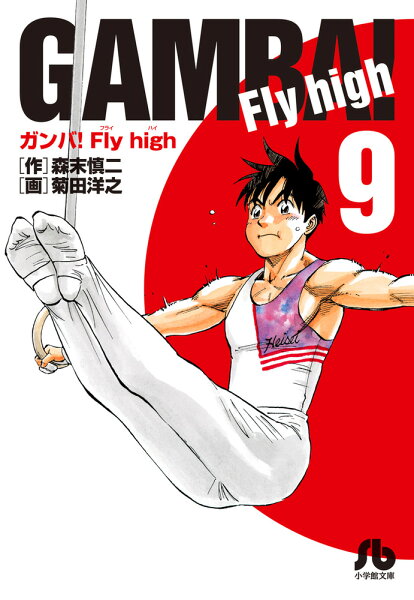
Gamba! Fly High
Gamba! Fly High follows Takeru Fujimaki, a boy with extraordinary natural talent who joins a gymnastics club and discovers that natural ability, without discipline and the right people around you, is not enough to reach the Olympics.
Sports / Drama
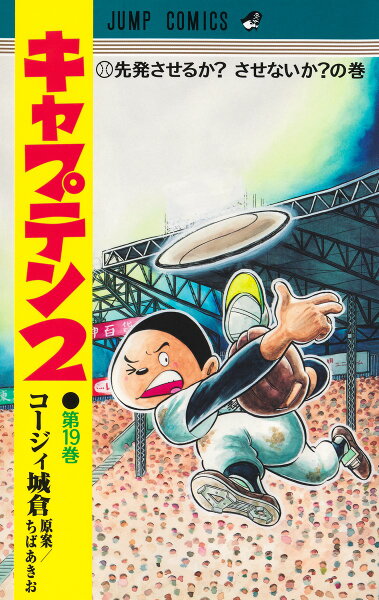
Captain
Captain follows four generations of captains at a weak downtown middle school baseball team — starting with Takao Taniguchi, a former bench player mistaken for a star, who trains himself half to death rather than admit the truth.
Sports / Drama
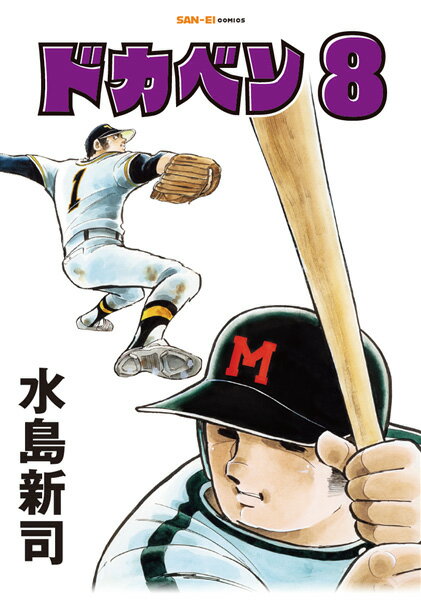
Dokaben
Dokaben follows Taro Yamada, a gentle giant who starts out in his middle school's judo club before becoming the catcher who carries Meikun High School to Koshien. Shinji Mizushima's classic ran in Weekly Shonen Champion from 1972 to 1981.
Written by
Yu
Manga Enthusiast from Japan
I grew up in Japan and manga literally saved me during a tough time in elementary school. My English isn't perfect, but my love for manga is real — and I want to share it with you.
Disclosure: This post contains affiliate links. As an Amazon Associate, I earn from qualifying purchases at no extra cost to you.