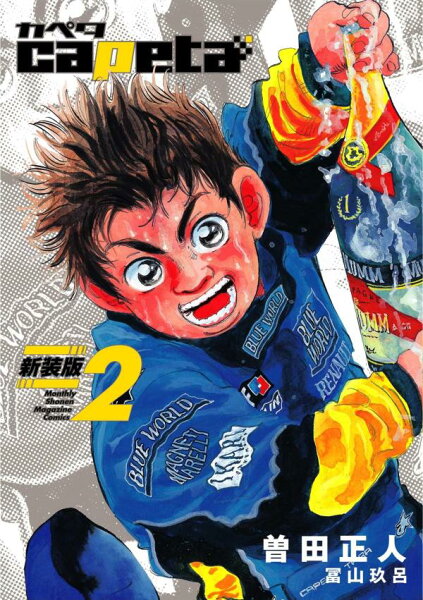
Capeta Review: The Kart a Father Built From Scrap
by Masahito Soda
Read the first volume. If it doesn't hook you, put it down. It'll hook you.
Buy Capeta on Amazon →*Affiliate link — I earn a small commission at no extra cost to you.
When I was small, I didn't have much. We weren't poor in a dramatic way, but there were things other kids had that I just quietly understood I wouldn't get. So the first chapter of Capeta hit a nerve I didn't expect a racing manga to find. A road-construction father, covered in dust, comes home and hands his motherless son a kart he built out of scrap metal he found at a circuit. He can't say "I love you" — men like that rarely can — so he says it in welds and salvaged parts. I read that opening and felt something close in my chest.
I came to Capeta expecting engines and lap times. What I got was a story about a parent giving a kid the one thing he can afford to give: a reason to look forward. That's why I kept reading all the way to volume 32.
Quick Take
- One of the most grounded motorsports manga ever made — Masahito Soda treats money, sponsorship, and access as part of the drama, not background noise.
- The opening — a paving-company father building his son a kart from junk — is one of the great quiet gut-punches in sports manga.
- Age rating: T (Teen). Racing crashes and the early loss of the protagonist's mother, but nothing graphic.
Story Overview
Kappeita "Capeta" Taira loses his mother young and is raised by his father Shigeo, a man who works for a road-paving company and barely knows how to talk to his own kid. One day Shigeo brings home a kart he assembled from discarded parts he scavenged at a circuit. He's clumsy and gruff, but it's the most direct thing he's ever done to reach his son — and it reignites a spark in a boy who had gone numb.
Capeta turns out to be a natural. In his very first race he masters a homemade machine and briefly overtakes Naomi Minamoto, the works-backed prodigy everyone calls the future of Japanese karting. Capeta — too green to even understand that Naomi's kart is in a completely different class from his scrap-built one — can't figure out why he couldn't hold the lead. That confusion is the seed of the whole series: the gap between raw talent and the resources money buys.
From there the manga climbs the racing ladder in real, deliberate steps. Capeta moves from junior karts into senior classes, scraping against constant financial walls, enrolls in the Formula Stella racing school, and eventually takes a national kart championship. As he grows from a child into a teenager, the series pushes him up into formula racing, against rivals from Japan and abroad, building toward a showdown at the Macau Grand Prix. It's a long, patient arc about what it costs — emotionally and literally — to keep climbing.
Characters
Capeta (Kappeita Taira) — A natural talent who is also, as one review put it, his own biggest obstacle. When he locks onto winning, he can tunnel so hard into the race that he loses everything else. His arc is the slow work of turning a gifted, prickly kid into a driver who understands why he races, not just that he's fast. Watching him grow up across the volumes is the spine of the whole thing.
Shigeo Taira — Capeta's father. A road-construction worker who can't articulate affection, so he expresses it through the kart and through showing up. He's the emotional anchor of the early volumes — every sacrifice the family makes is filtered through his quiet, exhausted love.
Naomi Minamoto — Capeta's lifelong rival, a year older, a privileged works-team prodigy trained from childhood. After watching Capeta's first race, Naomi privately marks him as a rival — something Capeta doesn't even know for a long time. Their relationship is the recurring measuring stick of the series: Capeta always feeling Naomi is one step ahead, both of them quietly wanting to finally race each other for real.
Nobu and Monami — Childhood friends who grow into Capeta's team, Nobu taking on the technical/managerial side. They keep the series human-scaled, reminding you this is a kid surrounded by other kids, not a lone genius.
What I Love About It
The kart in chapter one. Soda could have written the standard "boy discovers he's a prodigy" hook, but he frames the whole thing through the father. Shigeo isn't a racing dad living through his son — he's a tired man who found broken parts at a circuit and thought maybe this will make the light come back in my kid's eyes. The manga even says it plainly: bringing home that kart reignites a fire in Capeta that had gone out. I've never forgotten how that landed.
What makes it more than sentiment is that the manga never lets you forget the money. The reason the kart is built from scrap is that they can't afford a real one. The reason Capeta keeps hitting walls in the senior classes is funding. Soda refuses to pretend talent is enough in a sport that is brutally pay-to-play. That honesty — that effort and genius still have to fight economics — is what makes the underdog beats feel earned instead of cheap. It's a racing manga that's really about access, and that's rarer and braver than it sounds.
Memorable Scene ⚠️ Spoiler Warning
Capeta's debut race. He's in a hand-built scrap kart, surrounded by kids on proper machines, and somehow he not only handles the thing — he closes on Naomi Minamoto, the boy everyone's already calling the future of the sport, and briefly gets past him. Then Naomi pulls away, and Capeta is left genuinely baffled, because he doesn't yet know that Naomi's works-grade kart is in another universe from his.
What sticks with me isn't the overtake — it's the not-understanding. Capeta drove at the absolute limit of himself and a machine cobbled from junk, and reality still said not enough. And on the other side, Naomi watches this nobody come at him in a scrap kart and silently decides this is the rival he's been waiting for. Two kids walk away from one race carrying a rivalry neither of them has fully admitted yet. That's the engine that runs all 32 volumes, and it all turns on one race in a homemade kart.
Pros & Cons
Pros:
- Treats the economics of motorsport — funding, sponsorship, machinery gaps — as real drama
- A genuinely moving father-son core in the early volumes
- Long-form growth from child kart racer to formula aspirant that pays off the patience
Cons:
- 32 volumes is a serious commitment, and the pacing is deliberate
- Side characters can feel like stepping stones, and some races collapse into a 1-vs-1 between Capeta and one rival while the rest of the field fades into the background
- It's slow and earnest — that's either the appeal or the dealbreaker depending on you.
Is Capeta Worth Reading?
Yes — if you want a sports manga with weight. It's a patient, big-hearted climb that respects how money and class shape who gets to race, anchored by one of the best father-son openings in the genre. If you need fast payoffs and a deep, evenly-developed cast, its slow pace and Capeta-vs-one-rival focus may wear on you. For everyone else, it's one of the finest motorsports manga ever drawn.
Official English Translation Status
There has never been a licensed English print edition of Capeta — it has never been collected in English volumes you can buy on Amazon. The series is, however, officially available in English digitally through Kodansha's K Manga service (region-limited to the US), where the full run can be read chapter by chapter. If you want a physical copy to own, the Japanese tankōbon are the only print edition that exists.
Where to Buy
There's no licensed English print edition, so the Japanese release is the only legitimate way to own Capeta in print. (If you just want to read it in English, Kodansha's K Manga service carries it digitally in the US.)
This post contains affiliate links. If you purchase through these links, I may earn a small commission at no extra cost to you. As an Amazon Associate, I earn from qualifying purchases.
*Affiliate link — I earn a small commission at no extra cost to you.
More Manga You Might Like
Sports / Drama
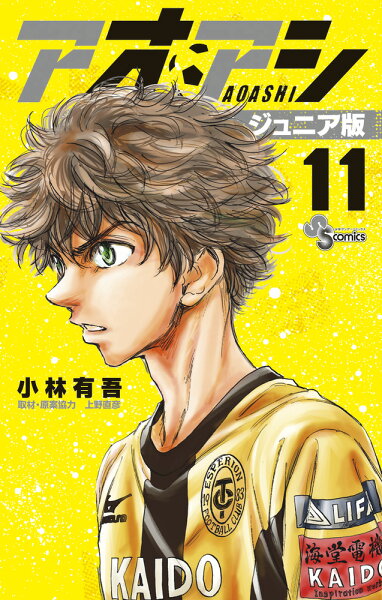
Aoashi
A review of Yuugo Kobayashi's Aoashi — ongoing in Weekly Big Comic Spirits. Ashito Aoi, a rough soccer talent from rural Ehime, is scouted into Tokyo's FC Tokyo youth academy. The series is about learning what modern soccer actually is — through a boy who sees the entire field and has to be taught how to use what he sees. Titan Comics' English edition is ongoing.

Sports / Drama
Gaku: Minna no Yama
Gaku: Minna no Yama follows Habu Gaku, a volunteer mountain rescue worker in the Japanese Alps, and the climbers he saves — or tries to save — as he demonstrates the specific combination of skill, knowledge, and relentless positivity that his work requires.
Sports / Drama
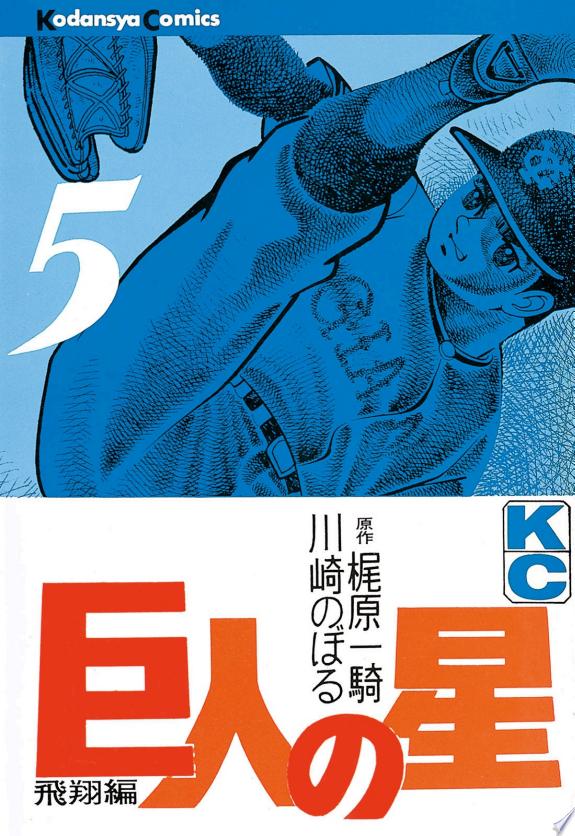
Kyojin no Hoshi
Kyojin no Hoshi follows Hyuma Hoshi, whose father — a former baseball player who never achieved his dream — has raised him from childhood to be a star pitcher for the Yomiuri Giants, through training that borders on abuse and produces a player who may be the greatest — at tremendous personal cost.
Sports / Drama
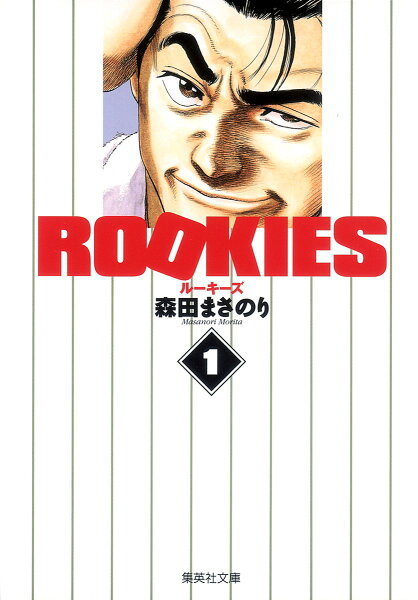
Rookies
Rookies follows Koichi Kawato, a young teacher transferred to Futakotamagawa High School who discovers a baseball club suspended after a violent incident — and decides, against all institutional advice, to coach them back to the Koshien.
Sports / Drama
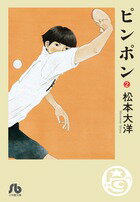
Ping Pong
Yu's review of Ping Pong — two high school table tennis players, one a prodigy who loves the game and one who hates to lose, move toward a tournament while the manga asks what it means to devote yourself to something.
Sports / Drama
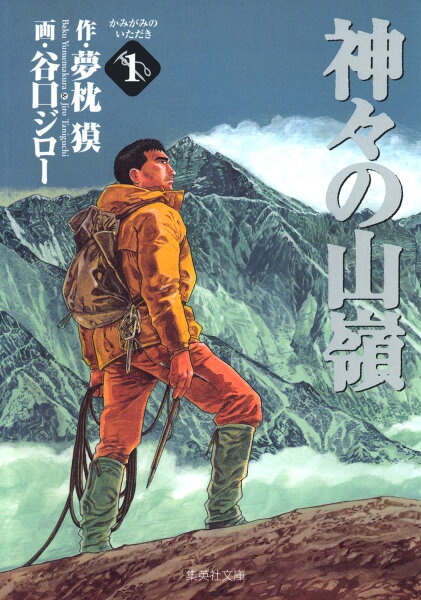
Kamigami no Itadaki
Kamigami no Itadaki is Jiro Taniguchi's 5-volume adaptation of Baku Yumemakura's mountaineering novel — Fukamachi, a journalist following the trail of a possibly-found camera that may prove George Mallory reached Everest's summit in 1924, with a Japanese alpinist's parallel obsession driving the story.
Written by
Yu
Manga Enthusiast from Japan
I grew up in Japan and manga literally saved me during a tough time in elementary school. My English isn't perfect, but my love for manga is real — and I want to share it with you.
Disclosure: This post contains affiliate links. As an Amazon Associate, I earn from qualifying purchases at no extra cost to you.