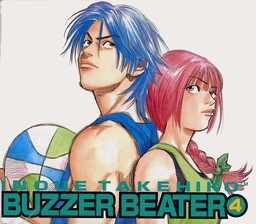
Buzzer Beater Review — Inoue's Full-Color Basketball Manga Set in Space
by Takehiko Inoue
Read the first volume. If it doesn't hook you, put it down. It'll hook you.
Buy Buzzer Beater on Amazon →*Affiliate link — I earn a small commission at no extra cost to you.
I came to Buzzer Beater the way most people do: I'd just finished Slam Dunk for the second time and I couldn't accept that it was over. I went looking for anything else Takehiko Inoue had drawn with a basketball in it. That's how I found out that after he ended his most famous work, he did something completely strange — he took the same love of the game and launched it into outer space, in full color, on an ESPN website.
I expected a footnote. A curiosity. Something I'd skim and forget. Instead I got pulled in by the same thing that hooks everyone with Inoue: a kid with a chip on his shoulder, a ball in his hands, and nothing to lose. Buzzer Beater is shorter and weirder than Slam Dunk, and it never got the love it deserved in the West. But it's pure Inoue, and I'm glad I chased it down.
Quick Take
- Takehiko Inoue's full-color sci-fi basketball manga — Earth's all-human team fights to break into the alien-dominated Intergalactic League
- Made after Slam Dunk, not before — it's Inoue stretching his legs, not a warm-up
- Age rating: T (Teen) — clean sports action with mild sci-fi violence, safe for most readers
Story Overview
Set hundreds of years in the future, basketball — born on Earth — has become the dominant sport across the entire universe. The pinnacle is the Intergalactic League, and it's ruled almost entirely by the Gol species. There isn't a single human player at that level. Earth, the birthplace of the game, has been completely shut out of its own sport.
An elderly millionaire named Yoshimune decides to change that. He pours his personal fortune into building the strongest possible all-Earth team to crash the cosmic league. The face of that team becomes Hideyoshi — a blue-haired street kid scraping by playing pickup ball, with athletic ability that doesn't make sense for his age. His raw speed gets him pulled out of the slums and onto the roster.
From there the manga is built around the underdog structure Inoue does better than almost anyone: a ragtag human team, physically outmatched by alien opponents, grinding through training and games to prove Earth belongs. Across the run, Hideyoshi starts suffering mysterious headaches — at first dismissed as growing pains, later revealed to be tied to his heritage, hinting he isn't entirely human. The series ran 80 chapters and ends open-ended rather than with a tournament-style finale, leaving the team mid-climb against higher-level Space League opponents.
Characters
Hideyoshi is the engine. A street child living rough, wearing jersey number 1 and playing point guard, with reflexes and speed that feel inhuman — because, it turns out, they partly are. His arc is the familiar Inoue shape of a proud, gifted kid learning that talent alone doesn't carry a team, but the sci-fi twist of his half-Gol heritage gives it a layer Slam Dunk never had.
Chache is the granddaughter of Yoshimune, the millionaire who founded the team. She's carrying her grandfather's dream forward, and she and Hideyoshi spend a lot of the series butting heads — the energetic foil to his attitude.
DT is the team's mysterious veteran and captain. He's the strategic brain, and his nickname comes from "Dream Time" — the idea that when he's running the floor, his teammates play better than they thought possible, like they've slipped into a dream. He's the calm, high-IQ counterweight to Hideyoshi's raw instinct.
The supporting roster rounds out a believable starting five: Ivan, a physically mature shot-blocker; Mo, a former sumo wrestler who dominates the paint as a center; and Maru, a sharpshooter known for deadly accuracy. They face off against alien squads — the Swallows, the Smoky Queens, and others — each designed to present a different physical or tactical problem the humans have to solve.
What I Love About It
What I love most is that Buzzer Beater proves Inoue's basketball storytelling wasn't dependent on realism. Slam Dunk works partly because it's grounded — real rules, real schools, real exhaustion. Strip all that away, put the game in space against seven-foot aliens, and the thing that makes Inoue special survives completely intact. The kinetic, you-can-feel-the-squeak-of-the-floor energy of his game sequences is right there on the page, in full color this time.
And the full color matters more than I expected. This wasn't a print manga that got colorized — it was born digital and colored, published on a website in 1996, which is wild for the era. The new wideban edition even includes a full illustration gallery of that original color art. Seeing Inoue's linework with actual color underneath it changes how the motion reads. It's the closest thing to watching him paint a basketball game in motion, and it's a side of him most readers who only know the black-and-white Slam Dunk volumes never get to see.
Memorable Scene ⚠️ Spoiler Warning
Spoiler Warning: The moment that stuck with me isn't a buzzer-beating shot — it's the slow reveal of Hideyoshi's headaches. Early on they're written off as growing pains, the kind of thing you'd shrug at in any sports story. Then the manga quietly turns them into the central mystery: the pain is tied to his heritage, the hint that the human team's best hope isn't fully human at all.
What makes it land is the restraint. Inoue doesn't hammer it. He lets the discomfort sit in the background through training and games until you realize the whole premise — "Earth's humans against the alien league" — has a crack running through it, embodied in the protagonist himself. In a manga that could have coasted on alien-dunk spectacle, that thread of unease is what gives it weight, and it's the thing I thought about long after the open ending left the team still climbing.
Pros & Cons
Pros:
- Unmistakably Inoue — the game sequences carry the same energy as Slam Dunk
- Full-color art, born digital, unlike anything else in his catalog
- A tight, fast underdog premise with a genuine sci-fi hook
- Short and complete at four volumes (two in the wideban edition)
Cons:
- The ending is open-ended — it stops rather than resolves
- Sci-fi world-building is sketched, not deep
- Lives permanently in Slam Dunk's shadow, which it can't fully escape
- The short length means most of the supporting cast stays thin — if you want the deep, slow character work of Slam Dunk or Real, this won't scratch that itch.
Is Buzzer Beater Worth Reading?
If you love Inoue and want to see his basketball instincts working in a setting nobody expected — full color, in space, against aliens — yes, absolutely. It's a fast, fascinating read. If you're coming in cold expecting another Slam Dunk-length emotional epic, manage your expectations: it's a sharp short story, not a saga.
Art Style
This is the headline. Buzzer Beater is full color and was drawn for the web, so it doesn't look like any of Inoue's print work. The basketball choreography has his trademark sense of weight and speed, and the alien designs give him room to play with body types and silhouettes you'd never see in a high-school gym. The wideban re-release was retrimmed for its larger page size and packs 40 chapters per volume, with an illustration gallery collecting the original color art.
Official English Translation Status
There's no licensed English print edition and no VIZ release — so you won't find an English paperback on Amazon.com. The only official English version is digital, via the subscription platform Manga Planet, which licensed the series in 2021. If you want to physically own it, the Japanese print editions (the 4-volume original or the 2-volume wideban) are the way to do that, and they're available on Amazon Japan.
Similar Manga
| Title | Its Approach | How Buzzer Beater Differs |
|---|---|---|
| Slam Dunk | Grounded high-school basketball, black and white, long-form character drama | Inoue's other game — sci-fi, full color, short, set in space |
| Real | Wheelchair basketball, serious and grounded, adult themes | Far lighter and more fantastical; pure underdog sports-action |
| Dragon Ball | Shōnen action with escalating alien/cosmic opponents | Buzzer Beater channels that escalation into basketball games, not fights |
Where to Buy
No English release yet. That just means you find it before everyone else does.
If you read Japanese, you can grab the print editions from Amazon Japan:
Get Buzzer Beater on Amazon Japan →
For an official English version, the only route is digital through Manga Planet's subscription.
This post contains affiliate links. If you purchase through these links, I may earn a small commission at no extra cost to you. As an Amazon Associate, I earn from qualifying purchases.
*Affiliate link — I earn a small commission at no extra cost to you.
More Manga You Might Like
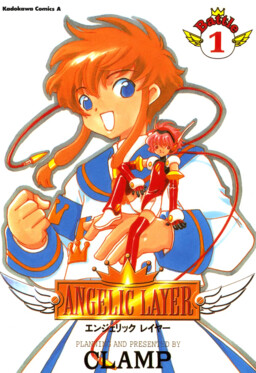
Sports / Sci-Fi
Angelic Layer
A review of CLAMP's Angelic Layer — 5 volumes in Monthly Shōnen Ace. Misaki Suzuhara arrives in Tokyo and discovers Angelic Layer, a competition game where small battle dolls fight under the mental and physical direction of their owners. Dark Horse Comics' English edition is complete.
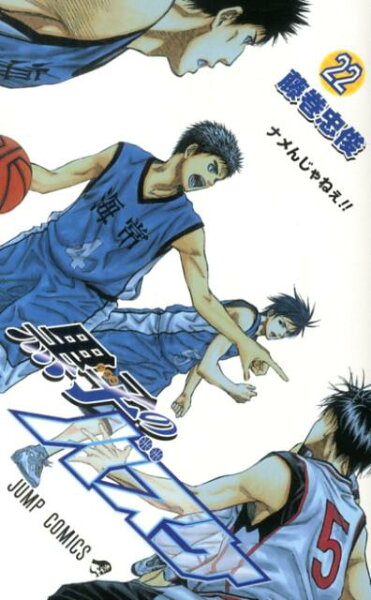
Sports
Kuroko's Basketball
A review of Kuroko's Basketball — the Shonen Jump sports manga about a nearly invisible player who was the phantom sixth member of the legendary Generation of Miracles team.
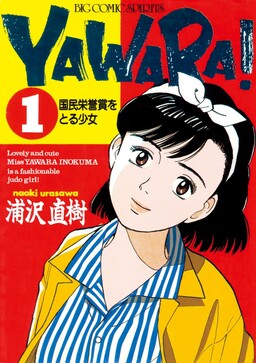
Sports / Romance
Yawara! A Fashionable Judo Girl
Yu's review of Yawara! — Yawara Inokuma is the granddaughter of a legendary judo master who has trained her since childhood to be a world champion; she has extraordinary talent and absolutely no desire to compete; what follows is her journey toward the Barcelona Olympics despite her own resistance.
Sports / Romance
Touch
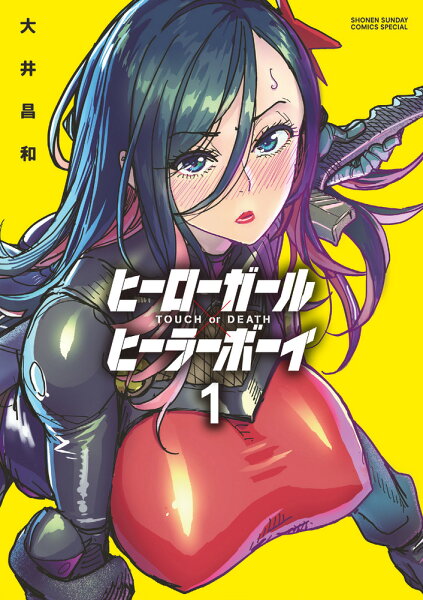
Twin brothers Tatsuya and Kazuya Uesugi live next door to Minami Asakura. Kazuya is the baseball genius. Tatsuya is the slacker. Minami's dream is to see one of them pitch at Koshien. Then volume 6 happens, and Mitsuru Adachi's 1981 baseball manga becomes the work that defined Japanese sports manga forever.
Sports / Drama
Kyojin no Hoshi
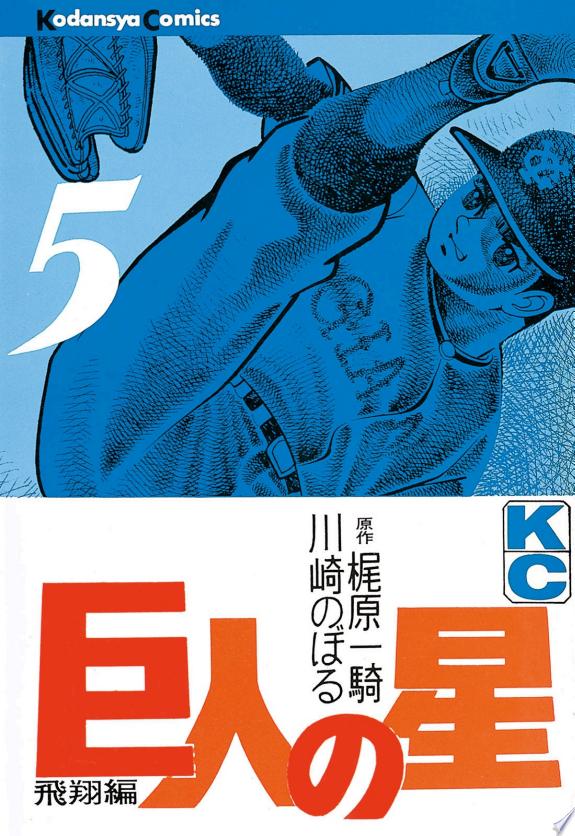
Kyojin no Hoshi follows Hyuma Hoshi, whose father — a former baseball player who never achieved his dream — has raised him from childhood to be a star pitcher for the Yomiuri Giants, through training that borders on abuse and produces a player who may be the greatest — at tremendous personal cost.
Sports / Drama
Rookies
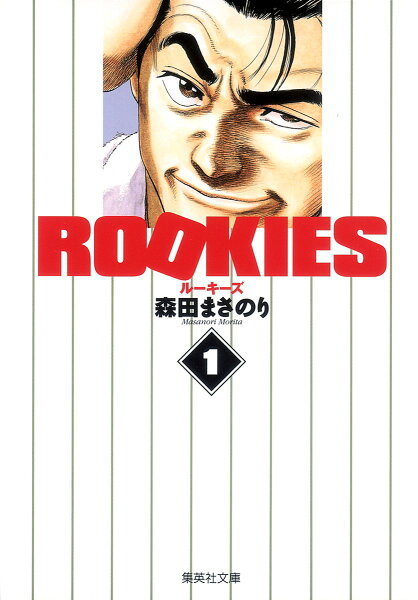
Rookies follows Koichi Kawato, a young teacher transferred to Futakotamagawa High School who discovers a baseball club suspended after a violent incident — and decides, against all institutional advice, to coach them back to the Koshien.
Written by
Yu
Manga Enthusiast from Japan
I grew up in Japan and manga literally saved me during a tough time in elementary school. My English isn't perfect, but my love for manga is real — and I want to share it with you.
Disclosure: This post contains affiliate links. As an Amazon Associate, I earn from qualifying purchases at no extra cost to you.