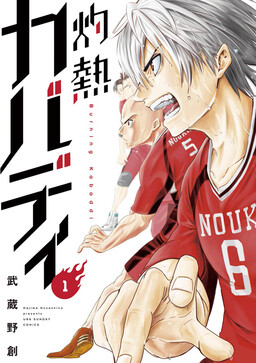
Burning Kabaddi Review: A Sport Where You Have to Hold Your Breath to Score
by Sou Musashino
Read the first volume. If it doesn't hook you, put it down. It'll hook you.
Buy Burning Kabaddi on Amazon →*Affiliate link — I earn a small commission at no extra cost to you.
The first time I heard the word "kabaddi," I laughed. Out loud. I was scrolling late at night and someone described it as "the sport where you chant your own name while tackling seven people," and I assumed it was a joke. It is not a joke. It is a real sport played by millions of people across India, Bangladesh, Pakistan, and Nepal, and it is at the Asian Games. And then I read Burning Kabaddi, and within three chapters I had completely stopped laughing and started holding my own breath every time a raid began.
I came to this manga as a soccer kid who quit. I played until middle school, loved it, and then one season something curdled and I just couldn't anymore. So Tatsuya Yoigoshi — a genuine soccer prodigy who burned out and swore he was done with sports forever — hit me somewhere personal. I did not expect a manga about a South Asian breath-holding tag sport to be the thing that reminded me why I ever loved competing. But it was.
Quick Take
- Kabaddi is the ancient South Asian team sport where a raider holds their breath, chants "kabaddi kabaddi kabaddi," enters the enemy half, tries to touch as many defenders as possible, and must get back across the center line before they run out of air. It is far more tactical and brutal than it sounds.
- It works as both a crash course in a sport almost no Western reader knows and a real sports drama about a burned-out ex-prodigy who gets tricked into loving competition again.
- 31 volumes, completed in Japan, won the 70th Shogakukan Manga Award. Age rating: T (Teen) — physical and intense, but nothing graphic.
Story Overview
Tatsuya Yoigoshi was the kind of soccer player adults whisper about — national-tournament level in middle school, the future supposedly locked in. By high school he'd quit completely, telling himself he was finished with team sports, content to be a live streamer and stay out of everything. Then a small, oddly intense first-year named Sōma Azemichi keeps inviting him to watch the kabaddi club.
Yoigoshi only ends up joining because he loses. Azemichi challenges him to a one-on-one and beats him, and the wager was that if Yoigoshi lost, he'd join. That's the hook of the whole series: he doesn't choose kabaddi, he's outmaneuvered into it, and his pride won't let him walk away once he's been beaten by a sport he was looking down on.
From there the structure is classic but well-built: Nōkyō High School's club is a ragtag group with one genuinely terrifying ace, and the series moves through internal training, practice matches against stronger schools, and then the real escalation of regional and national tournaments. The opponents get progressively more monstrous, culminating in players from the "World Group" (世界組) — the elite national middle-school selection who played at an international level — and Yoigoshi slowly transforms from a sneering skeptic into someone who genuinely loves the sport and, harder for him, learns to trust a team.
Characters
Tatsuya Yoigoshi — The burned-out prodigy. His arc isn't "falls back in love with sports" in some general way; it's specifically that kabaddi's unfamiliarity disarms his cynicism. He has nothing to be jaded about because he's a total novice, and his soccer instincts (footwork, spatial reading) turn out to translate. The real growth is emotional: a kid who quit a team sport because he stopped trusting teams learns to communicate, including through the coded hand signals the club uses mid-raid.
Masato Ōjō — The captain, and the reason the series has teeth. A third-year with over ten years of kabaddi experience and a former World Group member, he is small and frail-looking — 171cm, 58kg, dark circles under his eyes — and absolutely lethal. Normally calm, he flips into a state his opponents call the "Demon King" (魔王) the moment he attacks. He doesn't rely on muscle; he reads an opponent's breathing and timing and deliberately offsets it, scoring with counter-style touches that look impossible. His stated motivation is almost embarrassingly pure: he just loves kabaddi, more than the person across from him does, and the manga keeps proving him right.
Sōma Azemichi — The first-year who drags Yoigoshi in by beating him. From a mountain pottery-kiln family, short and powerful, with uncanny sensitivity to distance and positioning despite having no real athletic background. He's the catalyst for the entire story.
Kei Iura — The vice-captain and the team's strategic brain. He delivers much of the early rules explanation in-story, and his long partnership with Ōjō anchors the club's tactical identity. Rounding out the core are Kyōhei Misumi, a reformed delinquent turned powerful defensive specialist, and Shinji Date, a muscular former baseball pitcher on defense.
What I Love About It
The thing this manga does that I've never seen another sports manga pull off is make a single breath a source of unbearable tension. In most sports manga the clock or the score is the pressure. In kabaddi, the pressure is the air in the raider's lungs. The chant "kabaddi kabaddi kabaddi" isn't flavor — it's the proof that the raider hasn't inhaled, and the instant it stops, the raid is dead. Musashino draws raids as this tightening loop: the raider is out of breath, surrounded, has to either score now or lunge back across the line, and the defenders are physically grabbing and dragging to stop the escape. I genuinely caught myself not breathing.
What sells it is that the manga refuses to treat kabaddi as a novelty. Iura's early explanations of raiders, antis, the cant, and the struggle to cross back are folded into actual matches instead of being dumped as a lecture, so you learn the rules by watching them cost someone a point. And then it gives you Ōjō, whose whole game is built on reading the exact thing the sport is about — your breath and your timing — and turning it against you. The first time he "wins on love," outlasting an opponent purely because he wants it more, it shouldn't work as a line. It works completely, because the breath-holding mechanic has already made love-of-the-sport into something measurable: who's willing to suffer one more second without air.
Memorable Scene ⚠️ Spoiler Warning
The Kanto tournament third-round match against Sōwa High brings Ōjō face to face with Ayumu Rokugen — his rival from their World Group days, a player whose skill genuinely matches his. It's the fight the series had been building Ōjō toward: not a curbstomp, but an actual equal. They trade counters, feints, and lightness, two raiders reading each other's breathing in real time, neither able to fully shut the other down.
It goes to overtime. Ōjō pulls out four points in the extension and screams that it's the power of his love for kabaddi that's carrying him through — and after dozens of chapters of him quietly out-suffering everyone, the line lands like a thesis statement instead of a punchline. That's the panel I think about. A frail kid with dark circles under his eyes, lungs screaming, deciding he loves this stupid breath-holding sport more than the most talented person he's ever faced, and that being literally enough to win.
Pros & Cons
Pros
- Kabaddi turns out to be one of the most tense, viscerally specific sports a manga can be built on — the breath mechanic is genius
- The burned-out-prodigy premise is handled with more emotional honesty than the genre usually bothers with
- The rules are taught through play, not lectures, so you're never bored learning
- 31 completed volumes give the team and the tournaments room to actually breathe (no pun intended)
Cons
- The early volumes have to do real explaining, so they're slower than the explosive later matches
- There is no licensed English edition, so reading it legally in English isn't possible yet
- It is wall-to-wall sports — if you want romance or much life outside the court, this isn't that
- The sweaty, full-contact intensity is the whole point — that's either exactly your thing or completely not, and this one won't work for everyone.
Is Burning Kabaddi Worth Reading?
Yes — if you want a sports manga that takes a sport you've never thought about and makes you care about a single held breath. It's a tense, big-hearted underdog story carried by one of the best "ace" characters in sports manga. The catch is purely access: there's no official English release, and the early volumes ask for a little patience while it teaches you the rules.
Where to Buy
There's no licensed English edition yet — the Japanese print and digital release is the only legitimate way to read it. Which honestly just means you're early.
Find the Japanese volumes on Amazon →
Similar Manga
| Title | Its Approach | How Burning Kabaddi Differs |
|---|---|---|
| Haikyu!! | Underdog volleyball team climbs toward nationals with a strong ensemble | Built on a far more obscure sport and a single breath-holding raider as the unit of tension, not rallies |
| Yowamushi Pedal | A reluctant kid discovers an unexpected athletic passion (cycling) | Yoigoshi is a burned-out ex-prodigy dragged in by losing a bet, not a fresh novice |
| All Out!! | Physical full-contact team sport (rugby) with bodies colliding | Kabaddi's contact is one raider versus a whole defense, with air running out as the clock |
Where to Start
Volume 1. It opens with Yoigoshi's recruitment and the bet that traps him, and front-loads the rules so the later matches hit at full speed.
This post contains affiliate links. If you purchase through these links, I may earn a small commission at no extra cost to you. As an Amazon Associate, I earn from qualifying purchases.
*Affiliate link — I earn a small commission at no extra cost to you.
More Manga You Might Like

Sports
Dear Boys
Yu's review of Dear Boys by Hiroki Yagami — a basketball team suspended after its captain punched the coach, down to five players, gets one stubborn transfer named Aikawa who drags them back toward the Inter-High. The manga is unlicensed in English; only the anime ran as Hoop Days.
Sports
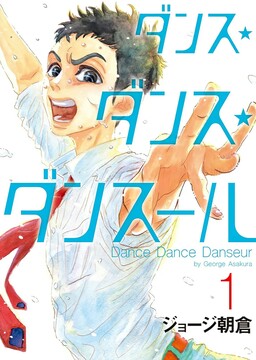
Dance Dance Danseur
Yu's review of Dance Dance Danseur — Junpei Murao buried his love of ballet after his father died because boys are supposed to be tough. Then a girl named Miyako and a strange, brilliant dancer named Luou pull it back out of him. George Asakura's seinen about what it costs a teenage boy to dance.
Sports
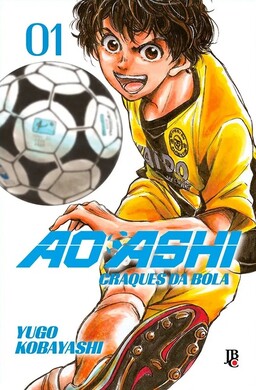
Ao Ashi
Yu's review of Ao Ashi — Ashito Aoi is recruited to the Tokyo City Esperion youth academy with a rare gift: he can see every player on the field simultaneously. But his coach already knows he is not a striker. The best soccer manga in English.
Sports / Comedy
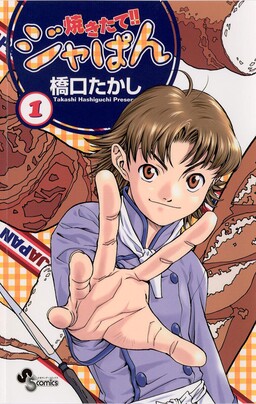
Yakitate!! Japan
Yu's review of Yakitate!! Japan — Kazuma Azuma has supernatural hands warm enough to activate yeast perfectly, and his dream is to create a national bread for Japan; the series applies shonen battle manga structure to competitive bread-baking with completely committed absurdist comedy.
Sports / Comedy
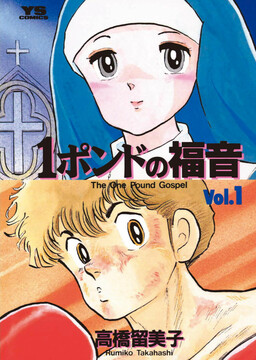
One Pound Gospel
Yu's review of One Pound Gospel — Kōsaku Hatanaka is a genuinely talented featherweight boxer with one catastrophic flaw: he can't stop eating, constantly missing weight for his fights; Sister Angela, a young nun, becomes his most unlikely source of encouragement; Rumiko Takahashi's compact boxing comedy with a warm central relationship.
Sports
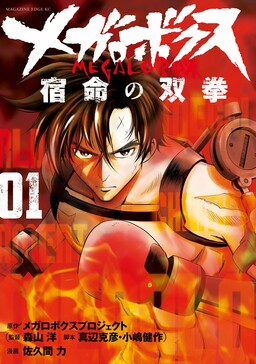
Megalo Box
Yu's review of Megalo Box — in a future where boxing is enhanced by mechanical exoskeletons, an undocumented fighter called Junk Dog challenges Megalonia, the world championship tournament; manga adaptation of the 50th anniversary Ashita no Joe project about a fighter with nothing to lose.
Written by
Yu
Manga Enthusiast from Japan
I grew up in Japan and manga literally saved me during a tough time in elementary school. My English isn't perfect, but my love for manga is real — and I want to share it with you.
Disclosure: This post contains affiliate links. As an Amazon Associate, I earn from qualifying purchases at no extra cost to you.