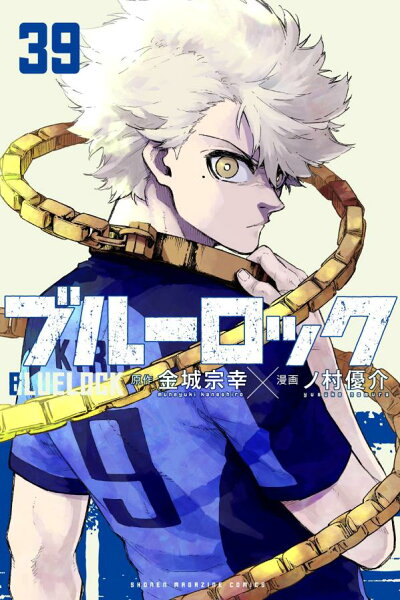
Blue Lock Review: Three Hundred Strikers, One Spot, and the Ego to Claim It
by Muneyuki Kaneshiro (story) / Yusuke Nomura (art)
Read the first volume. If it doesn't hook you, put it down. It'll hook you.
Buy Blue Lock on Amazon →*Affiliate link — I earn a small commission at no extra cost to you.
I grew up loving soccer manga that told me the same thing over and over: pass to your friend, trust your team, and the ball will find the net. As a kid who had no team and no friends, I believed it because I wanted to. Then I read Blue Lock, and a coach named Ego stood in front of 300 boys and said the exact opposite. He said the team is a lie you tell yourself so you never have to take the shot. He said the reason Japan loses is that nobody in the country is selfish enough to want the goal more than they want to be liked.
I felt that one in my chest. The whole comfortable message I'd been raised on got turned inside out on page one, and I couldn't put it down.
Quick Take
- 300 of Japan's best high school strikers get locked in a facility where losing a round means you can never represent the country again — and only one of them comes out as Japan's striker
- A soccer manga that treats ego as a serious tactical and psychological subject, not just a character flaw to be cured
- Ongoing and currently one of the biggest manga in the world; ageRating is T (Teen) — intense psychologically, but not graphic
Who Is This Manga For?
- Soccer fans who want a manga that actually understands the sport tactically
- Readers who like psychological warfare layered on top of the physical match
- Anyone who finds the standard "teamwork always wins" sports manga a little too tidy
- Fans of a huge cast of rivals who each feel genuinely distinct
Story Overview
Japan crashes out of the World Cup near the bottom of the table. The Japan Football Union decides the problem isn't talent — it's culture. Japanese soccer prizes harmony over ambition, the pass over the shot, the group over the individual who dares to want it all. So they hire a strange, theatrical strategist named Jinpachi Ego to run an experiment called Blue Lock. Three hundred of the country's top high school strikers are sealed in a facility and pushed through escalating elimination rounds. The last striker standing becomes Japan's representative — and, Ego claims, will be built into the best striker in the world.
Yoichi Isagi arrives as one of those 300. His story starts with a wound: in his high school's biggest match, with the goal in front of him, he chose the safe pass to a teammate instead of shooting himself. The teammate fluffed it. They lost. Isagi spends the early chapters convinced he made the unselfish, correct choice — and Ego's entire thesis is that this "correct choice" is exactly the disease killing Japanese soccer.
From there the manga keeps escalating: the opening tag-style elimination, the team-vs-team selection rounds, the brutal Second Selection where players steal each other onto their squads, and eventually a clash with the U-20 Japan national team that the Blue Lock boys aren't supposed to be able to touch. What keeps it from being a simple tournament grind is that the definition of "good" keeps changing. Every round rewards one kind of genius, then exposes that genius's ceiling and demands a new one.
Characters
Yoichi Isagi — The least flashy person in the building. He has no overwhelming physical gift, so his edge has to be his brain. Across the rounds he develops a spatial-awareness "weapon" — reading the whole field, sensing where the empty space and the blind spots are, positioning himself where the ball is about to be rather than where it is. Later he absorbs other players' strengths into that vision (the manga frames this as his evolving "metavision"). His arc is the slow discovery that his unremarkable-ness is the talent: he can copy and combine, and become the player who decides the moment.
Meguru Bachira — Isagi's first real friend and rival, a pure-instinct dribbler. As a lonely kid he invented an imaginary "monster" — an idealized version of himself — and plays as if chasing it. His arc is about whether raw joyful instinct is enough at the highest level, and about eventually letting the monster go and owning the ego as his own.
Seishiro Nagi — A lazy genius who would rather play video games than do anything that requires effort. He only picks up soccer because Reo Mikage, a rich classmate, sees Nagi casually trap a falling phone on his foot and decides this is the talent he wants to build a dream around. Nagi finds soccer interesting precisely because it's unpredictable in a way he can't instantly master. His arc is the question underneath the whole manga: does he play for Reo, who carried him here, or for himself?
Rin Itoshi — The cold, technically flawless rival, and arguably the most complete striker in Blue Lock. He started loving soccer because of his older brother Sae, who then went to Spain and crushed Rin's belief in him. Now Rin is driven by the need to surpass and humiliate Sae, and he insists he's fine while bristling at his brother's name.
Jinpachi Ego — The coach and the engine of the whole thesis. He's deliberately provocative and not always right, and the manga is honest about where his philosophy holds up and where it's pure cruelty dressed as science.
Art Style
Nomura's match art is the best argument for Blue Lock. Soccer is hard to draw because so much of it is about space and where everyone isn't — and Nomura makes that legible. He can diagram a developing play, show you every player's line of sight and what they're reading, and still make it explode with momentum when the shot finally comes. The roster of 300 could have been a blur, but the character designs are wild and varied enough that you can actually track who's who across overlapping storylines.
Cultural Context
The premise isn't pure fantasy. Japanese soccer has genuinely argued with itself about whether its players are too team-first, too reluctant to take individual responsibility in the decisive seconds of a match. Blue Lock takes that real debate and pushes it to a deliberately extreme, almost villainous conclusion — that the cure is to manufacture a striker selfish enough to win a World Cup alone. It's designed to provoke, and it works.
What I Love About It
I love that Blue Lock keeps moving the goalposts on what "good at soccer" even means. The first elimination rewards one kind of intelligence. The next round reveals the ceiling of that intelligence and introduces a completely different one. Every time Isagi thinks he's finally cracked what the best striker is, the manga shows him a player built on something he never considered, and he has to start understanding the game again from a new angle.
The concept of "weapons" — each player's one irreplaceable quality — is the best framing of athletic individuality I've found in a sports manga. Isagi's weapon isn't speed or strength or a signature trick. It's the way he reads space: standing in the blind spot, sensing the gap before it opens, arriving where the ball is going instead of chasing where it's been. Watching that one quiet ability get sharper round after round, and then get fused with things he steals from stronger players, is far more satisfying to me than any "I trained harder than you" power-up. It rewards rereading, because once you know what he's seeing, you can spot it building several pages early.
Memorable Scene ⚠️ Spoiler Warning
The U-20 match is the moment the whole experiment stops being theoretical. The Blue Lock kids are thrown against the actual U-20 Japan national squad — the players the Football Union has already decided are the future — and they're not supposed to stand a chance.
The detail that stuck with me is Rin shutting down his own brother. Sae Itoshi is the genius who broke Rin's heart and left for Spain, and in the dying minutes Rin doesn't beat him with more talent — he beats him with study. He's tracked Sae's habits closely enough to bait out Sae's favorite move and then kill it, neutralizing the dribble the rest of the field couldn't touch. Watching a brother weaponize years of resentment into a single perfectly-timed read, against the one person he most wanted to surpass, is exactly the kind of emotional-tactical fusion this manga does better than anyone. It's not just a great steal. It's a whole relationship collapsing into one tackle.
Pros & Cons
Pros
- The most tactically sophisticated soccer manga I've read
- A massive rival cast where every major player still feels like a distinct person
- Psychological depth that actually goes somewhere instead of being window dressing
- Art that renders soccer as a readable, spatial game
Cons
- Ongoing and long — it's past 38 volumes in Japan and the story hasn't concluded
- The huge cast and overlapping storylines can be hard to track
- You have to accept Ego's extreme "selfishness wins" framing on its own terms to enjoy it — that's either the hook or a dealbreaker depending on you
Is Blue Lock Worth Reading?
Yes — if you want a soccer manga that takes both the brain and the ego of the sport seriously. It's the best-drawn, most tactically clever sports series I've read in years, with a cast of rivals you'll actually remember. The catches are that it's long, still ongoing, and built on a deliberately provocative premise you have to buy into. If that premise excites you, nothing else scratches the same itch.
What English-Speaking Fans Say
Blue Lock is one of the most popular manga in the world right now, with an especially huge following among Western soccer fans and across Southeast Asia and Europe. The anime adaptation pushed it even further into the mainstream. English readers most often praise the psychological complexity, the sheer variety of the rivals, and how genuinely smart the soccer sequences are compared to typical sports series.
Similar Manga
| Title | Its Approach | How Blue Lock Differs |
|---|---|---|
| Haikyu!! | Volleyball built on a sincere teamwork thesis | Blue Lock argues the opposite — individual ego over the group |
| Slam Dunk | A delinquent grows up through basketball and a team | Blue Lock is colder and more systemic, less about heart, more about edge |
| Ao Ashi | Realistic soccer about reading the game and the wider pitch | Blue Lock is heightened and ruthless, a striker-only deathmatch rather than grounded development |
Reading Order / Where to Start
Volume 1. The premise lands in the first chapter and the elimination structure makes the order obvious. There's a Nagi-focused spin-off (Episode Nagi) you can read after you've met him, but it's optional.
Official English Translation Status
Kodansha USA publishes the ongoing series in English. Digital volumes are well ahead — into the high 30s — while a re-launched print/omnibus program is catching the physical editions up. New volumes keep coming on a regular schedule.
Format Comparison
| Format | Notes |
|---|---|
| Individual Volumes | Standard release; digital is furthest along |
| Digital | Great for this one — zooming in on the tactical diagrams is genuinely useful |
| Physical / Omnibus | Kodansha USA is running an omnibus program to catch print up to Japan |
Where to Buy
Read the first volume. If it doesn't hook you, put it down. It'll hook you.
This post contains affiliate links. If you purchase through these links, I may earn a small commission at no extra cost to you. As an Amazon Associate, I earn from qualifying purchases.
*Affiliate link — I earn a small commission at no extra cost to you.
More Manga You Might Like
Sports / Drama
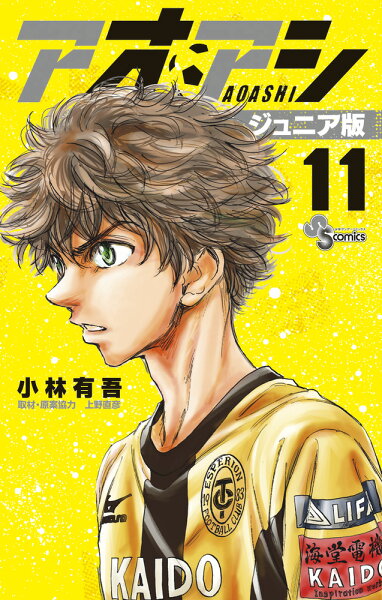
Aoashi
A review of Yuugo Kobayashi's Aoashi — ongoing in Weekly Big Comic Spirits. Ashito Aoi, a rough soccer talent from rural Ehime, is scouted into Tokyo's FC Tokyo youth academy. The series is about learning what modern soccer actually is — through a boy who sees the entire field and has to be taught how to use what he sees. Titan Comics' English edition is ongoing.
Sports
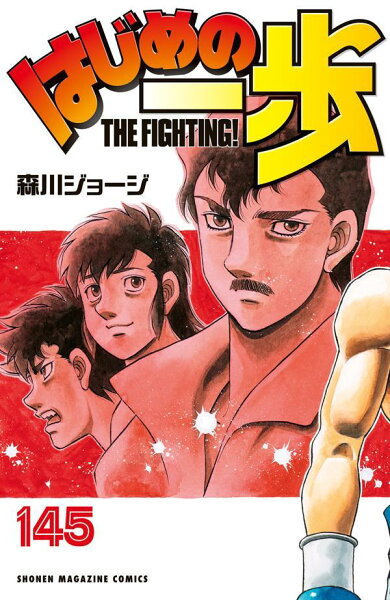
Hajime no Ippo
Yu's review of Hajime no Ippo — a bullied high school boy is saved by a professional boxer, discovers he has a natural gift for the sport, and begins the long road to becoming a champion.
Sports
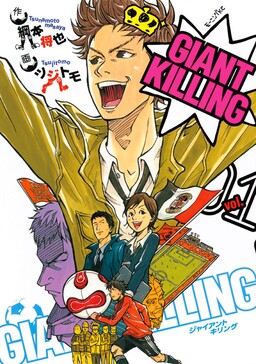
Giant Killing
Yu's review of Giant Killing — Takeshi Tatsumi, a player who disappeared from Japanese professional soccer and became a legend coaching a small English team, is hired to rescue East Tokyo United from the bottom of the J-League; a soccer management drama that treats the tactical and human sides of sports organization with equal seriousness.
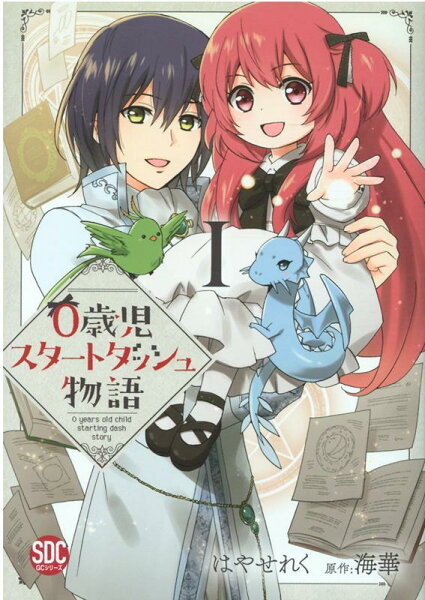
Sports / Drama
Shoot!
Shoot! follows Toshihiko Tanaka, who joins a high school soccer team to fulfill the dying wish of his childhood friend — and finds himself in a sport he barely knows, at a club that was legendary before it collapsed, trying to rebuild something worth the promise he made.
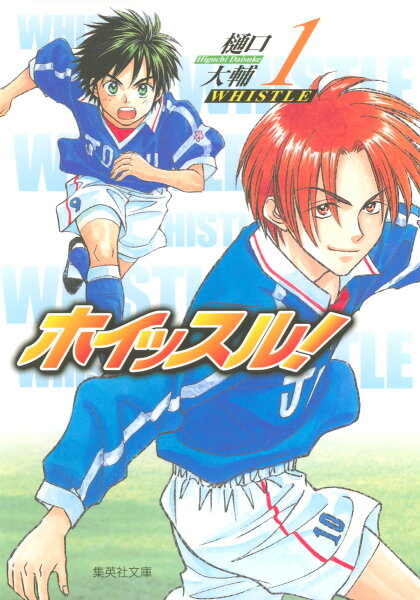
Sports / Drama
Whistle!
Yu's review of Whistle! — Sho Kazamatsuri was cut from his elite school's soccer team for lacking talent; he transfers to a school where he can actually play and works relentlessly to become a real player; the series follows his growth from the team's weakest member to something more.
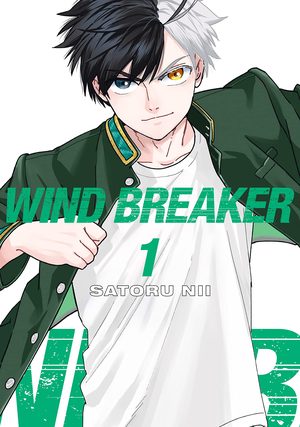
Sports / Action
Wind Breaker
Yu's review of Wind Breaker — Haruka Sakura transfers to Furin High School because of its reputation as the toughest school in the area; he discovers the students there protect their town, not terrorize it, and that strength has a different purpose than he thought.
Written by
Yu
Manga Enthusiast from Japan
I grew up in Japan and manga literally saved me during a tough time in elementary school. My English isn't perfect, but my love for manga is real — and I want to share it with you.
Disclosure: This post contains affiliate links. As an Amazon Associate, I earn from qualifying purchases at no extra cost to you.