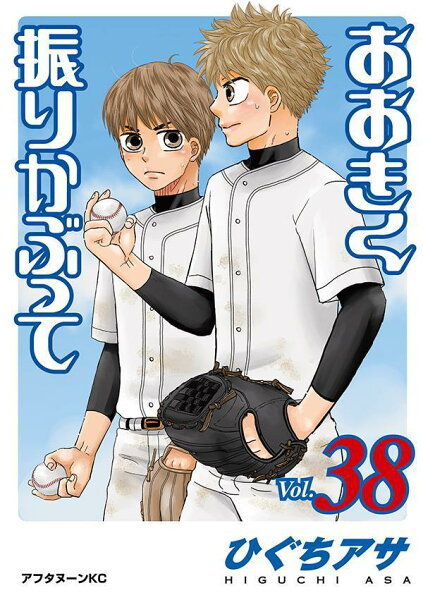
Big Windup! Review: The Baseball Manga Where the Ace Pitcher Is Terrified of Everyone
by Asa Higuchi
Read the first volume. If it doesn't hook you, put it down. It'll hook you.
Buy Big Windup! on Amazon →*Affiliate link — I earn a small commission at no extra cost to you.
I was the kid who apologized for existing. If I bumped a desk, I said sorry. If a teacher called on me and I got it right, I still felt like I'd done something wrong. So when I opened the first volume of Ookiku Furikabutte — Big Windup! — and met Ren Mihashi, a pitcher who literally cannot stop apologizing, who flinches when his own teammate speaks too loudly, I didn't see a baseball protagonist. I saw myself at eleven.
That's the thing nobody warns you about with this manga. It's a baseball series with some of the most technically detailed pitching in the genre. But underneath all the pitch sequences and tactical reads, it's about a boy who was convinced — told, by everyone around him — that he was worthless, and what it takes for one person to start undoing that. I read it slowly. I had to. Some pages hit too close.
Quick Take
- A control pitcher with crippling social anxiety joins a newly-formed high school team and is paired with a sharp, data-driven catcher who decides to rebuild him
- One of the most psychologically honest sports manga ever made — Mihashi's anxiety is treated as a real condition, not a quirk to be "powered through"
- 38 volumes, currently on indefinite hiatus (since 2024). T (Teen) — no official English manga edition exists
Who Is This Manga For?
- Readers who want a sports manga that takes mental health seriously instead of as an obstacle to overcome in one training montage
- Baseball fans who want genuinely detailed tactical pitching and game-calling
- Anyone who has lived with performance anxiety and wants to see it drawn honestly
- Readers who can handle a slow, granular pace where a single game spans many chapters
Story Overview
Ren Mihashi spent middle school as the "ace" of Mihoshi Academy — but only because his grandfather owned the school. His teammates believed (not entirely wrongly) that his spot was handed to him, and they froze him out: throwing games on purpose, refusing to back him up. By the time he graduates, Mihashi is convinced he is a terrible pitcher and a burden to any team. He enters Nishiura High School fully intending to quit baseball.
He doesn't quit. Nishiura is a brand-new program — every player is a first-year, the team is built from scratch under a young female coach, Maria Momoe. Mihashi ends up in front of catcher Takaya Abe, who watches him pitch and realizes something nobody at Mihoshi ever told him: Mihashi has extraordinary control. His fastball is slow, but he can place the ball into any of nine tiny zones across the strike zone, basically on command. In the right hands, that's a weapon.
Abe's plan is blunt and a little controlling: he'll call every single pitch, take every decision off Mihashi's shoulders, and demand only that Mihashi throw exactly where he's told. It works — and the manga is honest that it works because it's a crutch, one both of them eventually have to grow past. The early arc builds toward Nishiura's first official game in the summer tournament against Tosei (Kirisei) High, the previous year's regional champion. Nobody expects a team of first-years to last an inning. They win it 5–4.
Characters
Ren Mihashi — One of the genre's most unusual leads. His anxiety is genuine and severe; he apologizes compulsively, cries easily, and assumes the worst about himself constantly. But his attachment to pitching is so intense that on the mound he becomes quietly relentless. His arc isn't a confidence-glow-up — it's slow, halting, and earns every single inch.
Takaya Abe — Nishiura's catcher and the engine of the story. He's a data-driven game-caller who memorizes opposing batters' tendencies, every pitch, every out. He starts out wanting to control Mihashi completely, and the series quietly indicts that impulse: his real growth is learning that his pitcher needs autonomy, not a puppeteer. He's also far softer than he lets on — he nearly breaks down crying mid-game when Mihashi thanks him.
Yuichiro Tajima — The team's gift. Short, no home-run power, but blessed with freakish dynamic vision and instincts; he can foul off almost anything and play nearly any position. He's also emotionally steady in a way that quietly anchors Mihashi off the field.
Azusa Hanai — The reluctant captain. Talented but riddled with self-doubt, constantly measuring himself against Tajima's natural ability and feeling like he doesn't deserve the role. His clutch hit is what cracks open the Tosei game.
Maria Momoe — The coach who funded this underdog program largely out of her own pocket and refuses to let Mihashi hide. Her early demand — fix the self-deprecation or don't pitch — sets the whole emotional project in motion.
What I Love About It
The trust mechanic, and how honest the manga is about its limits. Abe taking all decision-making away from Mihashi is the most quietly radical idea in the series — and Higuchi never pretends it's healthy on its own. It's a scaffold. A way to get a terrified kid onto a mound at all. The drama lives in the gap between "Mihashi throws exactly where Abe points" and the much harder thing the manga is building toward: Mihashi trusting himself.
What gets me is how non-verbal it all is. A battery — pitcher and catcher — communicates in glances and finger signs, and Higuchi draws that as a relationship being negotiated pitch by pitch. When Mihashi manages, mid-game, to actually say thank you to Abe out loud, it lands like a confession, because for this character speaking a true feeling is harder than any pitch. Abe nearly cries. So did I. The baseball is real and detailed, but the games are always secretly about two anxious people learning to talk to each other.
Memorable Scene ⚠️ Spoiler Warning
The Tosei (Kirisei) game. Nishiura — nine first-years, a coach with no record, a pitcher who can barely make eye contact — draws the defending regional champions in their very first official match. Everyone, including the crowd, treats it as a formality. Mihashi is shaking from the expectation in the stands.
What follows is the team weathering pinch after pinch, inning after inning, on the back of Mihashi's control and Abe's reads, hanging on against Tosei's ace Takase. And then captain Hanai — the boy who never believed he deserved his spot — turns one chance into the hit that breaks the game open. Nishiura wins 5–4. Higuchi doesn't draw it as a miracle or a fluke. She draws it as the accumulated weight of every small thing the team had quietly been building. After a whole story spent watching Mihashi flinch and apologize, seeing him hold the line against the champions — and seeing Hanai of all people deliver — is the moment the series fully announces what it is.
Pros & Cons
Pros
- Mihashi's anxiety is written with rare psychological accuracy — no magic cure
- The pitching and game-calling are genuinely detailed and educational
- The Mihashi–Abe battery is one of sports manga's best relationships
- Real, slow-earned emotional payoff
Cons
- No official English manga release — you'll need the Japanese edition
- Currently on indefinite hiatus, and a single game can span many volumes
- The pace is glacial, and Mihashi's relentless self-deprecation can be exhausting at length — that's either the point or a dealbreaker depending on you
Is Big Windup! Worth Reading?
Yes — if you want a baseball manga that's really about anxiety, trust, and two damaged kids learning to communicate, and you have the patience for an extremely granular pace. Skip it if you want fast, conventional sports highs or can't read Japanese, since there's no licensed English edition.
Official English Translation Status
Despite a well-regarded two-season anime that was licensed in English, the manga itself has never received an official English-language release. Earlier claims that Del Rey or Kodansha USA published it are inaccurate — no English print or digital edition exists. To read the manga legitimately, you'll need the Japanese volumes.
Where to Buy
No English release yet. That just means you find it before everyone else does.
The Japanese edition is the only legitimate way to read the manga — the print and digital volumes are available from Amazon Japan.
Find the Japanese volumes on Amazon.co.jp →
Similar Manga
| Title | Its Approach | How Big Windup! Differs |
|---|---|---|
| Cross Game | Baseball wrapped around quiet romance and grief | Big Windup! swaps romance for a clinical, honest study of anxiety and the pitcher–catcher bond |
| Ace of Diamond | A confident ace fighting for the starting spot | Big Windup!'s ace is terrified, slow-balled, and barely believes he belongs |
| Haikyu!! | Team-building with an upbeat, conventional confidence arc | Big Windup! makes the confidence arc painfully slow and treats mental health as a real condition |
This post contains affiliate links. If you purchase through these links, I may earn a small commission at no extra cost to you. As an Amazon Associate, I earn from qualifying purchases.
*Affiliate link — I earn a small commission at no extra cost to you.
More Manga You Might Like
Sports / Drama
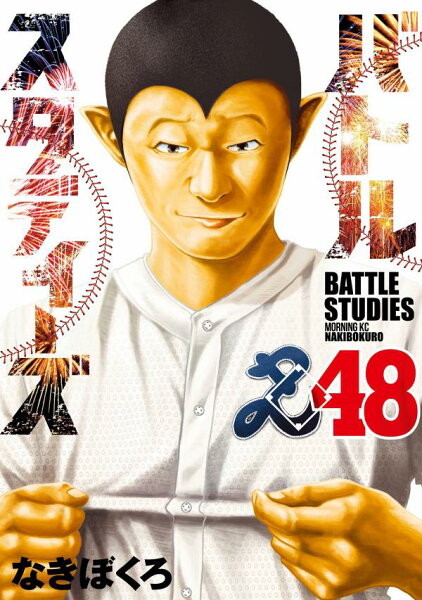
Battle Studies
A review of Battle Studies, Nakibokuro's brutally honest baseball manga set at DL Gakuen, a powerhouse high school modeled on the author's real years inside PL Gakuen's notorious baseball dorm.

Sports / Drama
Gaku: Minna no Yama
Gaku: Minna no Yama follows Habu Gaku, a volunteer mountain rescue worker in the Japanese Alps, and the climbers he saves — or tries to save — as he demonstrates the specific combination of skill, knowledge, and relentless positivity that his work requires.
Sports / Drama
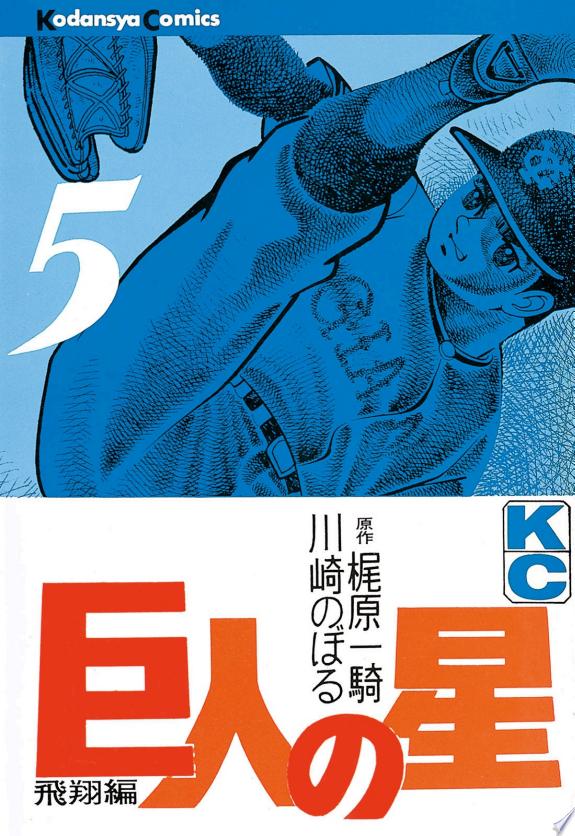
Kyojin no Hoshi
Kyojin no Hoshi follows Hyuma Hoshi, whose father — a former baseball player who never achieved his dream — has raised him from childhood to be a star pitcher for the Yomiuri Giants, through training that borders on abuse and produces a player who may be the greatest — at tremendous personal cost.
Sports / Drama
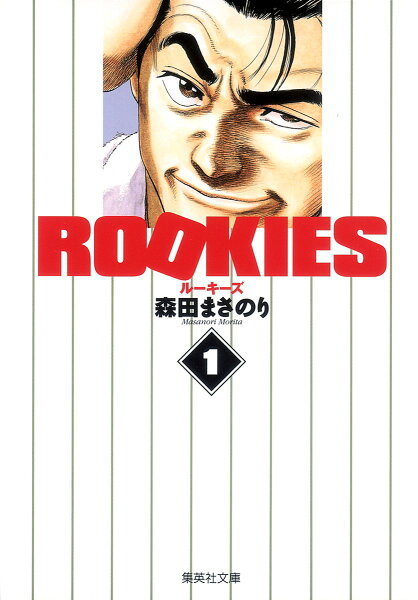
Rookies
Rookies follows Koichi Kawato, a young teacher transferred to Futakotamagawa High School who discovers a baseball club suspended after a violent incident — and decides, against all institutional advice, to coach them back to the Koshien.
Sports / Drama
Major
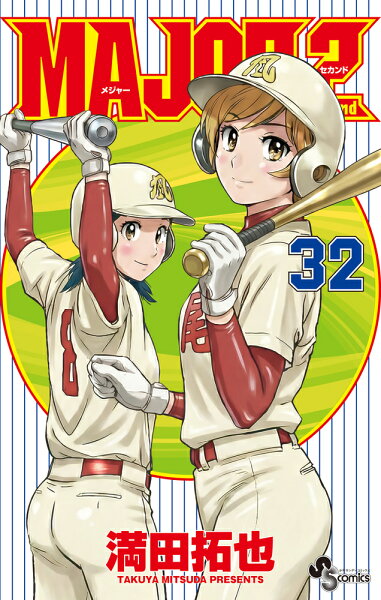
Yu's review of Major — Goro Honda is the son of a professional baseball player; when loss defines his childhood, baseball becomes how he carries his father forward; the series follows Goro from little league through professional baseball across 78 volumes, one of the longest complete sports manga stories ever told.
Sports / Romance
Mix: Meisei Story
A review of Mix: Meisei Story, Mitsuru Adachi's return to baseball manga set in the same world as Touch — quiet, funny, and deeply good.
Written by
Yu
Manga Enthusiast from Japan
I grew up in Japan and manga literally saved me during a tough time in elementary school. My English isn't perfect, but my love for manga is real — and I want to share it with you.
Disclosure: This post contains affiliate links. As an Amazon Associate, I earn from qualifying purchases at no extra cost to you.