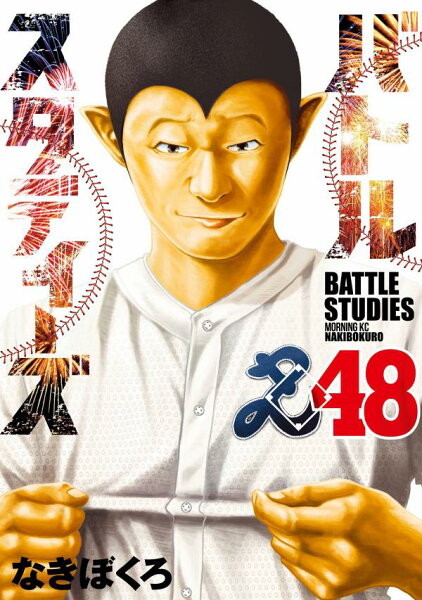
Battle Studies Review: The Baseball Manga Drawn by Someone Who Actually Survived the Machine
by Nakibokuro
Read the first volume. If it doesn't hook you, put it down. It'll hook you.
Buy Battle Studies on Amazon →*Affiliate link — I earn a small commission at no extra cost to you.
I grew up watching Koshien on TV every August, the way a lot of Japanese kids do. The crying, the dirt-stained uniforms, the boys scooping up the infield sand to take home. It always looked pure to me — sweat and tears and friendship, the whole TV-anthem version of high school baseball.
Then I read Battle Studies, and it quietly took that picture apart. Not by mocking it, but by showing me what is underneath it. The manga is drawn by Nakibokuro, a man who actually lived inside one of those legendary programs — he was a regular on PL Gakuen's team and played at Koshien himself. So when he draws a sixteen-year-old getting screamed at over a misplaced pair of shoes, I trust it, because he was there. This is the rare sports manga where the most intense scenes aren't the games. They're the dorm.
Quick Take
- A "super-realistic" baseball manga set at DL Gakuen, a fictionalized version of the author's real powerhouse high school PL Gakuen
- The drama is built around the dorm system — the brutal senpai-kouhai hierarchy — as much as the baseball itself
- Age rating: T (Teen), but be aware it depicts hazing, corporal punishment, and bullying as facts of life, not as villainy
Story Overview
Shotaro Kano is fifteen, and on the day the story opens, he is moving into the dorm of DL Gakuen — the baseball school he has worshipped his entire life. He is not a nobody. He played for Japan's national middle-school team, he hit dozens of home runs, he was scouted in as a top-tier "special recruit." He is the kind of prospect every program in the country wanted. He is also such an obsessive fan of DL that other characters call him a "DL otaku."
And then the doors of the dorm close behind him, and the manga shows you what that obsession actually costs.
DL's baseball program is fully residential, and the first-year experience is governed by an unwritten rulebook the second-years hand down — endless chores, bizarre customs, a hierarchy where a senior's word is law and a first-year's comfort, dignity, and time belong to the team. There is screaming. There is hazing. There is, at times, violence. The series is blunt that this is a "pre-modern" athletic culture where underclassmen have essentially no rights. Some of Kano's eighteen classmates can't take it and run away.
From that foundation, the series widens out into everything a baseball manga is supposed to be: practice, technique, rivalries, the long climb toward Koshien. But it never lets you forget the cost of admission. The central tension of the whole work is whether a system this harsh produces great players because of its cruelty or in spite of it — and the manga, to its credit, refuses to give you a clean answer.
Characters
Shotaro Kano is the catcher and the heart of the series. He arrives as a cocky, gifted slugger and a fanatic true believer in DL. What makes him interesting is that he isn't a saint — he's bright, warm, and devoted to his teammates, but he'll also bend or break the rules without blinking if it means winning. He is the rare sports-manga lead who is genuinely a little bit of a problem child, and the system spends years grinding against that.
Kenji Hinoki is Kano's battery partner, a left-handed pitcher who throws in the high 140s (km/h). He's arrogant and self-assured on the mound, but mentally fragile and weirdly easy to fool — Kano deceives him without much effort more than once. The friction and trust between this pitcher-catcher pair is one of the spines of the story.
Manabu Karasumaru is the team captain, small in stature but commanding, a leadoff hitter with speed and contact who posted a monstrous batting average at the Senbatsu tournament. Crucially, he is the one pushing to abolish the corporal-punishment culture from the inside — the manga gives the reform argument a face, and it's one of its most important threads.
Haruma Kanagawa is DL's ace, throwing up to the mid-150s (km/h). He's haughty and hard on the underclassmen, the embodiment of the old dominate-the-juniors order — but the manga is careful to show he also looks after them and pours real seriousness into coaching the players beneath him. He's not a cartoon tyrant; he's the system in human form.
What I Love About It
What I love is that Battle Studies refuses to be a lie. Almost every baseball manga I grew up on sold me the clean version of Koshien. This one was drawn by someone who survived the actual machine, and you feel it in the specificity — the rules, the chores, the customs that make no sense until they make terrible sense.
The genius of the book is that it doesn't simply condemn the brutal dorm culture, and it doesn't celebrate it either. It puts both arguments on the page through actual characters. Karasumaru, the captain, fights to end the corporal punishment. Kanagawa, the ace, is the product and defender of the harsh order — and the manga lets him be sympathetic anyway. Nakibokuro lived this, and instead of writing a revenge piece or a nostalgia piece, he wrote the honest, uncomfortable middle: that the same system which abuses kids also, sometimes, forges them. Holding both of those truths at once, without flinching, is harder than picking a side, and that's exactly what kept me reading.
Memorable Scene ⚠️ Spoiler Warning
The image that stays with me isn't a home run. It's the early stretch of the first year, when the reality of the dorm sets in and you watch which of Kano's eighteen classmates break.
Some of them run. The manga states it plainly — kids who came in chasing the same dream Kano chased, who looked at the chores and the hierarchy and the violence and the total erasure of a first-year's rights, and simply left. There's no triumphant music over it, no lesson about weakness. It's just shown as what happens. And the reason it haunts me is that it makes Kano's decision to stay feel like a real choice instead of a default. He isn't enduring this because he's tougher or purer than the boys who left. He's enduring it because his love for DL is so total that he's willing to pay a price most reasonable people would refuse. Watching that, I couldn't decide whether to admire him or worry about him — and I think that ambivalence is the whole point.
Pros & Cons
Pros
- Unmatched authenticity — drawn by an actual Koshien-level PL Gakuen alum
- Treats the dark side of Japanese sports culture honestly, from multiple viewpoints
- Kano is a genuinely unusual, rule-bending lead for the genre
- The baseball technical detail is grounded and convincing
Cons
- Long and ongoing (48 volumes and counting in Japan)
- The hazing and corporal-punishment content can be genuinely hard to read
- No licensed English edition exists, so non-Japanese readers face a real barrier
- The slow, institutional focus means the baseball games sometimes wait — that's either the appeal or the dealbreaker, depending on what you came for.
Is Battle Studies Worth Reading?
Yes — if you want a baseball manga that's about the institution of high school baseball as much as the sport, told by someone who lived inside it. It's authentic, morally honest, and unlike almost anything else in the genre. But it's a long commitment, the abuse content is real, and there's no official English release, so go in knowing what you're signing up for.
Cultural Context
DL Gakuen is a thin fictional mask over PL Gakuen (PL学園), a real Osaka high school whose baseball program was, for decades, the most feared and famous in the country before it wound down in the 2010s. Its alumni filled professional rosters. Nakibokuro attended it and played at Koshien as a regular, and the manga's authority comes directly from that. When the series depicts the dorm rules, the hierarchy, and the punishments, it is dramatizing a culture the author personally passed through. That's also why the corporal-punishment debate inside the story isn't abstract — it mirrors a real reckoning Japanese high school sports has been having for years.
Content Warnings & Age Rating
Age Rating: T (Teen) Content Warnings: Hazing, corporal punishment, bullying, intense senpai-kouhai pressure
This isn't gore, but it portrays the harsh underbelly of athletic dorm culture — including violence against underclassmen — as everyday reality. Readers sensitive to depictions of institutional abuse should know that going in.
Yu's Rating
| Category | Score |
|---|---|
| Story Depth | ★★★★☆ |
| Art Style | ★★★★☆ |
| Character Development | ★★★★☆ |
| Accessibility for Non-Japanese Readers | ★★☆☆☆ |
| Reread Value | ★★★★☆ |
Similar Manga
| Title | Its Approach | How Battle Studies Differs |
|---|---|---|
| Ace of Diamond | Idealized, dramatic powerhouse high school baseball | Battle Studies strips away the gloss and shows the brutal dorm culture underneath |
| Major | A decades-spanning baseball epic centered on one player's heart | Battle Studies stays inside one school and interrogates the institution itself |
| Cross Game | Adachi's quiet, restrained baseball-and-loss drama | Battle Studies is loud, raw, and built on hierarchy and survival, not melancholy |
Official English Translation Status
There is no licensed English edition of Battle Studies. The only versions circulating in English are unofficial fan scanlations on aggregator sites. The legitimate way to read it is in Japanese, through Kodansha's print and digital releases.
Where to Buy
No English release yet. That just means you find it before everyone else does.
The Japanese edition is the only legitimate way to read it — Kodansha publishes it in print and digital.
Find Battle Studies on Amazon.co.jp →
This post contains affiliate links. If you purchase through these links, I may earn a small commission at no extra cost to you. As an Amazon Associate, I earn from qualifying purchases.
*Affiliate link — I earn a small commission at no extra cost to you.
More Manga You Might Like
Sports / Drama
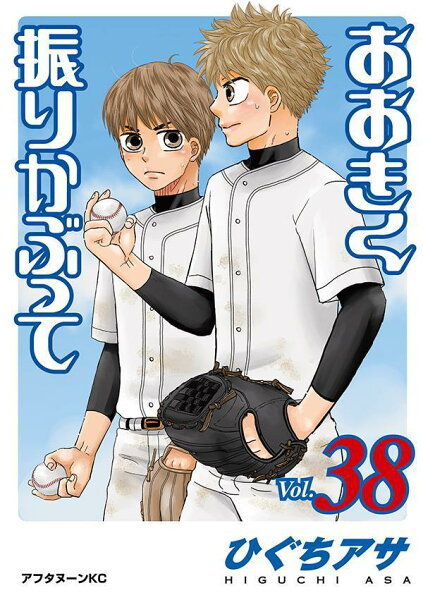
Big Windup!
Yu's review of Big Windup! (Ookiku Furikabutte) — a control pitcher with crippling anxiety joins a brand-new high school team and learns to trust the catcher calling his pitches. By Asa Higuchi.

Sports / Drama
Gaku: Minna no Yama
Gaku: Minna no Yama follows Habu Gaku, a volunteer mountain rescue worker in the Japanese Alps, and the climbers he saves — or tries to save — as he demonstrates the specific combination of skill, knowledge, and relentless positivity that his work requires.
Sports / Drama
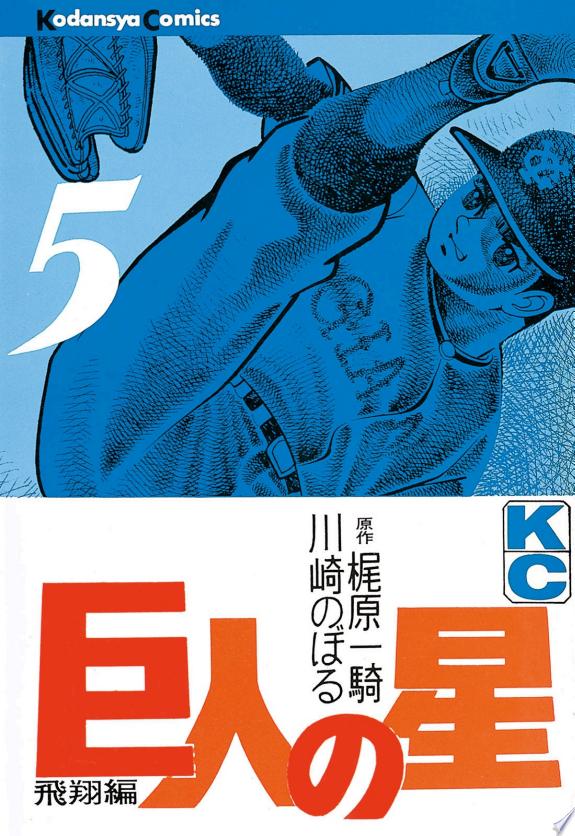
Kyojin no Hoshi
Kyojin no Hoshi follows Hyuma Hoshi, whose father — a former baseball player who never achieved his dream — has raised him from childhood to be a star pitcher for the Yomiuri Giants, through training that borders on abuse and produces a player who may be the greatest — at tremendous personal cost.
Sports / Drama
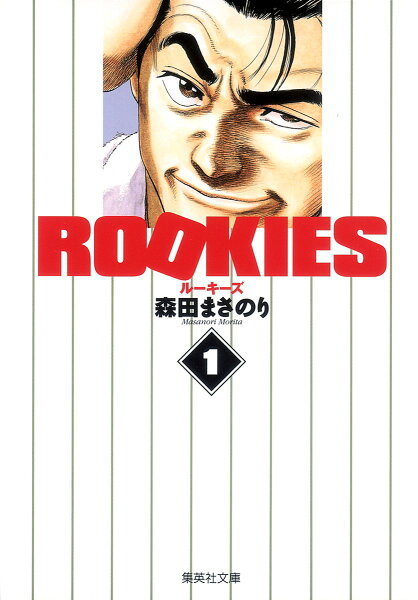
Rookies
Rookies follows Koichi Kawato, a young teacher transferred to Futakotamagawa High School who discovers a baseball club suspended after a violent incident — and decides, against all institutional advice, to coach them back to the Koshien.
Sports / Drama
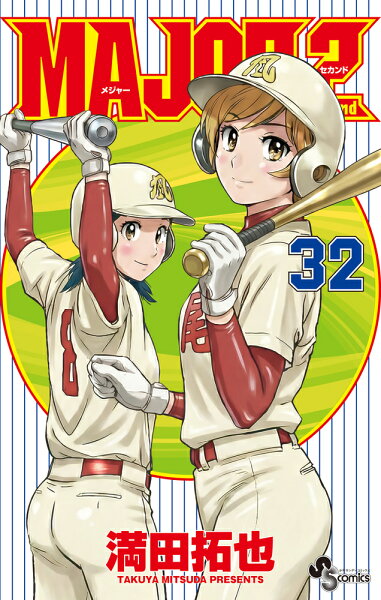
Major
Yu's review of Major — Goro Honda is the son of a professional baseball player; when loss defines his childhood, baseball becomes how he carries his father forward; the series follows Goro from little league through professional baseball across 78 volumes, one of the longest complete sports manga stories ever told.
Sports / Drama
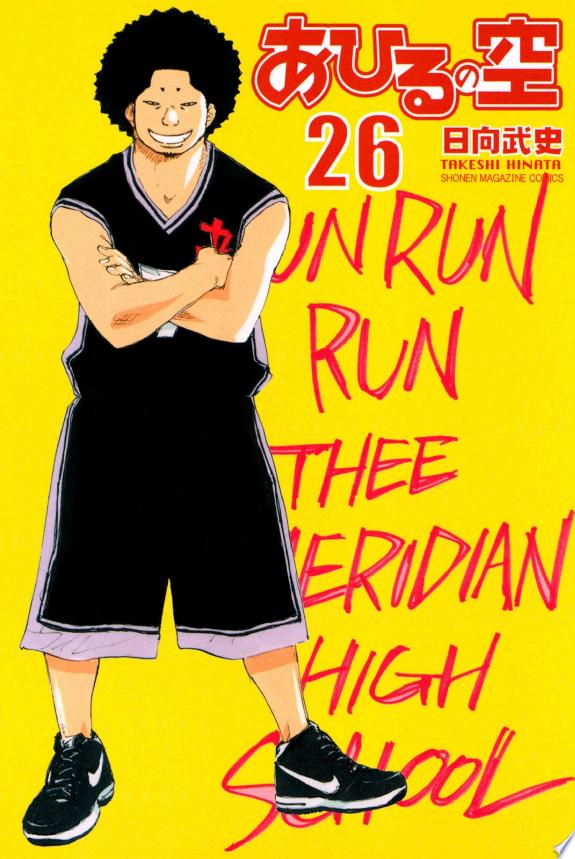
Ahiru no Sora
A review of Ahiru no Sora — a 149cm boy who promised his dying mother he'd win, joining a basketball club run by delinquents. Plot, characters, and whether it's worth reading.
Written by
Yu
Manga Enthusiast from Japan
I grew up in Japan and manga literally saved me during a tough time in elementary school. My English isn't perfect, but my love for manga is real — and I want to share it with you.
Disclosure: This post contains affiliate links. As an Amazon Associate, I earn from qualifying purchases at no extra cost to you.