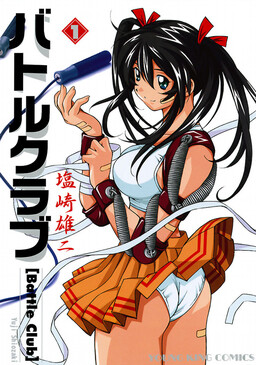
Battle Club Review: A Wrestling Manga Where the Sport Is Real and the Comedy Refuses to Be
by Yuji Shiozaki
Read the first volume. If it doesn't hook you, put it down. It'll hook you.
Buy Battle Club on Amazon →*Affiliate link — I earn a small commission at no extra cost to you.
I have a confession that probably disqualifies me as a serious manga reviewer: I picked up Battle Club for the wrong reasons. I was a teenager, I'd just finished Yuji Shiozaki's Battle Vixens, and I wanted more of that same loud, ridiculous energy. What I didn't expect was that underneath all the exploding clothing and the gags, there was an actual wrestling manga in here — one that understood takedowns and pins better than I did at the time.
So I'm going to be honest with you up front, because the CLAUDE rules and my own conscience both demand it: this is not a refined sports drama. It's a Mature-rated seinen comedy where the protagonist literally joins the wrestling club because he has a crush on a girl. But I kept reading all six volumes, and the reason I kept reading is the part nobody warns you about — the wrestling itself is taken seriously, and that contrast is the whole appeal.
Quick Take
- A 6-volume seinen wrestling comedy by Yuji Shiozaki (creator of Battle Vixens / Ikki Tousen) that pairs genuinely grounded grappling technique with relentless, cartoonish fanservice
- The sport is real — takedowns, pins, weight management, rival-school tournaments — but it's wrapped in a comedy that never once tries to be tasteful
- Rated M (Mature): heavy fanservice, nudity, "exploding clothing" gags. This is not an all-ages sports manga, and you should know that before page one
Story Overview
Mokichi shows up at Swan Academy with the dumbest possible plan: become the toughest guy in school by swinging a baseball bat at people. That plan lasts exactly until Tamako Kaneda — a clumsy girl who happens to be a natural wrestling prodigy — humiliates him in a fight.
Defeated and intrigued, Mokichi follows Tamako to the wrestling club. The catch: to officially join, he has to move her out of a pinning position. He "succeeds" through a maneuver that sets the tone for the entire series' sense of humor, and from that point on he's the lone male member of a club full of skilled women, training in a sport that demands exactly the kind of close physical contact the comedy keeps weaponizing.
From there the structure is pure sports manga underneath the gags. Swan Academy runs into rival schools — chief among them Black Dragon Academy — and the matches escalate from school rivalries into something darker. The back half pulls the cast toward NOB, the "Nightmare of Battle," an underground tournament organization that recruits fighters and raises the stakes well past normal high school competition. The main storyline resolves around Coach Tondemon's final confrontation with Black Dragon's Kuniko Mukoda, after which the remaining chapters shift into standalone shorts about side characters rather than continuing the central arc.
Characters
Mokichi — The lone male member and our protagonist, introduced as a self-described tough guy and quickly revealed as a bit of a weakling and an unrepentant pervert. His arc is the genuinely sports-manga part: a kid who joins for the wrong reasons (his crush on Tamako, the proximity of "training") and slowly, almost against his own nature, becomes an actual wrestler who cares about winning.
Tamako Kaneda — The heroine and the heart of the club's competitive credibility. She's a natural with incredible technique but frequently clumsy outside the ring, and she's the reason Mokichi walks through the door in the first place. The series treats her wrestling ability as legitimately formidable even while it never stops finding excuses for fanservice.
Rentarou Taki — The wrestling club captain, a cross-dressing character with a feminine physique. A reliable source of both authority within the club and the series' running gender-bending comedy.
Higuchi Ichiyo — The vice-captain, openly infatuated with Tamako. She's also a key early casualty of the rivalry arcs: her defeat at the hands of Black Dragon's Kuniko Mukoda is one of the turning points that escalates Swan Academy's conflicts.
Kuniko Mukoda — Starts as the antagonist from Black Dragon Academy who beats down Swan members, then evolves into a sympathetic ally. Her thread ties directly into the series' actual conclusion through her final clash with Coach Tondemon.
What I Love About It
Here's the thing that surprised me and stuck with me: Shiozaki clearly did his homework on wrestling. For a manga this committed to the joke, the grappling is depicted with real attention — the takedowns read clearly, the pins make sense as pins, and the body positioning in the matches is drawn so you can actually follow who has the advantage. That sounds like a low bar, but for a comedy that could have just hand-waved every match, it isn't.
What I love is the specific tension that creates. The premise is built on Mokichi joining for purely lecherous reasons, and the comedy never lets you forget it — but the sport keeps quietly asserting itself anyway. You watch a match that opens as a fanservice gag and ends as a genuine contest of technique, and somewhere in the middle the manga has tricked you into caring about the outcome as a sports fan. That whiplash between "this is absurd" and "wait, that was a clean takedown" is the experience Battle Club is selling, and when it lands it's more fun than it has any right to be.
Memorable Scene ⚠️ Spoiler Warning
The image I can't shake is Mokichi's actual entrance to the club. He's been beaten by Tamako, his bat-swinging ego in pieces, and the price of admission to the wrestling club is simply: move Tamako out of a lying pin. It should be a straightforward grappling challenge — and the series turns it into its mission statement by having him "win" through stripping off her undergarments and flipping her.
It's crude, it's exactly as juvenile as it sounds, and it perfectly encodes what Battle Club is: a story where a real wrestling problem gets solved by the dumbest, most fanservice-driven means available. I remember it because it's the moment the manga stops pretending it's going to be a normal sports series. Everything afterward — the rival schools, the NOB tournament, Tamako's genuine skill — exists in the shadow of that opening gag, and the series is honest enough to never apologize for it.
Pros & Cons
Pros
- Genuinely grounded wrestling technique — the matches are readable and the grappling is taken seriously
- Complete 6-volume run; no dangling, abandoned story
- Shiozaki's art is clean and expressive, carrying both the action and the comedy
- A rare wrestling-focused sports manga in English at all
Cons
- The fanservice is constant and central, not incidental — it earns the Mature rating
- Tonally uneven: it swings between real sports tension and crude gags without warning
- Older Tokyopop release; you're mostly hunting the secondary market
- This won't work for everyone — if the premise of "joins the club for the girls" turns you off on principle, nothing in here will win you back
Is Battle Club Worth Reading?
If you want a sports manga that respects wrestling as a sport while never taking itself remotely seriously, and the heavy fanservice is something you can take rather than a dealbreaker, then yes — it's a fun, complete, low-commitment read. If you're looking for a clean, earnest sports drama, this is emphatically not it. It's a Mature seinen comedy first, a wrestling manga second, and it's proud of that order.
Content Warnings & Age Rating
Age Rating: M (Mature) Content Warnings: Heavy fanservice and nudity ("exploding clothing" gags throughout); comedic and wrestling violence; sexual humor
Tokyopop published this as a Mature-rated title, and that's the right call. The fanservice isn't a garnish — it's load-bearing. Read accordingly.
Similar Manga
| Title | Its Approach | How Battle Club Differs |
|---|---|---|
| Ikki Tousen (Battle Vixens) | Shiozaki's own fighting-fanservice series, looser martial arts | Battle Club anchors its action in a real sport (wrestling) instead of stylized combat |
| Kenichi: The Mightiest Disciple | Martial arts comedy with earnest training arcs | Battle Club is shorter, raunchier, and grappling-focused rather than striking-focused |
| Teppu | Serious, grounded women's MMA drama | Battle Club shares the grappling realism but trades all of Teppu's gravity for comedy |
Where to Buy
Read the first volume. If it doesn't hook you, put it down. It'll hook you.
This post contains affiliate links. If you purchase through these links, I may earn a small commission at no extra cost to you. As an Amazon Associate, I earn from qualifying purchases.
*Affiliate link — I earn a small commission at no extra cost to you.
More Manga You Might Like
Sports / Drama
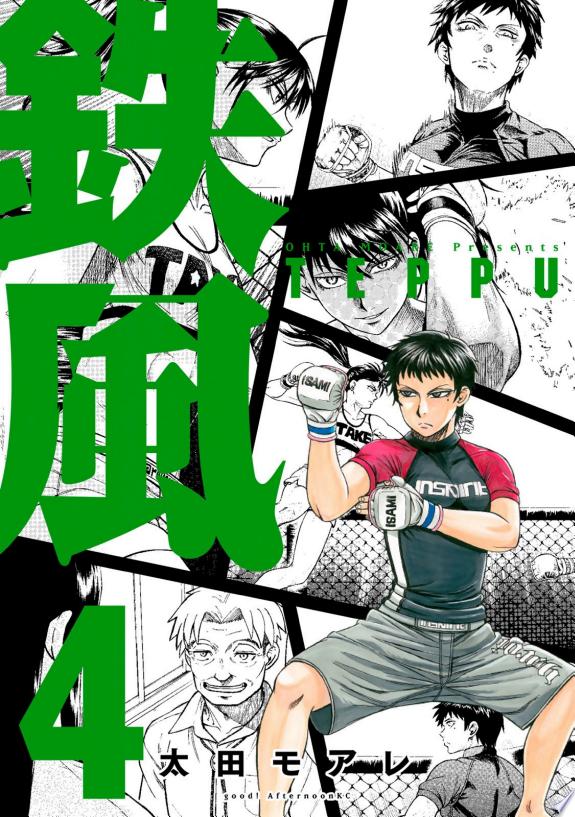
Teppu
Yu's review of Teppu — Natsuo Ishido is a natural athlete who has won everything she has tried without effort and resents every second of it; when she meets a girl who fights MMA with genuine passion despite not being naturally gifted, Natsuo joins an MMA gym to find out what it means to want something.
Sports / Comedy
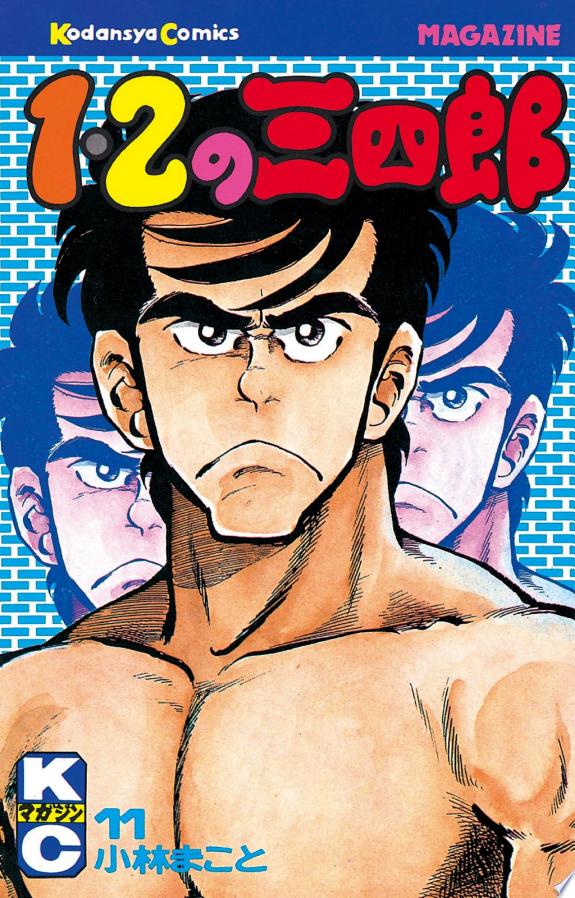
1-2 no Sanshiro
1-2 no Sanshiro follows Sanshiro Azuma, a goofy high-school athlete who blunders through rugby, judo, and finally professional wrestling — Makoto Kobayashi's Kodansha Manga Award-winning Weekly Shonen Magazine comedy from 1978 to 1983.

Sports / Action
Wanna Be the Strongest in the World!
Yu's review of Wanna Be the Strongest in the World! — Sakura Hagiwara is a member of the idol group Sweet Diva; after an altercation with a professional wrestler, she decides to enter women's professional wrestling herself; the series follows her training and career through the sport she is entirely unprepared for.
Sports
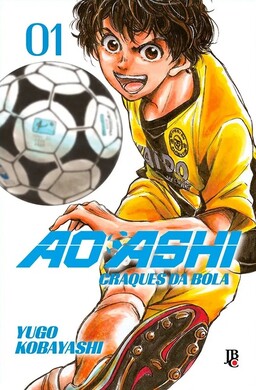
Ao Ashi
Yu's review of Ao Ashi — Ashito Aoi is recruited to the Tokyo City Esperion youth academy with a rare gift: he can see every player on the field simultaneously. But his coach already knows he is not a striker. The best soccer manga in English.
Sports
Real
A review of Real — Takehiko Inoue's adult basketball manga about wheelchair basketball players and the full weight of living with disability, grief, and athletic ambition.
Sports / Comedy
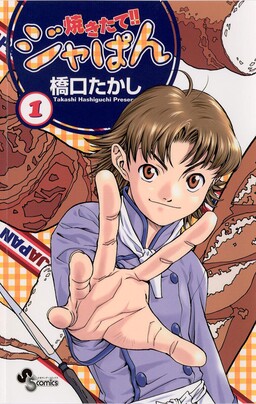
Yakitate!! Japan
Yu's review of Yakitate!! Japan — Kazuma Azuma has supernatural hands warm enough to activate yeast perfectly, and his dream is to create a national bread for Japan; the series applies shonen battle manga structure to competitive bread-baking with completely committed absurdist comedy.
Written by
Yu
Manga Enthusiast from Japan
I grew up in Japan and manga literally saved me during a tough time in elementary school. My English isn't perfect, but my love for manga is real — and I want to share it with you.
Disclosure: This post contains affiliate links. As an Amazon Associate, I earn from qualifying purchases at no extra cost to you.