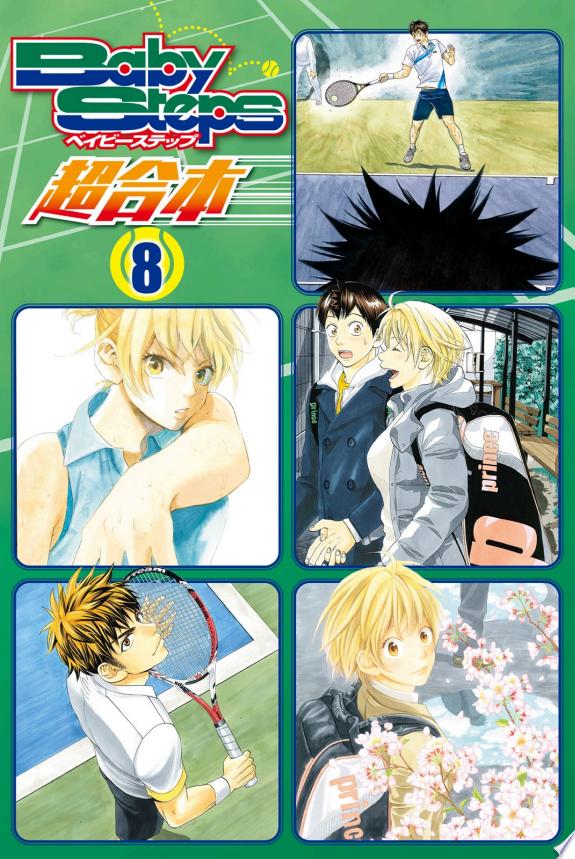
Baby Steps Review: The Tennis Manga Where Note-Taking Is the Superpower
by Hikaru Katsuki
Read the first volume. If it doesn't hook you, put it down. It'll hook you.
Buy Baby Steps on Amazon →*Affiliate link — I earn a small commission at no extra cost to you.
When I was in school, I was the kid who color-coded his notebooks. Everybody else thought it was a waste of time. I kept them because they were the one thing I felt I was actually good at — the one place where being careful and patient paid off, when nothing on a playground ever did. So when I picked up Baby Steps and met a boy named Eiichiro Maruo who keeps a notebook for literally everything, I felt seen in a way I wasn't expecting from a tennis manga.
Ei-chan doesn't have a special body. He doesn't have a genius serve or a hidden talent that wakes up in chapter three. What he has is the same dumb, stubborn thing I had: he writes everything down, and he refuses to skip steps. This is the manga that told me my one weird habit might actually be a strength. I love it for that more than I can say.
Quick Take
- A straight-A high schooler with zero athletic background applies academic note-taking to tennis, and the story follows him from total beginner all the way onto the professional tour
- Katsuki draws tennis with real mechanical accuracy — footwork, shot selection, court positioning — so matches read like strategy, not super-moves
- 47 volumes, available complete in English via K Manga (digital); rated T (Teen) — competitive pressure and realistic injury, nothing graphic
Story Overview
Eiichiro Maruo is the kind of student who takes perfect notes for nine straight years. One day he realizes he's been so glued to his desk that his body is falling apart, sees a flyer for the Southern Tennis Club, and walks in on a whim. He's hopelessly out of shape and has never hit a ball in his life.
But then the gears start turning. Ei-chan figures out he can do to tennis what he does to a textbook: observe, record, analyze. He starts keeping a tennis notebook, logging opponents' habits, his own mistakes, and exactly what separates him from better players. His "dynamic vision" — his unusually sharp eyesight — lets him read shots, and his notes let him predict them. His guiding principle is brutally simple: if you can reach every ball and control it, in theory you cannot lose.
From there the manga is a long, patient climb. Ei-chan grinds through prefectural Kanagawa juniors, then the Kanto regional tournament, then the All-Japan Junior championship — where he finishes fourth, not first. Katsuki refuses to hand him a fairy-tale title. Instead of winning juniors, Ei-chan sets himself a harder benchmark: he enters the open All-Japan Tennis Championship against full adults to decide whether he's good enough to turn pro, and reaches the semifinals against world-ranked Ayumu Monma. The series closes out on the lower rungs of the professional ladder — Futures and Challengers events — and ends mid-journey on the world tour, because that's honest about what going pro actually looks like.
Characters
Eiichiro Maruo (Ei-chan) — The honor student who becomes a tennis player by treating the sport like an exam he can study for. He has no power game and no instinct; he wins through opponent analysis, relentless consistency, and that obsessive notebook. His arc is the whole point of the manga: watching someone with no gift catch up to people who were born with one, step by tiny step, never skipping the boring parts.
Natsu Takasaki (Nat-chan) — A first-year girl who's played tennis since childhood and dreams of going pro. She's everything Ei-chan isn't: intuitive, emotional, talent-first. She pushes him into the club and becomes his closest partner. Their relationship grows from rivals-slash-training-partners into the series' central romance — Natsu confesses to him at the beach right before the Kanto Junior tournament, and they start dating from there.
Takuma Egawa — An upperclassman at Southern who's already one of the best junior players in Japan and openly aiming for the pros. He's the early bar Ei-chan measures himself against, and the living proof of what "talent that also works hard" looks like.
Yuu Nabae — Ei-chan's most important rival, and basically his evil twin. Nabae is an analytical player just like Ei-chan, except he's taken it further: he keeps his notes on a laptop and builds an exhaustive database on every opponent and on himself. He's the answer to the scary question "what if someone smarter did exactly what I do?" Their match is the intellectual peak of the series.
What I Love About It
Ei-chan's notebook isn't a gimmick — it's the actual narrative. Katsuki shows the analytical work on the page: the logged habits, the diagrammed patterns, the "this is the gap and here's how I close it" reasoning. Most sports manga skip straight to the spike and the explosion. Baby Steps lingers on the mental labor, the part where a kid sits down and figures out why he lost. For someone whose only school superpower was being thorough, watching that get treated as heroic genuinely moved me.
The clearest example of why this matters is the Nabae match. Nabae is Ei-chan's exact method scaled up — same note-taking instinct, just with a laptop and a deeper database. So the duel can't be won by being more analytical, because Nabae is already more analytical. Ei-chan has to invent a growing stack of attack patterns to crack Nabae's defense and, crucially, control his own emotions to keep that stack alive under pressure, until he finally breaks Nabae's serve in the deciding set. It's a match about two careful minds, and it lands because the manga spent forty volumes earning the idea that thinking can be a weapon.
Memorable Scene ⚠️ Spoiler Warning
The one that stuck with me isn't a match point — it's a quiet moment in chapter 234. Natsu tells Ei-chan that she feels like she's being left behind by him, that he's pulling ahead so fast it scares her, and that she wants both of them to win because more than anything she wants to stay beside him. He gets flustered — of course he does, he's Ei-chan — but then he reaches out and tells her he wants the same thing, that he wants to keep going together. She closes the gap and kisses him. Their first kiss.
What I love is that the manga frames this exactly like one of his tennis problems: there's a gap, he's scared of it, and the answer is to close it deliberately instead of waiting. The same boy who solves matches by working backward from a gap solves his own heart the same way. After hundreds of pages of him reaching for balls he couldn't quite get to, watching him reach for her — and actually make it — wrecked me a little.
Pros & Cons
Pros
- 47 volumes, available complete in English via K Manga (digital) — the entire arc from clueless beginner to the professional tour
- Tennis is depicted with real mechanical accuracy; matches read as strategy
- Ei-chan is a genuinely original sports protagonist — brain, not body
- The professional arc gets sustained, honest attention most sports manga never reach
Cons
- 47 volumes is a huge commitment
- The methodical, step-by-step pacing can feel slow in the quieter arcs
- The romance develops at a glacial speed
- The slow, analytical rhythm is either the whole appeal or a dealbreaker — that depends entirely on you.
Is Baby Steps Worth Reading?
Yes — if you want a sports manga where the hero wins by being thorough instead of gifted. It's long and deliberate, but that patience is the point: it's the rare series that treats studying, note-taking, and closing the gap one step at a time as genuinely heroic. If you've ever been the careful kid, it'll hit home.
Similar Manga
| Title | Its Approach | How Baby Steps Differs |
|---|---|---|
| Haikyu!! | Team sport powered by passion and explosive talent | Solo, analytical, and built on note-taking over instinct |
| Chihayafuru | Non-athletic discipline (karuta) won through dedication | A physical sport with real on-court mechanics |
| The Prince of Tennis | Tennis as stylized, near-superhuman spectacle | Grounded, realistic tennis where strategy beats super-moves |
Where to Buy
Read the first volume. If it doesn't hook you, put it down. It'll hook you.
This post contains affiliate links. If you purchase through these links, I may earn a small commission at no extra cost to you. As an Amazon Associate, I earn from qualifying purchases.
*Affiliate link — I earn a small commission at no extra cost to you.
More Manga You Might Like
Sports
The Prince of Tennis
Yu's review of The Prince of Tennis — a tennis prodigy returns from America at age twelve and joins his middle school tennis team, where his special techniques and mysterious potential turn the Japanese junior tennis world upside down.
Sports / Shojo
Ace wo Nerae!
Ace wo Nerae! follows Hiromi Oka, an ordinary first-year who falls in love with tennis and gets pulled into the brutal, devoted coaching of Jin Munakata — a 1970s shojo classic about a coach who is dying, a player he refuses to let stay ordinary, and what it costs to be the one person someone believes in.
Sports
Haikyuu!!
Haikyuu!! follows Hinata Shoyo, a volleyball-obsessed boy who is short for the sport, and his journey from disastrous first tournament through the complete arc of high school volleyball with the Karasuno High team — one of the most celebrated sports manga of its generation.
Sports / Drama
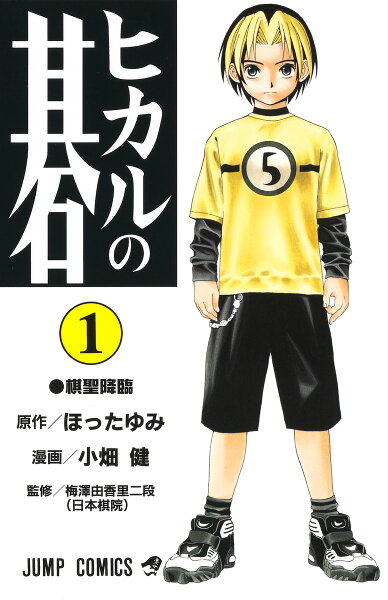
Hikaru no Go
Yu's review of Hikaru no Go — Hikaru Shindo discovers a haunted Go board inhabited by the spirit of a Heian-era master; the spirit possesses him during games; Hikaru gradually discovers his own passion for Go and his desire to surpass the ghost that started everything.
Sports / Drama
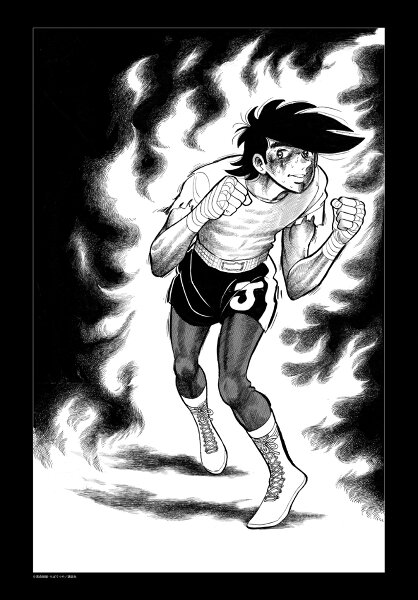
Ashita no Joe
Yu's review of Ashita no Joe — Joe Yabuki claws out of the postwar Tokyo slums, is found by a broken-down trainer, and turns boxing into a way to burn himself completely. From Rikiishi's fatal weight cut to the white-ash final scene, this is the manga that taught the whole genre what cost means.
Sports / Drama
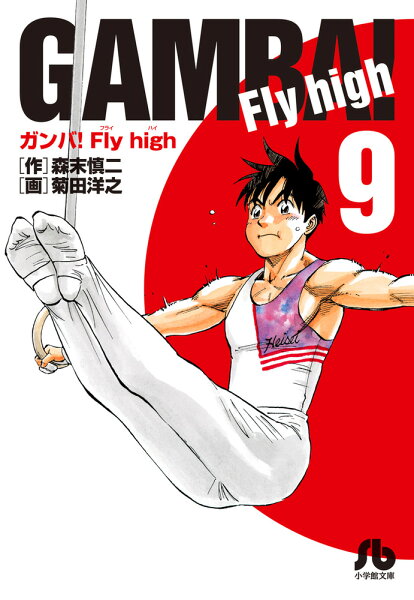
Gamba! Fly High
Gamba! Fly High follows Takeru Fujimaki, a boy with extraordinary natural talent who joins a gymnastics club and discovers that natural ability, without discipline and the right people around you, is not enough to reach the Olympics.
Written by
Yu
Manga Enthusiast from Japan
I grew up in Japan and manga literally saved me during a tough time in elementary school. My English isn't perfect, but my love for manga is real — and I want to share it with you.