
Attack No. 1 Review: The Volleyball Manga That Taught Girls They Were Allowed to Cry — and Keep Playing
by Chikako Urano
Read the first volume. If it doesn't hook you, put it down. It'll hook you.
Buy Attack No. 1 on Amazon →*Affiliate link — I earn a small commission at no extra cost to you.
I grew up on Haikyu!!, like a lot of people my age. So when I finally went back and read Attack No. 1, the manga that basically every volleyball story in Japan is descended from, I expected a museum piece. Something to respect from a distance. Old art, dated values, polite nods.
What I did not expect was to get genuinely choked up over a girl crying at the net.
There's a phrase from this series that every Japanese person of a certain age can recite: "tears come — because I'm a girl." It sounds soft. It is the opposite of soft. Kozue says it in the middle of training so brutal it breaks people, and the meaning is: yes, I'm crying, and no, I'm not stopping. That single line did more for how Japan imagined girls in sports than any speech could. Reading it now, decades late, I understood why my grandmother's generation never forgot this manga.
Quick Take
- The manga that invented sports-shoujo — published in 1968, riding the wave of Japan's Olympic volleyball gold, and every volleyball story since stands on it.
- Chikako Urano took the "spo-kon" (sports-guts) genre and put a girl at the center, complete with brutal training, named special moves, and real grief.
- All Ages — there's competition, very harsh coaching, and a major character death, but nothing graphic. Safe for most readers.
Story Overview
Kozue Ayuhara transfers into Fujimi Academy in rural Shizuoka while still recovering from tuberculosis. She's been told to take it easy. She does the opposite — she falls for volleyball and trains in secret, hiding it from the doctors, until she's fully recovered and good enough to be pushed toward the captaincy.
The early arc is about earning a team. Kozue arrives as an outsider, gets tangled up with the school's delinquent kids, and has to drag a fractured group into something that can actually win. Under the merciless coaching of Shunsuke Hongō — an English teacher who trains his girls like they're going to war — Fujimi climbs to the national championship.
Then the genre's most important move: it lets her break. The death of Tsutomu Ichinose, the boy who was Kozue's emotional anchor, drops her into a slump so deep she nearly quits the sport. (In the famous anime version he dies at sixteen in a car accident; the loss and the slump it triggers are the emotional spine of the back half either way.) Climbing back out of that — not winning her way out, grieving her way out — is the real climax of the series, more than any single match.
From there the scale widens: a punishing loss to a Soviet junior team, rivalry and unexpected encouragement from the Soviet star Shellenina, the development of signature "magic" techniques, and Kozue's path toward the world championship stage and Japan's national team.
Characters
Kozue Ayuhara — She starts as the sickly transfer student who's not supposed to exert herself, and ends as a world-class ace. Her arc isn't a straight upward line of victories; it's a girl who is gentle but stubbornly competitive, who is allowed to collapse under grief and self-doubt and still find her way back to the court. That permission to fall apart and continue is what made her revolutionary.
Midori Hayakawa — A wealthy heiress who first appears as Kozue's rival, openly demanding the captaincy for herself. She becomes Kozue's closest friend and the team's clear number two — and the only supporting character who stays with the series the whole way through. Crucially, her friendship isn't soft. When Kozue is wallowing after Ichinose's death, it's Midori who refuses to coddle her and snaps her out of self-pity. She's technically gifted, the architect behind plays like the "falling-leaf" feint.
Shunsuke Hongō — The coach. On the surface he's a tyrant whose training methods border on cruel, the template for every harsh-but-caring sports mentor that followed. Underneath the brutality is genuine investment in his players. He's where "spo-kon" gets its iconography: the conviction that suffering is the price of becoming great.
Tsutomu Ichinose — Kozue's cousin and her steady emotional support, the person she leans on outside the gym. His death is the hinge the entire second half turns on. He matters less for what he does on the page than for the hole he leaves.
What I Love About It
It's the honesty of "tears come, because I'm a girl."
Strip away the nostalgia and look at what that line is doing. Kozue is crying. The story does not present this as weakness, and it does not present it as something she needs to overcome to be a "real" athlete. The crying and the toughness exist at the same time, in the same person, with no contradiction. She cries and she stays on the court. The companion phrase from the series — "no matter how hard, no matter how sad, on the court I'm fine" — is the same idea swinging the other way: she carries the pain in with her instead of leaving it at the door.
In 1968, that was radical. There was no existing picture of a girl as a sports hero — driven, grinding, suffering for a goal the way boys' manga heroes were allowed to. Urano just... drew one. And she didn't make Kozue a boy with a ponytail. She let her be emotional and let that emotion coexist with iron. I think that's why the line outlived the manga, outlived the anime, and became a thing people quote without remembering where it's from. It told an entire generation of girls that ambition and tears weren't opposites. Reading it now, knowing how much came after, I find that genuinely moving — not as a relic, but as the moment a whole lane of manga opened up.
Memorable Scene ⚠️ Spoiler Warning
The slump after Ichinose's death is the part that stayed with me.
What gets me is that this is a sports manga — the genre that's supposed to solve every problem with more practice — and it stops, completely, to let a teenage girl grieve. Kozue doesn't power through. She comes apart. She becomes listless, half-hearted, ready to walk away from the only thing that ever gave her direction. For a series built on the idea that effort conquers everything, choosing to show that grief doesn't respond to effort is a startling, almost contradictory move.
And the way out isn't a montage. It's Midori. Her best friend refuses to let her drown in self-pity, gets hard with her instead of gentle, and essentially shoves her back toward the life she's about to throw away. The recovery is a friendship being load-bearing, not a training arc. In a genre that usually treats the coach as the source of all growth, here the thing that saves the protagonist is a peer who loves her enough to be unkind. I didn't expect a 1968 shoujo manga to understand grief that clearly.
Pros & Cons
Pros:
- The historical origin point of an entire genre — reading it is reading the source code of every volleyball manga since.
- Genuinely strong emotional core: the grief arc and Kozue–Midori friendship still land.
- Short and complete at 12 volumes — you can read the whole thing.
Cons:
- No official English release — Japanese editions only.
- The art and pacing are unmistakably late-1960s, and the "magic technique" volleyball is gloriously unrealistic.
- The spo-kon training ethos (suffering as virtue) can read as harsh to modern eyes — that's either a fascinating time capsule or a barrier, depending on you.
Is Attack No. 1 Worth Reading?
If you love volleyball manga or sports-shoujo and want to see where it all began, yes — Attack No. 1 is essential, and its emotional spine (grief, friendship, a girl allowed to cry and keep fighting) holds up far better than its vintage art suggests. If you only want polished modern sports storytelling, the 1968 pacing and unrealistic techniques may keep you at arm's length.
Similar Manga
| Title | Its Approach | How Attack No. 1 Differs |
|---|---|---|
| Haikyu!! | Modern, grounded ensemble volleyball with realistic tactics | Attack No. 1 is the genre's origin — one heroine, "magic" moves, and raw 1960s melodrama |
| Aim for the Ace! | The other foundational sports-shoujo, tennis, harsh coach, girl protagonist | Attack No. 1 came first and set the spo-kon-for-girls template Aim for the Ace! refined |
| Chihayafuru | A driven girl pouring herself into competitive karuta and friendship | Attack No. 1 trades karuta's elegance for sweat, named killer spikes, and Olympic-era national fervor |
Cultural Context
You can't separate this manga from its moment. Japan's women's volleyball team — the "Witches of the East" — won gold at the 1964 Tokyo Olympics, turning female athletes into national heroes practically overnight. Attack No. 1 channeled that euphoria onto the page in 1968, and the 1969–1971 anime adaptation became a phenomenon, averaging roughly 20% viewership with an opening theme that sold around 700,000 copies. Its reach went international: Italian volleyball star Francesca Piccinini has credited the show with making her start playing. This is a manga that didn't just reflect a sports craze — it manufactured one.
Where to Buy
There's no licensed English edition of Attack No. 1. The Japanese print and digital releases are the only legitimate way to read it — so if you want it, you're reading it before the English-speaking world catches up.
Search Attack No. 1 on Amazon.co.jp →
This post contains affiliate links. If you purchase through these links, I may earn a small commission at no extra cost to you. As an Amazon Associate, I earn from qualifying purchases.
*Affiliate link — I earn a small commission at no extra cost to you.
More Manga You Might Like
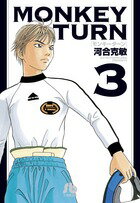
Sports / Drama
Monkey Turn
Monkey Turn follows Hasegawa Kouji, a young man who enters the world of competitive motorboat racing (kyotei) — Japan's unique professional boat racing sport — and fights to master the dangerous, technical, and thrilling 'monkey turn' technique.
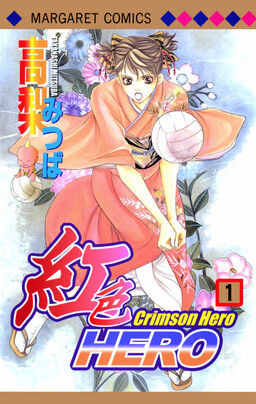
Sports / Drama
Crimson Hero
Yu's review of Crimson Hero — Nobara Sumiyoshi is the eldest daughter of a family that runs a traditional Japanese ryotei and is expected to inherit it. When her mother cancels the girls' volleyball club at her new school, Nobara runs away from home, becomes the live-in dorm mother for four boys on the school's volleyball team, and fights to rebuild a girls' team from nothing.
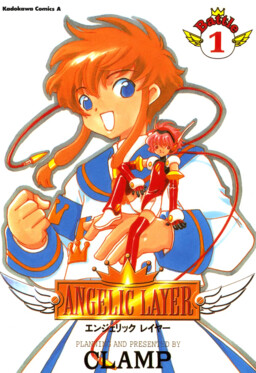
Sports / Sci-Fi
Angelic Layer
A review of CLAMP's Angelic Layer — 5 volumes in Monthly Shōnen Ace. Misaki Suzuhara arrives in Tokyo and discovers Angelic Layer, a competition game where small battle dolls fight under the mental and physical direction of their owners. Dark Horse Comics' English edition is complete.
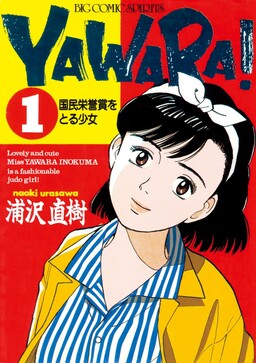
Sports / Romance
Yawara! A Fashionable Judo Girl
Yu's review of Yawara! — Yawara Inokuma is the granddaughter of a legendary judo master who has trained her since childhood to be a world champion; she has extraordinary talent and absolutely no desire to compete; what follows is her journey toward the Barcelona Olympics despite her own resistance.

Sports / Romance
Touch
Twin brothers Tatsuya and Kazuya Uesugi live next door to Minami Asakura. Kazuya is the baseball genius. Tatsuya is the slacker. Minami's dream is to see one of them pitch at Koshien. Then volume 6 happens, and Mitsuru Adachi's 1981 baseball manga becomes the work that defined Japanese sports manga forever.
Sports / Drama
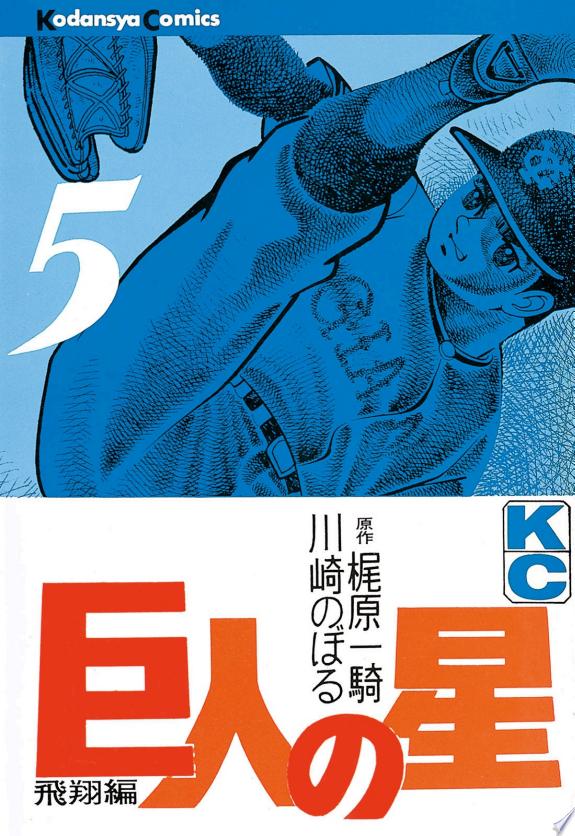
Kyojin no Hoshi
Kyojin no Hoshi follows Hyuma Hoshi, whose father — a former baseball player who never achieved his dream — has raised him from childhood to be a star pitcher for the Yomiuri Giants, through training that borders on abuse and produces a player who may be the greatest — at tremendous personal cost.
Written by
Yu
Manga Enthusiast from Japan
I grew up in Japan and manga literally saved me during a tough time in elementary school. My English isn't perfect, but my love for manga is real — and I want to share it with you.
Disclosure: This post contains affiliate links. As an Amazon Associate, I earn from qualifying purchases at no extra cost to you.