
Astro Kyudan Review: The Baseball Manga Where the Bat Bleeds Before the Batter Does
by Shiro Tozaki (story) / Norihiro Nakajima (art)
Read the first volume. If it doesn't hook you, put it down. It'll hook you.
Buy Astro Kyudan on Amazon →*Affiliate link — I earn a small commission at no extra cost to you.
I grew up on baseball manga where the climax was a kid finally throwing a strike after a hundred chapters of practice. Then a friend in Osaka handed me a battered tankobon of アストロ球団 and said "this is what happens when Shonen Jump stops pretending baseball is safe." I read the first game and I genuinely did not know whether I was watching a sport or a battlefield. Forty years before me, kids read this in 1972 and felt the same thing. That confusion — am I allowed to enjoy something this insane? — is the whole experience.
I came to it expecting a curiosity, an old "so bad it's good" relic. What I found instead was a manga so committed to its own madness that it loops back around into something I can only call sincere.
Quick Take
- Nine superhuman players — all born at exactly 9:09:09 on September 9, 1954, each marked with a baseball-shaped birthmark — assembled to fulfill pitcher Eiji Sawamura's dying dream of "the greatest team the world will ever see"
- 20 volumes that contain only three full games, because each game is a war of attrition that leaves bodies on the field
- Rated T (Teen) — but heavy: blood, broken bones played as triumph, death, and a batter who commits ritual suicide to focus before swinging
Story Overview
The setup comes from a premonition. The legendary pre-war pitcher Eiji Sawamura — Japan's Cy Young, dead in WWII — is said to have dreamed of nine "Astro Supermen," all born in the same instant, who would build the strongest baseball team the world has ever seen. Manager J. Shuro spends the series tracking them down, because each man carries a baseball-shaped birthmark and a body that should not be able to do what it does.
The structure is the trick. Across four years of serialization and 20 volumes, the team plays only three games — that is not a typo. Each game expands to fill volumes because every at-bat is a single combat. The Astro team faces the revenge-driven Black Astro squad, then a Lotte Orions-flavored gauntlet, and finally the Victory team, the longest and bloodiest war of all. Players get injured, players get carried off, players die, and the game simply continues over them.
The turning point of the whole series is the rise of Kyushiro Touge, an Astro superman who hates his own birthmark and turns against his brothers, forming the Victory team specifically to exterminate the Astros. The final stretch isn't "win the championship" — it's whether the Astro blood inside Touge wakes up before the game kills everyone playing it. By the end, the nine are finally assembled and set their eyes overseas, toward America's major leagues, which was always Sawamura's true target.
Characters
Kyuichi Uno (宇野球一) — the ace pitcher, cleanup hitter, and team leader. He first appears impersonating a real pro to test himself before Shuro finds him. He's the purest distillation of the manga's ethic: in one sequence he grinds his own hand on a drill and bats with a broken collarbone, because stopping is never on the table. He's the one who invents the series' most famous swing.
Kyuzaburo Ijuin (伊集院球三郎) — a beautiful blind first baseman, a former race car driver who lost his sight and was revived through a method as deranged as everything else here (a corpse strapped to a parachute). He plays through a "mind's eye," and his arc climaxes in a fated death-duel with his own brother, Daimon Ijuin, who joins the enemy specifically to kill him.
Kyushiro Touge (峠球四郎) — grandson of a corporate magnate, an Astro superman who despises the mark on his arm and so builds the Victory team to wipe his own kind out. His arc is the emotional spine of the back half: through the brutality of the final game, the Astro blood he tried to deny awakens in him. After his defeat he tries to commit seppuku and is stopped by a teammate — the manga refusing to let even its antagonist off cleanly.
The Akechi twins (明智球七 / 球八) — the small one, Kyushichi, is the "home run cleaner," an outfielder who keeps standing on defense even after his Achilles tendon is cut. The giant, Kyuhachi, is a "human launch pad" who literally hurls his brother into the air to rob home runs over the wall. They start as opponents and are absorbed into the team after Uno's signature swing defeats them.
What I Love About It
What I love is that it takes itself completely, suicidally seriously.
A manga where pitches kill batters could so easily be a joke, a wink, a parody you laugh at from a safe distance. Astro Kyudan never winks. When a player decides to finish a play knowing it will cost him, the manga doesn't frame it as gallows comedy — it frames it as fulfillment, the exact thing the character was born at 9:09:09 to do. The premise is ridiculous; the emotions underneath it are not. That gap between absurd setup and genuine feeling is the engine of the whole thing, and almost no other sports manga commits to it this hard.
And the craft of the escalation is real. The Giacobini Meteor Shower Swing — Uno's signature batting technique — is invented mid-game to beat a superhuman outfield: he deliberately cracks his bat before contact so it shatters on the swing, and the splinters fly with the ball, hiding it like a meteor shower so the fielder can't track it. It's nonsense physics, but it's nonsense built on an actual logic, named after a real meteor shower, and the manga sells it with such total conviction that you stop questioning and start cheering. That is a magic trick, and Nakajima pulls it off every single game.
Memorable Scene ⚠️ Spoiler Warning
The image that won't leave me is a batter committing ritual suicide before stepping into the box — opening his own body to channel total commitment into a single swing. It is staged not as horror but as the ultimate expression of the manga's creed: there is no version of "trying your best" extreme enough, so the body itself becomes the price of admission.
Right alongside it is the Human Niagara defense from the Victory team game — a defensive play so violent that even the characters watching ask whether you can still call it "fielding" or whether it's just a killing technique. Bodies fly, blood sprays, the umpire barely pretends to enforce a rule. On the page it reads like a war panel that wandered into a baseball diamond. The Victory game is openly billed in-story as a "death match," and the manga earns that billing with players who are described as a kamikaze survivor literally seeking death on the field. Whether all of this is heroic or horrifying depends entirely on how you read everything before it — and that ambiguity is exactly why it sticks.
Pros & Cons
Pros
- Total, fearless commitment to its own insane premise — the sincerity is what makes it work
- Character "deaths" and sacrifices actually carry weight, which is rare in sports manga
- The escalation craft is genuine: each technique tops the last with its own internal logic
- A complete, self-contained classic that anchors a whole lineage of over-the-top Jump sports manga
Cons
- No licensed English edition — you'll need Japanese
- The premise demands you abandon every expectation of realistic baseball
- 20 volumes for three games means pacing that's pure escalation with few quiet beats
- The violence and ritual-suicide imagery are intense — this won't work for everyone, and that's either the point or a dealbreaker depending on you
Is Astro Kyudan Worth Reading?
If you want sports manga at its most extreme — and a genuine piece of 1970s Shonen Jump history that influenced creators from Masami Kurumada to Hideaki Anno — then yes, absolutely. If you want baseball that actually behaves like baseball, this is the wrong book. But as the most unhinged, sincerely committed baseball manga ever serialized, it delivers everything it promises and then some.
Similar Manga
| Title | Its Approach | How Astro Kyudan Differs |
|---|---|---|
| Star of the Giants (Kyojin no Hoshi) | Hot-blooded baseball built on brutal training and family drama | Astro Kyudan skips realism entirely — superhuman match-level combat instead of training arcs |
| Captain Tsubasa | Soccer escalated into near-supernatural skill duels | Same escalation instinct, but Astro Kyudan adds actual blood, death, and birthmarked "supermen" |
| Saint Seiya | Combat manga of escalating special techniques and sacrifice | Astro Kyudan applies that exact logic to a baseball diamond — and Kurumada cites it as an influence |
Official English Translation Status
Astro Kyudan has no licensed English release. There's no legitimate English edition to point you to — the Japanese print and digital tankobon are the only proper way to read it.
Where to Buy
No English release yet. That just means you find it before everyone else does.
The Japanese edition is on Amazon Japan:
Search Astro Kyudan on Amazon.co.jp →
This post contains affiliate links. If you purchase through these links, I may earn a small commission at no extra cost to you. As an Amazon Associate, I earn from qualifying purchases.
*Affiliate link — I earn a small commission at no extra cost to you.
More Manga You Might Like
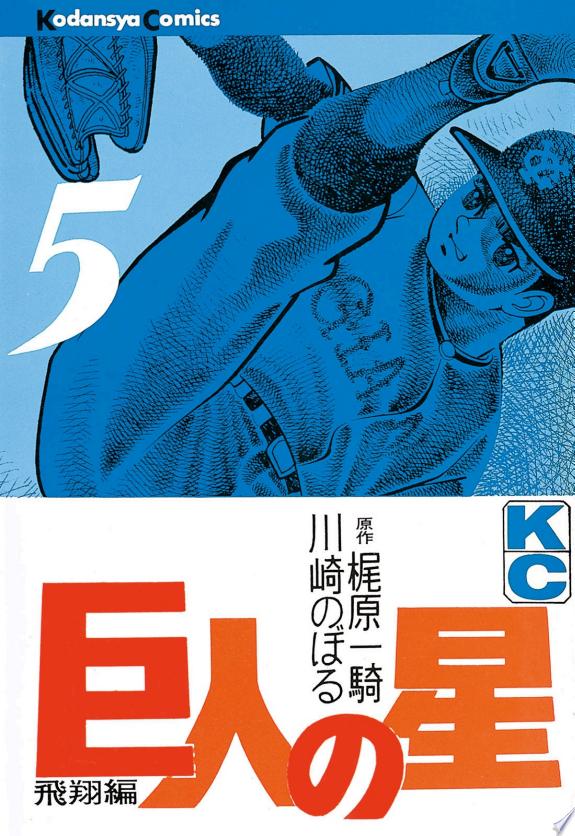
Sports / Drama
Kyojin no Hoshi
Kyojin no Hoshi follows Hyuma Hoshi, whose father — a former baseball player who never achieved his dream — has raised him from childhood to be a star pitcher for the Yomiuri Giants, through training that borders on abuse and produces a player who may be the greatest — at tremendous personal cost.
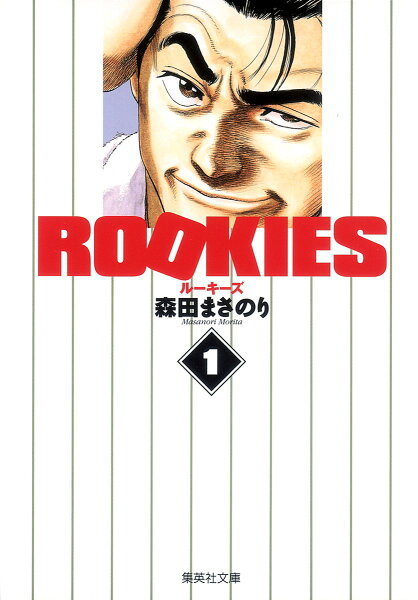
Sports / Drama
Rookies
Rookies follows Koichi Kawato, a young teacher transferred to Futakotamagawa High School who discovers a baseball club suspended after a violent incident — and decides, against all institutional advice, to coach them back to the Koshien.
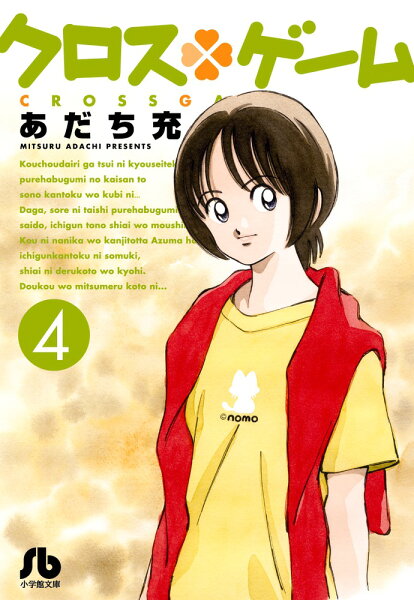
Sports / Romance
Cross Game
Yu's review of Cross Game — Ko grows up next to the four Tsukishima sisters, loses Wakaba in fifth grade, and spends seventeen volumes chasing the dream she left behind at Koshien.
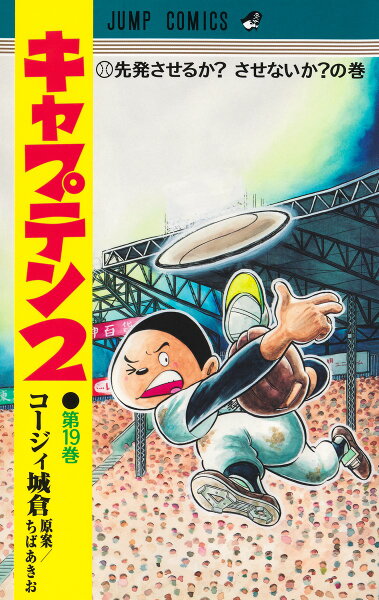
Sports / Drama
Captain
Captain follows four generations of captains at a weak downtown middle school baseball team — starting with Takao Taniguchi, a former bench player mistaken for a star, who trains himself half to death rather than admit the truth.
Sports / Drama
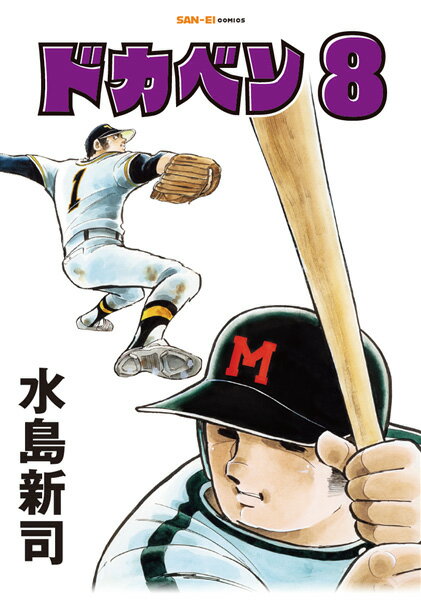
Dokaben
Dokaben follows Taro Yamada, a gentle giant who starts out in his middle school's judo club before becoming the catcher who carries Meikun High School to Koshien. Shinji Mizushima's classic ran in Weekly Shonen Champion from 1972 to 1981.
Sports / Drama
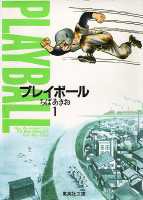
Play Ball
Play Ball follows Koichi Tani, a key player from Captain, into high school at Sumiya High — a sequel that shifts perspective and asks what happens to the supporting cast after the captain's era ends.
Written by
Yu
Manga Enthusiast from Japan
I grew up in Japan and manga literally saved me during a tough time in elementary school. My English isn't perfect, but my love for manga is real — and I want to share it with you.
Disclosure: This post contains affiliate links. As an Amazon Associate, I earn from qualifying purchases at no extra cost to you.