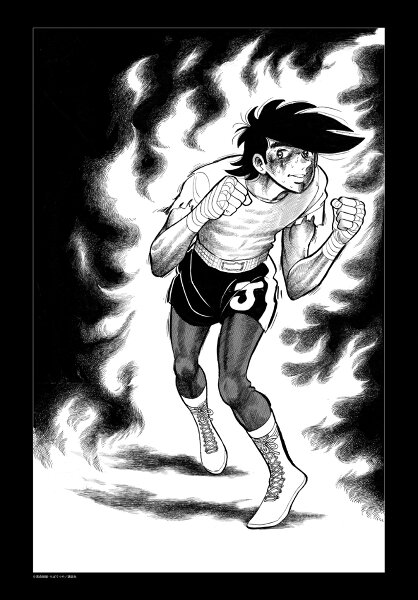
Ashita no Joe Review: The Boxing Manga Where the Hero Wins by Burning Down to Pure White Ash
by Asao Takamori / Tetsuya Chiba
Read the first volume. If it doesn't hook you, put it down. It'll hook you.
Buy Ashita no Joe on Amazon →*Affiliate link — I earn a small commission at no extra cost to you.
I grew up reading sports manga where effort pays off. You train, you bleed a little, you win, the crowd cheers, and the last page tells you that hard work is always rewarded. I loved those stories. They got me through some lonely afternoons. But the first time I read Ashita no Joe, I realized I'd been reading a softer version of the thing this manga invented. Here, effort doesn't get rewarded with a happy ending. It gets rewarded with the right to burn yourself all the way down.
I read it as an adult, decades after it ran, and it still hit harder than almost anything published since. There's a line near the end where Joe says his fire flares up bright and hot for a moment, almost blinding — and then all that's left is pure white ash. I've never been able to shake that image. This is a review of the manga that made me rethink what a sports story is even allowed to be.
Quick Take
- The foundation of the entire sports-manga genre — a postwar classic whose ending is still argued about more than 50 years after it ran
- Joe Yabuki doesn't fight to win comfortably; he fights to spend himself completely, and the series asks whether that's a tragedy or a kind of victory
- 20 volumes, complete; ageRating T (Teen) but among the heaviest sports manga ever made — death, brain damage, and slum poverty are all on the page
Who Is This Manga For?
- Readers who want to understand where the modern sports-manga genre actually came from
- Boxing-manga fans who want the one that started it all
- Anyone interested in postwar Japan and how a comic became a political symbol
- Readers who want a sports story that asks, honestly, what a life spent chasing one thing actually costs
Content Warnings & Age Rating
Age Rating: T (Teen) Content Warnings: Boxing violence with serious, lasting damage; the death of a major character from a brutal weight cut and brain hemorrhage; punch-drunk syndrome (chronic brain damage) shown directly; honest depiction of slum poverty; self-destruction as a core character trait
This is heavier than its rating suggests. Nothing is gratuitous, but nothing is softened either.
Yu's Rating
| Category | Score |
|---|---|
| Story Depth | ★★★★★ |
| Art Style | ★★★★☆ |
| Character Development | ★★★★★ |
| Accessibility for Non-Japanese Readers | ★★★★☆ |
| Reread Value | ★★★★★ |
Story Overview
Joe Yabuki is a drifter who turns up in a postwar Tokyo slum with nothing — no family, no home, no plan, just a talent for fighting and a refusal to back down from anyone. There he runs into Danpei Tange, a washed-up, alcoholic former boxing trainer who spots raw boxing instinct in this angry kid and decides Joe is going to be his redemption.
The first real turning point comes in juvenile detention, where Joe meets Tōru Rikiishi — a genuinely gifted boxer from a more privileged background. Their detention-tournament bout ends without a clean result, and both vow to settle it as professionals. Joe claws up through the amateur ranks on a brawling style and his trademark cross-counter, even landing a famous triple cross-counter to take down the champion Wolf Kanagushi.
Then comes the fight that defines everything after it. Rikiishi is naturally a heavier man, so to meet Joe he forces himself through a savage weight cut down to bantamweight. He wins — he knocks Joe out in the eighth round — but the combination of the brutal weight loss and a brain hemorrhage from the fight kills him soon after. Joe is shattered. For a long stretch he can't even throw a punch at an opponent's head, haunted by what his boxing did.
He claws back. He fights an illegal countryside circuit, then the world-ranked Carlos Rivera, who befriends him — and who is later destroyed in a single round by world champion José Mendoza, left brain-damaged. By the time Joe earns his shot at Mendoza, Yoko Shiraki has discovered that Joe himself is already punch-drunk. She begs him to cancel, confesses she loves him; he refuses. The title fight goes the full fifteen rounds. Joe loses on points, but he gives Mendoza everything — so much that Mendoza's hair turns white from the ordeal. Afterward Joe tells Danpei it's all burned to ash, and when Danpei turns back, Joe is sitting motionless in his corner, smiling.
Characters
Joe Yabuki — One of the most fully realized protagonists in manga. What drives him isn't conventional courage; it's a compulsion not to stop, ever, even when stopping is the sane choice. His arc runs from a feral slum kid to a fighter who consciously chooses to spend his entire self in one fight rather than live a long, half-lived life. He is not admirable in the usual way. He's something rawer and more real.
Danpei Tange — The broken trainer who builds himself back up through Joe. His belief is the steadiest emotional thread in the series; he sees more in Joe than Joe ever sees in himself, and he's the one left holding Joe at the very end.
Tōru Rikiishi — The rival, and the series' first devastating lesson in what boxing costs. His decision to drop a full weight class to face Joe — and the death that follows — reframes everything. After Rikiishi, Joe can't fight the same way, and neither can the reader.
Carlos Rivera — A charismatic, world-ranked fighter who becomes Joe's friend, then a warning. His destruction by Mendoza, leaving him brain-damaged, is the future Yoko is terrified Joe is walking straight into.
Yoko Shiraki — She starts as a millionaire's granddaughter and grows into a gym manager who runs Joe's path to the title. She's the one who uncovers that Joe is punch-drunk and tries to stop the final fight — the only voice in the story arguing for Joe to choose living over burning.
Art Style
Tetsuya Chiba essentially wrote the visual grammar of boxing manga here. The fight sequences read with total clarity — you feel the impact, the speed, the accumulating damage. The figures have a deliberate roughness that suits men who live in slums and gyms, and the postwar Tokyo backdrops are drawn with real historical specificity. It looks like 1968–73 because it is 1968–73, and that's part of its power.
Cultural Context
Ashita no Joe ran in Weekly Shōnen Magazine from 1968 to 1973, while the memory of postwar slum poverty was still living experience for many readers. It became a political icon. When Japanese Red Army members hijacked a plane in 1970, they reportedly declared "We are tomorrow's Joe." And in March 1970, after Rikiishi died in the pages of the magazine, around 700 fans attended a real funeral held for the fictional character at Kodansha's Tokyo headquarters — staged by Shūji Terayama's avant-garde theater troupe Tenjō Sajiki, complete with incense, sutras, and a referee's count to ten on a gong. I don't know another comic that bled into reality quite like that.
What I Love About It
The "pure white ash" idea, and how completely the manga commits to it. Most sports stories treat total effort as a means to an end — you give everything so that you win. Joe inverts it. For him, burning completely isn't the price of victory; it is the victory. He says his fire roars up bright and hot for a moment, almost blinding, and then all that remains is pure white ash — and he'd rather have that one blinding moment than a long life of, in his words, incomplete combustion.
What gets me is that the manga earns this philosophy instead of just stating it. By the final fight, Joe is already brain-damaged. Yoko has told him. He knows. Carlos, his friend, is living proof of where this road ends. And he steps into the ring anyway, not out of denial but out of a clear-eyed choice that this is what he wants his life to be for. The white-ash line lands so hard precisely because the story spent twenty volumes making sure you understand exactly what it's going to cost him. That's not motivational-poster effort. That's a manga willing to say a fully spent life might be worth more than a long careful one — and then making you sit with whether you agree.
Memorable Scene ⚠️ Spoiler Warning
The final panel. Joe has gone the full fifteen rounds with José Mendoza and lost on points — but he pushed the world champion so far that Mendoza's hair has turned white from the trauma of the fight. Joe walks back to his corner, tells Danpei that everything has burned to ash, and slumps into his chair. Danpei turns away for a second to say something, turns back — and finds Joe sitting completely still, a faint smile on his face, not responding.
The manga refuses to tell you whether he's dead. Takamori later said in a biography that Joe died; Chiba has always declined to confirm it, hinting Joe might have survived. The page just gives you that smile and stops. It's one of the most discussed endings in manga history, and after reading the whole thing, I understand why nobody wanted to resolve it. Whether Joe lives or dies almost doesn't matter — he's done. He burned all the way down to white ash, on his own terms, smiling. That image has stayed with me longer than any victory pose in any other sports manga I've read.
What English-Speaking Fans Say
For decades English readers knew Ashita no Joe mostly by reputation — through scanlations, the anime, and constant references in other manga (the white-ash ending famously echoes through Banana Fish, among others). The reaction I see most often is a kind of surprised reverence: people expect a dated old boxing comic and instead find a character study with genuine literary weight and an ending that legitimately unsettles them. It's cited again and again as the single most important sports manga for understanding why the genre turned out the way it did.
Pros & Cons
Pros
- The foundational sports manga, complete at 20 volumes
- Joe Yabuki is a protagonist of genuine literary standing
- The Rikiishi arc and the final scene are among manga's all-time peaks
- Postwar setting gives it a weight and specificity most sports manga lack
Cons
- The 1968–73 art style looks and reads differently from modern manga
- The postwar context rewards a little background reading
- It is genuinely heavy — death, brain damage, self-destruction — and it doesn't offer comfort. That bleakness is either the whole point or a dealbreaker, depending on what you want from a sports story.
Is Ashita no Joe Worth Reading?
Yes — if you want to understand where sports manga came from and you're willing to read a story that treats total effort as something that can destroy you. It's complete, it's the genre's foundation, and its ending is unforgettable. Just know going in that this is the manga that taught everyone else what cost means, and it doesn't flinch from showing it.
Similar Manga
| Title | Its Approach | How Ashita no Joe Differs |
|---|---|---|
| Hajime no Ippo | Modern boxing manga with a lighter register and deep love of the sport's technique | Ashita no Joe is darker and more philosophical — boxing as self-immolation, not self-improvement |
| Slam Dunk | Big-hearted sports manga about what the game asks of you | Ashita no Joe asks what the sport takes from you, permanently, and never softens the answer |
| Vagabond | Inoue's serious, painterly study of a fighter's inner life | Ashita no Joe is rougher and rooted in real postwar poverty, with a fixed tragic endpoint rather than an open spiritual search |
Reading Order / Where to Start
Start at Volume 1. The slum setting and Joe's first encounter with Danpei are essential context for everything that follows — none of the later weight lands without them.
Official English Translation Status
There was never an official English edition until recently. In February 2024, Kodansha USA announced Ashita no Joe: Fighting for Tomorrow, the first official English release — eight oversized hardcover volumes (each collecting roughly 2.5 of the original 20), available in print and digital. As of this writing, five of the eight volumes are out and the rest are ongoing.
Format Comparison
| Format | Notes |
|---|---|
| Oversized Hardcover | Kodansha USA's Fighting for Tomorrow edition; 8 jumbo volumes, ~580 pages each |
| Digital | Available per volume |
Where to Buy
Read the first volume. If it doesn't hook you, put it down. It'll hook you.
This post contains affiliate links. If you purchase through these links, I may earn a small commission at no extra cost to you. As an Amazon Associate, I earn from qualifying purchases.
*Affiliate link — I earn a small commission at no extra cost to you.
More Manga You Might Like
Sports / Action
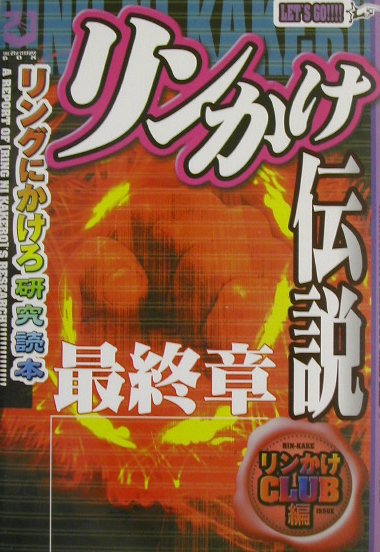
Ring ni Kakero
Ring ni Kakero follows Ryuji Takane and his sister Kiku through a boxing journey that begins in realism and evolves into one of manga's most spectacular supernatural combat series — the bridge between sports manga and the battle shonen that followed.
Sports
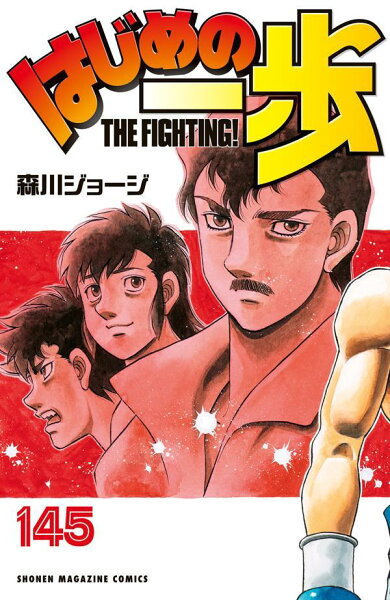
Hajime no Ippo
Yu's review of Hajime no Ippo — a bullied high school boy is saved by a professional boxer, discovers he has a natural gift for the sport, and begins the long road to becoming a champion.
Sports / Drama
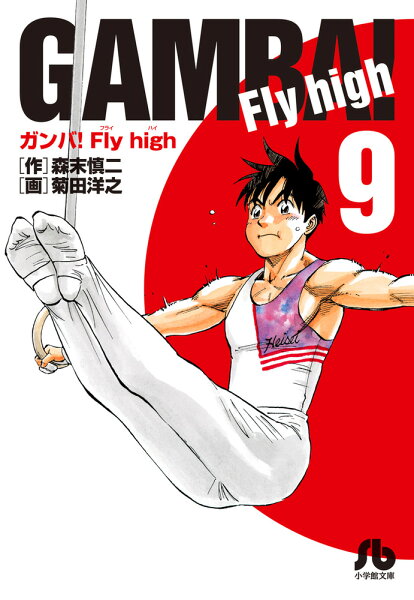
Gamba! Fly High
Gamba! Fly High follows Takeru Fujimaki, a boy with extraordinary natural talent who joins a gymnastics club and discovers that natural ability, without discipline and the right people around you, is not enough to reach the Olympics.
Sports / Drama
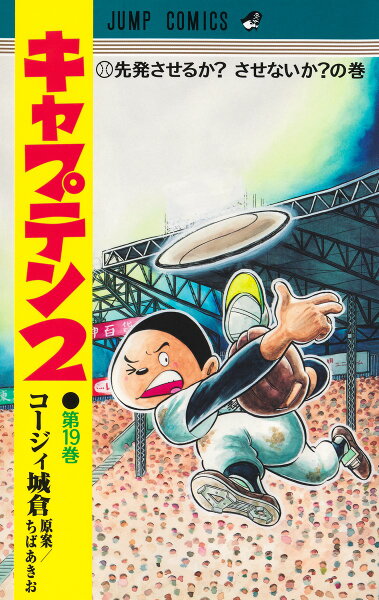
Captain
Captain follows four generations of captains at a weak downtown middle school baseball team — starting with Takao Taniguchi, a former bench player mistaken for a star, who trains himself half to death rather than admit the truth.
Sports / Drama
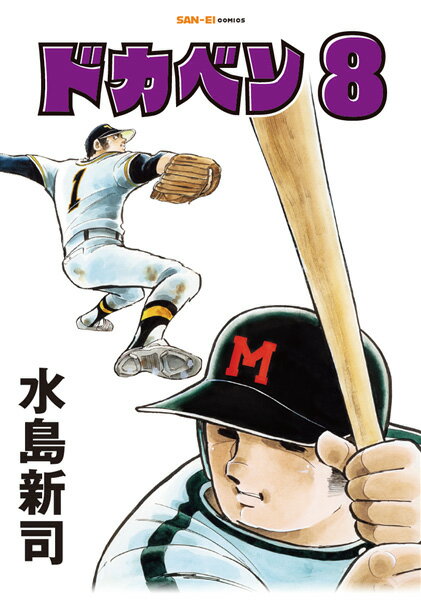
Dokaben
Dokaben follows Taro Yamada, a gentle giant who starts out in his middle school's judo club before becoming the catcher who carries Meikun High School to Koshien. Shinji Mizushima's classic ran in Weekly Shonen Champion from 1972 to 1981.
Sports / Drama
Ore wa Teppei
Ore wa Teppei follows Teppei, a wild boy raised in the mountains who comes to the city and discovers judo — a story about raw talent meeting structured discipline, and what happens when someone who has never been constrained learns to choose constraint.
Written by
Yu
Manga Enthusiast from Japan
I grew up in Japan and manga literally saved me during a tough time in elementary school. My English isn't perfect, but my love for manga is real — and I want to share it with you.
Disclosure: This post contains affiliate links. As an Amazon Associate, I earn from qualifying purchases at no extra cost to you.