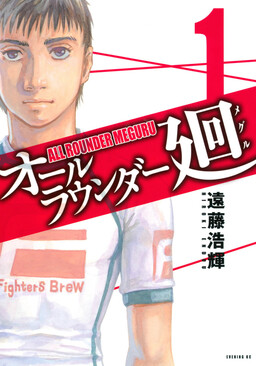
All-Rounder Meguru Review: The MMA Manga Where the Hero Loses to His Best Friend
by Hiroki Endo
Read the first volume. If it doesn't hook you, put it down. It'll hook you.
Buy All-Rounder Meguru on Amazon →*Affiliate link — I earn a small commission at no extra cost to you.
I started training in a small combat gym when I was in my twenties — nothing serious, just a way to stop hiding from people. I was never good. I'd watch the guy next to me pick up a movement in one session that took me a month, and I'd go home and lie awake doing the math: how many years of this before I'm not the worst person in the room? For most of us the answer is "you never get there." That's not a tragedy. It's just true.
That's the exact feeling All-Rounder Meguru lives inside. I came to it because Hiroki Endo wrote Eden: It's an Endless World!, one of the bleakest, smartest sci-fi manga I've ever read, and I wanted to see what he'd do with a sport. What he did was write the only fighting manga I know that's honest about the thing nobody wants to admit: that you can want it with everything you have, train like your life depends on it, and still lose to your best friend. Twice.
Quick Take
- A shoot-wrestling (Japanese MMA) manga from Eden author Hiroki Endo that treats grappling, striking, and ground theory as real technique — not a backdrop for a power fantasy
- The emotional engine isn't a tournament ladder; it's Meguru chasing a childhood friend who is simply, permanently better than he is
- 19 volumes, complete; licensed in English digitally by Kodansha USA. Rated T+ (Older Teen) for realistic combat violence and blood
Story Overview
Meguru Takayanagi is a high schooler with no direction who drifts into a shoot gym — shooto, the Japanese form of MMA that blends wrestling, striking, and submission grappling. He has a karate background and good stamina, but no standout weapon. He's an "all-rounder" in the unflattering sense: decent at everything, exceptional at nothing.
Six months in, the gym pushes him into his first amateur tournament. He doesn't want to go. He goes anyway. And the opponent fate hands him is Takashi Yamabuki — the childhood friend he lost touch with years ago, now grown into a sharp, intimidating striker with a yakuza tattoo on his shoulder and a coldness Meguru doesn't recognize. Meguru gets taken apart. He's beaten badly.
That loss is the whole series in miniature. Instead of a revenge arc, Endo lets it become an obsession that quietly reorganizes Meguru's entire life. He starts training seriously. He grinds through regional amateur events — semifinals here, a win there — pointing himself at the goal of turning pro and someday standing across the ring from Takashi as an equal.
The series builds, across all 19 volumes, to a rematch in a championship final (volumes 18–19). And here's where Endo refuses the easy ending. The structure of a sports manga screams that Meguru should win this one. He doesn't. He fights brilliantly — far closer than the first time — but Takashi beats him again. They walk away on separate roads: Takashi, undefeated domestically, heads to America; Meguru sets his sights on a shooto championship of his own. What they get back, after all of it, is the friendship they lost as kids.
Characters
Meguru Takayanagi — The protagonist, a lightweight whose honesty about his own ceiling is what makes him rare. He knows he's better than average and not yet good enough, and he never lies to himself about the gap. His arc isn't "talent revealed late." It's a kid choosing to keep climbing a wall he may never get over, and finding meaning in the climbing itself. By the end he's lost the war with Takashi and still come out larger for it.
Takashi Yamabuki — Meguru's childhood friend and the gravity the whole story orbits. The shoulder tattoo and the underworld edge aren't window-dressing; they mark how far the two boys' lives diverged. He's not an antagonist — he's a benchmark Meguru can't reach, fought with total focus and zero theatrics. In the final he wins by staying calm, working Meguru's body, and countering instead of chasing. Then he leaves for America, finally reconnected to the friend he hurt.
Maki Kamiya — A tall female kickboxer at the gym with a blunt, no-nonsense personality who spars with the men as an equal. She becomes Meguru's training partner and, eventually, the person he falls for. The romance plays out as awkwardly and persistently as everything else in the series.
The gym — Endo populates the supporting cast — trainers, judo-background grapplers, fellow amateurs — to build a believable picture of what a small Japanese fight gym actually feels like: cramped, sweaty, and full of people privately doing the same hopeless math I used to do.
What I Love About It
Meguru loses. Not as a speed-bump before triumph — he loses the fights that matter most, to the one person he most wants to beat, for the plainest reason there is: Takashi is better. The first tournament, the man he's spent the series chasing destroys him. The final rematch, after 19 volumes of grinding, he loses again. Endo had every structural excuse to give him the win and he just... didn't.
What I love is that this isn't cynicism — it's respect. Respect for the sport, which doesn't reward effort proportionally, and respect for the reader, who's assumed to be adult enough to handle it. The fights stay genuinely uncertain because the outcome was never guaranteed by genre. And the aftermath is braver than the fight: Meguru loses, and the manga asks whether the years were wasted, and answers no — because what he built was a self that could stand across from Takashi without flinching, and a friendship that came back. That's a harder, truer thing to dramatize than a knockout win, and Endo nails it.
Memorable Scene ⚠️ Spoiler Warning
The final, volumes 18–19. The championship rematch with Takashi, and the closest Meguru has ever come.
Meguru opens strong — he actually scores the first knockdown, the moment the whole series has been building toward. But Takashi doesn't panic. He stays cold, goes back to the body, and methodically grinds Meguru down — front kicks, a Brazilian kick, steady pressure that piles up damage even as he hurts his own left shoulder absorbing Meguru's right middle kick. Late in the fight Meguru takes a knee that tears his retina; one eye is gone, he's down on points, and with around forty seconds left the only path to winning is a knockout.
So he hunts it. He chases Takashi to the corner, desperate to finish — and that desperation is exactly the opening. When Meguru lunges to take the back, Takashi switches, counters, and sinks a choke. Points even, then KO. Meguru loses, suffers a retinal tear, and is handed a four-week training ban. What stays with me isn't the loss itself but how it's framed: the back-take that should have been the heroic finish is the precise mistake that loses him the fight. Endo lets the most "shonen" move in the playbook be the thing that beats his hero. I've never forgotten it.
Pros & Cons
Pros
- Technically accurate shoot-wrestling — grappling positions, striking mechanics, and ring strategy that hold up to real MMA knowledge
- Character work treats winning and losing with equal weight; the losses mean something
- Hiroki Endo's art renders the physical toll of combat with the same realism as his Eden work
- A complete, deliberately structured 19-volume arc with a real ending
Cons
- Combat is graphic and the consequences (a torn retina, real damage) are unflinching
- It's far less triumphant than most sports manga — the hero loses the big ones
- The romance subplot is divisive; Meguru's pursuit of Maki reads as pushy to some readers
- This won't work for everyone — if you read sports manga for the catharsis of the hero winning, this one will frustrate you on purpose.
Is All-Rounder Meguru Worth Reading?
If you want a combat-sports manga that respects the sport and respects you enough to let its hero lose to a better friend, yes — it's one of the most honest fighting manga ever licensed in English. If you read sports manga for the guaranteed last-page victory, this will leave you cold by design.
Similar Manga
| Title | Its Approach | How All-Rounder Meguru Differs |
|---|---|---|
| Holyland | Street-fighting realism with detailed technique breakdowns | Trades street survival for the regulated shooto/amateur-MMA circuit |
| Teppu | Women's MMA, equally cold-eyed about talent gaps and ego | Centers a male all-rounder and a lifelong friendship-rivalry |
| Slam Dunk | Sports manga where losing carries real dramatic weight | Different sport, and far more willing to let the protagonist lose the climax |
Where to Buy
Read the first volume. If it doesn't hook you, put it down. It'll hook you.
Note: Kodansha USA released the series in English digitally (2017–2021), so digital is the way to read it in English.
This post contains affiliate links. If you purchase through these links, I may earn a small commission at no extra cost to you. As an Amazon Associate, I earn from qualifying purchases.
*Affiliate link — I earn a small commission at no extra cost to you.
More Manga You Might Like
Sports / Drama
Teppu
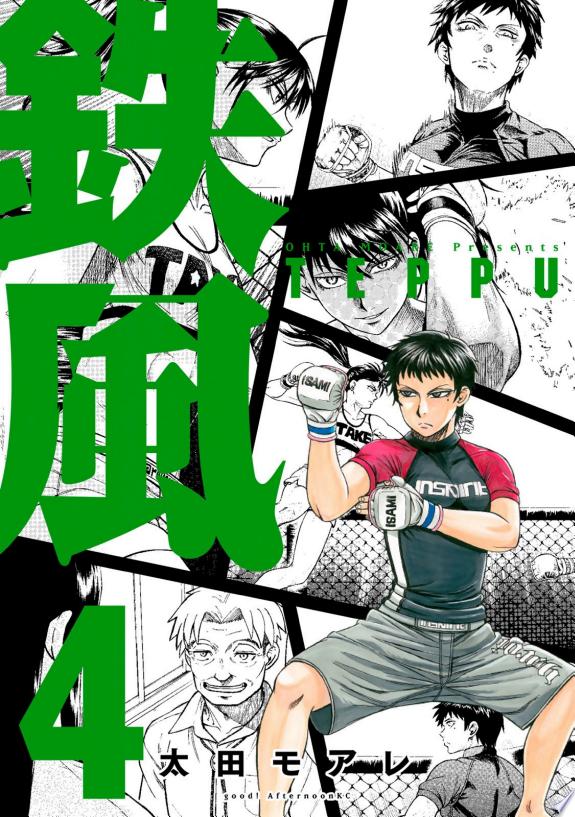
Yu's review of Teppu — Natsuo Ishido is a natural athlete who has won everything she has tried without effort and resents every second of it; when she meets a girl who fights MMA with genuine passion despite not being naturally gifted, Natsuo joins an MMA gym to find out what it means to want something.
Sports / Romance
Suzuka
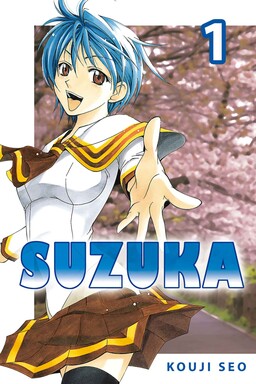
Yu's review of Suzuka — Yamato Akitsuki moves to Tokyo to live at his aunt's apartment complex and immediately falls for his neighbor Suzuka Asahina, a high school track prodigy who is completely closed off emotionally; the series is a romantic sports manga about the difficulty of loving someone who isn't ready to be loved.
Sports / Drama
Ore wa Teppei
Ore wa Teppei follows Teppei, a wild boy raised in the mountains who comes to the city and discovers judo — a story about raw talent meeting structured discipline, and what happens when someone who has never been constrained learns to choose constraint.
Sports / Comedy
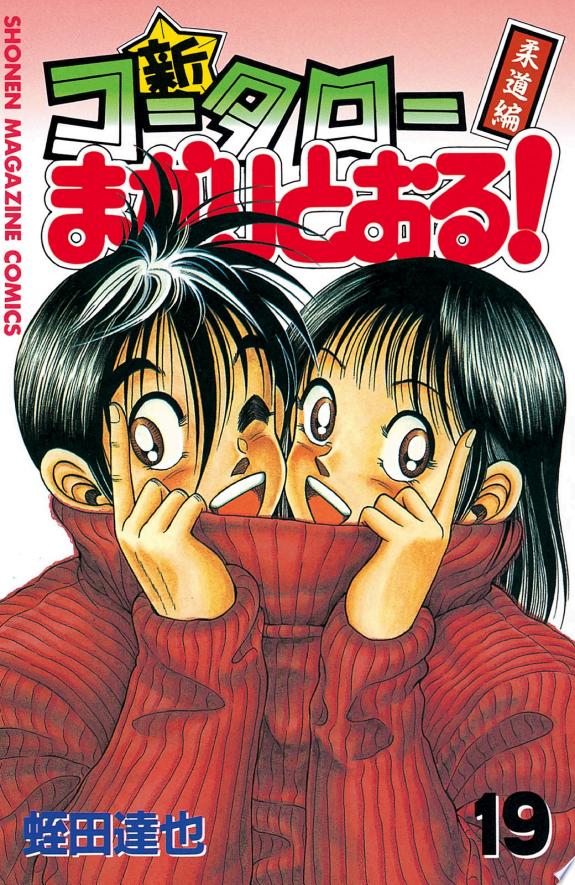
Kotaro Makaritoru
Kotaro Makaritoru follows Kotaro Shindo, a karate expert at a Japanese high school whose combination of martial prowess, persistent cheerfulness, and complete obliviousness to normal social rules makes every school day into an event.
Sports / Comedy
Mitsudomoe
Yu's review of Mitsudomoe — Yabe Satoshi is a new teacher at an elementary school; his class contains the Marui triplets: Mitsuba, who is manipulative and vain; Futaba, who is incredibly strong and fixated on the physical; and Hitoha, who is terrifying to everyone around her for reasons she doesn't fully understand; the series follows his attempts to manage a classroom that manages him instead.
Sports
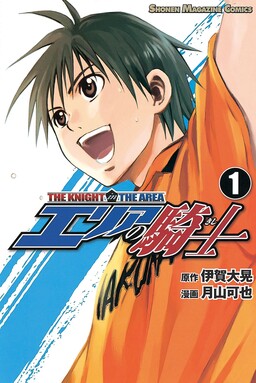
Knight in the Area
Yu's review of Knight in the Area (Area no Kishi) — Kakeru Aizawa is a timid soccer boy who manages his school's soccer team while his older brother Suguru is a genuine prodigy; after a life-changing accident, Kakeru discovers that the potential his brother always believed in was real; a long-running soccer manga with genuine emotional stakes and technical depth.
Written by
Yu
Manga Enthusiast from Japan
I grew up in Japan and manga literally saved me during a tough time in elementary school. My English isn't perfect, but my love for manga is real — and I want to share it with you.
Disclosure: This post contains affiliate links. As an Amazon Associate, I earn from qualifying purchases at no extra cost to you.