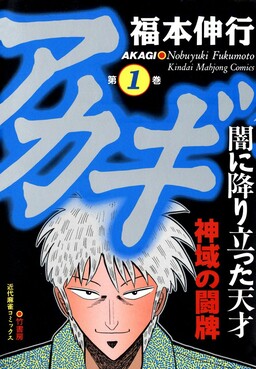
Akagi Review: The Mahjong Manga Where the Genius Wins Because He Doesn't Care If He Dies
by Nobuyuki Fukumoto
Read the first volume. If it doesn't hook you, put it down. It'll hook you.
Buy Akagi: The Genius Who Descended Into the Darkness on Amazon →*Affiliate link — I earn a small commission at no extra cost to you.
I didn't grow up playing mahjong. I learned the rules slowly, badly, mostly so I could understand what was happening in Fukumoto's manga — and I want to be honest with you up front: you don't actually need to. I came to Akagi sideways, through Kaiji, the way most people outside Japan do. Same author, same long elongated chins, same "ざわ…ざわ…" hum of dread vibrating in the margins of the panels. But Akagi hit me differently. Kaiji is about a weak man clawing for survival. Akagi is about a boy who walked away from survival entirely, and how terrifying that makes him to everyone sitting at the table with him.
The thing I remember most is the feeling of being scared of the protagonist. Not for him. Of him. I've never read another manga that did that to me.
Quick Take
- The mahjong manga that isn't really about mahjong — it's a psychological thriller about a boy whose genius comes from not fearing death, and what that does to every opponent he faces
- Fukumoto's art is extreme and unmistakable; the tension is built almost entirely through internal monologue and reasoning, not action
- 36 volumes, complete (serialized 1991–2018). Rated M (Mature) — underground gambling, yakuza, and a literal blood-as-stakes match
Story Overview
It opens on a cliff road at night. A thirteen-year-old named Shigeru Akagi has just survived a game of chicken — two cars racing toward a cliff edge, the loser being whoever brakes first. Akagi doesn't brake. He drives off the cliff and lives. Then, on the run from police, he ducks into an underground gambling den where a small-time gambler named Nangou is losing a mahjong game to yakuza, with a debt that could cost him his life.
Akagi has never played mahjong. He watches, asks Nangou to let him take over, and wins. That's the cold open, and it's one of the best in the medium: a child who has just thrown himself off a cliff sitting down at a table of killers and beating them because, unlike them, he has nothing to protect.
From there the series escalates through the underground mahjong world — the Urabe arc, the Nakai arc — each opponent more skilled and more dangerous. But everything builds toward one confrontation that consumed most of the manga's run: Iwao Washizu, an immensely wealthy shadow figure of postwar Japan who has invented his own version of the game. In "Washizu mahjong," the stakes aren't money. They're blood. Players bet by the cc, drained by transfusion as they lose, until a losing player simply dies at the table.
That match begins around chapter 70 and doesn't conclude until roughly chapter 300 — it ran for about twenty real-world years. And it ends in a way I won't fully spoil here but will return to below: not with a clean checkmate, but with something stranger and more honest about who Akagi actually is.
Characters
Shigeru Akagi — His genius is presented as completely real, but the manga is precise about its source: he takes risks no rational player would take because no threat has weight to him. He isn't suicidal in a dramatic way — he's simply indifferent, and that indifference is an unbeatable weapon at a table where everyone else is gambling something they're afraid to lose. The series keeps circling one question without ever fully answering it: is this freedom, or is it damage? In the late epilogue, when his companion Osamu starts treating him like a friend, Akagi pushes him away — people who get close, he warns, "start to think they're my friend." Even at the end he refuses to be held.
Iwao Washizu — The elderly antagonist who built his fortune and power in the chaos of postwar Japan and now, with everything, finds nothing can excite him except the prospect of a real opponent. Washizu mahjong with its transparent glass tiles and blood stakes is his attempt to manufacture genuine fear in himself and others. His arc is the most complex in the series: a monster who has waited his whole life to meet someone he can't intimidate, and who half-worships Akagi for being that person.
Nangou — The ordinary, desperate gambler from the opening chapters. He's not a genius and never becomes one; his entire function is contrast. Watching Nangou sweat over a debt that could kill him, and then watching a thirteen-year-old sit down and feel nothing, is how the manga defines what Akagi is by showing you what a normal person looks like.
Osamu Nozaki — The coworker/companion from the epilogue years later, who follows Akagi around as he wins fortunes at tehonbiki and other gambles. His attachment to Akagi, and Akagi's rejection of it, is the series' final note.
Art Style
Fukumoto's art is notorious and instantly recognizable — extreme jawlines, elongated chins, sharp angular faces, almost no backgrounds. People who haven't read him laugh at it. People who have understand it: those faces are built to carry internal states, not beauty. A panel of Washizu's grin, or Akagi's flat dead-eyed calm, communicates more than a "realistic" rendering ever could. And the lettering does real work — the trembling "ざわ…ざわ…" (zawa… zawa…) scattered across crowd panels became the series' signature, the visual sound of dread spreading through a room.
What I Love About It
It's the structure of the Washizu match itself — the audacity of spending fifteen-plus volumes on a single game of mahjong, and making it the most tense reading experience I've had in any manga.
What makes it work is the glass tiles. In Washizu mahjong, three of every tile type are transparent, so most of each player's hand is visible to the others. On paper that sounds like it would kill the tension — if you can see the hands, where's the mystery? Fukumoto does the opposite. Because so much is visible, every hidden tile becomes enormous. The reasoning narrows to a knife's edge: both players can see almost everything, so the whole game turns on the few things they can't, and on what each one is willing to gamble his blood to find out. Each hand gets dissected from both players' internal perspectives at once, the monologues running in parallel. It should be exhausting. Instead it's unbearable in the best way — I'd finish a single hand and have to put the book down.
And underneath the puzzle is the thing that actually grips me: Washizu literally cannot beat Akagi by raising the stakes, because the stakes mean nothing to Akagi. Blood, death, a slow drain into nothing — Akagi sits there unmoved. The richest, most feared man in the room has built the deadliest game imaginable and discovered there's one person it can't touch. That's the engine of the whole arc, and it's why it never gets boring no matter how long it runs.
Memorable Scene ⚠️ Spoiler Warning
The ending of the Washizu match is the one that stays with me, because it refuses to be the victory you've spent thirty volumes waiting for.
After everything — after years of blood drained cc by cc, after the match warps into something almost surreal — Washizu collapses from catastrophic blood loss right before he can claim his own win, and his attendants forfeit to transfuse his blood back to try to save him. Akagi doesn't celebrate. He leaves his share of the fortune behind and walks out, deciding that he didn't defeat Washizu at all. He only outlived him.
That line reframes the entire series. The whole point was never that Akagi is the better player — it's that he was the only one at that table who was never really playing to win, because winning and losing, living and dying, had collapsed into the same thing for him long ago. He doesn't take the money because beating Washizu was never the goal. There was no goal. That's the horror and the beauty of him, and the manga is brave enough to end on it rather than on a clean triumph.
Pros & Cons
Pros
- One of manga's most sustained psychological tension sequences — the Washizu arc is a genre masterpiece
- Akagi is a genuinely original protagonist: frightening rather than admirable
- The mahjong is explained well enough to follow the stakes with zero prior knowledge
- Complete, with an ending that actually means something
Cons
- Fukumoto's art style is extreme and an acquired taste
- The pacing is glacial by design — one match spans most of the series
- The M-rated content (blood, death stakes, manipulation) is genuinely heavy
- A single match lasting twenty volumes is either the appeal or the dealbreaker — there's no middle ground, and it won't work for everyone
Is Akagi Worth Reading?
If you want a "sports" manga in any normal sense, no. If you want one of the most intense character studies in the medium — a thriller where the genius is terrifying precisely because he has nothing to lose, wrapped around a single game stretched to a breaking point — then yes, absolutely. Come for the mahjong, stay for the dread.
Similar Manga
| Title | Its Approach | How Akagi Differs |
|---|---|---|
| Kaiji | Same author; gambling as survival horror for a weak everyman | Akagi's hero is fearless and frightening, not desperate — the opposite emotional engine |
| Liar Game | Psychological game-theory tension across many games | Akagi spends its tension on one endless game and one impossible opponent |
| One Outs | Baseball reframed as psychological warfare by a genius gambler | Akagi's genius comes from indifference to death, not from confidence in winning |
Cultural Context
Akagi is a spin-off prequel to Fukumoto's earlier series Ten: Tenhōdōri no Kaidanji, where an older Akagi appears as a legendary figure; this series tells his origin. The late-1950s underground setting (the story opens in 1958) reflects an era when mahjong was tightly bound up with yakuza gambling culture, not the modern competitive scene. Notably, the series helped spark Western interest in mahjong, and reportedly even "ignited a boom" in Russia.
Official English Translation Status
There is no licensed official English edition of Akagi. Despite its reputation among Western fans (largely via the anime and via Kaiji), the manga has never been licensed in English. The Japanese print and digital releases are the only legitimate way to read it.
Where to Buy
No English release yet. That just means you find it before everyone else does. The Japanese-language volumes are still in print and available digitally — that's the only legitimate way to read it for now.
Find the Japanese volumes on Amazon.co.jp →
This post contains affiliate links. If you purchase through these links, I may earn a small commission at no extra cost to you. As an Amazon Associate, I earn from qualifying purchases.
*Affiliate link — I earn a small commission at no extra cost to you.
More Manga You Might Like
Sports / Romance
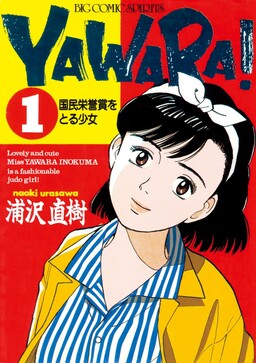
Yawara! A Fashionable Judo Girl
Yu's review of Yawara! — Yawara Inokuma is the granddaughter of a legendary judo master who has trained her since childhood to be a world champion; she has extraordinary talent and absolutely no desire to compete; what follows is her journey toward the Barcelona Olympics despite her own resistance.
Sports / Drama
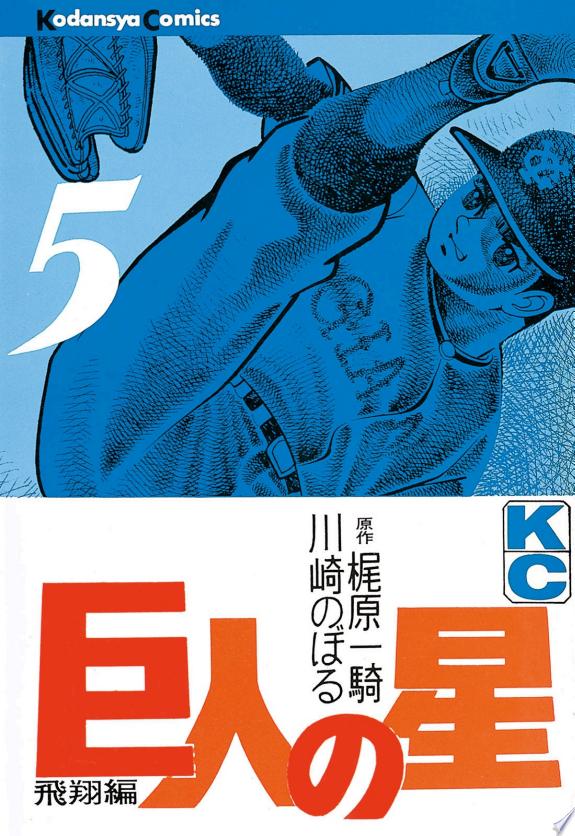
Kyojin no Hoshi
Kyojin no Hoshi follows Hyuma Hoshi, whose father — a former baseball player who never achieved his dream — has raised him from childhood to be a star pitcher for the Yomiuri Giants, through training that borders on abuse and produces a player who may be the greatest — at tremendous personal cost.
Sports / Drama
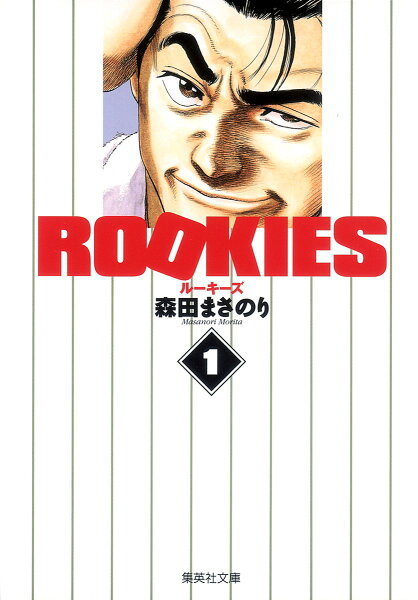
Rookies
Rookies follows Koichi Kawato, a young teacher transferred to Futakotamagawa High School who discovers a baseball club suspended after a violent incident — and decides, against all institutional advice, to coach them back to the Koshien.
Sports / Shojo
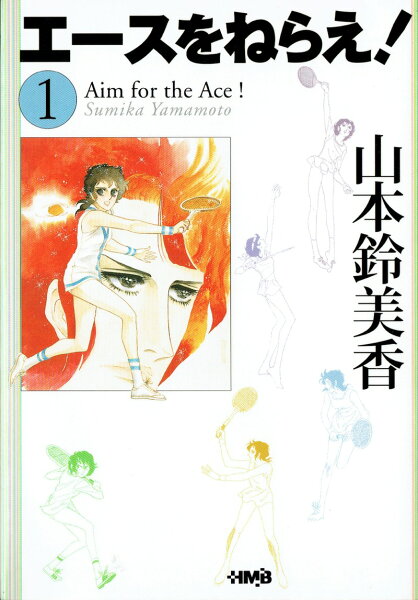
Ace wo Nerae!
Ace wo Nerae! follows Hiromi Oka, an ordinary first-year who falls in love with tennis and gets pulled into the brutal, devoted coaching of Jin Munakata — a 1970s shojo classic about a coach who is dying, a player he refuses to let stay ordinary, and what it costs to be the one person someone believes in.
Sports / Romance
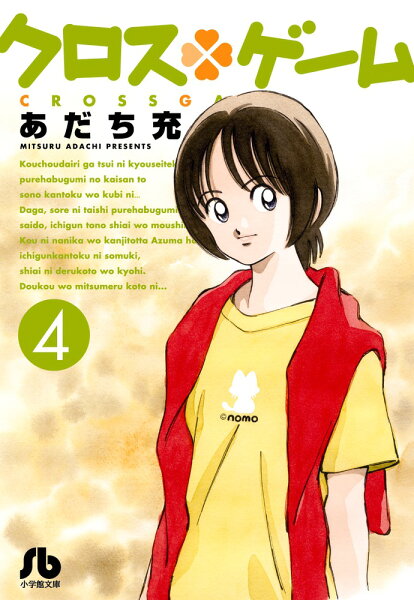
Cross Game
Yu's review of Cross Game — Ko grows up next to the four Tsukishima sisters, loses Wakaba in fifth grade, and spends seventeen volumes chasing the dream she left behind at Koshien.
Sports / Drama
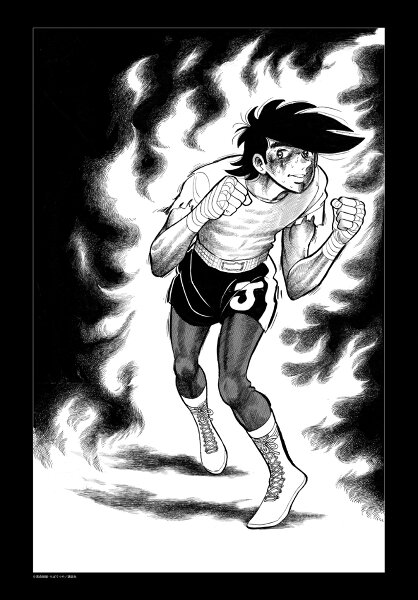
Ashita no Joe
Yu's review of Ashita no Joe — Joe Yabuki claws out of the postwar Tokyo slums, is found by a broken-down trainer, and turns boxing into a way to burn himself completely. From Rikiishi's fatal weight cut to the white-ash final scene, this is the manga that taught the whole genre what cost means.
Written by
Yu
Manga Enthusiast from Japan
I grew up in Japan and manga literally saved me during a tough time in elementary school. My English isn't perfect, but my love for manga is real — and I want to share it with you.
Disclosure: This post contains affiliate links. As an Amazon Associate, I earn from qualifying purchases at no extra cost to you.