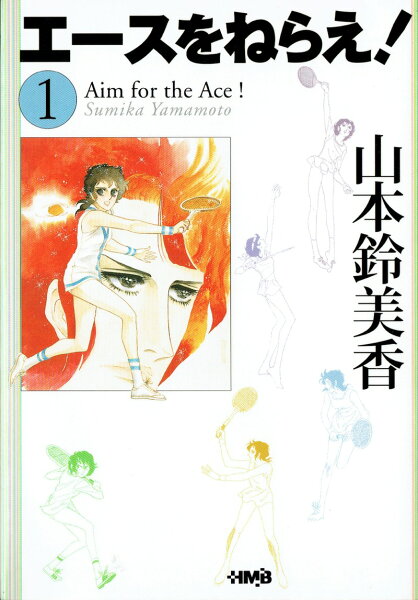
Ace wo Nerae! Review: The Tennis Manga Where Being Believed In Is Its Own Kind of Pressure
by Sumika Yamamoto
Read the first volume. If it doesn't hook you, put it down. It'll hook you.
Buy Ace wo Nerae! on Amazon →*Affiliate link — I earn a small commission at no extra cost to you.
When I was a kid, no adult ever really looked at me. Teachers saw a quiet boy in the back of the class who didn't cause trouble. That was enough for them. Nobody ever pulled me aside and said, "I think you could be more than this." I used to imagine what it would feel like to have someone push me — not gently, not kindly, but hard, because they actually saw something.
That is exactly why Ace wo Nerae! hit me the way it did. On the surface it's a tennis manga from the 1970s. Underneath, it's about an ordinary girl named Hiromi Oka who gets singled out by a coach who is himself running out of time — and what it does to a person to suddenly be the one someone has decided to believe in. I didn't expect a shojo sports series this old to wreck me. It did.
Quick Take
- Sumika Yamamoto's foundational shojo tennis manga (Margaret, 1973–1980, 18 volumes) — the work that built the "demanding coach and the chosen beginner" template for the entire sports genre.
- The engine of the story is Coach Jin Munakata: a man who can no longer play, who is dying, and who pours everything he has left into one ordinary girl.
- Age rating: All Ages — but be ready for a major character's death from terminal illness and a lot of emotional weight beneath the tennis.
Story Overview
Hiromi Oka is a first-year at the prestigious Nishi High School. She has no real tennis pedigree — she joins the club because she's dazzled by Reika Ryuzaki, the team's untouchable star, nicknamed Ochou-fujin ("Madame Butterfly") for her elegance on the court.
Then a new coach arrives: Jin Munakata. He looks at Hiromi — an unremarkable beginner — and picks her for the team over players who have earned their place through years of work. The decision detonates the club. The other members are furious; Hiromi is bewildered and, soon, resented. Munakata doesn't explain himself. He just trains her with a punishing, relentless intensity, dragging her toward a kind of "power tennis" beyond her natural limits.
What Hiromi (and the reader) only gradually learns is why he's in such a hurry. Munakata was a brilliant player himself who was struck down young — his body broke at 22 — and his health is failing. He is not a sadist. He is a man who knows he is dying and is racing to pour his entire understanding of the game into a vessel that can carry it forward.
The first major arc climaxes in a member-selection showdown: Hiromi must beat Ochou-fujin herself to keep her spot, and the two play a grueling four-hour match. But the story's real gut-punch comes later. Munakata's illness catches up with him. He entrusts Hiromi's future to his closest friend, Daigo Katsura, and to Takayuki Todo, and dies at 27. The back half of the series is Hiromi learning to stand inside the grief — to keep playing toward the world stage carrying everything he gave her, rather than collapsing under losing him.
Characters
Hiromi Oka — The protagonist whose growth is credible precisely because Yamamoto refuses to hand it to her. She starts anxious, mediocre, and over her head, and every gain costs her something visible. Her real arc isn't "beginner becomes champion" — it's learning to carry the weight of being chosen, and later, of being left behind, without breaking.
Jin Munakata — The coach, and the most complex figure in the book. A former player crippled at 22, now dying, he selects Hiromi and drives her without mercy or explanation. His harshness is the only way he knows to give her everything before his time runs out. His death at 27, after handing Hiromi off to the people who can keep loving her when he can't, is the emotional spine of the series.
Reika Ryuzaki (Ochou-fujin) — Far more than a rival. She's the elegant idol who first drew Hiromi to tennis, then becomes the obstacle Hiromi has to overcome, then something rarer: a senior who chooses to pour her own skill into the girl rising to replace her. Her arc is the loneliness of the queen who knows her reign is ending and decides to make her defeat mean something.
Takayuki Todo — Vice-captain of the boys' team, gentle and steady, who falls for Hiromi. Munakata, focused on her tennis, pushes Hiromi to put the sport before romance — making Todo's quiet support a slow-burn presence rather than a centerpiece. After Munakata's death, he becomes one of the people entrusted with her future.
What I Love About It
I love that the most important thing Munakata ever gives Hiromi is a sentence, not a technique.
There's a moment where Munakata, knowing his own body is finished, passes Hiromi a phrase he carried as a young man: "Kono ichikyu wa zetsumu-ni no ichikyu nari" — this one ball is an absolutely unique ball, one that will never come again; therefore strike it with all of your body and soul. And then he admits something devastating: he only truly understood those words after he could no longer play. The lesson is sharpened by the fact that the man teaching it has lost the thing he's teaching her to treasure.
That's the whole genius of this manga compressed into one exchange. The tennis is real, but the tennis is never the point — it's the vehicle for something Yamamoto refuses to say out loud. Munakata is teaching a healthy teenager to value every single shot because he, of all people, knows what it is to have those shots taken away. He even tells her, in essence, don't fall into the hole I fell into. His belief in her was never stated as "I believe in you." It was enacted, brutally, in drill after drill — because for him, making Hiromi great was the way his own broken life got to mean something. That indirection is why this 50-year-old series still feels so much more honest than manga that just have a character announce their feelings.
Memorable Scene ⚠️ Spoiler Warning
The match I can't shake is Hiromi versus Ochou-fujin at the member-selection showdown — the four-hour duel where Hiromi has to defeat the very person who made her want to play in the first place.
What makes it unforgettable isn't a flashy comeback. It's the layering. Hiromi is fighting the idol she worshipped; Ryuzaki is the reigning queen forced to defend her place against the girl she half-knows is meant to surpass her. And Ryuzaki's response to that impossible position is what guts me. Instead of resenting Hiromi, she eventually tells her, in effect, "Come at me — fight like your life depends on it," because she wants the battle to have meant something, and she wants every bit of her own technique to live on in the person beating her. There's a separate line where she names her own cost flatly — "I am the one who is truly alone" — while Hiromi gets to grow surrounded by people who hold her up.
It's a sports climax where winning and losing both hurt, and both matter, because the manga has spent fifteen volumes making sure you understand exactly what each player is putting on the line. Nobody labels it as the payoff. It just happens — which is the mark of writing that trusts the accumulation.
Cultural Context
Ace wo Nerae! ran in Shueisha's Margaret from 1973 to 1980, with a long hiatus in the middle (the story splits into a first and second part). It's considered one of the definitive works of 1970s shojo and one of the founding texts of the sports-shojo subgenre. The demanding-coach-and-chosen-protagonist structure it codified got echoed across decades of sports manga that followed.
It spawned multiple anime adaptations and a live-action drama, and the phrase "Ochou-fujin" became cultural shorthand in Japan for an elegant, untouchable rival figure.
Pros & Cons
Pros
- The foundational sports shojo — historically essential and genuinely moving, not just important.
- The Munakata–Hiromi dynamic is executed with a nuance the genre rarely reaches.
- Ryuzaki is one of the great "rivals" in manga — she gets a real arc, not just a wall to climb.
- Complete at 18 volumes, so it actually earns its ending.
Cons
- No official English release — you'll need Japanese.
- The 1970s pacing and art will feel slow and dated to readers raised on modern sports manga.
- The emotional payoff depends on patience with indirection and a willingness to sit with grief.
- If the dedicated-beginner structure doesn't connect with you, there's less underneath it to fall back on — that's either the heart of the book or a dealbreaker, depending on the reader.
Is Ace wo Nerae! Worth Reading?
For shojo readers and sports-manga fans, yes — this is the original template, executed at a level many of its descendants never matched. It asks for patience with vintage pacing and the gut to take a major character's death head-on. But as sports shojo at the height of its ambition — a story about being seen, being pushed, and being left to carry it forward alone — it's still one of the best.
Where to Buy
There's no licensed English edition yet — the Japanese print and digital release is the only legitimate way to read it. That just means you find it before everyone else does.
Search for エースをねらえ! on Amazon Japan →
This post contains affiliate links. If you purchase through these links, I may earn a small commission at no extra cost to you. As an Amazon Associate, I earn from qualifying purchases.
*Affiliate link — I earn a small commission at no extra cost to you.
More Manga You Might Like
Sports
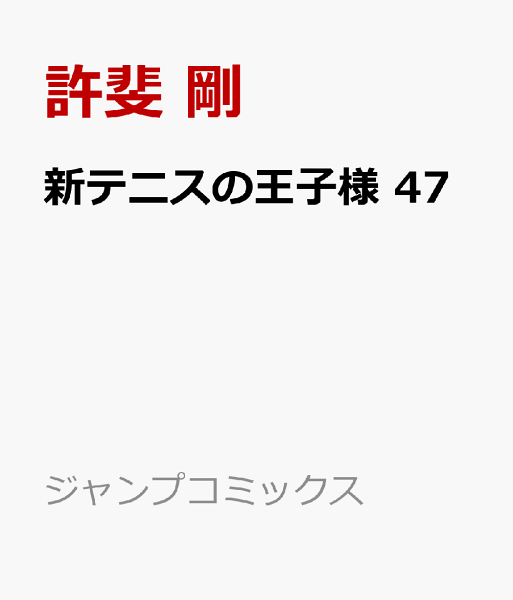
The Prince of Tennis
Yu's review of The Prince of Tennis — a tennis prodigy returns from America at age twelve and joins his middle school tennis team, where his special techniques and mysterious potential turn the Japanese junior tennis world upside down.
Sports / Romance
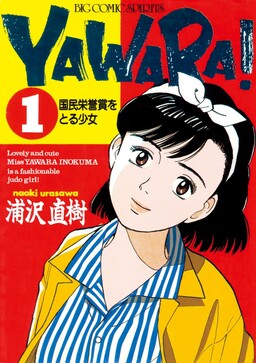
Yawara! A Fashionable Judo Girl
Yu's review of Yawara! — Yawara Inokuma is the granddaughter of a legendary judo master who has trained her since childhood to be a world champion; she has extraordinary talent and absolutely no desire to compete; what follows is her journey toward the Barcelona Olympics despite her own resistance.
Sports / Drama
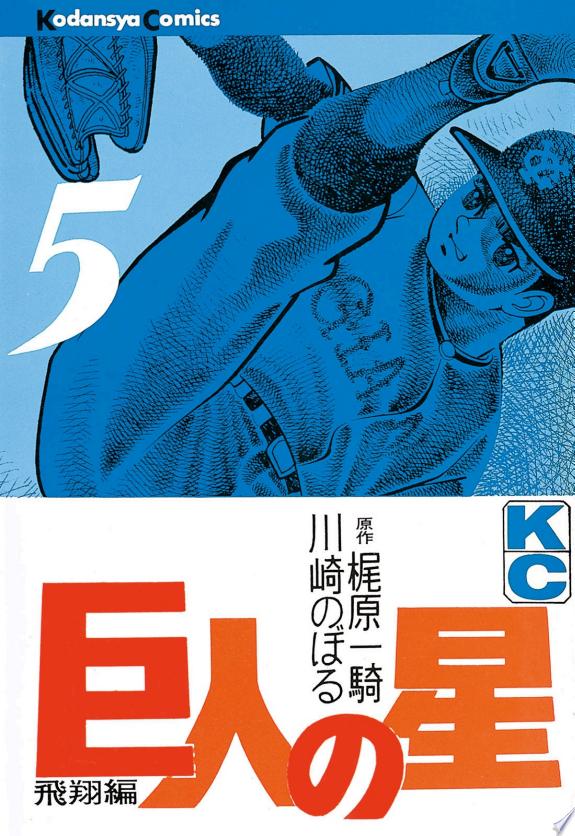
Kyojin no Hoshi
Kyojin no Hoshi follows Hyuma Hoshi, whose father — a former baseball player who never achieved his dream — has raised him from childhood to be a star pitcher for the Yomiuri Giants, through training that borders on abuse and produces a player who may be the greatest — at tremendous personal cost.
Sports / Drama
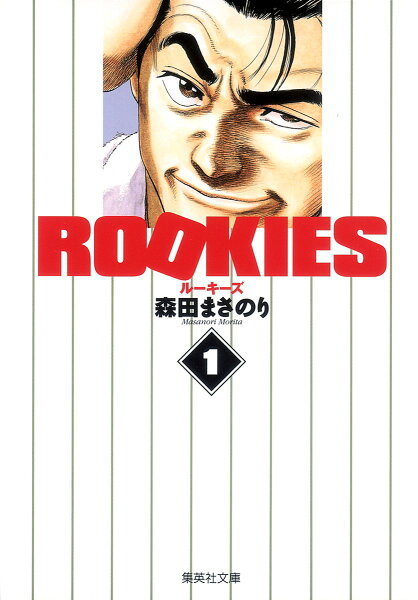
Rookies
Rookies follows Koichi Kawato, a young teacher transferred to Futakotamagawa High School who discovers a baseball club suspended after a violent incident — and decides, against all institutional advice, to coach them back to the Koshien.
Sports / Romance
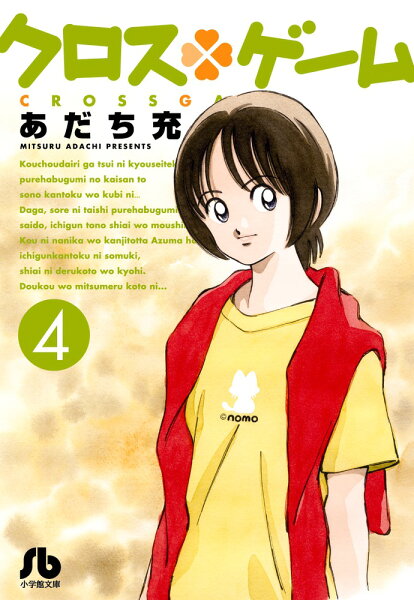
Cross Game
Yu's review of Cross Game — Ko grows up next to the four Tsukishima sisters, loses Wakaba in fifth grade, and spends seventeen volumes chasing the dream she left behind at Koshien.
Sports / Drama
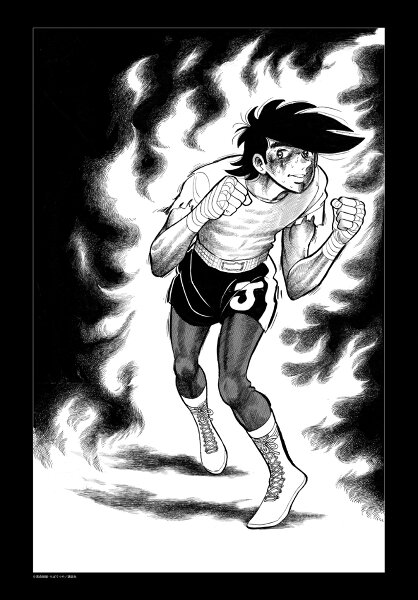
Ashita no Joe
Yu's review of Ashita no Joe — Joe Yabuki claws out of the postwar Tokyo slums, is found by a broken-down trainer, and turns boxing into a way to burn himself completely. From Rikiishi's fatal weight cut to the white-ash final scene, this is the manga that taught the whole genre what cost means.
Written by
Yu
Manga Enthusiast from Japan
I grew up in Japan and manga literally saved me during a tough time in elementary school. My English isn't perfect, but my love for manga is real — and I want to share it with you.