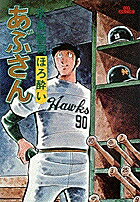
Absan Review: The Drunk Who Played 37 Years and Never Apologized for It
by Shinji Mizushima
Read the first volume. If it doesn't hook you, put it down. It'll hook you.
Buy Absan on Amazon →*Affiliate link — I earn a small commission at no extra cost to you.
I started this site because manga was the thing that kept me company when no one else would. So I have a soft spot for stories about people who keep showing up — who don't quit even when nothing about them is special. Absan is the most extreme version of that idea I have ever read. It is 107 volumes about a baseball player who drinks too much, was never drafted, and somehow lasts 37 years on the field.
When I first heard about it, I assumed it was a gag manga. A drunk who plays pro ball? It sounds like a joke premise. But the longer I sat with it, the more I understood that the sake isn't the joke. The sake is the point. Yasutake Kageura is a man who lived exactly how he wanted, on the field and at the bar, and the manga loved him for it without ever asking him to change.
Quick Take
- One of the longest manga in Japanese history — 107 volumes, 976 chapters, serialized from 1973 to 2014 in Big Comic Original
- Absan enters as an undrafted pinch-hitter and ends as a Triple Crown cleanup hitter who plays until age 61
- The sake is not a flaw to overcome — it's who he is; age rating T (Teen) for heavy alcohol themes and adult life
Story Overview
His name is Yasutake Kageura, and everyone calls him "Absan." He is from Niigata, and his baseball career nearly ended before it began — in high school he hit a walk-off home run to win a regional tournament, only to have the victory revoked when his drinking was discovered.
He drifts into adult life until his old high school coach, Tetsugoro Iwata — now a scout — finds him again at the tavern "Daitora" and brings him into the Nankai Hawks as an undrafted player in 1973. Absan starts as nothing important: a pinch-hitter specialist, a part-timer who comes off the bench when the team needs one swing. His signature is a small, strange ritual — a fine spray of sake misted onto his bat grip before he steps in.
What the series does over the next four decades is let him grow into the team. The Hawks move from Osaka to Fukuoka, become the Daiei Hawks, then the SoftBank Hawks. Absan moves with them — from bench bat to regular cleanup hitter. He wins the Triple Crown three years running. He hits .401 in a season. He marries Sachiko, the beautiful barmaid from Daitora. They have a son. And still he keeps playing, well past the age any real player would have retired, until he finally steps down at 61 in 2009. The final chapter doesn't end on a championship. Kageura, his playing life over, looks back to the day baseball found him, and pours sake on the grave of the man who got him there.
Characters
Yasutake Kageura (Absan) — The man who refused to be ordinary by simply outlasting everyone. His arc is the entire 37-year span: undrafted pinch-hitter to three-time Triple Crown cleanup hitter to graying veteran older than his coaches. The drinking never resolves into a redemption arc. He drinks, he hits, he stays. That is the whole character, drawn across a lifetime.
Sachiko Katsuragi — The barmaid at Daitora, described in the manga as the kind of woman ten out of ten people call beautiful. She chooses Absan from their younger days and stays devoted through decades of a difficult, drinking, aging ballplayer. She is not a prize he wins; she's the steady center of the life that lets him keep playing.
Tetsugoro Iwata — The scout and former high-school coach who pulls Absan into pro baseball. Mizushima fans will recognize him: Iwata is a crossover character who appears across Mizushima's baseball works with nearly identical look and temperament. His own career was derailed by drink, which is partly why he believes in a man like Absan.
Kagetora Kageura — Absan's son, born into the story and raised into a left-handed pitcher who eventually reaches the Hawks himself. Watching the father's career overlap with the son's is one of the quiet rewards of reading the series in full — the next generation arriving while the old man somehow refuses to leave.
Art Style
Mizushima draws baseball like a man who has watched ten thousand games. The swings, the stances, the way a veteran's body carries a slightly different weight than a rookie's — it's all there. But the scenes I remember most aren't the home runs. They're Absan at the counter of Daitora, glass in hand, the lines on his face getting deeper volume by volume. Mizushima ages his hero honestly, and that honesty is the whole appeal.
What I Love About It
I love that the sake is never resolved.
In almost any other sports manga, a habit like heavy drinking would be a flaw to overcome — the arc where the hero gives it up and finally reaches his potential. Absan never does that. The sake spray on his bat grip is treated as part of his swing, not a sin in it. He drinks at Daitora, he plays the next day, and the manga holds both without forcing one to cancel the other. Over 107 volumes that refusal becomes a kind of philosophy: a person can be exactly what they are and still be worth loving.
What makes it land for me is that it isn't framed as rebellion either. Absan isn't a bad boy thumbing his nose at the establishment. He's just a man who likes sake and likes baseball and sees no contradiction. Mizushima respects that wholeness for four decades straight. By the time you've followed him from undrafted bench player to graying veteran, the drinking has stopped reading as a vice at all. It's just Absan. And the manga's patience with him — its willingness to love a flawed man without fixing him — is something I almost never see in the genre.
Memorable Scene ⚠️ Spoiler Warning
The image that stays with me isn't a single home run — it's the very last page. After a 37-year playing career, Absan is finally done. There's no pennant, no walk-off, no roaring stadium to close on. Instead the old man's thoughts go back to the beginning, to the day baseball first reached for him, and he carries a bottle to the grave of Tetsugoro Iwata — the coach-turned-scout who pulled a drinking, washed-up young man into the pros.
He pours the sake over the stone. The same sake he misted onto his bat grip for four decades, the thing the world told him was his weakness, becomes the offering he leaves for the man who believed in him anyway. A 107-volume career ends not with a trophy but with a drunk paying his respects the only way he knows how. It doesn't editorialize. It trusts you to understand exactly what that bottle means.
Pros & Cons
Pros
- One of the most complete portraits of a professional sports career in any medium — 37 in-story years, drawn in real time across 41 years of serialization
- The refusal to moralize about Absan's drinking is genuinely rare and quietly radical
- Mizushima's baseball knowledge gives every game scene real authority
- The long form pays off — the father-son overlap and the aging hero are earned, not stated
Cons
- No English translation exists
- 107 volumes is an enormous commitment
- The low-stakes, slice-of-life structure may frustrate readers who want tournament drama
- The deep ties to real Hawks history can be opaque if you don't know Japanese baseball — this won't work for everyone, and that's fine
Is Absan Worth Reading?
For baseball fans and long-form readers, yes. This is one of the definitive career-length sports narratives, and its patience with a flawed, drinking, aging hero is something the genre almost never attempts. If you want dramatic climaxes or a short read, look elsewhere. But if you'll follow a man's whole working life from undrafted nobody to legend who simply wouldn't leave, it's extraordinary.
Similar Manga
| Title | Its Approach | How Absan Differs |
|---|---|---|
| Dokaben | High-school baseball built on tournament arcs | A pro career manga spanning decades, not seasons |
| Major | A hero's journey from childhood to the majors | A career player who was never the chosen one and stayed anyway |
| Touch | Romance and baseball driven by emotional peaks | Baseball as slow career continuity, with the drinking, not romance, at its center |
Where to Buy
There's no licensed English edition. The Japanese print and digital releases are the only legitimate way to read it — and honestly, finding it before everyone else is half the fun.
Search Absan on Amazon.co.jp →
This post contains affiliate links. If you purchase through these links, I may earn a small commission at no extra cost to you. As an Amazon Associate, I earn from qualifying purchases.
*Affiliate link — I earn a small commission at no extra cost to you.
More Manga You Might Like
Sports
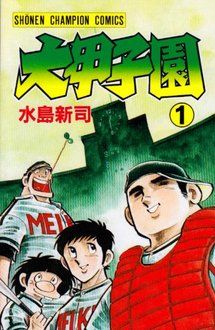
Dai Koshien
Dai Koshien is Shinji Mizushima's dream crossover — a sequel to Dokaben that pulls Yamada Taro and heroes from his other baseball manga into one summer Koshien tournament, climaxing in an 18-inning semifinal for the ages.
Sports / Drama
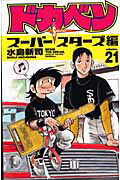
Dokaben Super Stars
Dokaben Super Stars-hen is Shinji Mizushima's professional-baseball continuation of Dokaben, sending Yamada Taro and his generation of free agents into two brand-new Pacific League expansion teams in 2004 — and pulling characters from across Mizushima's whole baseball universe onto the same diamond.
Sports
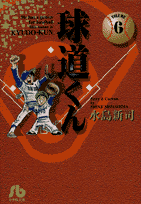
Kyudo-kun
Kyudo-kun follows Kyudo Narao, a young pitcher from Osaka with natural talent and a deep connection to the game through his father — a baseball story about inheritance, pressure, and what it means to throw yourself completely into what you love.
Sports
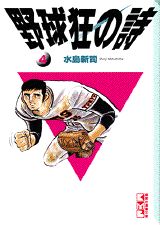
Yakyuukyo no Uta
Yakyuukyo no Uta follows an aging pitcher for a fictional Tokyo team as he fights to stay in the game, but the series is best remembered for introducing Yuki Mikami — Japan's first fictional female professional baseball pitcher — into a sport that had never imagined her.
Sports
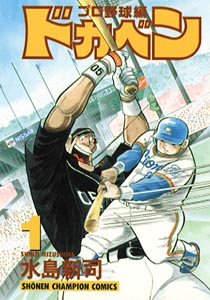
Dokaben Pro Yakyuhen
Dokaben Pro Yakyuhen takes Yamada Taro and his old high school rivals into the real NPB — Seibu, the Hawks, Orix, Lotte, the Giants — and famously got Shinji Mizushima sued by an actual pro pitcher over one panel.
Sports / Drama
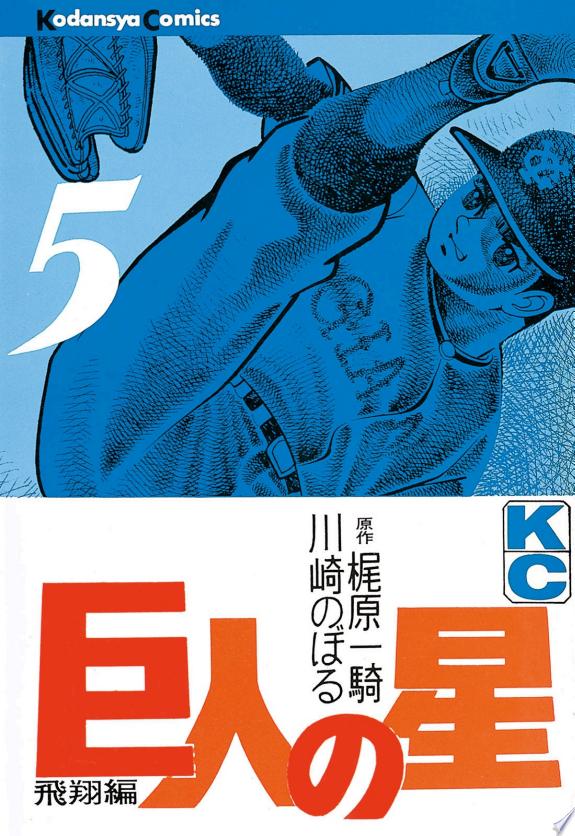
Kyojin no Hoshi
Kyojin no Hoshi follows Hyuma Hoshi, whose father — a former baseball player who never achieved his dream — has raised him from childhood to be a star pitcher for the Yomiuri Giants, through training that borders on abuse and produces a player who may be the greatest — at tremendous personal cost.
Written by
Yu
Manga Enthusiast from Japan
I grew up in Japan and manga literally saved me during a tough time in elementary school. My English isn't perfect, but my love for manga is real — and I want to share it with you.