
Yuru Yuri Review: Four Girls Take Over the Tea Room and Do Nothing in Particular, Very Happily
by Namori
Read the first volume. If it doesn't hook you, put it down. It'll hook you.
Buy Yuru Yuri on Amazon →*Affiliate link — I earn a small commission at no extra cost to you.
Quick Take
- The definitive "nothing happens, happily" school comedy — the characters have no goal, the Amusement Club does nothing, and the manga is one of the funniest in the genre
- Yuri undertones throughout, handled with the series' characteristic lightness
- 20 volumes ongoing; one of the longest-running Yuri Hime titles
Who Is This Manga For?
- Readers who want school comedy without dramatic stakes
- Fans of yuri manga who want something light rather than earnest
- Anyone who enjoyed Azumanga Daioh and wants more of that energy with explicit yuri content
- Readers who appreciate comedy built entirely on character interaction
Content Warnings & Age Rating
Age Rating: T (Teen) Content Warnings: Girls express romantic/crush feelings for each other throughout; mild suggestive humor
The content is affectionate rather than explicit.
Yu's Rating
| Category | Score |
|---|---|
| Story Depth | ★★☆☆☆ |
| Art Style | ★★★★☆ |
| Character Development | ★★★☆☆ |
| Accessibility for Non-Japanese Readers | ★★★★★ |
| Reread Value | ★★★★☆ |
Story Overview
The Amusement Club has no purpose. It exists in the abandoned tea ceremony room because the four members wanted a place to be after school. They drink tea. They argue about whose turn it is to make the tea. They visit each other's houses. They celebrate holidays. They go to school events.
The comedy is character-based: each member has a specific personality that generates specific kinds of comedy in specific combinations. The series is a machine for producing interactions between characters the reader already likes, and it runs efficiently.
The yuri content is mostly in the form of Chinatsu's enormous crush on Yui, Kyoko's enthusiastic appreciation of anyone she finds cute, and a dense web of one-sided affections among the wider cast.
Characters
Akari Akaza — Nominally the protagonist, though the series frequently jokes about how she disappears from her own story. Her main role is to be unremarkable in ways that the series finds funny.
Kyoko Toshinou — The engine of the comedy — enthusiastic, self-centered in a harmless way, an otaku who makes doujinshi about the people around her, and constitutionally unable to take anything seriously.
Yui Funami — The straight man to Kyoko's chaos; her capacity for patience is the series' most tested resource.
Chinatsu Yoshida — Her enormous crush on Yui and her artistic style that produces disturbing renderings of the people she loves is the series' most reliable comedy machine.
Art Style
Namori's character designs are among the cleanest in the school comedy genre — round, distinct, immediately recognizable. The art has grown more confident across 20 volumes. The chibi sequences that accompany the comedy beats are particularly well-executed.
Cultural Context
Yuru Yuri is a foundational title of the modern yuri manga genre — it has been running since 2008 and helped establish the template for school-based yuri comedy. The Comic Yuri Hime anthology where it runs is the primary home of yuri manga in Japan, and Yuru Yuri's longevity reflects both its consistent quality and its place in that ecosystem.
What I Love About It
Kyoko's doujinshi. She makes fan comics about the people around her, the characters occasionally see them, the reactions are always perfect. The meta-joke of a character in a school comedy who produces fan fiction about the real people in her life and treats this as completely normal is a thread the series never abandons.
What English-Speaking Fans Say
Western readers consistently describe Yuru Yuri as the comfort food version of school comedy — familiar structure, reliable character interactions, consistently cheerful. The anime adaptations have introduced many Western fans who then find the manga; the source material is lighter and more episodic than the anime suggests.
Memorable Scene ⚠️ Spoiler Warning
The culture festival episode where Kyoko's plan for the Amusement Club's booth goes exactly as wrong as it was always going to go — and everyone's reactions land exactly as the series has trained the reader to expect them to land — is the series at its most mechanically precise.
Similar Manga
- Azumanga Daioh — School comedy, ensemble girls, 4-koma heritage
- K-On! — School club, warm comedy, similar energy
- Bloom Into You — Yuri romance with more emotional seriousness
- GA: Geijutsuka Art Design Class — School setting, similar warmth
Reading Order / Where to Start
Volume 1 — the characters establish in the first chapter.
Official English Translation Status
One Peace Books is publishing the ongoing English release.
Pros & Cons
Pros
- Reliable and consistent comedy across many volumes
- Character dynamics are immediately engaging
- Yuri content is sweet rather than fanservicey
- One of the genre's foundational texts
Cons
- No dramatic arc or progression — purely episodic
- Akari's "background character" joke runs thin across many volumes
- English release is ongoing
Format Comparison
| Format | Notes |
|---|---|
| Individual Volumes | One Peace Books; standard |
| Digital | Available |
Where to Buy
Read the first volume. If it doesn't hook you, put it down. It'll hook you.
This post contains affiliate links. If you purchase through these links, I may earn a small commission at no extra cost to you. As an Amazon Associate, I earn from qualifying purchases.
*Affiliate link — I earn a small commission at no extra cost to you.
More Manga You Might Like

Slice of Life / Comedy
Slow Start
Yu's review of Slow Start — Hana Ichinose started high school a year late due to illness, making her a year older than her classmates; the series follows her trying to fit in with her new friends while carrying the secret that she is different, in Tokumi Yuiko's characteristic warm and gentle 4-koma style.
Slice of Life
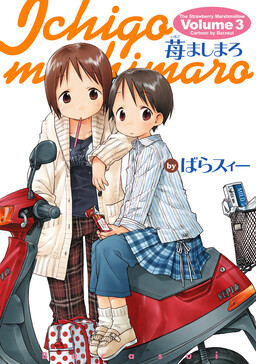
Ichigo Mashimaro
Yu's review of Ichigo Mashimaro — Nobue Itoh and the four grade-schoolers around her (her sister Chika, the chaotic Miu, the timid Matsuri, and British transplant Ana Coppola) drift through ordinary days in suburban Hamamatsu. Barasui's long-running deadpan comedy is built on Miu's relentless schemes and the cruel running joke of Ana forgetting her own English.
Slice of Life
Kill Me Baby
A review of Kaduho's Kill Me Baby — ongoing in Manga Time Kirara Carat since July 2008, 16+ volumes in Japan. Sonya is a trained assassin; Yasuna is her completely unfazed school friend. Yen Press publishes the English edition.
Comedy / Slice of Life
D-Frag!
Yu's review of D-Frag! — Kenji Kazama is a delinquent who wants to be feared, and instead gets dragged into the Game Creation Club (provisional) by four girls who are not afraid of him at all. A loud, fast school comedy where the joke is a tough guy who can't scare anyone.

Slice of Life / Comedy
Keep Your Hands Off Eizouken!
A review of Keep Your Hands Off Eizouken! by Sumito Oowara — three high school girls form an anime-making club, and the manga keeps stepping inside their imaginations to show you what making something actually feels like.

Slice of Life / Comedy
Wave, Listen to Me!
Yu's review of Wave, Listen to Me! — Minare Koda is a restaurant worker in Sapporo who rants to a radio producer at a bar about her ex-boyfriend; the producer records it and airs it; instead of suing, she agrees to do a radio show; a fast-talking adult comedy about a woman who is genuinely funny and genuinely a mess.
Written by
Yu
Manga Enthusiast from Japan
I grew up in Japan and manga literally saved me during a tough time in elementary school. My English isn't perfect, but my love for manga is real — and I want to share it with you.
Disclosure: This post contains affiliate links. As an Amazon Associate, I earn from qualifying purchases at no extra cost to you.