
Yugami-kun ni wa Tomodachi ga Inai Review: The Comedy About Why Some People Decide Friendship Isn't Worth It
by Jun Sakura
Read the first volume. If it doesn't hook you, put it down. It'll hook you.
Buy Yugami-kun ni wa Tomodachi ga Inai on Amazon →*Affiliate link — I earn a small commission at no extra cost to you.
Most school manga ask how to make friends. This one asked whether you should — and the answer wasn't obvious.
Quick Take
- Mikoto Mochida's 17-volume Weekly Shonen Sunday comedy — Yugami's deliberate friendlessness and Chihiro's confused investigation of it
- A genuinely original premise that doesn't conclude in the obvious place
- One of Sunday's strongest 2010s slice-of-life comedies
Who Is This Manga For?
- Slice-of-life comedy readers who want unusually intelligent premise execution
- Sunday classic readers who want the magazine's recent strong work
- Anti-social-comedy enthusiasts who appreciate when comedies examine why social conventions exist
- Anyone who has ever wondered whether having friends was actually worth the work
Content Warnings & Age Rating
Age Rating: T (Teen) Content Warnings: Mild social tension, school setting drama. Generally low-stakes.
Suitable for most readers.
Yu's Rating
| Category | Score |
|---|---|
| Story Depth | ★★★★☆ |
| Art Style | ★★★★☆ |
| Character Development | ★★★★☆ |
| Accessibility for Non-Japanese Readers | ★★★☆☆ |
| Reread Value | ★★★★☆ |
Story Overview
Yugami Yuuichirou is a high school student who has actively chosen not to have friends. Not because he is bullied, not because he is socially anxious, not because he hates other people — he has decided, with full deliberateness, that friendship would interfere with his preferred way of living, and he has executed this decision consistently. He is polite, competent, popular in the sense that classmates respect him; he simply doesn't have, and doesn't want, friends.
Chihiro Otsuka is a transfer student whose social conventions have been violated by encountering someone whose social architecture is genuinely different. She tries to understand Yugami. She tries to befriend him despite his clear preference. She tries to figure out what is happening when his behavior consistently doesn't match what social conventions say should happen.
The structure is episodic with strong continuity. Each chapter is essentially a small comic situation arising from the central premise: Yugami's friendlessness encountered by people whose social expectations require explanation. Across 17 volumes, the comic territory expands without exhausting because the underlying question — why might someone make this choice, and what does the choice cost — proves richer than initial appearances.
Characters
Yugami Yuuichirou: A protagonist whose deliberateness about friendlessness is the series' subject — drawn with enough character to make the choice feel like a genuine choice rather than a deficit.
Chihiro Otsuka: The transfer student whose investigation drives the social comedy — drawn with the persistence and confusion the premise produces.
The classmates: Each contributes specific friction with the central premise — some respect Yugami's distance, some try to bridge it, some are puzzled by it.
Art Style
Mochida's art has the clean, expressive register of contemporary Sunday comedy — character designs distinctive, comic timing well-managed, the visual rhythm matching the slice-of-life pace.
Cultural Context
Yugami-kun ni wa Tomodachi ga Inai ran from 2013 to 2018 in Weekly Shonen Sunday. The series belongs to Sunday's contemporary slice-of-life tradition but distinguishes itself through the genuinely original premise. The Japanese-cultural context — where social belonging is traditionally treated as central — gives the premise additional weight.
A drama adaptation in 2020 brought the series broader recognition.
What I Love About It
I love that Yugami doesn't reform.
The standard arc would have Yugami slowly discover the value of friendship through Chihiro's persistent attentions, eventually opening up, learning that he was wrong. Mochida refuses. Yugami across 17 volumes remains essentially the same person who made the original decision. He is not lonely, not damaged, not waiting to be redeemed. The series respects his choice as a choice rather than treating it as a problem to be fixed. The respect is the work's intelligence.
What English-Speaking Fans Say
Limited international awareness without translation. Among readers familiar with it through fan engagement or the drama adaptation, regarded as one of the most intelligent slice-of-life comedies of its era.
Memorable Scene ⚠️ Spoiler Warning
A late-series moment where Yugami's reasons for his choice become clearer to Chihiro — and the recognition that the choice, while strange to her, is not pathological. The scene exemplifies the series' commitment to taking its premise seriously rather than resolving it conventionally.
Similar Manga
| Title | Its Approach | How Yugami-kun Differs |
|---|---|---|
| Komi Can't Communicate | Social-anxiety school comedy | Komi struggles to make friends; Yugami chose not to |
| Watamote | Social-failure school comedy | Watamote is about failed attempts; Yugami is about successful avoidance |
| Sakamoto desu ga? | School comedy with cool protagonist | Both feature self-contained protagonists but Yugami examines the choice itself |
Reading Order / Where to Start
Volume 1. The premise establishes immediately and develops across the volumes.
Official English Translation Status
Yugami-kun ni wa Tomodachi ga Inai has no official English translation.
Pros & Cons
Pros
- Genuinely original premise executed with discipline
- Refuses the standard reformation arc
- 17 volumes of consistent quality
- Character work supports the conceptual ambition
Cons
- No English translation
- Premise may strike some readers as artificially constructed
- Quiet pacing won't satisfy readers wanting drama spikes
- Episodic structure limits sustained character arcs
Is Yugami-kun ni wa Tomodachi ga Inai Worth Reading?
For slice-of-life comedy readers who appreciate intelligent premises and Sunday-classic enthusiasts, yes — this is one of the magazine's strongest 2010s slice-of-life entries. For readers wanting traditional friendship narratives or unable to engage with the central conceit, the appeal may narrow. As original premise execution, it's exemplary.
Format Comparison
| Format | Notes |
|---|---|
| Physical | Japanese editions available |
| Digital | Available in Japanese |
| Omnibus | Collected editions available |
Where to Buy
No English release yet. That just means you find it before everyone else does.
*Affiliate link — I earn a small commission at no extra cost to you.
More Manga You Might Like

Slice of Life / Comedy
Nichijou: My Ordinary Life
Yu's review of Nichijou — a high school slice-of-life where ordinary situations escalate to catastrophic absurdity, a robot girl tries to hide what she is, and the Professor is an eight-year-old genius who made her.
Slice of Life / Comedy
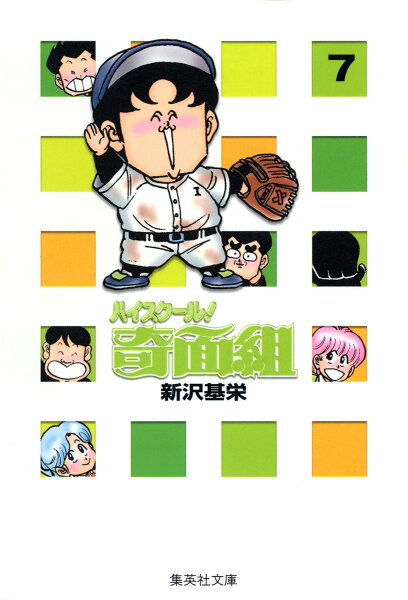
High School! Kimengumi
High School! Kimengumi follows five boys who turn their strange faces into a way of life, building one of the loudest, weirdest gag manga of 1980s Shonen Jump.
Slice of Life / Comedy
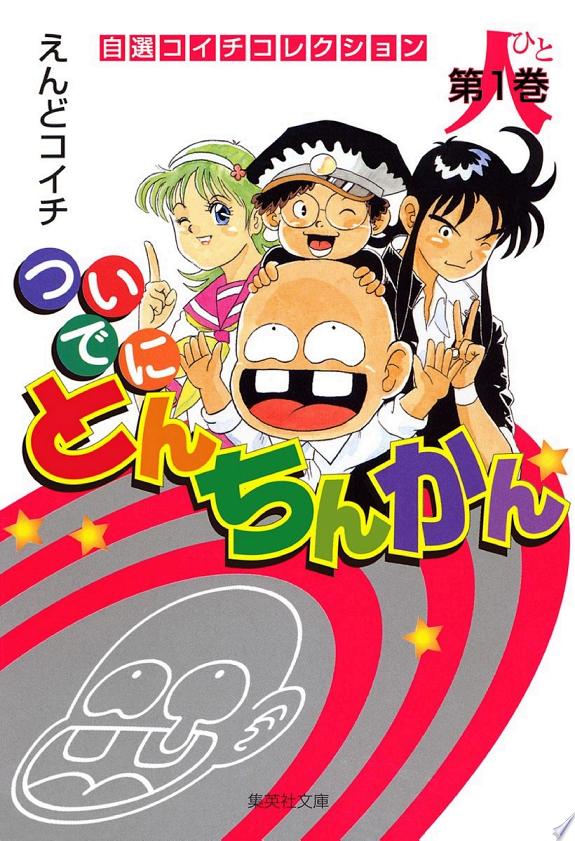
Tondemo-kun
Tondemo-kun follows a trio of delinquent students whose plans to cause trouble consistently backfire in ways that are so spectacularly wrong they accidentally create good outcomes — a comedy built entirely on the gap between intention and result.
Comedy / Slice of Life
Macaroni Houren-sou
Macaroni Houren-sou follows three high school students living together in a boarding house — Toshio Shingami, the energetic straight man; Kinoshita, the eccentric wildcard; and Trapp, the cool foreigner — in a surreal comedy that uses the school-life setting as a launching pad for increasingly unhinged humor.
Slice of Life / Comedy
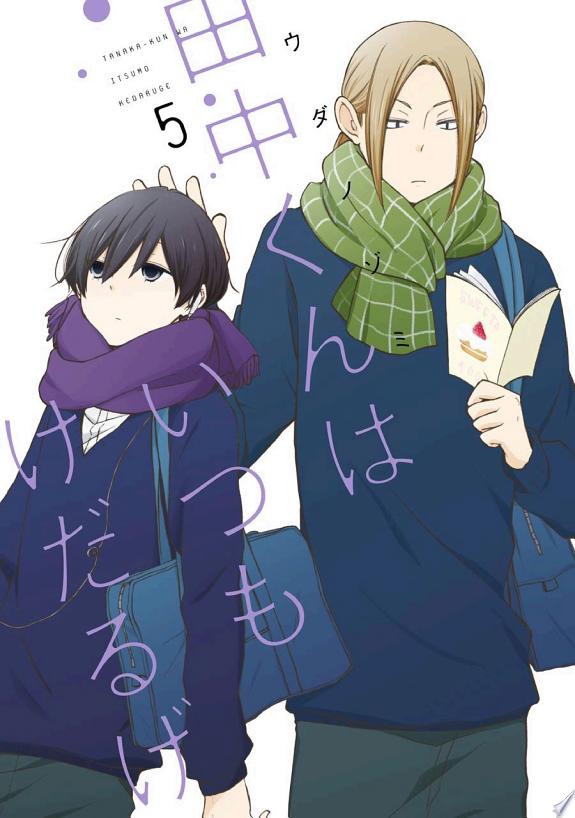
Tanaka-kun Is Always Listless
Yu's review of Tanaka-kun Is Always Listless — Tanaka is a high school boy whose entire being is devoted to doing as little as possible; his best friend Ohta carries him when necessary; the series follows Tanaka's profound listlessness encountering the energetic, enthusiastic people around him without disturbing his fundamental peace.

Slice of Life
Sayonara, Zetsubou-Sensei
Yu's review of Sayonara, Zetsubou-Sensei — Nozomu Itoshiki is a Japanese teacher whose name, written horizontally, reads 'despair'; his approach to life matches; he is constantly in despair about modern society; his student Kafuka Fuura is pathologically optimistic and refuses to accept any negative interpretation of anything.
Written by
Yu
Manga Enthusiast from Japan
I grew up in Japan and manga literally saved me during a tough time in elementary school. My English isn't perfect, but my love for manga is real — and I want to share it with you.