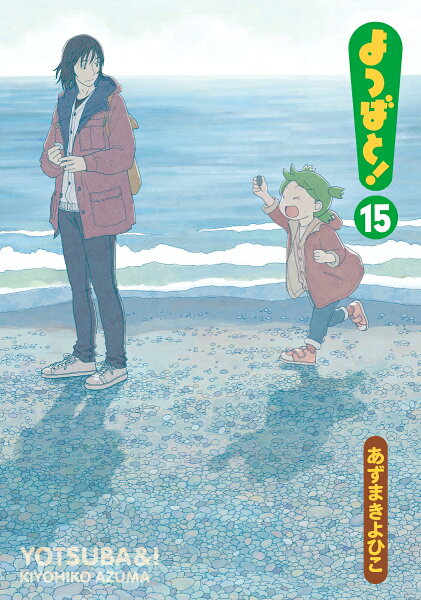
Yotsuba&! Review: The Manga That Taught Me How to See the World Again
by Kiyohiko Azuma
Read the first volume. If it doesn't hook you, put it down. It'll hook you.
Buy Yotsuba&! on Amazon →*Affiliate link — I earn a small commission at no extra cost to you.
Quick Take
- Five-year-old Yotsuba encounters cicadas, air conditioners, and watering cans for the first time
- No plot, no conflict, no stakes — just childhood wonder rendered perfectly on every page
- The single most purely happy manga I have ever read
Who Is This Manga For?
- Everyone. Genuinely, everyone.
- Adults who have lost their sense of wonder and want it back
- Parents who want to understand how their children experience the world
- Readers who are tired and need something that asks nothing from them except to smile
Content Warnings & Age Rating
Age Rating: All Ages Content Warnings: None
Completely safe for all readers. If anything, the risk is feeling too happy.
Yu's Rating
| Category | Score |
|---|---|
| Story Depth | ★☆☆☆☆ |
| Art Style | ★★★★★ |
| Character Development | ★★★☆☆ |
| Accessibility for Non-Japanese Readers | ★★★★★ |
| Reread Value | ★★★★★ |
Story Overview
Yotsuba Koiwai is five years old with green hair and no apparent memory of where she came from before living with her father. She has recently moved to a new town.
Each chapter of Yotsuba&! follows her through a single day or activity: discovering air conditioning for the first time, trying to water the garden, going to the department store, encountering a thunder storm, learning what cicadas are.
These are not adventures. They are ordinary summer days experienced by someone for whom everything is genuinely new and genuinely astonishing.
There is no plot. There are no stakes. There is just Yotsuba, her father Koiwai, and the neighbors (the Ayase family and their daughters), encountering the world together.
Characters
Yotsuba is the most well-observed five-year-old in manga. Azuma clearly spent time with actual children — her curiosity is specific, her logic is recognizably child-logic, and her emotional responses (panic, delight, focused concentration, sudden tiredness) are drawn from observation rather than stereotype.
Koiwai (her father) is a relaxed, slightly irresponsible but genuinely loving single father who lets Yotsuba experience things rather than protecting her from them. His parenting philosophy is basically "see what happens." It mostly works.
Jumbo is Koiwai's giant friend who provides ridiculous physical comedy simply by existing near small objects and small children.
Fuuka, Ena, and Asagi are the teenage girls next door who become part of Yotsuba's extended world. They react to Yotsuba with the specific mix of exasperation and delight that teenagers actually feel around small children who are unexpectedly delightful.
Art Style
Azuma's art in Yotsuba&! is his best work. The character designs are precise and specific — you can tell exactly what each person is feeling from their face at any moment. Yotsuba's reactions in particular are some of the most expressive character art in manga.
The backgrounds are detailed and feel lived-in. The town is a real town. The houses look like real houses. The cicadas look like real cicadas.
This attention to reality is what makes Yotsuba's wonder feel real. She is marveling at actual things that exist.
Cultural Context
The series is set in Japan during summer — the cicada song, the heat, the summer festivals, the school vacation rhythms are all present. For Japanese readers, these details create specific nostalgic resonance.
For international readers, the details are specific enough to feel true rather than generic, which is what makes cross-cultural slice-of-life work. Yotsuba's experience of encountering air conditioning or rice paddy frogs is specific to her setting but recognizable as the experience of encountering anything wonderful for the first time.
What I Love About It
I first read Yotsuba&! during a very difficult period. I will not go into detail. But it was a time when I found most things exhausting and nothing felt worth the effort.
Reading Yotsuba encountering a sunflower that was taller than she was — her complete astonishment, her need to report this to her father immediately, the whole chapter that followed — I felt something I had not felt in months.
I did not have a word for what it was. Later I thought: it was the feeling of someone showing you something they thought was wonderful and discovering that they were right.
Yotsuba&! is not about anything. It is just about paying attention. I needed that.
What English-Speaking Fans Say
Yotsuba&! is universally beloved in the English-speaking manga community. It appears on essentially every "manga recommendations" list for good reason. It is the manga people recommend to people who have never read manga. It is the manga people recommend to people who need cheering up. It is the manga people recommend to each other just to share the joy.
The consensus is that it is one of the best manga ever made, in any genre, full stop.
Memorable Scene ⚠️ Spoiler Warning
There is nothing to spoil. But here is a moment: in an early volume, Yotsuba encounters a cicada for the first time. She does not know what it is. She touches it. It screams. She screams. Her father has to explain cicadas while laughing.
This took about five pages. I have thought about it at least fifty times.
Similar Manga
- Chi's Sweet Home — cats experiencing the world; similar gentle observation
- Non Non Biyori — rural slice-of-life with similar quiet warmth; older characters
- Barakamon — adult fish-out-of-water story with wonderful child character
- Flying Witch — gentle magical slice-of-life with similar atmosphere
Reading Order / Where to Start
Volume 1, immediately. The series is ongoing at 15 volumes and shows no sign of ending, which is fine.
Official English Translation Status
Yen Press has been publishing Yotsuba&! in English since 2005. All 15 volumes are available. The series is still being published in Japan with new volumes appearing annually.
Pros & Cons
Pros
- The happiest manga in existence
- Perfect for all ages and all reading levels
- Art that captures both observation and emotion at the highest level
- No prerequisite knowledge; just open Volume 1
Cons
- No plot for those who need narrative momentum
- Still ongoing; you will eventually catch up and have to wait
- Will make you want to be five years old again; there is no cure for this
Format Comparison
| Format | Notes |
|---|---|
| Physical | Strongly recommended — Azuma's art benefits from physical reading |
| Digital | Available; perfectly readable but physical is better |
| Omnibus | Not standard; individual volumes are the right way to experience it |
Where to Buy
Read the first volume. If it doesn't hook you, put it down. It'll hook you.
*Affiliate link — I earn a small commission at no extra cost to you.
More Manga You Might Like

Slice of Life / Comedy
Laid-Back Camp
Yu's review of Laid-Back Camp — a quiet girl who camps alone near Mount Fuji meets a sleepy newcomer over a cup of curry noodles, and somehow that becomes the warmest manga about cold weather I have ever read.
Slice of Life / Comedy
Doraemon
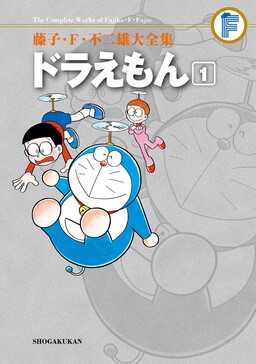
Yu's review of Doraemon — a robot cat from the 22nd century, sent back to help a hopeless boy named Nobita with gadgets from his four-dimensional pocket. Fujiko F. Fujio's most beloved work, and the manga every Japanese kid grows up inside.
Slice of Life / Comedy
Barakamon
Yu's review of Barakamon — a young calligrapher punches a critic, gets exiled to the Goto Islands, and a seven-year-old girl named Naru slowly dismantles everything he thought made him good.
Comedy / Slice of Life
Chibi Maruko-chan
A review of Chibi Maruko-chan, Momoko Sakura's semi-autobiographical comedy about a lazy, scheming third-grade girl in 1970s Shimizu — and why the original manga is sharper than the gentle anime everyone knows.
Slice of Life / Comedy
Squid Girl
Yu's review of Squid Girl — Ika Musume (Squid Girl) emerges from the sea to conquer humanity as revenge for ocean pollution; she is immediately defeated by the Aizawa sisters who run a beach house and ends up working there to pay for property damage; world conquest is repeatedly delayed.

Slice of Life / Comedy
Shirokuma Cafe
Yu's review of Shirokuma Cafe — a polar bear named Shirokuma runs a café near the zoo; Panda works part-time there (poorly), Penguin is a regular customer, and the humor comes from animal characters behaving with human social conventions while remaining animals.
Written by
Yu
Manga Enthusiast from Japan
I grew up in Japan and manga literally saved me during a tough time in elementary school. My English isn't perfect, but my love for manga is real — and I want to share it with you.
Disclosure: This post contains affiliate links. As an Amazon Associate, I earn from qualifying purchases at no extra cost to you.