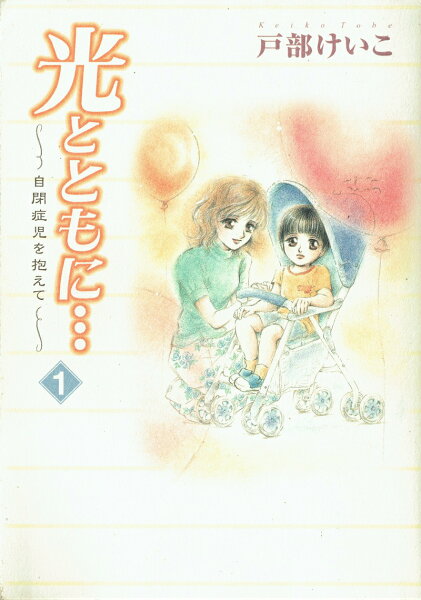
With the Light Review: The Manga About Raising an Autistic Child That Changed How I See People
by Keiko Tobe
Read the first volume. If it doesn't hook you, put it down. It'll hook you.
Buy With the Light: Raising an Autistic Child on Amazon →*Affiliate link — I earn a small commission at no extra cost to you.
Quick Take
- A mother raises her autistic son Hikaru through childhood into adolescence, drawn with extraordinary honesty
- Not inspirational porn — this shows the exhaustion, the setbacks, and the real small victories
- Essential reading for understanding autism and the families that navigate it; one of manga's most important works
Who Is This Manga For?
- Parents of autistic children who want to see their experience reflected in art
- Anyone who wants to understand what autism spectrum disorder actually looks like day to day
- Readers interested in mature slice-of-life that deals with real challenges
- Those who believe manga can be educational and emotionally true at the same time
Content Warnings & Age Rating
Age Rating: All Ages Content Warnings: Depictions of bullying, parental exhaustion and frustration, difficult family and school situations
Appropriate for older children through adults. The content is emotionally weighty but handled with care rather than sensationalism.
Yu's Rating
| Category | Score |
|---|---|
| Story Depth | ★★★★★ |
| Art Style | ★★★☆☆ |
| Character Development | ★★★★★ |
| Accessibility for Non-Japanese Readers | ★★★★☆ |
| Reread Value | ★★★★☆ |
Story Overview
Sachiko Azuma is a young woman who gives birth to her first child, Hikaru. Hikaru is diagnosed with autism.
The series follows Sachiko and her family — including her husband Masato, her mother-in-law, and later her second child Kanon — over years of raising Hikaru. It covers his early childhood, his struggle to enter school, the negotiations with the education system, the exhaustion of Sachiko, the development of Hikaru's abilities and personality, his friendships, and his teenage years.
This is not a story about a miraculous breakthrough. It is about the ongoing work of understanding a child who experiences the world differently, advocating for him, and loving him.
Characters
Sachiko is the series' main character, and she is portrayed with extraordinary honesty. She gets exhausted. She loses patience. She sometimes says the wrong thing. She loves her son completely and fights for him constantly, and those two things coexist with her being a real human person who has her own needs and fears.
Hikaru is specific and particular as a character — not "autistic child" as a type, but this child, with these specific interests and this specific way of communicating and these specific challenges and this specific joy. Tobe clearly did deep research and engagement with autistic people and their families.
Masato (the father) develops significantly over the series — from someone who does not fully understand to someone who does.
The supporting characters — teachers, therapists, neighbors, other parents of children with disabilities — are all drawn as real people navigating their own limitations.
Art Style
Tobe's art is clean and clear. It is not the most visually spectacular manga, but it serves the story well. The characters' emotional states are readable, and the slice-of-life scenes feel naturalistic.
The layouts prioritize clarity over style, which is appropriate for a story that is trying to convey real information about what these daily situations look like.
Cultural Context
Autism awareness and support in Japan has followed a different timeline than in Western countries. The series, which ran from 2001 to 2009 (and was left unfinished due to the author's death), was published during a period when autism was being increasingly discussed in Japan but was still poorly understood in many school and social contexts.
The manga was used as an educational resource by Japanese schools and was cited in policy discussions about special education. The specific challenges Sachiko faces with the Japanese education system — the push to mainstream all children, the stigma around special education classes, the lack of support — are specific to the Japanese context but recognizable in other systems.
What I Love About It
I do not have an autistic child. I am not autistic. I read this manga because someone recommended it to me as an example of what manga can do that other media cannot.
They were right.
I understand something now that I did not understand before reading this series. Not in the abstract "I have more awareness" sense. I mean I can see specific situations more clearly. I understand why certain environments are difficult. I understand what a sensory overload is from the inside, or as close as someone neurotypical can get.
The series gave me that. I do not think I could have gotten it the same way from a non-fiction book or a documentary.
Keiko Tobe passed away in 2009 before completing the story. The final chapters were left as drafts. The loss is real.
What English-Speaking Fans Say
Western readers consistently call this one of the most important manga they have read. It appears on recommendation lists for parents of autistic children and for educators. It is one of the few manga that gets recommended by therapists and counselors.
The consensus is that it is outstanding and that the death of the author before completion is genuinely tragic.
Memorable Scene ⚠️ Spoiler Warning
There is a scene in the early volumes where Hikaru, during a public moment that goes wrong, is in distress, and Sachiko has to manage both Hikaru and the judgment of bystanders simultaneously.
The way she moves through that moment — holding Hikaru's reality and the public reality at the same time — is one of the most precisely observed pieces of parenting I have seen in any medium.
Similar Manga
- A Silent Voice — bullying and disability from a different angle; more focused on deafness and redemption
- I Hear the Sunspot — slice-of-life romance involving hearing loss; gentler tone
- March Comes in Like a Lion — depression handled with similar emotional intelligence
- Real — wheelchair basketball manga with similar unflinching treatment of disability
Reading Order / Where to Start
Start from Volume 1. The English edition covers the most important arcs. The story is chronological and builds over time.
Official English Translation Status
Yen Press published 8 volumes in English, covering Hikaru from infancy through his middle school years. The Japanese series ran 15 volumes but the final volumes were incomplete drafts due to the author's death. Yen Press's 8 volumes cover the main published story.
Pros & Cons
Pros
- Genuinely educational without being didactic
- Sachiko is one of manga's best protagonists — fully human and fully flawed
- Hikaru is a specific, real-feeling individual, not a type
- The series changed how many readers see autism and disability
Cons
- The English release covers only part of the full Japanese run
- The author's death means the story was never fully completed
- Emotionally heavy; requires engaged, patient reading
Format Comparison
| Format | Notes |
|---|---|
| Physical | Yen Press omnibus editions available; recommended for this series |
| Digital | Available on Kindle |
| Omnibus | Yen Press released omnibus editions covering multiple volumes each; these are the best format |
Where to Buy
Read the first volume. If it doesn't hook you, put it down. It'll hook you.
*Affiliate link — I earn a small commission at no extra cost to you.
More Manga You Might Like
Slice of Life
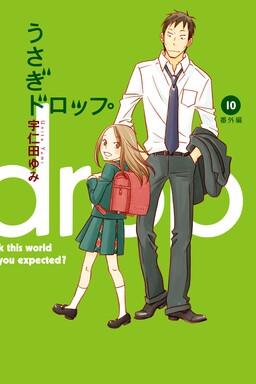
Bunny Drop
Yu's honest review of Bunny Drop (Usagi Drop) by Yumi Unita — bachelor Daikichi adopts Rin, his late grandfather's young illegitimate daughter, on impulse and learns to parent. The first half is some of the best family manga ever made; the second half time-skips and turns into something many readers reject. I tell you exactly what happens so you can decide.
Slice of Life / Historical Drama
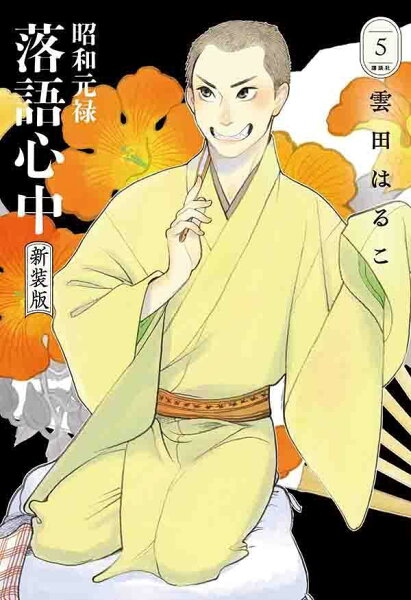
Shouwa Genroku Rakugo Shinjuu
Shouwa Genroku Rakugo Shinjuu follows the world of rakugo — traditional Japanese comic storytelling — through two performers across two generations: the transcendent and self-destructive Yakumo, and the student Yotaro who inherits what Yakumo cannot save.
Slice of Life / Drama
Umimachi Diary
Umimachi Diary follows three adult sisters in Kamakura who invite their half-sister — whom they barely know — to live with them after their estranged father's death, and the slow process of becoming a family.
Slice of Life / Drama
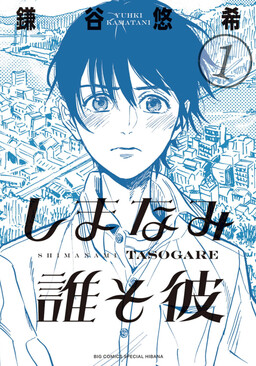
Our Dreams at Dusk: Shimanami Tasogare
Yu's review of Our Dreams at Dusk — Tasuku Kaname is outed to his classmates; he goes to a building to jump; a woman in white tells him to come to a drop-in center; the center is a community of people across the LGBTQ spectrum who have found a way to be in the world; Tasuku begins to find his own way through them.
Slice of Life / Drama
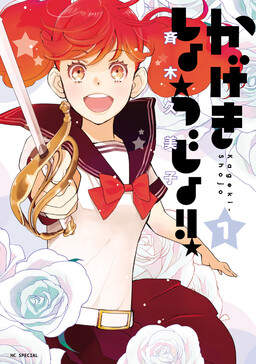
Kageki Shojo!!
Yu's review of Kageki Shojo!! — Sarasa Watanabe, a tall girl pushed out of kabuki as a child, enters the Kouka School of Musical and Theatrical Arts dreaming of playing Oscar from The Rose of Versailles. Her roommate is Ai Narata, a former JPX48 idol who fled an abusive past into all-female spaces. A Takarazuka-inspired drama about what performance costs the people who carry damage onto the stage.
Slice of Life / Drama
My Boy
My Boy follows Mashuu Hayami, a 32-year-old office worker adrift in her life after a painful breakup, who meets Satoru Kaga, a 12-year-old boy playing hockey alone in the park. Their unlikely friendship — and the questions it raises — unfolds across seven thoughtful volumes.
Written by
Yu
Manga Enthusiast from Japan
I grew up in Japan and manga literally saved me during a tough time in elementary school. My English isn't perfect, but my love for manga is real — and I want to share it with you.
Disclosure: This post contains affiliate links. As an Amazon Associate, I earn from qualifying purchases at no extra cost to you.