Way of the Househusband Review: The Immortal Dragon Retired From the Yakuza to Become a Stay-at-Home Husband
by Kousuke Oono
Read the first volume. If it doesn't hook you, put it down. It'll hook you.
Buy The Way of the Househusband on Amazon →*Affiliate link — I earn a small commission at no extra cost to you.
Quick Take
- One of manga's funniest single-premise comedies — Tatsu's application of yakuza intensity to housework is deployed with perfect timing and never gets old across 12 volumes
- The Tatsu/Miku marriage is quietly one of manga's most functional adult relationships
- 12 volumes complete; the ideal length for a comedy that knows exactly what it is
Who Is This Manga For?
- Readers who want comedy manga that executes a single premise with extraordinary precision
- Anyone who wants to see a domestic comedy with an unusual protagonist
- Fans of short, punchy manga chapters with consistent comedic timing
- Readers who want something that is exclusively funny and warm
Content Warnings & Age Rating
Age Rating: T (Teen) Content Warnings: Former yakuza themes are the comedic premise; mild yakuza language used in domestic context; the violence is entirely comedic implication rather than actual
Accessible and warm throughout.
Yu's Rating
| Category | Score |
|---|---|
| Story Depth | ★★★☆☆ |
| Art Style | ★★★★☆ |
| Character Development | ★★★☆☆ |
| Accessibility for Non-Japanese Readers | ★★★★★ |
| Reread Value | ★★★★★ |
Story Overview
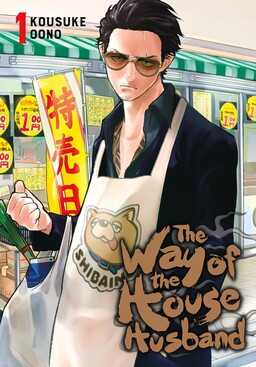
Tatsu is introduced standing in a grocery store aisle with the posture and expression of a man surveying a battlefield. He is selecting vegetables.
He was called the Immortal Dragon — the yakuza boss whose reputation made rival organizations refuse to act against his group. Now he grocery shops, cooks dinner, and maintains the household while his wife Miku works her design job.
Every chapter presents a new domestic situation — a neighborhood cooking class, a household appliance shopping trip, a dispute with the local supermarket, housework maintenance — which Tatsu approaches with absolute seriousness and the specific vocabulary and posture of organized crime. The comedy is generated entirely by this contrast and the reactions of normal people encountering his normal-domestic actions delivered with yakuza intensity.
Characters
Tatsu — His intensity is never played as threatening in the domestic context; it is purely comedic. His genuine devotion to Miku — expressed entirely through housework done excellently — is the series' warmest element.
Miku — Her complete acceptance of who her husband is, combined with her occasional embarrassment at specific yakuza-vocabulary deployments in public situations, provides the series' most consistent secondary comedic register.
Masa / Torii — Tatsu's former yakuza associates and their specific reactions to his domestic transformation are the series' secondary comedic source.
Art Style
Oono's art is clean and expressive — the specific deadpan expressions Tatsu uses in domestic situations are the series' visual foundation. The character designs are deliberately stylized to maximize the contrast between yakuza aesthetics and domestic activity.
Cultural Context
The Way of the Househusband engages with two Japanese cultural realities simultaneously: the specific aesthetics and vocabulary of yakuza culture (which has extensive Japanese media coverage), and the still-relatively-rare phenomenon of the male stay-at-home partner (主夫, shufu) in a society where housework is still primarily coded as feminine. The comedy operates in both registers.
What I Love About It
The cooking chapters. Tatsu applies yakuza tradecraft to cooking — the sourcing of ingredients, the preparation sequence, the specific vocabulary of cooking as strategy — with such complete sincerity that the result is consistently excellent food. His meals are always good. The comedy is that the process of making them looks like a military operation.
What English-Speaking Fans Say
Western readers describe Way of the Househusband as the most universally recommendable manga they know — the premise crosses language and cultural barriers because the contrast (scary-looking man doing domestic things with maximum intensity) is visually immediate. The Netflix adaptation is frequently cited as the gateway. The Tatsu/Miku marriage is praised as one of manga's most quietly functional adult relationships.
Memorable Scene ⚠️ Spoiler Warning
The chapter where Miku is sick and Tatsu cares for her — the specific way he expresses concern and the specific domestically-extreme measures he takes for her recovery — is the series' purest expression of his character and the most direct statement of what the comedy's underlying warmth actually is.
Similar Manga
- Wotakoi — Adult couple comedy, similar warmth
- Daily Lives of High School Boys — Comedic sketch format, different register
- Grand Blue — Comedic excess with group ensemble
- Miss Kobayashi's Dragon Maid — Domestic fantasy with unusual characters, similar warmth
Reading Order / Where to Start
Volume 1, Chapter 1 — the grocery store introduction is the series' perfect opening.
Official English Translation Status
Viz Media published the complete 12-volume run. All volumes available.
Pros & Cons
Pros
- Executes its single premise with perfect timing across 12 volumes
- The Tatsu/Miku marriage is quietly excellent
- 12 volumes — complete and exactly the right length
- Universally accessible across different reader backgrounds
Cons
- The single-premise comedy offers limited narrative development
- Readers looking for character arcs will find less than the comedy delivers
- The sketch format means each volume is similar in structure
Format Comparison
| Format | Notes |
|---|---|
| Individual Volumes | Viz Media; standard |
| Digital | Available |
Where to Buy
Read the first volume. If it doesn't hook you, put it down. It'll hook you.
This post contains affiliate links. If you purchase through these links, I may earn a small commission at no extra cost to you. As an Amazon Associate, I earn from qualifying purchases.
*Affiliate link — I earn a small commission at no extra cost to you.
More Manga You Might Like
Slice of Life / Comedy
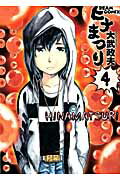
Hinamatsuri
Yu's review of Hinamatsuri — a metal pod drops a deadpan telekinetic girl named Hina onto a yakuza man's head, and the deadpan comedy slowly turns into one of the most quietly moving found-family manga I've ever read.
Slice of Life / Comedy
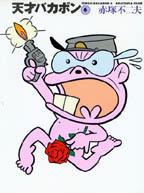
Tensai Bakabon
Tensai Bakabon is Fujio Akatsuka's landmark gag manga about the Bakabon family — a household where the father's complete detachment from logic is presented as wisdom, and the world's attempts to impose reason are the actual problem.
Slice of Life / Comedy
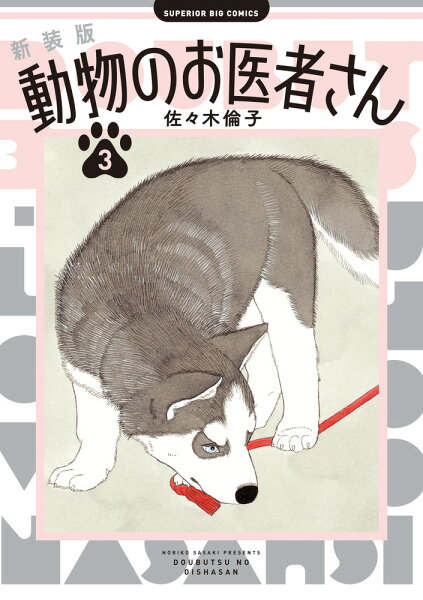
Doubutsu no Oisha-san
Doubutsu no Oisha-san follows Hamutaro, a quiet veterinary student in Hokkaido, his deadpan husky Chobi, and the warm chaos of vet-school life — a 12-volume Hana to Yume comedy so popular it set off a real Siberian Husky boom across Japan.
Slice of Life / Comedy
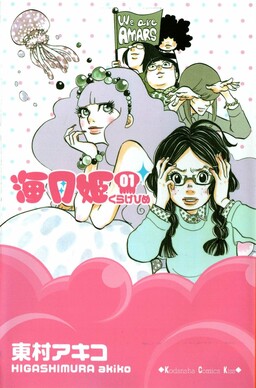
Princess Jellyfish
Yu's review of Princess Jellyfish — Tsukimi Kurashita is a jellyfish-obsessed otaku girl living in an all-female apartment building full of passionate nerds; when she meets Kuranosuke, a cross-dressing son of a politician who barges into her world, her quiet otaku life starts to change.

Slice of Life / Comedy
Nichijou: My Ordinary Life
Yu's review of Nichijou — a high school slice-of-life where ordinary situations escalate to catastrophic absurdity, a robot girl tries to hide what she is, and the Professor is an eight-year-old genius who made her.
Slice of Life / Comedy
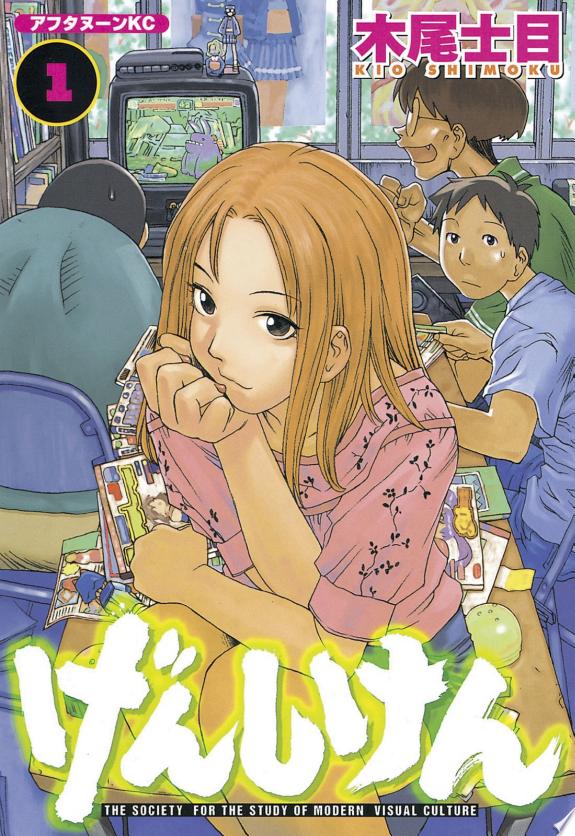
Genshiken
Yu's review of Genshiken — the Society for the Study of Modern Visual Culture is a university otaku club, and across nine volumes Shimoku Kio follows Sasahara, Madarame, Saki, Ohno, Tanaka and Ogiue as they graduate, fall in love, make a doujinshi, and figure out what being a fan costs and gives you.
Written by
Yu
Manga Enthusiast from Japan
I grew up in Japan and manga literally saved me during a tough time in elementary school. My English isn't perfect, but my love for manga is real — and I want to share it with you.
Disclosure: This post contains affiliate links. As an Amazon Associate, I earn from qualifying purchases at no extra cost to you.