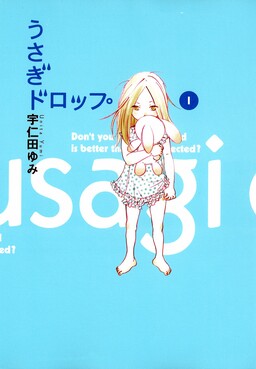
Usagi Drop Review: A 30-Year-Old Bachelor Adopts His Grandfather's Illegitimate 6-Year-Old Daughter
by Yumi Unita
*Affiliate link — I earn a small commission at no extra cost to you.
Quick Take
- The first 4-5 volumes are among manga's most warm and carefully observed portraits of parenting — Daikichi's adjustment to caring for Rin, and Rin's specific child voice, are genuinely beautiful
- Important content warning for later volumes: the time-skip arc (volumes 7-9) takes the series in a direction that many readers — including many who loved the early volumes — find deeply uncomfortable; this review covers the full series
- Read the early volumes for what they are; approach the later volumes knowing what they contain
Who Is This Manga For?
- Readers who want slice-of-life manga focused on parenting and daily domestic life — specifically the early volumes
- Fans of josei manga with warm family content
- Readers who want to understand the full arc of the series before deciding how much to read
- Anyone who appreciates precisely observed adult daily life in manga
Content Warnings & Age Rating
Age Rating: T (Teen)
Content Warnings: Single-parent adjustment; child's backstory involves abandonment; the later time-skip volumes (7-9) include a romantic development that many readers consider inappropriate — this is a significant caveat the review does not conceal
The T rating applies to the early volumes. The later volumes' content is a matter of ongoing debate in manga fandom; readers should know this before starting.
Yu's Rating
| Category | Score |
|---|---|
| Story Depth | ★★★☆☆ |
| Art Style | ★★★★☆ |
| Character Development | ★★★★☆ |
| Accessibility for Non-Japanese Readers | ★★★★☆ |
| Reread Value | ★★★☆☆ |
Story Overview
Daikichi Kawachi is 30, single, and entirely unprepared for parenthood when his grandfather dies and reveals Rin — a quiet, self-contained 6-year-old girl who was his grandfather's illegitimate daughter with a woman no one can find. Rin is effectively an orphan; no family member is willing to take her. Daikichi, almost on impulse, says he will.
The early volumes follow the specific adjustments this requires: finding a daycare that accepts late pickups, changing his work schedule away from overtime culture, learning to make lunches and manage small children's specific needs. Rin's character — cautious, observant, slowly opening — is drawn with remarkable specificity.
The series includes a time-skip in the later volumes that moves to Rin as a teenager and introduces romantic content that many readers consider incompatible with the family story that preceded it.
Characters
Daikichi Kawachi — His specific form of adult adjustment — not romanticized, not effortless, conducted through practical problem-solving — is the early volumes' most valuable element.
Rin — Her child voice is the series' most praised element; the specific way she thinks and expresses herself in the early volumes is observational writing of a quality rarely achieved in manga.
Art Style
Unita's art in the early volumes is warm and detailed — domestic settings rendered with specificity that makes them feel inhabited. The characters age visibly across the series, which serves the time-skip narrative while also making the later developments more uncomfortable to read.
Cultural Context
Usagi Drop ran in Feel Young — a josei magazine aimed at adult women — and reflects that magazine's interest in adult domestic life rather than teenage romance. The parenting content in the early volumes drew on real observation and achieved genuine literary quality within the manga form.
What I Love About It
Rin's questions. The early volumes document the specific questions a 6-year-old asks about the adult world she is encountering — why certain things work the way they do, what certain words mean — and Daikichi's specific fumbling attempts to answer them at the right level. The specificity of these exchanges is the series at its best.
What English-Speaking Fans Say
Western readers universally praise the early volumes as genuinely excellent slice-of-life manga and divide strongly on the later volumes — this is one of the manga community's most consistent discussions about where a beloved series went wrong and what that means for how to recommend it.
Memorable Scene ⚠️ Spoiler Warning
Rin's first day at the new daycare — the specific anxiety and the specific way it resolves — is the series' most quietly perfect scene and the purest expression of what the early volumes were doing.
Similar Manga
- A Man and His Cat — Adult domestic warmth, different family structure
- Sweetness and Lightning — Single-parent cooking manga, similar warmth
- March Comes in Like a Lion — Adult character adjusting to responsibility, similar register
- Yotsuba&! — Child voice and adult perspective, warmer tone
Reading Order / Where to Start
Volume 1 — the funeral and Daikichi's decision establish immediately. Readers who want to stop at the natural ending of the family story should consider stopping at volume 5 or 6.
Official English Translation Status
Yen Press published the complete 9-volume run. All volumes available.
Pros & Cons
Pros
- The early volumes' parenting observation is genuinely excellent
- Rin's child voice is unique in manga
- Daikichi's adjustment is depicted with unusual specificity
- The domestic detail work is precise
Cons
- The later time-skip volumes take a direction that many readers strongly object to
- The series' trajectory makes it difficult to recommend without significant qualification
- The T rating does not adequately communicate the later volumes' content
Format Comparison
| Format | Notes |
|---|---|
| Individual Volumes | Yen Press; standard |
| Digital | Available |
Where to Buy
Get Usagi Drop Vol. 1 on Amazon →
This post contains affiliate links. If you purchase through these links, I may earn a small commission at no extra cost to you. As an Amazon Associate, I earn from qualifying purchases.
*Affiliate link — I earn a small commission at no extra cost to you.
Written by
Yu
Manga Enthusiast from Japan
I grew up in Japan and manga literally saved me during a tough time in elementary school. My English isn't perfect, but my love for manga is real — and I want to share it with you.
Disclosure: This post contains affiliate links. As an Amazon Associate, I earn from qualifying purchases at no extra cost to you.