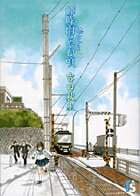
Umimachi Diary Review: Four Sisters, One House, and the Quiet Weight of Family
by Akiko Yoshida
Read the first volume. If it doesn't hook you, put it down. It'll hook you.
Buy Umimachi Diary on Amazon →*Affiliate link — I earn a small commission at no extra cost to you.
Quick Take
- One of the most beautiful slice-of-life manga ever created — the restraint is the art
- Kamakura as a setting becomes as much of a character as the four sisters
- The source for Hirokazu Kore-eda's acclaimed film "Our Little Sister"
Who Is This Manga For?
- Readers who love quiet, literary manga where nothing dramatic happens and everything matters
- Fans of Kore-eda's films who want the source material's full scope
- People interested in Japanese family dynamics — especially the complicated inheritance of parents who fail their children
- Anyone who has lived with complicated love — the kind that persists despite clear reasons to let it go
Content Warnings & Age Rating
Age Rating: T (Teen) Content Warnings: A parent's death, family estrangement, the complicated emotions around loving people who have hurt you
Handled with extraordinary gentleness.
Yu's Rating
| Category | Score |
|---|---|
| Story Depth | ★★★★★ |
| Art Style | ★★★★★ |
| Character Development | ★★★★★ |
| Accessibility for Non-Japanese Readers | ★★★★★ |
| Reread Value | ★★★★★ |
Story Overview
Sachi, Yoshino, and Chika are three sisters living together in their grandmother's old house in Kamakura. Their father left when they were young; their mother later left too. They have built a quiet, functional life together, each managing the particular grief of their family's dissolution in her own way.
Their father has died, in a distant town, with a second family they knew nothing about. At the funeral, they meet Suzu — their half-sister, fourteen, the child of the woman their father left their mother for. Suzu is not responsible for any of it. Sachi makes a decision: Suzu will come to Kamakura and live with them.
The nine volumes that follow are about what happens when you choose to love someone who is the evidence of your family's wound. Suzu's presence does not resolve the sisters' complicated feelings about their father — it reopens them, slowly, in ways each sister must eventually face.
Characters
Sachi: The oldest, who has managed everything since their mother left and therefore manages everything still. Her caregiving competence comes at a cost she hasn't fully accounted. Her arc — discovering what she has suppressed in order to keep functioning — is the series' central emotional thread.
Yoshino: The second sister whose chaotic romantic life provides the series' comedy while masking something more serious. Her relationship with the concept of abandonment, played out in choices about men who will and won't stay, is the series' most psychologically precise portrait.
Chika: The youngest, still in some ways processing what happened, still young enough to not have organized it into a stable narrative.
Suzu: The half-sister whose presence is both the problem and the gift. She did not ask to be part of this family's history. She earns her place in it through exactly the right combination of effort and ordinariness.
Art Style
Yoshida's art is exceptional — the restraint of the panel composition, the way character emotion is communicated through posture and small expressions rather than dramatic faces, the rendering of Kamakura's specific seasonal beauty. The series looks like what it is: something created with full attention.
Cultural Context
Kamakura — the historic city south of Yokohama, known for its temples, its sea, and its specific quietness — is rendered with obvious love by an author who knows it deeply. The seasonal progression through the nine volumes maps onto Kamakura's particular character across the year. The house where the sisters live is a presence as much as a setting.
The Kore-eda film adaptation (2015) is excellent, but condensation necessarily loses what nine volumes of weekly attention can accumulate.
What I Love About It
I love the specificity of what the series understands about complicated love.
The sisters' grief about their father is not resolved when they invite Suzu. It is not resolved when Suzu becomes part of the family. It is not resolved at the series' end. What changes is not the grief but the sisters' relationship to it — their willingness to let it exist alongside love, to stop requiring resolution before they can move forward.
This is something very few pieces of fiction understand: that loving someone who has hurt you, and grieving them, and living with the unanswerable questions their absence creates, are all things that can coexist indefinitely. You don't have to choose. The sisters eventually stop trying to choose.
What English-Speaking Fans Say
Widely regarded by English-speaking readers who have accessed it as one of the finest manga available in the genre. The complete English translation (Drawn & Quarterly) has made it genuinely accessible, and readers who find it tend to describe it as exactly what they needed without knowing they needed it.
Frequently recommended alongside March Comes in Like a Lion and Yotsuba&! as examples of manga that requires no prior familiarity with the form.
Memorable Scene ⚠️ Spoiler Warning
A scene where one of the sisters, in a moment of quiet with Suzu, says something about their father that she has never said aloud — something she has known for years and protected everyone else from knowing — and the release it produces. The conversation is brief and the scene is small. The weight of it is not.
Similar Manga
- March Comes in Like a Lion: Quiet literary manga about family and grief
- Sweetness and Lightning: Different tone, same care about found-family dynamics
- A Silent Voice: More dramatic, same quality of taking difficult family emotion seriously
Reading Order / Where to Start
Volume 1. The accumulation is the experience.
Official English Translation Status
Umimachi Diary has a complete official English translation (all 9 volumes) from Drawn & Quarterly.
Pros & Cons
Pros
- One of manga's finest slice-of-life works
- Complete English translation available
- Self-contained at 9 volumes — appropriate scope for its material
- Extraordinary visual and emotional restraint
Cons
- The quietness requires patient engagement
- Nothing "happens" in a conventional sense — readers wanting plot will be frustrated
- Seasonal specificity of Kamakura may not translate for all readers
Format Comparison
| Format | Notes |
|---|---|
| Physical | English editions available (Drawn & Quarterly) |
| Digital | Available in English |
| Omnibus | Not available |
Where to Buy
Read the first volume. If it doesn't hook you, put it down. It'll hook you.
*Affiliate link — I earn a small commission at no extra cost to you.
More Manga You Might Like
Slice of Life
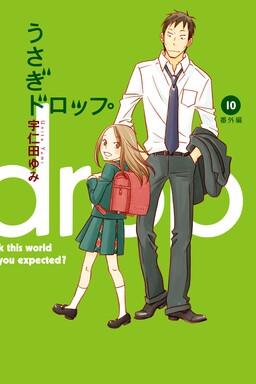
Bunny Drop
Yu's honest review of Bunny Drop (Usagi Drop) by Yumi Unita — bachelor Daikichi adopts Rin, his late grandfather's young illegitimate daughter, on impulse and learns to parent. The first half is some of the best family manga ever made; the second half time-skips and turns into something many readers reject. I tell you exactly what happens so you can decide.
Slice of Life / Drama
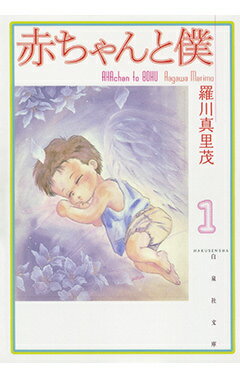
Baby and Me
Baby and Me follows Takuya Enoki, a grade-schooler who becomes a mother and a brother at the same time, raising his toddler brother Minoru after their mother dies and their father works to keep the family going.
Slice of Life / Historical Drama
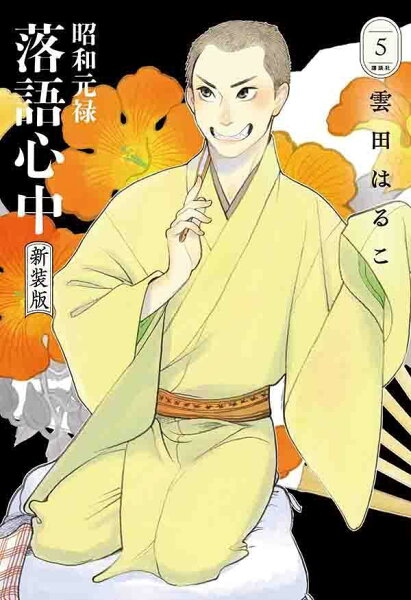
Shouwa Genroku Rakugo Shinjuu
Shouwa Genroku Rakugo Shinjuu follows the world of rakugo — traditional Japanese comic storytelling — through two performers across two generations: the transcendent and self-destructive Yakumo, and the student Yotaro who inherits what Yakumo cannot save.
Slice of Life
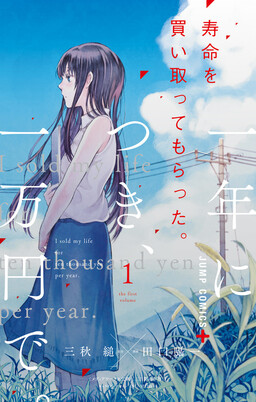
Three Days of Happiness
Yu's review of Three Days of Happiness — in a world where you can sell your remaining lifespan for money, Kusunoki sells most of his and discovers he has only three months left; manga adaptation of Sugaru Miaki's novel about what matters when time is finite.
Slice of Life
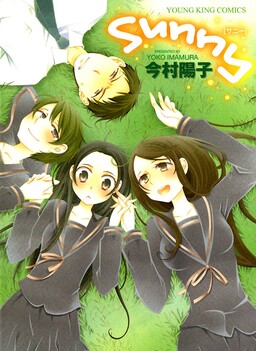
Sunny
Yu's review of Sunny — at a group home for children whose families cannot take care of them, a broken-down old car called Sunny becomes a private space where the children go to be alone; Taiyo Matsumoto's meditation on childhood longing, on what it means to be left, and on how children find ways to survive what adults do to them.
Slice of Life / Drama
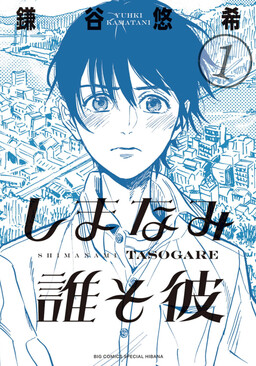
Our Dreams at Dusk: Shimanami Tasogare
Yu's review of Our Dreams at Dusk — Tasuku Kaname is outed to his classmates; he goes to a building to jump; a woman in white tells him to come to a drop-in center; the center is a community of people across the LGBTQ spectrum who have found a way to be in the world; Tasuku begins to find his own way through them.
Written by
Yu
Manga Enthusiast from Japan
I grew up in Japan and manga literally saved me during a tough time in elementary school. My English isn't perfect, but my love for manga is real — and I want to share it with you.