
Suppli Review: What It Actually Costs to Be a Woman Working Late in Tokyo
by Mari Okazaki
Read the first volume. If it doesn't hook you, put it down. It'll hook you.
Buy Suppli on Amazon →*Affiliate link — I earn a small commission at no extra cost to you.
She's 25, she's good at her job, and she has no idea how to want the right things in the right proportions.
Quick Take
- A josei manga about a young woman in advertising trying to have both a career and a personal life — and discovering they conflict in specific, identifiable ways
- Mari Okazaki's art brings Tokyo office culture to life with unusual precision
- 11 complete volumes; one of the more honest josei manga about work and desire
Who Is This Manga For?
- Adult women in their 20s and 30s who recognize the work-life balance problem from the inside
- Readers who want josei manga that treats professional ambition as genuine rather than incidental
- Fans of Mari Okazaki's more explicit work (Flowers of Evil adult) who want something accessible
- Anyone who wants a complete, honest story about what being young and ambitious and uncertain actually feels like
Content Warnings & Age Rating
Age Rating: T (Teen) Content Warnings: Workplace stress, adult relationships, career conflict themes
The content is adult in register without being graphic.
Yu's Rating
| Category | Score |
|---|---|
| Story Depth | ★★★★☆ |
| Art Style | ★★★★★ |
| Character Development | ★★★★★ |
| Accessibility for Non-Japanese Readers | ★★★★☆ |
| Reread Value | ★★★★☆ |
Story Overview
Minami Fujii is 25 years old and works at an advertising agency in Tokyo. She's competent, ambitious, and trying to figure out what she actually wants from the parts of her life that aren't work.
Suppli follows her over several years: the relationships that start and don't resolve neatly, the colleagues who are more complicated than they appear at first, the career decisions that cost her things she didn't know she was attached to, and the specific way that professional competence and personal uncertainty can coexist completely in the same person.
Okazaki's approach is josei rather than shojo — the emotional register is adult, the problems are recognizable rather than dramatic, and the romance is entangled with the work in ways that reflect actual life rather than narrative convenience.
Characters
Minami Fujii — One of manga's better portrayals of a young professional woman: competent at work in ways that are visible and specific, uncertain about relationships in ways that are equally visible and specific. Her growth is about learning what she actually wants rather than what she thinks she should want.
The male leads — Multiple romantic interests across the series, each representing a different relationship between professional and personal — men whose ambition matches hers differently, whose availability varies, whose feelings are as complicated as hers.
Work colleagues — Drawn with the specific textures of office relationships: people you like because you spend more time with them than anyone, who become genuinely important.
Art Style
Mari Okazaki's art is the series' outstanding element. Her visual language for Tokyo — the offices, the trains, the specific typography of the city — is exceptional. Character work is precise and expressive. The fashion and visual culture of early 2000s Tokyo advertising is documented with care. Okazaki makes the professional environment feel inhabited rather than generic.
Cultural Context
Suppli was published during a period of increasing attention to work-life balance issues for Japanese professional women — the "career woman" as a cultural category, with all its specific pressures. The advertising industry setting is chosen carefully: it's a high-demand, high-creativity environment where the tension between professional investment and personal life is especially visible.
Josei manga for professional women in their 20s-30s was an expanding category in this period. Suppli is among the most precisely observed entries in that category.
What I Love About It
The scenes where Minami is actually working — not the office as backdrop, but the specific texture of advertising work: the pitches, the compromises, the moments when professional skill and personal vision diverge. Okazaki clearly understood what she was depicting, and it makes the work feel real rather than generic "career woman" shorthand.
What English-Speaking Fans Say
Highly regarded among josei manga readers who found it through Fanfare's small but quality catalog. Minami's characterization is consistently praised as one of the more accurate portrayals of young professional women in manga. The complete 11-volume release is appreciated. The publication by Fanfare/Ponent Mon (a European publisher) means it's less widely known than it deserves to be.
Memorable Scene ⚠️ Spoiler Warning
The scene where Minami realizes that she's been treating the relationship that matters most to her as something she can fit around the work, rather than the other way around — and that this is a choice she made without realizing she was making it — is the emotional turning point. Okazaki draws it without drama. Just recognition.
Similar Manga
| Title | Its Approach | How Suppli Differs |
|---|---|---|
| Nana | Young women in Tokyo navigating love and career | Nana is more dramatic and music-focused; Suppli is more grounded in office life |
| Tramps Like Us | Working woman, complicated romance | Both address similar themes; Tramps Like Us is more dramatic; Suppli is quieter |
| Hataraki Man | Working woman in journalism | Hataraki Man is more work-focused; Suppli balances professional and personal more equally |
Reading Order / Where to Start
Volume 1, straight through. Minami's story builds cumulatively.
Official English Translation Status
Fanfare/Ponent Mon published all 11 volumes in English. Complete and available, though distribution outside Europe may be limited.
Pros & Cons
Pros
- One of the more precise portrayals of young professional women in manga
- Okazaki's art is exceptional for the office setting
- Complete 11-volume story with honest resolution
- The work is depicted with genuine understanding
Cons
- Published by a European publisher; availability in North America may be limited
- The quiet pace is not for readers who need dramatic momentum
- The professional-romance balance requires patience before the emotional payoff
- Distribution means it's harder to find than it should be
Is Suppli Worth Reading?
For adult josei readers and anyone who recognizes Minami's specific problem — yes. One of the more honest manga about what young professional life actually feels like.
Format Comparison
| Format | Pros | Cons |
|---|---|---|
| Physical | Complete 11-volume set | European publication; availability varies in North America |
| Digital | More accessible | — |
| Omnibus | No omnibus available | — |
Where to Buy
Read the first volume. If it doesn't hook you, put it down. It'll hook you.
This post contains affiliate links. If you purchase through these links, I may earn a small commission at no extra cost to you. As an Amazon Associate, I earn from qualifying purchases.
*Affiliate link — I earn a small commission at no extra cost to you.
More Manga You Might Like

Slice of Life / Romance
Wotakoi: Love Is Hard for Otaku
Yu's review of Wotakoi — Narumi hides her fujoshi hobby at every job she has ever had; at her new job she discovers her childhood friend Hirotaka is there, and he knows all her secrets; they start dating, and navigate being adult otaku in a relationship together.

Slice of Life / Romance
Nodame Cantabile
A comprehensive review of Nodame Cantabile — plot, characters, art style, and whether it's worth reading.

Slice of Life / Comedy
Tsuribaka Nisshi
Tsuribaka Nisshi follows Densuke 'Hama-chan' Hamasaki — a dead-average salaryman obsessed with fishing — who unknowingly befriends Ichinosuke 'Su-san' Suzuki, the president of the construction company he works for, after the two meet over a leftover grilled fish.

Slice of Life / Comedy
Police in a Pod
Police in a Pod follows Seiko Kawai, a burned-out policewoman who is about to quit, and her new superior Fuji — a former elite officer with her own complicated reasons for being at a small police box — as they navigate the absurd and occasionally moving realities of police work.
Slice of Life / Romance
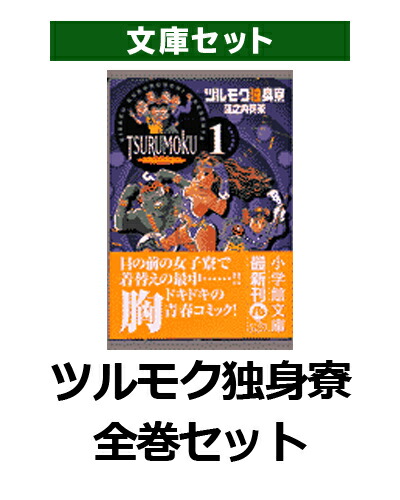
Tsurumoku Dokusin-ryo
Tsurumoku Dokusin-ryo follows young workers living in their company's bachelor dormitory — a comedy of closeness, romantic complications, and the specific texture of young adult working life in Japan when everyone you know also lives where you work.

Slice of Life / Comedy
Wagnaria!! (Working!!)
Yu's review of Wagnaria!! — Souta Takanashi starts working at a family restaurant because a tiny girl asked him to; his coworkers include a woman with androphobia, a katana-carrying floor chief, an invisible manager, and a girl who thinks she might be in love with him; chaos is the default state.
Written by
Yu
Manga Enthusiast from Japan
I grew up in Japan and manga literally saved me during a tough time in elementary school. My English isn't perfect, but my love for manga is real — and I want to share it with you.
Disclosure: This post contains affiliate links. As an Amazon Associate, I earn from qualifying purchases at no extra cost to you.