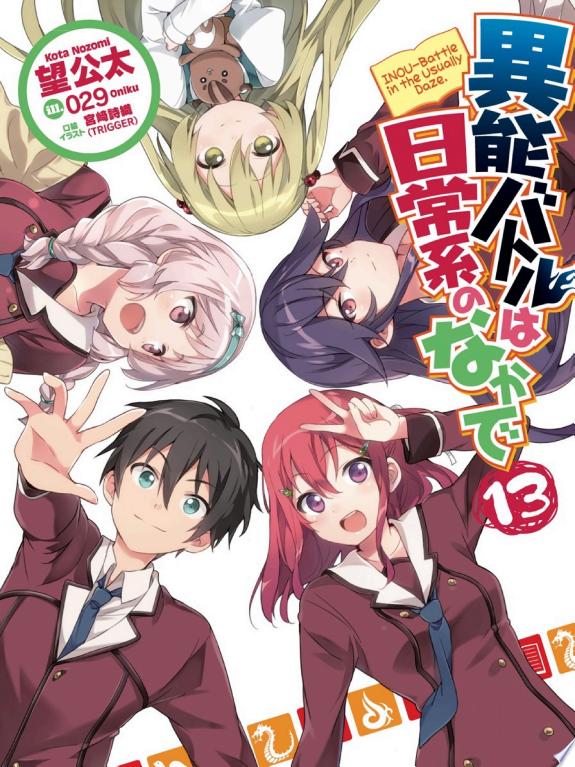
When Supernatural Battles Became Commonplace Review: Powers That Change Nothing
by Kota Nozomi (story) / 029 (art)
Read the first volume. If it doesn't hook you, put it down. It'll hook you.
Buy When Supernatural Battles Became Commonplace on Amazon →*Affiliate link — I earn a small commission at no extra cost to you.
Quick Take
- A comedy built on one premise: what if you got superpowers and they turned out to be completely irrelevant to your life
- The literature club setting and the ordinary relationship drama continue unchanged; the powers are background noise
- The series is funnier if you're familiar with the tropes it's deflating
Who Is This Manga For?
- Readers familiar with battle manga tropes who want those tropes treated as absurd
- Slice-of-life fans who want their genre lightly flavored with the supernatural
- Comedy manga readers who prefer situational and character-based humor
- Fans of the anime adaptation who want to experience the original light novel manga version
Content Warnings & Age Rating
Age Rating: T (Teen) Content Warnings: Light supernatural action that is never serious; school romance content; nothing significant
Entirely appropriate for teen readers.
Yu's Rating
| Category | Score |
|---|---|
| Story Depth | ★★★☆☆ |
| Art Style | ★★★☆☆ |
| Character Development | ★★★★☆ |
| Accessibility for Non-Japanese Readers | ★★★★☆ |
| Reread Value | ★★★☆☆ |
Story Overview
The literature club develops supernatural powers: elemental manipulation, time control, dimensional interference — the kind of abilities that in any other manga would be the basis for an epic battle series. In this manga, they continue attending club meetings, having ordinary conversations, and navigating the complicated feelings that come with being a group of teenagers who spend too much time together.
The powers exist. They are used occasionally. But the series' attention is entirely on the ordinary life happening around the extraordinary abilities. The would-be battle protagonist (Andou, who has "Dark and Dark," a power that is entirely useless) is more interested in performing his chuunibyou persona than in actually developing his abilities.
Characters
Andou: The chuunibyou protagonist who wanted to be a battle manga hero and got powers that won't cooperate. His self-awareness about his own absurdity is the series' primary comedy engine.
The literature club members: Each with powers, each continuing to use them approximately zero times for anything important. Their relationships — complicated, overlapping, not easily resolved — are what the series actually cares about.
Art Style
029's art is clean and expressive in the modern light-novel adaptation style — character designs that are immediately appealing, school settings that feel lived in, and power sequences that deliberately lack the visual drama that battle manga would bring to the same material.
Cultural Context
Chuunibyou — the adolescent phase of fantasy about having hidden powers and special destiny — is a persistent subject of gentle Japanese comedy. The series takes the chuunibyou character type and gives him literal powers that still can't make him the protagonist he imagines himself to be.
The gap between the fantasy of supernatural power and the reality of ordinary high school life is the series' basic joke, and it is a good one.
What I Love About It
I love the series' central argument: that what actually matters to these characters is not the powers.
The powers are irrelevant to what the characters care about, which is each other — the specific textures of their friendships and feelings, the small dramas that make up a school year, the things that will actually matter when they look back on this time. The supernatural elements are noise. The ordinary elements are signal.
This is a choice worth making. Most manga about people with powers treats the powers as the point. This manga treats them as a joke about manga that treats powers as the point.
What English-Speaking Fans Say
Moderate awareness in English-speaking markets through the anime adaptation (also titled When Supernatural Battles Became Commonplace). Among fans of both the slice-of-life genre and the battle manga it's parodying, it's appreciated for its specific humor. The anime adaptation is considered a faithful and enjoyable version of the source material.
Memorable Scene
A chapter where the literature club's powers briefly become relevant to a genuine crisis — and the resolution has nothing to do with the powers, which proves to be completely useless. The scene is about what actually helps people in a real situation versus what looks impressive.
Similar Manga
- Chuunibyou demo Koi ga Shitai!: Same chuunibyou theme, different approach
- Kokoro Connect: Same literature club setting, different dramatic register
- Daily Lives of High School Boys: Similar "ordinary life is funnier than dramatic premise" structure
Reading Order / Where to Start
Volume 1. The premise is established quickly.
Official English Translation Status
When Supernatural Battles Became Commonplace has no official English translation of the manga. The light novel series it is adapted from has no English translation either.
Pros & Cons
Pros
- Clever premise executed with consistent commitment
- Character relationships have genuine depth
- Complete at 10 volumes
- Anime adaptation available for those who prefer that format
Cons
- No English translation of manga or source light novel
- The humor requires familiarity with the tropes being deflated
- Some readers may find the non-resolution of power plotlines unsatisfying
Format Comparison
| Format | Notes |
|---|---|
| Physical | Japanese editions available |
| Digital | Available in Japanese |
| Omnibus | Not available |
Where to Buy
No English release yet. That just means you find it before everyone else does.
*Affiliate link — I earn a small commission at no extra cost to you.
More Manga You Might Like
Slice of Life / Romance
Teasing Master Takagi-san
Yu's review of Teasing Master Takagi-san — Takagi teases her desk neighbor Nishikata every single day; he keeps making plans to get back at her; she always wins; the series is about two middle school students who are clearly in love with each other before either of them knows how to say it.
Slice of Life / Comedy
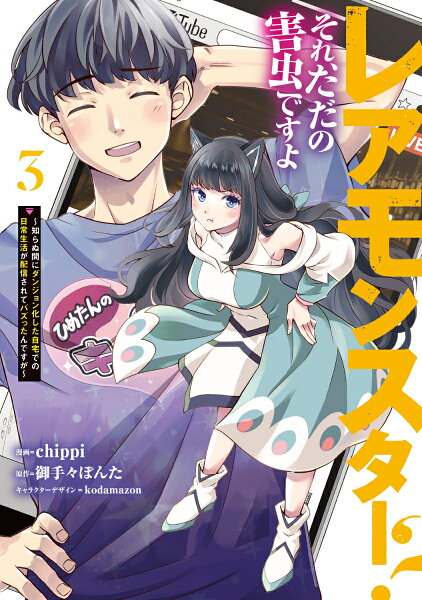
Nichijou: My Ordinary Life
Yu's review of Nichijou — a high school slice-of-life where ordinary situations escalate to catastrophic absurdity, a robot girl tries to hide what she is, and the Professor is an eight-year-old genius who made her.
Slice of Life / Romance
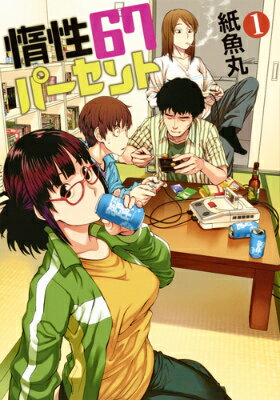
Dasei 67%
Dasei 67% follows art-school student Minami Yoshizawa and the three friends who never leave her tiny apartment, drifting through a college life that runs on about 67% effort and 100% dumb, lovable inertia.
Slice of Life / Comedy
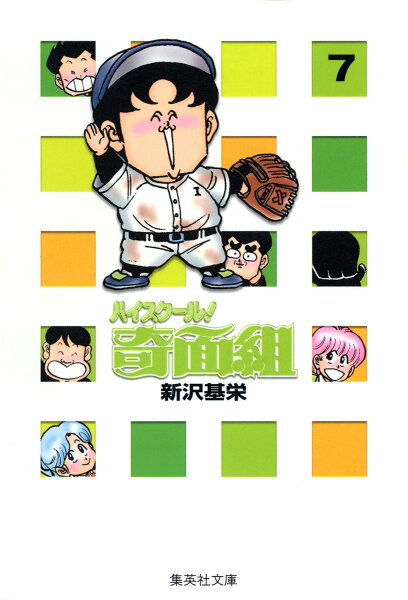
High School! Kimengumi
High School! Kimengumi follows five boys who turn their strange faces into a way of life, building one of the loudest, weirdest gag manga of 1980s Shonen Jump.
Slice of Life / Comedy
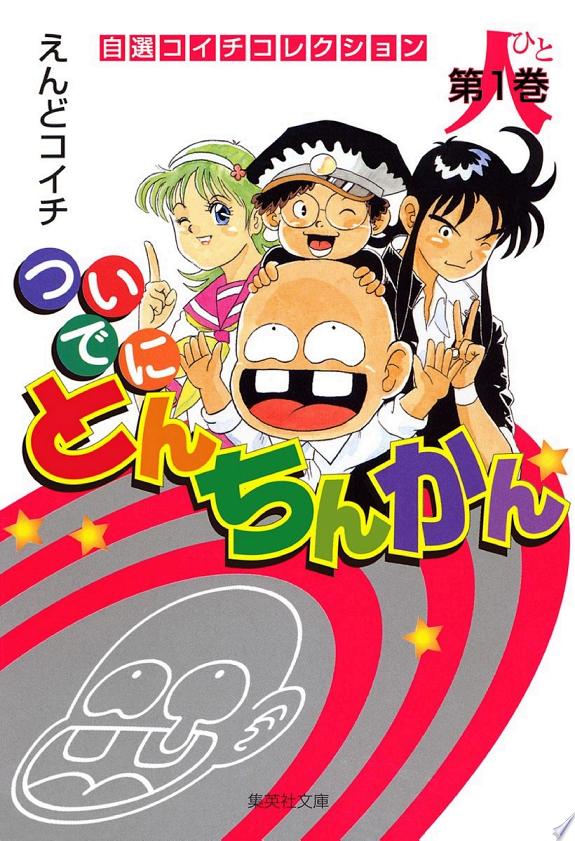
Tondemo-kun
Tondemo-kun follows a trio of delinquent students whose plans to cause trouble consistently backfire in ways that are so spectacularly wrong they accidentally create good outcomes — a comedy built entirely on the gap between intention and result.
Comedy / Slice of Life
Macaroni Houren-sou
Macaroni Houren-sou follows three high school students living together in a boarding house — Toshio Shingami, the energetic straight man; Kinoshita, the eccentric wildcard; and Trapp, the cool foreigner — in a surreal comedy that uses the school-life setting as a launching pad for increasingly unhinged humor.
Written by
Yu
Manga Enthusiast from Japan
I grew up in Japan and manga literally saved me during a tough time in elementary school. My English isn't perfect, but my love for manga is real — and I want to share it with you.