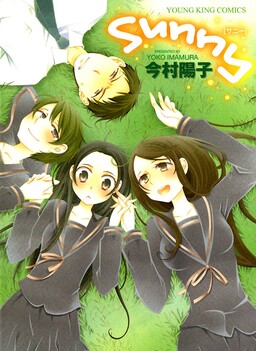
Sunny Review: Children in a Group Home Find Their Inner World in a Broken-Down Old Car
by Taiyo Matsumoto
Read the first volume. If it doesn't hook you, put it down. It'll hook you.
Buy Sunny on Amazon →*Affiliate link — I earn a small commission at no extra cost to you.
Quick Take
- Taiyo Matsumoto's most emotionally precise work — the children of the group home are rendered with specific interiority, not sentimentalized or simplified
- The Sunny car as private world is the series' most powerful image: a broken thing that still contains everything a child needs
- 6 volumes complete; essential literary manga
Who Is This Manga For?
- Readers who want literary manga that treats children as complete people
- Anyone interested in how manga handles emotional difficulty with honesty
- Fans of Taiyo Matsumoto's distinctive visual style
- Readers looking for complete manga that rewards emotional engagement
Content Warnings & Age Rating
Age Rating: T (Teen) Content Warnings: Group home setting and what it means for children; family abandonment and longing; children's emotional difficulty; poverty
T rating — appropriate for most readers; the emotional content is serious but handled with care.
Yu's Rating
| Category | Score |
|---|---|
| Story Depth | ★★★★★ |
| Art Style | ★★★★★ |
| Character Development | ★★★★★ |
| Accessibility for Non-Japanese Readers | ★★★★☆ |
| Reread Value | ★★★★★ |
Story Overview
The group home Star Kids Home houses children whose parents are absent — dead, imprisoned, unable to care for them. The children go to school, eat dinner together, and wait to be either returned to their families or to age out of the system.
In the yard sits Sunny — an old car that doesn't run, that is slowly rusting, that nobody uses for driving. The children use it for everything else: as a private space, as an imagination vehicle, as the place where they can be the selves their group home lives don't allow them to be.
Each chapter follows a specific child, their specific situation, their specific inner world. The episodes accumulate into a portrait of what it means to be a child in a place that is not home.
Characters
Haruo — The newest arrival; his initial resistance to the group home is the series' entry point.
Sei — An older child who has been at the home long enough to know its rhythms; his specific relationship to the hope of returning to his mother is the series' most fully developed emotional thread.
The other children — Each rendered with specific personality and specific longing; no child in this manga is a type.
Art Style
Matsumoto's art is immediately distinctive — textured, expressive, influenced by European comics, with a visual language uniquely suited to depicting interior emotional states. The 1970s setting is rendered with period specificity.
Cultural Context
Sunny ran in Monthly Shōnen Sunday S. The 1970s setting is deliberate — Matsumoto grew up in this era, and the specific objects and textures of the period (the car, the clothes, the food) carry personal memory alongside historical accuracy.
What I Love About It
The Sunny car as container of imagination. When children sit in a car that cannot go anywhere, they go everywhere — to their parents, to a future, to a version of themselves that the group home circumstances don't allow. Matsumoto depicts these interior journeys with visual specificity that makes them feel simultaneously dreamlike and entirely real.
What English-Speaking Fans Say
Western readers describe Sunny as one of the most emotionally affecting manga in English — specifically noted for Matsumoto's ability to depict childhood interiority without condescension, for the group home setting being specific and honest, and for the cumulative emotional impact of the six-volume run being exceptional. Consistently cited as essential Matsumoto alongside Tekkonkinkreet.
Memorable Scene ⚠️ Spoiler Warning
Sei's vigil — waiting at a specific point for something that his mother promised but that the reader understands will not come — is the series' most precisely constructed emotional moment.
Similar Manga
- Tekkon Kinkreet — Matsumoto's other essential work
- A Drifting Life — Different register, similar literary ambition
- Barakamon — Children in unexpected settings with similar warmth
- Yotsuba&! — Childhood rendered with similar observational love
Reading Order / Where to Start
Volume 1 — the group home and its children are established from the first chapter.
Official English Translation Status
Viz Media published the complete English series. All 6 volumes available.
Pros & Cons
Pros
- Matsumoto's visual style is exceptional
- Children rendered as complete people
- Cumulative emotional impact is significant
- Complete at 6 volumes
Cons
- Emotional weight requires reader readiness
- 1970s setting creates period distance
- Episodic structure without resolution arc
Format Comparison
| Format | Notes |
|---|---|
| Individual Volumes | Viz Media; complete series |
| Digital | Available |
Where to Buy
Read the first volume. If it doesn't hook you, put it down. It'll hook you.
This post contains affiliate links. If you purchase through these links, I may earn a small commission at no extra cost to you. As an Amazon Associate, I earn from qualifying purchases.
*Affiliate link — I earn a small commission at no extra cost to you.
More Manga You Might Like
Slice of Life
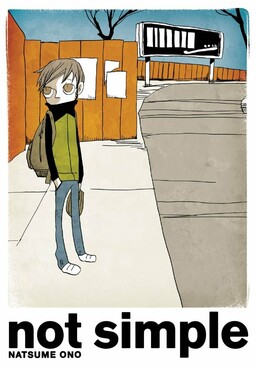
not simple
Yu's review of not simple — Ian is an English young man whose life has been defined by loss, abuse, neglect, and a desperate search for his sister; the manga tells his story in non-linear fragments, assembled by a journalist writing a novel about Ian's life, asking what it means to witness someone's suffering and what fiction can do with it.
Slice of Life / Drama
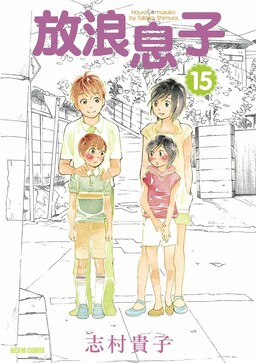
Wandering Son
Yu's review of Wandering Son — Shuichi Nitori is a boy who wants to be a girl; his new friend Yoshino Takatsuki is a girl who wants to be a boy; the manga follows both of them from elementary school through adolescence as they navigate gender identity, friendship, and growing up; a gentle, serious work about transgender experience.
Slice of Life
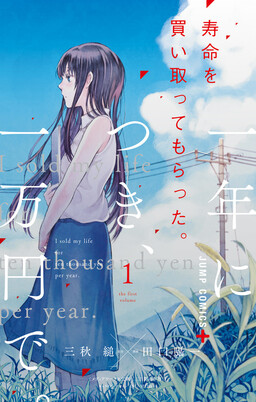
Three Days of Happiness
Yu's review of Three Days of Happiness — in a world where you can sell your remaining lifespan for money, Kusunoki sells most of his and discovers he has only three months left; manga adaptation of Sugaru Miaki's novel about what matters when time is finite.
Slice of Life
Stargazing Dog
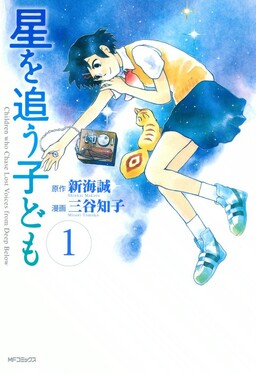
Yu's review of Stargazing Dog — Daddy adopts a puppy named Happie; the manga follows Happie's life with Daddy through family happiness, family collapse, and the road journey that is their final chapter together; narrated from Happie's perspective, the story is exactly as emotionally devastating as its premise suggests.
Slice of Life
Ristorante Paradiso
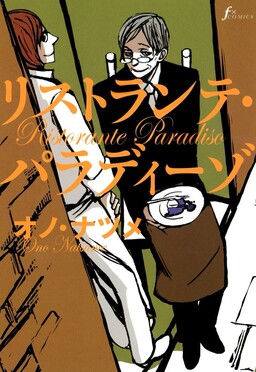
Yu's review of Ristorante Paradiso — Nicoletta travels from her hometown to Rome to confront her mother, who left her as a child; her mother's husband doesn't know she exists; the restaurant Casetta dell'Orso, staffed entirely by older bespectacled gentlemen, becomes the setting for Nicoletta's unexpected new life.
Slice of Life / Drama
Kids on the Slope
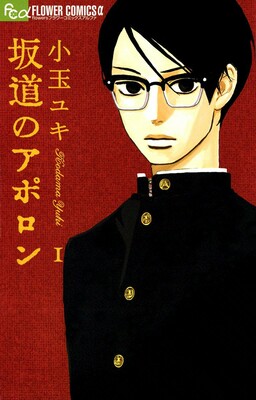
Yu's review of Kids on the Slope (Sakamichi no Apollon) — 1966 Sasebo, Kyushu. Kaoru is a lonely classical pianist; Sentaro is a half-American delinquent who plays jazz drums in the basement of a record shop. Their friendship grows through music, the school festival, and a reunion years later at a church.
Written by
Yu
Manga Enthusiast from Japan
I grew up in Japan and manga literally saved me during a tough time in elementary school. My English isn't perfect, but my love for manga is real — and I want to share it with you.
Disclosure: This post contains affiliate links. As an Amazon Associate, I earn from qualifying purchases at no extra cost to you.