
Smile Down the Runway Review: Too Short for a Model, Too Stubborn to Quit
by Kotoba Inoya
Read the first volume. If it doesn't hook you, put it down. It'll hook you.
Buy Smile Down the Runway on Amazon →*Affiliate link — I earn a small commission at no extra cost to you.
Quick Take
- Chiyuki's refusal to accept physical limits as career limits is this manga's most compelling energy
- The fashion industry depiction is specific and research-grounded
- 23 volumes complete; one of the more unusual shonen manga published in English
Who Is This Manga For?
- Readers interested in fashion industry manga with competitive stakes
- Anyone who enjoys "pursuing an impossible dream" narratives with genuine obstacles
- Fans of shonen that uses a non-combat industry as its arena
- Readers looking for complete fashion drama with dual protagonists
Content Warnings & Age Rating
Age Rating: T (Teen) Content Warnings: Fashion industry competitive pressure; body-height as career obstacle; poverty subplot; design competition content
T rating — appropriate for most readers.
Yu's Rating
| Category | Score |
|---|---|
| Story Depth | ★★★★☆ |
| Art Style | ★★★★★ |
| Character Development | ★★★★★ |
| Accessibility for Non-Japanese Readers | ★★★★☆ |
| Reread Value | ★★★★☆ |
Story Overview
Chiyuki Fujito has wanted to be a Paris Collection runway model since childhood — her father is a legendary fashion designer. At 158cm, she's been told repeatedly she is too short. The Paris Collection standard is 175cm. The gap is physical and unchangeable.
Ikuto Tsumura is her classmate, the son of a large family in financial difficulty. He has extraordinary fashion design talent he can't afford to develop — design school fees are beyond his family's means.
They make an implicit deal: Chiyuki will model Ikuto's designs; Ikuto will make designs that Chiyuki — at her height — can command on the runway. They push each other toward goals the fashion industry says are impossible.
Characters
Chiyuki Fujito — Her absolute refusal to accept the height limit as a final verdict — combined with genuine understanding of what she's asking the industry to accept — makes her an unusually self-aware protagonist.
Ikuto Tsumura — His talent and his obstacles are both real; his collaboration with Chiyuki is the story's most productive relationship.
Art Style
Inoya's art is excellent in its fashion sequences — the runway moments and design work are rendered with visual specificity, and Chiyuki's presence on the page has the kind of intensity that makes the model-as-protagonist premise work.
Cultural Context
Smile Down the Runway ran in Weekly Shonen Magazine — an unusual venue for fashion manga. Inoya uses shonen narrative structure (rivals, tournaments, escalating stakes) applied to the fashion competition circuit. The Paris Collection focus reflects Japan's genuine engagement with European luxury fashion as cultural aspiration.
What I Love About It
The height problem isn't solved. Chiyuki's path to the runway isn't "she grows" or "the industry changes its rules." It's about finding a specific way to work within a real constraint — and the story takes that constraint seriously.
What English-Speaking Fans Say
Western readers describe Smile Down the Runway as a shonen manga that successfully uses fashion as its competitive arena — specifically noted for Chiyuki's protagonist energy being unlike most shojo fashion heroines, for the industry details being genuinely specific, and for the 23-volume length feeling earned.
Memorable Scene ⚠️ Spoiler Warning
Chiyuki's first Paris Collection walk — when the runway moment she's been refusing to give up on finally arrives and the question of whether she was right becomes answerable — is the series' earned climax.
Similar Manga
- Skip Beat — Entertainment industry dream pursuit in different tone
- Kageki Shojo — Performing arts pursuit in similar dramatic register
- Nana — Fashion and music industry with different emotional register
- Blue Period — Art school dream pursuit in similar realistic stakes
Reading Order / Where to Start
Volume 1 — Chiyuki and Ikuto's first encounter.
Official English Translation Status
Kodansha Comics published the complete 23-volume English series.
Pros & Cons
Pros
- Fashion industry depiction specific and research-grounded
- Chiyuki's determination compelling as shonen protagonist energy
- Both protagonists fully developed
- Complete at 23 volumes
Cons
- Fashion industry focus not for all readers
- Long at 23 volumes
- Supporting cast large and sometimes diffuse
Format Comparison
| Format | Notes |
|---|---|
| Individual Volumes | Kodansha Comics; complete 23 volumes |
| Digital | Available |
Where to Buy
Read the first volume. If it doesn't hook you, put it down. It'll hook you.
This post contains affiliate links. If you purchase through these links, I may earn a small commission at no extra cost to you. As an Amazon Associate, I earn from qualifying purchases.
*Affiliate link — I earn a small commission at no extra cost to you.
More Manga You Might Like
Slice of Life / Drama
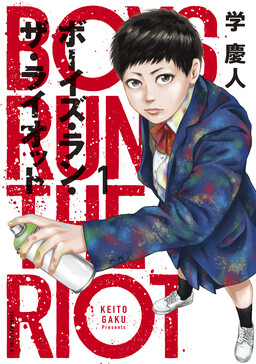
Boys Run the Riot
Yu's review of Boys Run the Riot — Ryo Watari is a transgender high schooler who can't tell anyone who he is, until he meets Jin, a loud transfer student who pulls him into starting a streetwear brand. A four-volume manga, drawn by a trans creator, about fashion as the language you use when words won't come.
Slice of Life
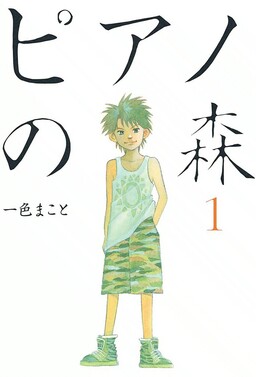
Piano Forest
Yu's review of Piano Forest — Kai Ichinose grows up poor in a forest community and has been playing an abandoned piano in the woods since childhood; when the talented but pressured Shuhei Amamiya moves to his town, their friendship and their different relationships with music begin a story about what playing truly means.

Slice of Life / Music
Those Snow White Notes
Yu's review of Those Snow White Notes — Setsu Sawamura is a shamisen prodigy whose grandfather, the legendary Matsugorou Sawamura, has just died; unable to play since losing his teacher, Setsu leaves his rural home and arrives in Tokyo, where he must find his own sound separate from his grandfather's influence.
Slice of Life / Comedy
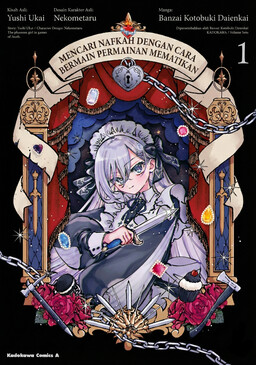
Phantom of the Idol
Yu's review of Phantom of the Idol — Yuuya Niyodo is an idol who hates performing and tries to be fired; Asahi Mogami is the ghost of an idol who died before she could reach her dreams; when she possesses Yuuya during a performance, they strike a deal — she performs through his body, he reaps the rewards.
Slice of Life
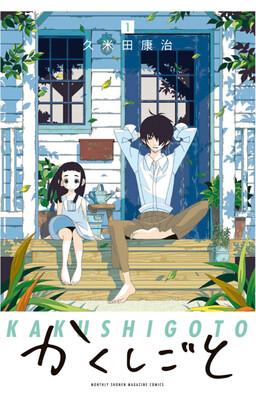
Kakushigoto
Yu's review of Kakushigoto by Koji Kumeta — an ecchi manga artist hides his job from his daughter Hime, and a daily gag comedy slowly reveals itself as a father-daughter love story across ten years.
Slice of Life
Gokinjo Monogatari
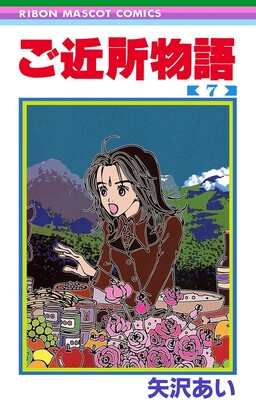
Yu's review of Gokinjo Monogatari (Neighborhood Story) — Ai Yazawa's 1995 Ribon manga about Mikako Kouda, a fashion student building her Happy Berry brand, and her childhood-friend neighbor Tsutomu. The early-Yazawa series that sits one universe over from Paradise Kiss, finally complete in English from VIZ.
Written by
Yu
Manga Enthusiast from Japan
I grew up in Japan and manga literally saved me during a tough time in elementary school. My English isn't perfect, but my love for manga is real — and I want to share it with you.
Disclosure: This post contains affiliate links. As an Amazon Associate, I earn from qualifying purchases at no extra cost to you.