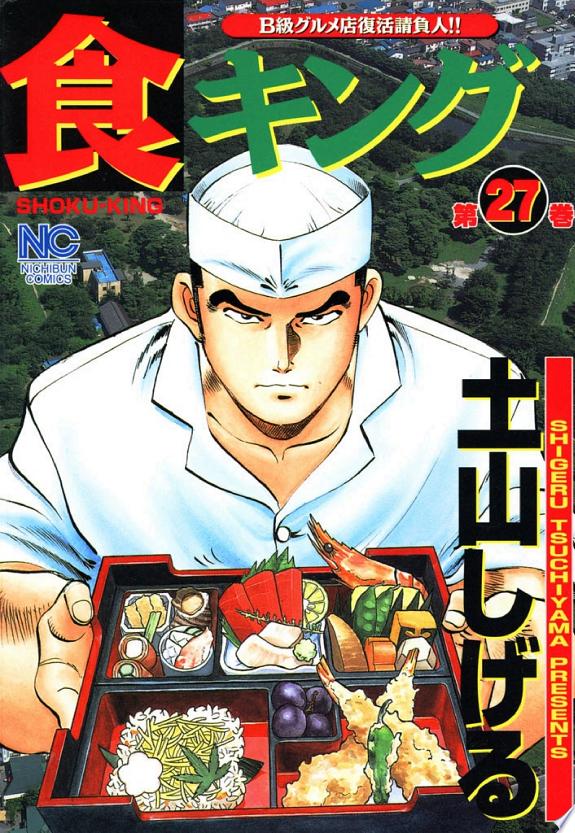
Shokuking Review: The Cooking Manga That Believed Food Was a Battlefield Worth Dying For
by Shigeru Tsuchiyama
Read the first volume. If it doesn't hook you, put it down. It'll hook you.
Buy Shokuking on Amazon →*Affiliate link — I earn a small commission at no extra cost to you.
He didn't fix restaurants. He fixed people who happened to run restaurants.
Quick Take
- Shigeru Tsuchiyama's 17-volume cooking manga — Kitajima the wandering chef restoring failing restaurants
- A serious-cooking manga in the Tsuchiyama tradition: earnest, technical, committed to its food subjects
- Episodic structure with each restaurant a self-contained story of culinary and personal restoration
Who Is This Manga For?
- Cooking manga readers who want technical seriousness applied to restaurant operations
- Drama readers who want food-as-vehicle for personal-restoration narratives
- Tsuchiyama fans who appreciate his commitment to the genre across decades
- Anyone curious about what saving a restaurant looks like when the manga takes the work seriously
Content Warnings & Age Rating
Age Rating: T (Teen) Content Warnings: Competitive cooking intensity, occasional emotional drama. Mostly wholesome.
Suitable for most readers.
Yu's Rating
| Category | Score |
|---|---|
| Story Depth | ★★★★☆ |
| Art Style | ★★★★☆ |
| Character Development | ★★★★☆ |
| Accessibility for Non-Japanese Readers | ★★★☆☆ |
| Reread Value | ★★★★☆ |
Story Overview
Hideyoshi Kitajima was once one of Japan's elite chefs. Something happened — depicted gradually across the series — that turned him from establishment chef into wandering consultant. He travels Japan, encountering failing restaurants whose problems aren't always purely culinary. Sometimes the food is the problem; sometimes the people running the kitchen are the problem; sometimes the restaurant's identity has drifted from what it should be.
Each arc is a restaurant restoration. Kitajima diagnoses what's wrong — usually in two parts, the technical and the personal — and reforms both. The technical reforms are depicted with precision: actual cooking techniques, actual ingredient choices, actual operational fixes. The personal reforms are usually about the people involved understanding what they originally wanted from this work.
The structure repeats but doesn't tire because each restaurant has a different problem and each set of people has different reasons for being where they are. Across 17 volumes, Tsuchiyama explores variations on the question: what does a restaurant exist to do, and what happens when its operators forget?
Characters
Hideyoshi Kitajima: A protagonist whose authority comes from earned experience and visible competence — his interventions work because they're technically correct.
The restaurant casts: Each arc's set of operators, staff, and stakeholders is rendered with enough specificity that the resolution feels earned.
Art Style
Tsuchiyama's signature detailed food rendering is the foundation — readers can see the dishes, recognize the techniques, follow the kitchen action. Character art is functional rather than flashy; faces communicate emotion through restraint.
Cultural Context
Shokuking ran from 1996 to 2002 in Weekly Manga Goraku — a magazine known for serious-genre seinen including mahjong manga, yakuza fiction, and cooking. The series belongs to Tsuchiyama's substantial catalog of food-focused works (Kuishinbo, Furokago, others) and to the broader tradition of dignified cooking manga that Oishinbo had defined.
The "wandering expert who fixes things" is a recognizable Japanese narrative archetype, and Shokuking applies it to the restaurant industry with characteristic Tsuchiyama earnestness.
What I Love About It
I love that Kitajima respects the restaurants.
A different kind of "fixing" series would have its protagonist condescend — show up, lecture, leave. Kitajima does something different. He looks at what each restaurant was trying to be. He helps it become that better version of itself. He doesn't impose external standards; he restores internal ones. The respect is the series' moral architecture, and it makes Kitajima's competence feel like service rather than ego.
What English-Speaking Fans Say
Limited international audience without translation. Among Tsuchiyama readers familiar with his catalog, regarded as one of his strongest cooking manga and a quintessential expression of his approach to food fiction.
Memorable Scene ⚠️ Spoiler Warning
A late-arc restoration where the restaurant's actual problem turns out to be that its owner doesn't believe in his own cooking anymore — and Kitajima's intervention is to remind him what he originally believed. The scene is small and quiet; the technical fixes are easy compared to the emotional one.
Similar Manga
| Title | Its Approach | How Shokuking Differs |
|---|---|---|
| Oishinbo | Cooking journalism with food appreciation | Shokuking is operational rather than journalistic — about restaurants rather than about food itself |
| Tetsunabe no Jan | Cooking competition with villain protagonist | Shokuking is the wholesome inverse — restoration rather than dominance |
| Bambino! | Restaurant kitchen drama with growth narrative | Bambino tracks one chef; Shokuking is episodic across many restaurants |
Reading Order / Where to Start
Volume 1. The episodic format means individual arcs work standalone, but Kitajima's character builds across volumes.
Official English Translation Status
Shokuking has no official English translation.
Pros & Cons
Pros
- Earnest treatment of restaurant operations is rare and valuable
- Technical food content is rigorous throughout
- Episodic format keeps each volume fresh
- Kitajima's character carries the series
Cons
- No English translation
- The episodic structure limits sustained character development
- Restaurant-industry context requires some familiarity
- The wholesome register won't satisfy readers wanting drama spikes
Is Shokuking Worth Reading?
For cooking manga readers and food-fiction enthusiasts who want serious treatment of restaurant operations, yes — this is one of Tsuchiyama's best works and a quietly excellent series. For readers wanting flashier comic registers, the dignified earnestness may feel slow. As thoughtful cooking drama, it's a strong recommendation.
Format Comparison
| Format | Notes |
|---|---|
| Physical | Japanese editions available |
| Digital | Available in Japanese |
| Omnibus | Collected editions available |
Where to Buy
No English release yet. That just means you find it before everyone else does.
*Affiliate link — I earn a small commission at no extra cost to you.
More Manga You Might Like
Slice of Life / Drama
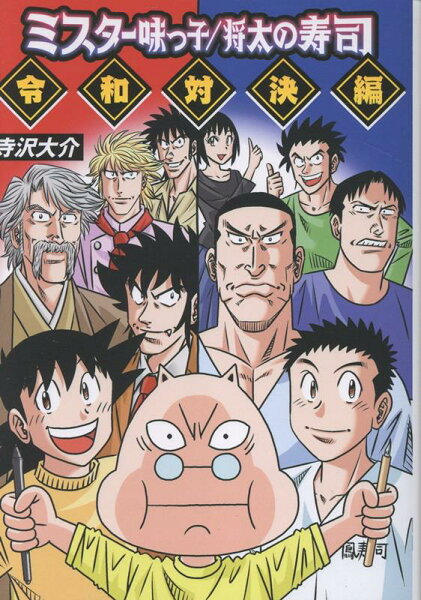
Shota no Sushi
A review of Daisuke Terasawa's Shota no Sushi (将太の寿司) — 27 volumes in Weekly Shōnen Magazine from 1992 to 1997. A Hokkaido boy trains at Tokyo's finest sushi restaurant, learns from masters, and competes at the highest levels of Japanese culinary craft.
Slice of Life / Drama
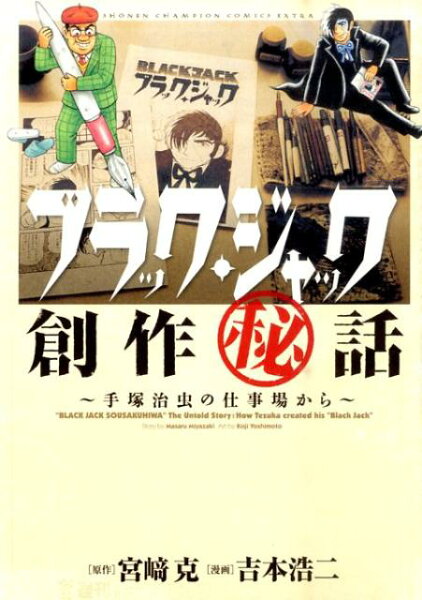
Black Jack Sousaku Hiwa
Black Jack Sousaku Hiwa is a documentary manga about how Osamu Tezuka created Black Jack — told through the editors and assistants who worked beside him, capturing both the genius and the human cost of his impossible work ethic.
Slice of Life / Drama
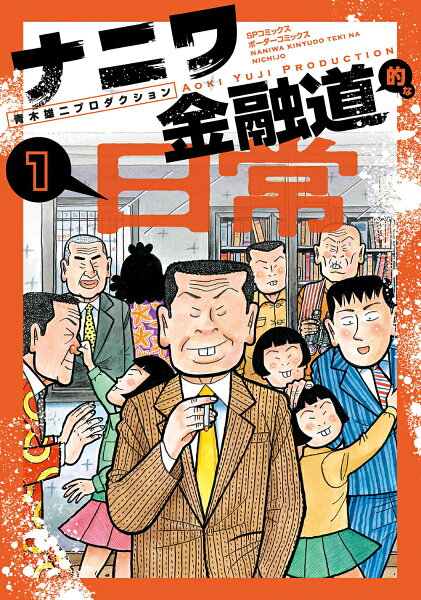
Naniwa Kinyuudo
Naniwa Kinyuudo follows new employee Ginji Mita at a small-loan finance company in Osaka — a manga that uses the world of moneylending and debt collection to create one of manga's most honest portraits of Japanese economic life.
Slice of Life / Drama
Wandering Son
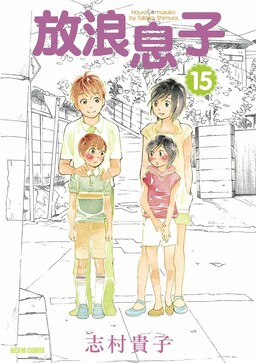
Yu's review of Wandering Son — Shuichi Nitori is a boy who wants to be a girl; his new friend Yoshino Takatsuki is a girl who wants to be a boy; the manga follows both of them from elementary school through adolescence as they navigate gender identity, friendship, and growing up; a gentle, serious work about transgender experience.

Slice of Life
Three Days of Happiness
Yu's review of Three Days of Happiness — in a world where you can sell your remaining lifespan for money, Kusunoki sells most of his and discovers he has only three months left; manga adaptation of Sugaru Miaki's novel about what matters when time is finite.

Slice of Life / Heartwarming
Sweetness and Lightning
Yu's review of Sweetness and Lightning — Kouhei Inuzuka is a teacher and single father whose wife recently died; he cannot cook and his daughter Tsumugi eats convenience store food; a student named Kotori invites them to her family's empty restaurant and teaches him to cook for his daughter.
Written by
Yu
Manga Enthusiast from Japan
I grew up in Japan and manga literally saved me during a tough time in elementary school. My English isn't perfect, but my love for manga is real — and I want to share it with you.