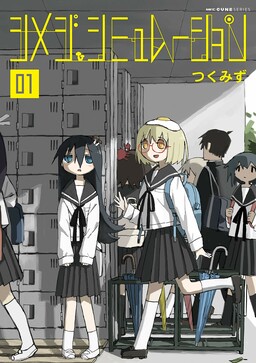
Shimeji Simulation Review — Tsukumizu's High School Manga Where a Girl Emerged From the Ground and No One Mentions It
by Tsukumizu
Read the first volume. If it doesn't hook you, put it down. It'll hook you.
Buy Shimeji Simulation on Amazon →*Affiliate link — I earn a small commission at no extra cost to you.
I read Girls' Last Tour the year I dropped out of graduate school. I had time and very little energy, and the manga's specific quiet — two girls at the end of the world, occasionally finding small reasons to be glad they were the ones still moving — was exactly the shape of comfort I needed.
When Shimeji Simulation started coming out in English, I almost didn't read it. I worried it would be Tsukumizu trying to be lighter and losing what made her great. I was wrong. Shimeji Simulation is Girls' Last Tour's mirror image — the same author looking at the same questions from inside a high school instead of from the end of everything.
Quick Take
- By the creator of Girls' Last Tour (Tsukumizu) — same melancholy, same quiet existentialism, set in high school instead of post-apocalypse
- A girl emerges from a hole in the ground. Her friend has a mushroom growing on her head. The world is wrong in ways that accumulate. No one mentions any of this.
- Age rating: T (Teen) — no graphic content; some readers may find the existential undertone heavy
What Is Shimeji Simulation About?
Shijima has emerged from the ground.
The manga opens with her climbing out of a hole. She is wearing a school uniform. She walks into a high school where she is apparently enrolled, even though she has just been underground for some unspecified time. The teachers do not ask where she has been. The other students do not seem surprised. Shijima takes a seat in class and the day begins.
In the same classroom is Majime — a girl with a mushroom growing out of her head. Twin shimeji mushrooms, specifically. Sometimes the mushrooms are larger. Sometimes they are smaller. Sometimes they appear to be different mushrooms. Majime never refers to them. The other students don't either.
Shijima and Majime become friends.
The manga then proceeds as a high school slice-of-life: lunch, club activities, summer festival, school trips. The students participate in the rhythm of Japanese school life with apparent normalcy. Around them, the world is subtly and consistently wrong:
- The sky sometimes does things skies don't do
- The school building sometimes has different geometry between visits
- Other students have features that Shijima and Majime appear not to notice
- Time may or may not be passing in the conventional sense
- The school exists in a space that may not be exactly Earth
None of this is explained. None of this is the plot. The plot, such as it is, is Shijima and Majime's friendship — the small ways they accommodate each other, the things they do together, the conversations they have at lunch. The surrealism is the wallpaper. The friendship is the room.
By volume 4 or 5, the manga begins, very gently, to acknowledge what's happening. There are hints about where Shijima came from. There are implications about what the world actually is. Tsukumizu refuses to make the explanation the point — she keeps the explanation ambient, the way she kept the post-apocalypse ambient in Girls' Last Tour. The reader can piece together a theory; the manga will not confirm it.
The series ends in volume 7. The ending is consistent with the tone — quiet, ambiguous, satisfying without resolving. Tsukumizu has earned the right to let things end the way they began: with two girls who are friends, in a world that is wrong, finding ways to be glad they are the ones still walking through it.
Tsukumizu and Girls' Last Tour: The Connection
Tsukumizu is the pen name of a Japanese manga artist whose first major work was Girls' Last Tour (少女終末旅行, Shoujo Shuumatsu Ryokou), serialized 2014–2018, six volumes. Girls' Last Tour follows two girls, Chito and Yuuri, traversing a post-apocalyptic ruined city on a motorcycle. The world has ended. Most of humanity is gone. The girls eat what they can find, sleep where they can shelter, and have small conversations about existence as they pass through the wreckage. The manga was adapted into a beloved anime in 2017.
Shimeji Simulation is Tsukumizu's follow-up.
The two works share:
- Two-girl protagonist pair (the friendship is the emotional center)
- Ambient existential dread (the world is wrong, but the protagonists don't dwell on it)
- Quiet panel composition with significant negative space
- Conversations about life, time, and meaning embedded in mundane activities
- A specific tone — gentle, melancholy, occasionally funny, never dramatic
The two works differ in:
- Setting: post-apocalypse (GLT) vs subtly-wrong present (Shimeji)
- Visual style: GLT's art is heavier and more architectural; Shimeji's is softer and more cute
- Tone: GLT is openly melancholic; Shimeji buries the melancholy under deadpan comedy
- Pace: GLT is slower; Shimeji has more conventional chapter structure
If you loved Girls' Last Tour: you will probably love Shimeji Simulation, though it may take a volume or two to adjust to the lighter surface.
If you have not read Girls' Last Tour: you can start with Shimeji Simulation, but I would gently suggest reading GLT first. It is the work that established Tsukumizu's voice, and the experience of reading Shimeji as her second register is part of what makes it work.
Who Is This Manga For?
- Girls' Last Tour readers who want more Tsukumizu
- Surreal slice-of-life fans (Yokohama Kaidashi Kikou, Aria, Nichijou) who want the existential register
- Quiet manga readers who can sit with ambient strangeness
- Mushroom enjoyers (this is a real demographic, somehow)
- Not for: readers who need plot momentum, readers who need resolutions, readers who need explanations
Content Warnings & Age Rating
Age Rating: T (Teen) — 13+ Content Warnings: Existential and uncanny content (the world being wrong may be unsettling); some implicit eschatological imagery in later volumes; no graphic violence, no sexual content, no profanity
The T rating is generous; All Ages would also be defensible. Younger teen readers can handle Shimeji Simulation without issue. The "warnings" are about the manga's atmosphere, not its content.
Story Overview
Shimeji Simulation is essentially structurally episodic — each chapter is a vignette of school life — but with cumulative thematic depth building across volumes.
Volumes 1–2 establish the world. Shijima emerges. Majime is introduced. The school setting. The first friends and acquaintances. The first hints that the world is wrong. The deadpan comedic tone solidifies. The friendship between Shijima and Majime becomes the work's emotional center.
Volumes 3–4 deepen the strangeness. Other students get more attention. The teachers get more attention. Field trips. Festival chapters. The wrongness of the world becomes more visible without becoming more explained.
Volumes 5–6 are where the manga begins, very gently, to gesture at what's underneath. Shijima's origin (where she came from, what she was doing in the ground) gets oblique attention. The nature of the school is questioned, mostly via what isn't said. Tsukumizu's craft is at its highest here — she gives the reader enough to construct a theory and refuses to confirm any of it.
Volume 7 closes the work. The ending is quiet. There is no apocalyptic reveal. There is no everything-explained chapter. Shijima and Majime are friends. The world is what it has been. The manga ends with them still walking through it.
Characters
Shijima — The protagonist who emerged from the ground. Tsukumizu draws her with the specific flat affect of someone who has not learned, or has un-learned, how to react to surprise. She experiences the wrongness of the world the same way she experiences a normal Tuesday: with quiet acceptance, mild observation, and occasional small pleasures. The slowly-accumulating texture of her friendship with Majime is the manga's primary character arc.
Majime — The girl with the mushroom. Tsukumizu refuses to explain the mushroom. Majime is fully realized as a person — warm, slightly mischievous, more emotionally invested than her deadpan suggests — and the mushroom is just part of her. Her relationship to Shijima is one of mutual accommodation; they meet each other where they are, including in the parts of themselves that don't quite fit the school.
The supporting cast — Various classmates, teachers, and acquaintances. Each is rendered with the same gentle care Tsukumizu shows the protagonists. The teacher who occasionally seems to know more than she's saying. The student council member whose composure has a specific brittleness. The shop owner near the school whose hours follow no pattern Shijima can track. None of these characters get elaborate arcs, but all of them feel like real residents of the slightly-wrong world.
Art Style
Tsukumizu's Shimeji Simulation art is softer and more conventionally cute than Girls' Last Tour. Character designs lean into Manga Time Kirara's house style (cute girls, large eyes, gentle proportions). The school environment is rendered with realistic specificity — desks, lockers, hallways, classroom geometry — which makes the moments when the geometry is wrong land harder.
The mushroom on Majime's head is drawn with care across the series. Tsukumizu varies its size, shape, and orientation with the same attention she would give any other costume element. The mushroom is not a joke. It's a feature of Majime.
The visual signature of Tsukumizu — significant negative space, panels that hold a single moment longer than expected, environmental compositions that emphasize the human figures as small against larger spaces — is present throughout. Shimeji Simulation is visually quieter than its high-school setting suggests.
Cultural Context
Shimeji Simulation participates in the Japanese iyashikei (癒し系, "healing-type") slice-of-life tradition while subverting it. Iyashikei manga (Aria, Yokohama Kaidashi Kikou, Sketchbook) is calming, low-stakes, atmospheric. Shimeji Simulation has the iyashikei texture but with an existential undertone the genre usually avoids.
The work also participates in the Manga Time Kirara tradition — the "cute girls doing things" 4-koma manga that has dominated certain corners of Japanese serialization for decades. Tsukumizu takes that genre's surface and uses it to deliver something thematically heavier.
The title — Shimeji Simulation — combines the Japanese mushroom (shimeji, a common cooking mushroom) with the English word "simulation," signaling both the mushroom on Majime's head and the question of what the world actually is. The title is doing some of the manga's thematic work upfront.
What I Love About It
The summer festival chapter.
I won't say which volume specifically. Somewhere in the middle of the run, the school holds its summer festival. Shijima and Majime go together. The chapter is structured like an ordinary summer festival chapter from any school manga — yukatas, food stalls, fireworks. Tsukumizu draws all of it with care: the lanterns, the takoyaki, the way the wooden geta sandals click on the festival path.
And then there's a single panel — Shijima looking up at the sky as the fireworks begin — where the sky is doing something that skies do not do. Tsukumizu does not make a big deal of it. She just draws it. The panel is in the middle of the chapter. Two pages later, Majime offers Shijima a candy apple and the wrongness is gone from the page.
What I love is what that panel does. The manga has spent volumes establishing that the world is wrong without making it the point. The festival chapter is the manga at its most ordinary — a sequence we have seen in fifty other slice-of-life manga. By putting the wrong-sky panel in the middle of that ordinary sequence, Tsukumizu accomplishes two things at once. She reminds us that the wrongness is constant — it's always there, even at the festival. And she insists that the wrongness does not stop the festival from being a real festival, the friendship from being a real friendship, the small joy of a candy apple from being real joy.
That's Tsukumizu's whole project. The world is broken. The world contains small good things. Both facts are true. The first does not erase the second. The second does not require fixing the first. You walk through what is, with someone you like, and that is the answer.
I think about this a lot. Sometimes I read this chapter when I need to.
What English-Speaking Fans Say
Shimeji Simulation has a smaller English-language readership than Girls' Last Tour, partly because GLT had an anime adaptation that brought wide visibility and Shimeji does not (yet). Among English-language Tsukumizu fans, Shimeji is generally received as a strong second work — different in register from GLT, recognizably the same author, worth reading.
The most common comment is some version of "I missed GLT's heavier melancholy, but Shimeji's lightness is its own thing and I appreciated it on its own terms." A minority of readers prefer Shimeji to GLT; most consider them complementary.
The deadpan comedy lands well in English translation. The Yen Press release is well-regarded.
Memorable Scene ⚠️ Light Spoiler
The conversation between Shijima and Majime on the rooftop, late in the series.
I'll keep it vague. Somewhere in volume 6, after the manga has been building toward what feels like a reveal, Shijima and Majime have a conversation that approaches — without arriving at — explaining what they are and what the world is. The conversation is quiet. Tsukumizu draws it in small panels with the rooftop fence in soft focus and the sky doing whatever the sky is doing.
Majime says something specific about why she came to this school. Shijima says something specific about what she remembers from before she was underground. Neither of them tells the other everything. Neither of them asks for everything. The conversation establishes that they both know more than they have been saying, and that they have chosen to be friends inside the knowing rather than around it.
The chapter ends with them going back inside to class. Nothing has resolved. Everything has shifted. The reader, who has been waiting for explanation, realizes the explanation has been happening this whole time, in the small ways the two girls have been adjusting to each other across six volumes.
That is what Tsukumizu does. The big reveal is never the big reveal. The big reveal is that two people decided to be present with each other in a world that does not particularly cooperate. That decision, repeated over time, is the story.
Similar Manga
| Title | Its Approach | How Shimeji Simulation Differs |
|---|---|---|
| Girls' Last Tour (Tsukumizu) | Same author, post-apocalyptic | GLT is heavier; Shimeji is lighter on the surface, still heavy underneath |
| Yokohama Kaidashi Kikou | Quiet post-apocalyptic slice-of-life | YKK is even quieter; same iyashikei + existential blend |
| Nichijou | Surreal high school comedy | Nichijou is funnier and louder; Shimeji is funnier and quieter |
| Hidamari no Ki / Aria | Iyashikei classics | More straightforwardly calming; Shimeji has an undertone they don't |
Reading Order / Where to Start
Volume 1.
For new Tsukumizu readers: read Girls' Last Tour first if you can. It establishes the author's voice and Shimeji Simulation reads richer for having that context.
For readers who only want one: either work stands alone. Pick by setting (post-apocalyptic GLT vs surreal high school Shimeji).
Official English Translation Status
Yen Press published all 7 volumes in English in print and digital. The series is complete.
Pros & Cons
Pros
- Tsukumizu working in a complementary register to Girls' Last Tour
- The Shijima-Majime friendship is genuinely warm
- The ambient surrealism rewards careful reading
- 7 volumes complete with an earned ending
- Visually beautiful
Cons
- The ambient surrealism requires tolerance for the unexplained
- Readers expecting Girls' Last Tour's specific tone will find a different (lighter) work
- The deadpan comedy is an acquired taste
- The pacing is slow even by slice-of-life standards. It won't land for everyone.
Is Shimeji Simulation Worth Reading?
For Girls' Last Tour fans: yes, definitely. For readers new to Tsukumizu who enjoy quiet, surreal slice-of-life: yes. For readers who need plot momentum or clean explanations: no, this isn't the manga for you.
Format Comparison
| Format | Notes |
|---|---|
| Physical (Yen Press) | All 7 volumes available in English. Standard tankoubon |
| Digital | Available via Yen Press digital, Kindle |
| Omnibus | Not available |
Where to Buy
Read the first volume. If it doesn't hook you, put it down. It'll hook you.
This post contains affiliate links. If you purchase through these links, I may earn a small commission at no extra cost to you. As an Amazon Associate, I earn from qualifying purchases.
*Affiliate link — I earn a small commission at no extra cost to you.
More Manga You Might Like

Slice of Life
Three Days of Happiness
Yu's review of Three Days of Happiness — in a world where you can sell your remaining lifespan for money, Kusunoki sells most of his and discovers he has only three months left; manga adaptation of Sugaru Miaki's novel about what matters when time is finite.

Comedy / Slice of Life
Macaroni Houren-sou
Macaroni Houren-sou follows three high school students living together in a boarding house — Toshio Shingami, the energetic straight man; Kinoshita, the eccentric wildcard; and Trapp, the cool foreigner — in a surreal comedy that uses the school-life setting as a launching pad for increasingly unhinged humor.
Slice of Life / Fantasy
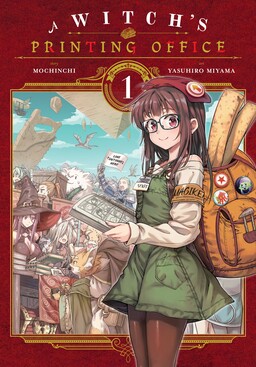
A Witch's Printing Office
Yu's review of A Witch's Printing Office — Mika is a modern Japanese woman who worked at Comiket (the giant doujinshi convention) and wakes up in a fantasy world where magical festivals share printed pamphlets; using her knowledge of convention organization and printing logistics, she builds a business that transforms how the fantasy world shares information.
Slice of Life
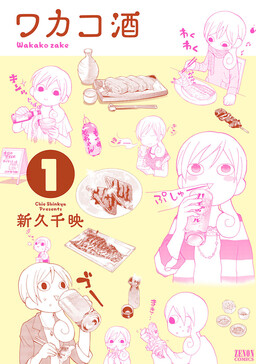
Wakakozake
Yu's review of Wakakozake — Murasaki Wakako, a young office worker, spends her evenings alone at izakayas, carefully selecting food and sake pairings; each short chapter follows one evening, one food, one drink, and her quiet appreciation; the series is a celebration of eating alone as a specific pleasure.

Slice of Life / Comedy
Slow Start
Yu's review of Slow Start — Hana Ichinose started high school a year late due to illness, making her a year older than her classmates; the series follows her trying to fit in with her new friends while carrying the secret that she is different, in Tokumi Yuiko's characteristic warm and gentle 4-koma style.

Slice of Life
Not Love But Delicious Foods Make Me So Happy!
Yu's review of Not Love But Delicious Foods Make Me So Happy! — the protagonist is a manga artist who won't date but will eat anything; she navigates Tokyo restaurants with friends, colleagues, and editors; Fumi Yoshinaga's semi-autobiographical restaurant guide manga that doubles as character comedy about a woman who prioritizes food over romance.
Written by
Yu
Manga Enthusiast from Japan
I grew up in Japan and manga literally saved me during a tough time in elementary school. My English isn't perfect, but my love for manga is real — and I want to share it with you.
Disclosure: This post contains affiliate links. As an Amazon Associate, I earn from qualifying purchases at no extra cost to you.