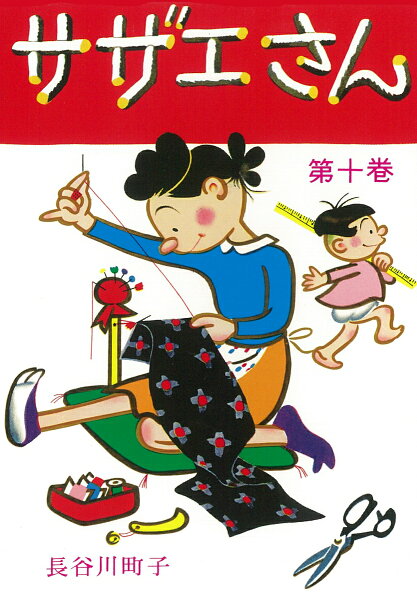
Sazae-san Review: The Manga That Has Been Running Since 1946 and Never Stopped
by Machiko Hasegawa
Read the first volume. If it doesn't hook you, put it down. It'll hook you.
Buy Sazae-san on Amazon →*Affiliate link — I earn a small commission at no extra cost to you.
Quick Take
- The most influential manga in Japanese history — Sazae-san defined the newspaper comic strip format and the multigenerational family comedy
- 28 years of strips that followed Japan from postwar recovery through the economic miracle
- Hasegawa was a groundbreaking figure — one of the first major female manga artists in a male-dominated industry
Who Is This Manga For?
- Anyone interested in the foundations of manga as a medium and cultural form
- Readers of Japanese cultural history who want to see postwar Japan through a comedic lens
- 4-koma fans who want the format's origin and peak simultaneously
- Fans of Doraemon, Chibi Maruko-chan and other multigenerational family comedy — this is the source
Content Warnings & Age Rating
Age Rating: All Ages Content Warnings: None — completely appropriate for all readers
Yu's Rating
| Category | Score |
|---|---|
| Story Depth | ★★★☆☆ |
| Art Style | ★★★★☆ |
| Character Development | ★★★☆☆ |
| Accessibility for Non-Japanese Readers | ★★★☆☆ |
| Reread Value | ★★★★☆ |
Story Overview
Sazae Isono (later Sazae Fuguta after marriage) is a young woman living with her extended family in postwar Tokyo — cheerful, impulsive, frequently getting into scrapes that she navigates with optimism and more luck than skill.
The strips follow her family: her parents, her younger siblings Katsuo and Wakame, her husband Masuo, their son Tarao, the extended household. Each strip is complete in itself — a small comedy of domestic life, misunderstanding, or Sazae's characteristic impulsiveness creating a situation she then has to escape.
Over 28 years, the strips also recorded Japan's transformation: the specific goods available, the social situations encountered, the changing relationship between traditional and modern life. Reading the complete run is reading postwar Japan's daily life from the inside.
Characters
Sazae Isono (Fuguta): One of manga's most enduring protagonists — not because she is complex but because she is deeply recognizable. Her cheerfulness in the face of difficulty, her specific way of creating problems, her fundamental goodness — these are consistent across 28 years.
The Isono family: An ensemble that grew to include three generations, depicted with consistency across decades. The family dynamic — multigenerational household, specific roles, warm chaos — became the model for subsequent family comedy manga.
Art Style
Hasegawa's style evolved across the series' 28 years but retained its characteristic warmth and expressive simplicity. The character designs are immediately legible. The 4-koma pacing is mastered to an extraordinary degree — a significant technical achievement that made the format feel natural.
Cultural Context
Sazae-san began in 1946 — the year after Japan's surrender, in a newspaper serving the Fukuoka region. It moved to the Asahi Shimbun (Japan's largest-circulation newspaper) in 1951 and ran until 1974. The 68 collected volumes contain strips that record Japan's entire postwar transformation.
Hasegawa's achievement was recognized during her lifetime. She received Japan's People's Honor Award, and the series has never been out of print. The anime adaptation, which began in 1969, is still airing — making it the world's longest-running animated television series.
What I Love About It
I love what the series says about ordinary happiness.
Sazae-san is not about crisis. It is not about drama. It is about the specific texture of ordinary family life — the small misunderstandings, the domestic routines, the recurring characters who make up a community. Hasegawa found this texture genuinely funny and genuinely worth recording.
Reading the early strips, from 1946 and 1947, when Japan was still in ruins, and seeing Sazae navigate the shortages and difficulties with her characteristic optimism — it is something. The series chose to be happy when happiness was an act of will.
What English-Speaking Fans Say
Not widely known in English-speaking markets due to the absence of translation and the cultural specificity of newspaper comics. Among scholars of manga history, Sazae-san is recognized as one of the foundational works of the medium — essential for understanding where Japanese popular culture comes from.
Memorable Scene
An early strip where Sazae makes a mistake that costs money the family can barely spare — and her father, instead of scolding her, simply incorporates the mistake into the routine of daily life. The strip is four panels. It says more about postwar Japanese survival than many longer works.
Similar Manga
- Chibi Maruko-chan: Direct descendant — same newspaper spirit, different era
- Doraemon: Another multigenerational family comedy in the same tradition
- Yotsuba&!: Contemporary heir to the same project of finding comedy in ordinary life
Reading Order / Where to Start
Volume 1. The strips are episodic and accessible anywhere, but Volume 1 begins in 1946 and the historical accumulation is valuable.
Official English Translation Status
Sazae-san has no official English translation. There is a partial translation (5 volumes) published by Kodansha International in the 1990s that is long out of print.
Pros & Cons
Pros
- Foundational — understanding Sazae-san illuminates everything that followed
- Complete at 68 volumes — a complete record of its era
- Accessible, warm, genuinely funny
- Historically irreplaceable
Cons
- No current English translation
- Cultural specificity reduces some accessibility for non-Japanese readers
- Episodic newspaper strip format is very different from narrative manga
Format Comparison
| Format | Notes |
|---|---|
| Physical | Japanese editions continuously available |
| Digital | Available in Japanese |
| Omnibus | Full collected sets available in Japan |
Where to Buy
No English release yet. That just means you find it before everyone else does.
*Affiliate link — I earn a small commission at no extra cost to you.
More Manga You Might Like
Slice of Life / Comedy
Mainichi Kaasan
Mainichi Kaasan is a newspaper comic strip that ran in the Mainichi Shimbun for over a decade — autobiographical 4-koma strips about being a mother, a manga artist, a wife, and eventually a widow, drawn with humor and complete honesty.
Comedy / Slice of Life
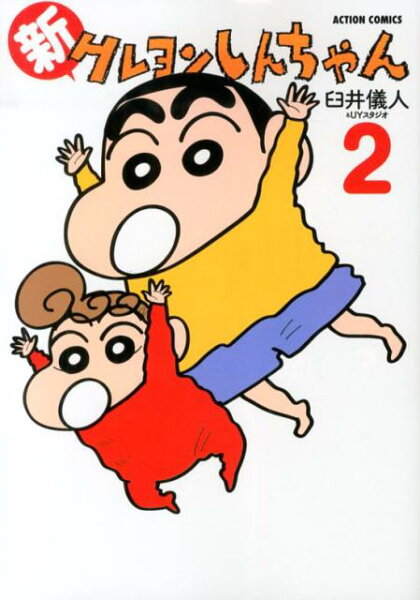
Crayon Shin-chan
A review of Crayon Shin-chan, Yoshito Usui's gag manga about a shameless five-year-old in suburban Saitama who says every embarrassing thing adults are too polite to say out loud.
Comedy / Slice of Life
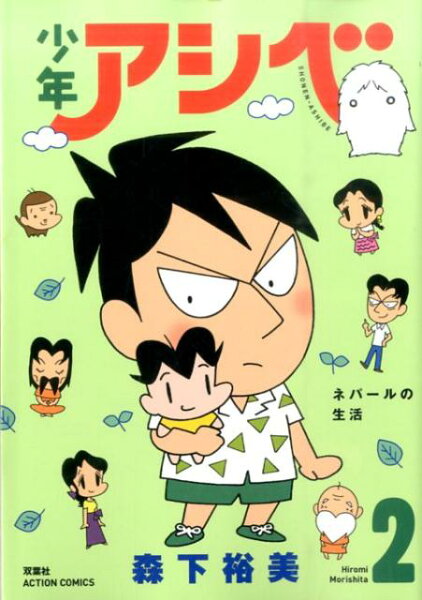
Shonen Ashibe
Shonen Ashibe follows Ashibe, an energetic young boy, and his pet baby seal Goma-chan — a white, round, extremely photogenic animal that causes chaos wherever it goes and is beloved by everyone who encounters it, to the exhausted amusement of Ashibe's father.
Slice of Life / Comedy
Dokonjo Gaeru
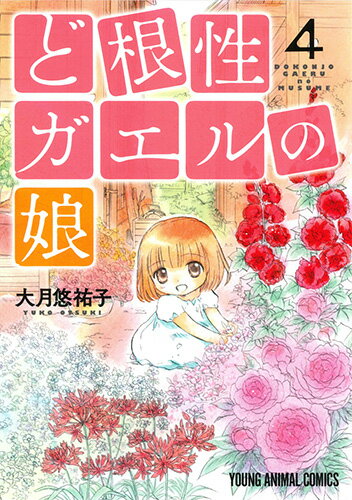
Dokonjo Gaeru is Yasumi Yoshizawa's classic 1970-1976 Weekly Shonen Jump comedy about Hiroshi Kaizuka, a middle-school boy whose flattened-but-alive frog Pyonkichi lives on the front of his shirt — 27 volumes of one of Jump's defining early gag manga.
Slice of Life / Comedy
Moretsu Ataro
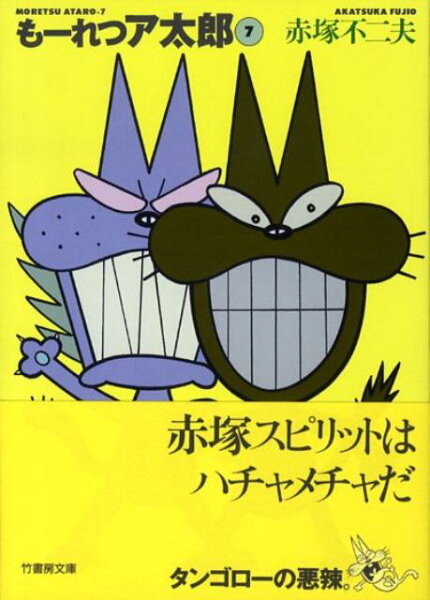
Moretsu Ataro is Fujio Akatsuka's late-1960s gag manga following Ataro, a young boy who runs his late father's vegetable shop while surrounded by an outlandish cast of friends and neighbors — a foundational work of Japanese gag comedy from one of its greatest masters.
Comedy / Slice of Life
Chibi Maruko-chan
A review of Chibi Maruko-chan, Momoko Sakura's semi-autobiographical comedy about a lazy, scheming third-grade girl in 1970s Shimizu — and why the original manga is sharper than the gentle anime everyone knows.
Written by
Yu
Manga Enthusiast from Japan
I grew up in Japan and manga literally saved me during a tough time in elementary school. My English isn't perfect, but my love for manga is real — and I want to share it with you.