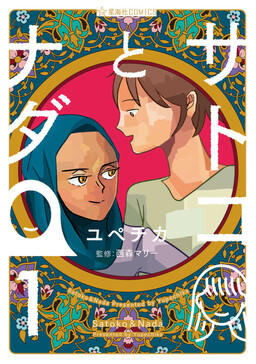
Satoko and Nada Review: Two Students Share an Apartment and Learn About Each Other's Worlds
by Yupechika
Read the first volume. If it doesn't hook you, put it down. It'll hook you.
Buy Satoko and Nada on Amazon →*Affiliate link — I earn a small commission at no extra cost to you.
Quick Take
- The Japan-Saudi Arabia cultural exchange premise is warm, specific, and genuinely educational without being preachy
- Nada's explanations of Islamic practices and Satoko's explanations of Japanese customs are both drawn with care
- 4 volumes complete; one of the few manga dealing seriously with Muslim characters
Who Is This Manga For?
- Readers who want cultural exchange manga beyond the typical Japan-plus-West format
- Anyone interested in Islamic culture and practices depicted with warmth
- Fans of friendship slice-of-life in international university setting
- Readers looking for short complete manga that expands its readers' cultural knowledge
Content Warnings & Age Rating
Age Rating: T (Teen) Content Warnings: Islamic practices depicted respectfully (hijab, prayer, dietary restrictions); cultural differences discussed; gentle humor about misunderstanding
T rating — appropriate for most readers.
Yu's Rating
| Category | Score |
|---|---|
| Story Depth | ★★★☆☆ |
| Art Style | ★★★★☆ |
| Character Development | ★★★★☆ |
| Accessibility for Non-Japanese Readers | ★★★★★ |
| Reread Value | ★★★★☆ |
Story Overview
Satoko is a Japanese student studying abroad in the United States. She's assigned a roommate: Nada, a Saudi Arabian woman studying the same program. Neither knows much about the other's culture. Both are far from home.
They share an apartment. They share meals — navigating halal requirements and Japanese food preferences. They ask each other questions that each finds obvious and the other finds genuinely interesting.
The series follows their friendship across cultural exchange, misunderstanding, genuine discovery, and the specific experience of being a foreigner somewhere far from the world you understand.
Characters
Satoko — Her openness about not knowing and her genuine curiosity about Nada's world drives many of the series' educational moments; her own explanations of Japanese customs to Nada make her cultural perspective visible to herself.
Nada — Her warmth and her willingness to explain her life without defensiveness makes the series' approach to Islamic culture work; she is a person first and a cultural ambassador second.
Art Style
Yupechika's art is clean and warm — character designs that emphasize approachability, with the cultural details (Nada's hijab styles, the apartment's shared space) drawn specifically.
Cultural Context
Satoko and Nada ran in Comic Flapper. The manga was created partly as a counter to stereotyped depictions of Muslim characters in manga — Nada is depicted as an individual with specific preferences, humor, and perspective, not as a representative of all Muslims.
What I Love About It
The reversal moments. Both characters are simultaneously the one who knows and the one who doesn't — Satoko explaining Japanese things to Nada while Nada explains Islamic practices to Satoko. The series refuses to position one culture as the default.
What English-Speaking Fans Say
Western readers describe Satoko and Nada as one of the most respectful and warm cross-cultural manga available in English — specifically noted for Nada's character being fully realized beyond her religious identity, for the Islamic practices depicted being accurate and non-sensationalized, and for the four-volume length being perfectly suited.
Memorable Scene ⚠️ Spoiler Warning
Nada explaining to Satoko why she wears a hijab — when her own relationship to her practice is given space rather than assumed — is the series' most important character moment.
Similar Manga
- Sweetness and Lightning — Slice-of-life with warm cultural specificity
- A Distant Neighborhood — Japanese cultural context in different register
- Grand Blue — University life in different tone
- Shimanami Tasogare — Community-as-found-family in similar gentle register
Reading Order / Where to Start
Volume 1 — Satoko and Nada's first meeting.
Official English Translation Status
Seven Seas Entertainment published the complete 4-volume English series.
Pros & Cons
Pros
- Cross-cultural representation warm and specific
- Nada depicted as individual rather than symbol
- Educational without being preachy
- Complete at 4 volumes
Cons
- Episodic — no major narrative arc
- Short at 4 volumes
- No dramatic conflict — pure slice-of-life
Format Comparison
| Format | Notes |
|---|---|
| Individual Volumes | Seven Seas; complete 4 volumes |
| Digital | Available |
Where to Buy
Read the first volume. If it doesn't hook you, put it down. It'll hook you.
This post contains affiliate links. If you purchase through these links, I may earn a small commission at no extra cost to you. As an Amazon Associate, I earn from qualifying purchases.
*Affiliate link — I earn a small commission at no extra cost to you.
More Manga You Might Like

Slice of Life / Memoir
My Lesbian Experience with Loneliness
Yu's review of My Lesbian Experience with Loneliness — Nagata Kabi's autobiographical manga about her experiences with depression, an eating disorder, her difficult relationship with her parents, and her gradual understanding of her own sexuality and loneliness; one of the most honest mental health memoirs in manga form.
Slice of Life / Drama
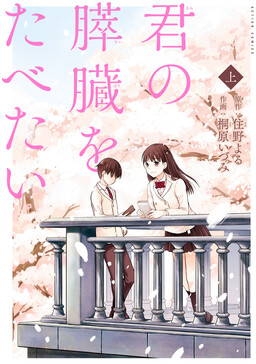
I Want to Eat Your Pancreas
Yu's review of the I Want to Eat Your Pancreas manga — Idumi Kirihara's adaptation of Yoru Sumino's novel. A withdrawn boy finds classmate Sakura Yamauchi's secret diary and learns she's dying of a pancreatic illness. She chooses him precisely because he won't treat her like a dying girl. Seven Seas collected the two Japanese volumes into one English omnibus.

Slice of Life / Music
Blue Giant
Yu's review of Blue Giant — Dai Miyamoto, a Sendai high schooler with no talent and no friends in jazz, decides he will become the greatest jazz saxophonist in the world, moves to Tokyo, and forms the trio JASS with a cocky pianist and a total drumming beginner.
Slice of Life / Memoir
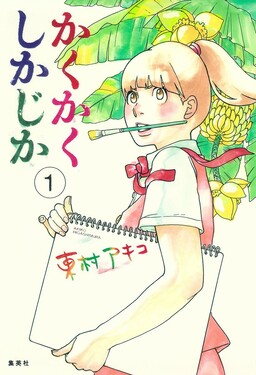
Blank Canvas: My So-Called Artist's Journey
Yu's review of Blank Canvas (Kakukaku Shikajika) — Akiko Higashimura's autobiographical manga about Hidaka-sensei, the bamboo-sword-wielding art teacher in rural Miyazaki who screamed 'Draw!' until she became the artist she is. A memoir, a comedy, and a eulogy all at once.
Slice of Life / Comedy
New Game!
Yu's review of New Game! — Aoba Suzukaze joins Eagle Jump, the game company that made her favorite childhood game, as a character designer; the series follows her first year in professional game development alongside an all-female team; a workplace slice-of-life that treats game development with genuine procedural interest.

Slice of Life
Maria Watches Over Us (Marimite)
Yu's review of Maria Watches Over Us — Yumi is a first-year student at the Lillian Girls' Academy, a Catholic school with a tradition of 'soeur' relationships between older and younger students; she is noticed by the beautiful third-year Sachiko; Nagasawa's adaptation of Konno's beloved light novel about ritual, belonging, and the specific intensity of all-girls school friendships.
Written by
Yu
Manga Enthusiast from Japan
I grew up in Japan and manga literally saved me during a tough time in elementary school. My English isn't perfect, but my love for manga is real — and I want to share it with you.
Disclosure: This post contains affiliate links. As an Amazon Associate, I earn from qualifying purchases at no extra cost to you.