
Sabagebu! Review: A Girl Joins a Survival Game Club and Discovers She Is a Natural at Fake Violence
by Hidekichi Matsumoto
Read the first volume. If it doesn't hook you, put it down. It'll hook you.
Buy Sabagebu! —Survival Game Club!— on Amazon →*Affiliate link — I earn a small commission at no extra cost to you.
Quick Take
- A survival game comedy with an unusually selfish protagonist — Momoka's actual personality, which is less heroic than her appearance suggests, is the series' most distinctive element
- The survival game battles are rendered with mock-action enthusiasm that suits the comedy register
- 9 volumes complete; compact complete comedy with good ensemble energy
Who Is This Manga For?
- Readers who want all-female ensemble school comedy with an unusual protagonist
- Anyone interested in survival game/airsoft content used for comedy
- Fans of school club comedy where the club actually does its activity
- Readers looking for short complete comedy manga
Content Warnings & Age Rating
Age Rating: T (Teen) Content Warnings: Mock combat with airsoft weapons (survival game content); exaggerated slapstick violence; comedy including physical humor
T rating — all violence is clearly within mock/game context.
Yu's Rating
| Category | Score |
|---|---|
| Story Depth | ★★☆☆☆ |
| Art Style | ★★★☆☆ |
| Character Development | ★★★☆☆ |
| Accessibility for Non-Japanese Readers | ★★★★★ |
| Reread Value | ★★★☆☆ |
Story Overview
Momoka Sonokawa transfers to a new school and immediately gets recruited into the Survival Game Club by president Miou Ootori, who has the appearance of a princess and the instincts of a tactician.
The Survival Game Club plays survival games (airsoft mock combat) with genuine enthusiasm and genuine equipment. Momoka has immediate aptitude. This is good for the club and slightly alarming for everyone, because Momoka's interior monologue reveals that she is considerably less selfless than she appears.
The comedy operates on two levels: the mock combat sequences, which are rendered with exaggerated action movie drama, and Momoka's actual personality, which is self-interested in ways that her pleasant exterior conceals from everyone except the narrator and the reader.
Characters
Momoka Sonokawa — A protagonist whose gap between appearance (kind and capable) and interior (self-interested and calculating) is the series' most consistent comedy source.
Miou Ootori — The beautiful, aristocratic president who leads the club with genuine competence and occasional aristocratic excess.
The club members — Each has a distinct comedy register that gives the ensemble variety.
Art Style
Matsumoto's art handles both the club character designs and the survival game mock-action sequences with appropriate enthusiasm. The fantasy-sequence combat moments — when the survival game is rendered as though it's real action — are the art's most energetic element.
Cultural Context
Sabagebu! ran from 2010 to 2015 in Monthly Comic Alive. Survival games (airsoft) have a dedicated subculture in Japan, and the series uses this hobby setting with enough detail to be authentic while treating it as comedy rather than enthusiast content.
What I Love About It
Momoka's self-interest. She is not secretly kind — the series doesn't resolve her into a more conventional protagonist. Her genuine personality, which includes calculation about personal benefit and tactical thinking applied to social situations, is maintained. This makes her more interesting than the pleasant exterior she maintains.
What English-Speaking Fans Say
Western readers describe Sabagebu! as a pleasant complete comedy — specifically noted for Momoka being a more interesting protagonist than typical shojo comedy leads, for the survival game content being used with enough authenticity to be funny rather than generic, and for the 9-volume format being appropriately short. Recommended for readers who want short complete comedy manga.
Memorable Scene ⚠️ Spoiler Warning
Any sequence where the gap between Momoka's appearance and her actual reasoning is most clearly exposed — when she explains to the reader why something is actually about her benefit — is the series' most honest comedy.
Similar Manga
- D-Frag! — Club comedy from same publisher with similar structure
- Girls und Panzer — All-female club activity with real hobby content
- Ouran High School Host Club — All-female adjacent club comedy in different register
- Kill Me Baby — Short complete comedy with similar tonal register
Reading Order / Where to Start
Volume 1 — Momoka's recruitment and first survival game establish both the premise and her actual personality.
Official English Translation Status
Seven Seas has published the complete English series. All 9 volumes available.
Pros & Cons
Pros
- Momoka's self-interest is a genuinely unusual protagonist quality
- Complete in 9 volumes
- Survival game content used with authentic detail
- Ensemble cast provides variety
Cons
- Limited plot development
- Comedy premise thin across all 9 volumes
- Momoka's characterization may not appeal to all readers
Format Comparison
| Format | Notes |
|---|---|
| Individual Volumes | Seven Seas; complete series available |
| Digital | Available |
Where to Buy
Read the first volume. If it doesn't hook you, put it down. It'll hook you.
This post contains affiliate links. If you purchase through these links, I may earn a small commission at no extra cost to you. As an Amazon Associate, I earn from qualifying purchases.
*Affiliate link — I earn a small commission at no extra cost to you.
More Manga You Might Like
Slice of Life / Comedy
New Game!
Yu's review of New Game! — Aoba Suzukaze joins Eagle Jump, the game company that made her favorite childhood game, as a character designer; the series follows her first year in professional game development alongside an all-female team; a workplace slice-of-life that treats game development with genuine procedural interest.
Slice of Life / Comedy
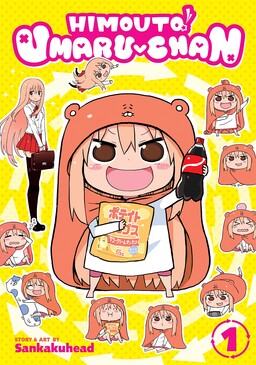
Himouto! Umaru-chan
Yu's review of Himouto! Umaru-chan — Umaru Doma is the school's flawless honor student, but the moment she's home she shrinks into a chibi gremlin in a hamster hoodie demanding chips, cola, and games from her tired brother Taihei. Twelve complete volumes from Seven Seas, and the warmth under the gags is what kept me reading.
Slice of Life / Memoir
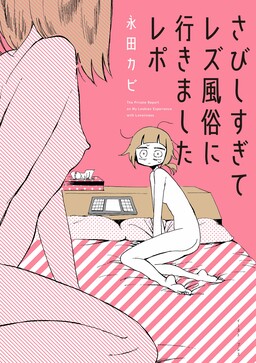
My Lesbian Experience with Loneliness
Yu's review of My Lesbian Experience with Loneliness — Nagata Kabi's autobiographical manga about her experiences with depression, an eating disorder, her difficult relationship with her parents, and her gradual understanding of her own sexuality and loneliness; one of the most honest mental health memoirs in manga form.
Slice of Life / Drama
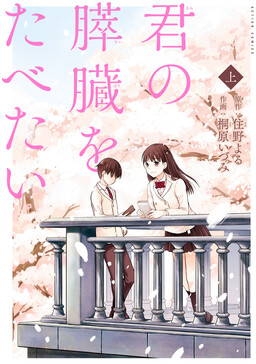
I Want to Eat Your Pancreas
Yu's review of the I Want to Eat Your Pancreas manga — Idumi Kirihara's adaptation of Yoru Sumino's novel. A withdrawn boy finds classmate Sakura Yamauchi's secret diary and learns she's dying of a pancreatic illness. She chooses him precisely because he won't treat her like a dying girl. Seven Seas collected the two Japanese volumes into one English omnibus.
Slice of Life / Music
Blue Giant
Yu's review of Blue Giant — Dai Miyamoto, a Sendai high schooler with no talent and no friends in jazz, decides he will become the greatest jazz saxophonist in the world, moves to Tokyo, and forms the trio JASS with a cocky pianist and a total drumming beginner.
Slice of Life / Memoir
Blank Canvas: My So-Called Artist's Journey
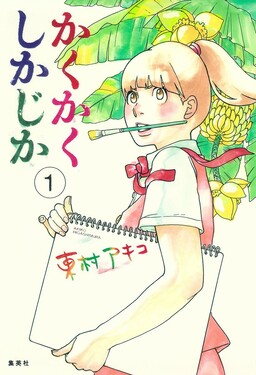
Yu's review of Blank Canvas (Kakukaku Shikajika) — Akiko Higashimura's autobiographical manga about Hidaka-sensei, the bamboo-sword-wielding art teacher in rural Miyazaki who screamed 'Draw!' until she became the artist she is. A memoir, a comedy, and a eulogy all at once.
Written by
Yu
Manga Enthusiast from Japan
I grew up in Japan and manga literally saved me during a tough time in elementary school. My English isn't perfect, but my love for manga is real — and I want to share it with you.
Disclosure: This post contains affiliate links. As an Amazon Associate, I earn from qualifying purchases at no extra cost to you.