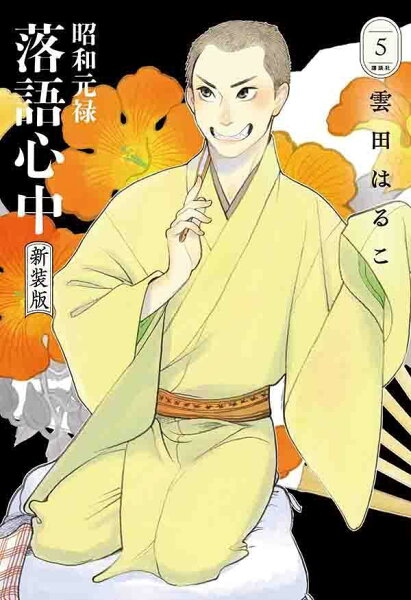
Shouwa Genroku Rakugo Shinjuu Review: The Art That Dies With You, and the Art That Lives On
by Haruko Kumota
Read the first volume. If it doesn't hook you, put it down. It'll hook you.
Buy Shouwa Genroku Rakugo Shinjuu on Amazon →*Affiliate link — I earn a small commission at no extra cost to you.
Quick Take
- One of the greatest manga of the 2010s — a meditation on art, mortality, and what we pass on
- The rakugo world is rendered with genuine expertise and genuine love
- A tragedy that earns every tear; the characters are fully human and fully themselves
Who Is This Manga For?
- Readers who want serious literary manga that treats art as a subject worth deep exploration
- Fans of historical settings — Shouwa-era Japan rendered with period precision
- Anyone drawn to tragedy done right — grief and loss depicted with emotional truth
- Josei manga readers looking for mature, complex storytelling
Content Warnings & Age Rating
Age Rating: M (Mature) Content Warnings: Death, suicide themes, adult relationships, period-appropriate gender and sexuality dynamics, themes of artistic obsession
This is mature, serious manga. Not recommended for readers who want lighter content.
Yu's Rating
| Category | Score |
|---|---|
| Story Depth | ★★★★★ |
| Art Style | ★★★★★ |
| Character Development | ★★★★★ |
| Accessibility for Non-Japanese Readers | ★★★★☆ |
| Reread Value | ★★★★★ |
Story Overview
The story begins with Yotaro, a young man released from prison who becomes obsessed with rakugo after seeing a master performer. He apprentices himself to Yakumo — the eighth-generation master of that name, the greatest living rakugo performer, who is also clearly a man carrying something enormous and unprocessed.
What follows is a story told in two time periods. The present follows Yotaro learning his art and the complicated family he inherits through Yakumo. The past — revealed gradually — follows young Yakumo and his best friend Sukeroku across the Shouwa era, their rise as performers, their fundamental incompatibility, and the tragedy that defines everything in the present.
Rakugo is the subject and the metaphor. The art form that is passed from one throat to the next, changed by each transmission, sometimes carried wrong, sometimes transcended — that is the story of everything in the series.
Characters
Yakumo (eighth): One of the most complex characters in manga. A man who performs warmth and intimacy in art while having abandoned both in his personal life. His relationship with beauty — in rakugo, in the people he loved — is the engine of the tragedy. Understanding why he is the way he is takes the whole series.
Sukeroku: Yakumo's opposite. Where Yakumo is precise and polished, Sukeroku is chaotic and alive. His rakugo is beloved because it contains him — and he can't contain himself. His relationship with Yakumo is the heart of the story's retrospective sections.
Konatsu: The woman who bridges the two generations. Her grief and her rage and her love all have to find a direction across ten volumes.
Yotaro: The inheritor. The series is framed by his POV, and his hopefulness provides contrast to the tragedy of the past.
Art Style
Haruko Kumota's art is exquisite — the linework is assured and elegant, the character designs distinct without being stylized. The period settings (1930s-1980s Japan) are rendered with evident research. The rakugo performance sequences — two people in a single spotlight conveying entire casts through voice and gesture — are depicted with theatrical flair that makes the art form comprehensible to readers who have never seen rakugo.
Cultural Context
Rakugo is a centuries-old Japanese performing art: a single performer, two props (fan and hand towel), and an entire cast of characters brought to life through voice and suggestion. In the story's time period, it was simultaneously a beloved popular entertainment and a dying art form, threatened by television and changing cultural tastes.
The Shouwa era (1926-1989) that the title references was Japan's most dramatic century of transformation — war, defeat, occupation, reconstruction, economic miracle. The rakugo world both reflects and is insulated from these changes, which is part of the story's texture.
What I Love About It
I came to this manga not knowing what rakugo was. I finished it feeling like I had lost something I loved.
That's what this manga does. Haruko Kumota creates an entire world — performers, family, tradition, the specific weight of art that has been passed from one person to another over generations — and makes you care about its survival and its transformation. By the end, I cared about rakugo as if it were a person.
The central tragedy is not surprising. You can see where it is going. But that's the point — like the audience at a performance of a classic rakugo piece, you know the ending, and the knowing doesn't protect you. The craft of the telling is everything.
Yakumo broke my heart. Konatsu broke my heart. I don't expect to stop thinking about this series.
What English-Speaking Fans Say
Frequently cited as one of the best manga of the 2010s. Readers who encounter it tend to become advocates — the word-of-mouth quality is exceptional. The anime adaptation (two seasons, 2016-2017) is considered one of the finest anime of that period and drove significant readership to the manga.
The most common response from English-speaking readers: surprise at how accessible the rakugo world becomes despite being culturally unfamiliar, and devastation at the ending.
Memorable Scene ⚠️ Spoiler Warning
There is a performance sequence in the retrospective arc where young Yakumo performs a piece he has made completely his own — and the reader can see, simultaneously, what it costs him personally to perform it and what genius it demonstrates artistically. The gap between his private self and his performing self is never wider or more achingly clear. It is the moment when the full scope of his tragedy becomes visible, and it is magnificent, and it is heartbreaking.
Similar Manga
- Descending Stories: This is the official English title — same manga, same recommendation
- Golden Kamuy: Different genre, similar seriousness about historical Japan and cultural specificity
- Nana: Different story, but similar quality of caring about art as the vehicle for human feeling
Reading Order / Where to Start
Volume 1. The structure is deliberate — present and past interweave to deepen each other. Start from the beginning.
Official English Translation Status
Kodansha Comics published all 10 volumes in English. Complete.
Pros & Cons
Pros
- Literary quality rare in any medium
- Characters with genuine depth and complexity
- The rakugo world rendered lovingly and accessibly
- A tragedy that earns its emotional weight fully
Cons
- Demanding — requires patience with slow-burn storytelling
- The tragedy is thorough — this is not a comfort read
- Cultural context of rakugo may need outside reading for some readers
- Mature content throughout
Format Comparison
| Format | Notes |
|---|---|
| Physical | 10 Kodansha Comics volumes |
| Digital | Available digitally |
| Omnibus | Not available |
Where to Buy
Read the first volume. If it doesn't hook you, put it down. It'll hook you.
This post contains affiliate links. If you purchase through these links, I may earn a small commission at no extra cost to you. As an Amazon Associate, I earn from qualifying purchases.
*Affiliate link — I earn a small commission at no extra cost to you.
More Manga You Might Like
Slice of Life / Drama
Umimachi Diary
Umimachi Diary follows three adult sisters in Kamakura who invite their half-sister — whom they barely know — to live with them after their estranged father's death, and the slow process of becoming a family.
Slice of Life / Drama
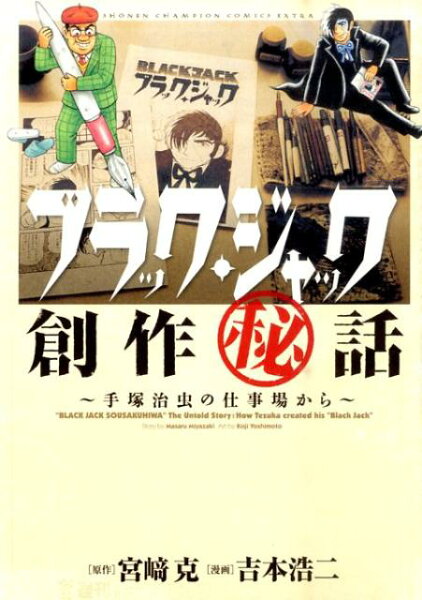
Black Jack Sousaku Hiwa
Black Jack Sousaku Hiwa is a documentary manga about how Osamu Tezuka created Black Jack — told through the editors and assistants who worked beside him, capturing both the genius and the human cost of his impossible work ethic.
Slice of Life / Drama
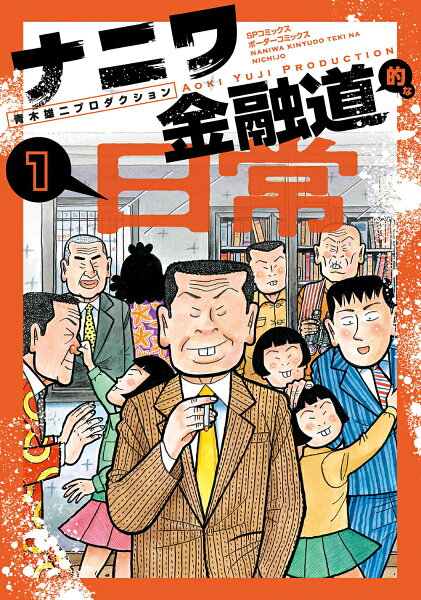
Naniwa Kinyuudo
Naniwa Kinyuudo follows new employee Ginji Mita at a small-loan finance company in Osaka — a manga that uses the world of moneylending and debt collection to create one of manga's most honest portraits of Japanese economic life.
Slice of Life / Drama
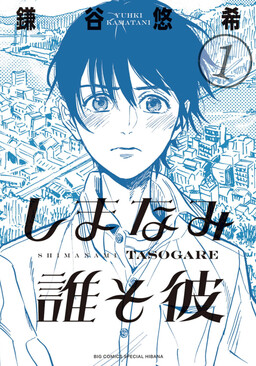
Our Dreams at Dusk: Shimanami Tasogare
Yu's review of Our Dreams at Dusk — Tasuku Kaname is outed to his classmates; he goes to a building to jump; a woman in white tells him to come to a drop-in center; the center is a community of people across the LGBTQ spectrum who have found a way to be in the world; Tasuku begins to find his own way through them.
Slice of Life
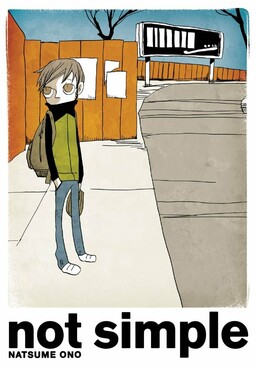
not simple
Yu's review of not simple — Ian is an English young man whose life has been defined by loss, abuse, neglect, and a desperate search for his sister; the manga tells his story in non-linear fragments, assembled by a journalist writing a novel about Ian's life, asking what it means to witness someone's suffering and what fiction can do with it.
Slice of Life / Drama
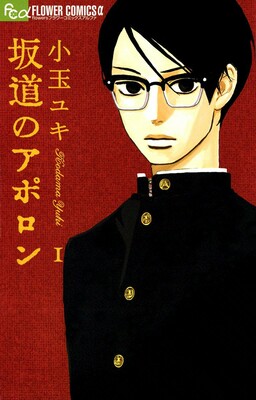
Kids on the Slope
Yu's review of Kids on the Slope (Sakamichi no Apollon) — 1966 Sasebo, Kyushu. Kaoru is a lonely classical pianist; Sentaro is a half-American delinquent who plays jazz drums in the basement of a record shop. Their friendship grows through music, the school festival, and a reunion years later at a church.
Written by
Yu
Manga Enthusiast from Japan
I grew up in Japan and manga literally saved me during a tough time in elementary school. My English isn't perfect, but my love for manga is real — and I want to share it with you.
Disclosure: This post contains affiliate links. As an Amazon Associate, I earn from qualifying purchases at no extra cost to you.