
Quest for the Missing Girl Review: A Mountain Climber Searches for a Missing Teenager Across the Japan Alps
by Jiro Taniguchi
Read the first volume. If it doesn't hook you, put it down. It'll hook you.
Buy Quest for the Missing Girl on Amazon →*Affiliate link — I earn a small commission at no extra cost to you.
Quick Take
- Taniguchi combines his mountain landscape work with a search narrative — the Japan Alps rendered with exceptional detail as the setting for a character's search
- The mountain guide protagonist is one of his most distinctive characters: competent in specific ways, limited in others
- Single volume complete; accessible Taniguchi with more narrative than The Walking Man
Who Is This Manga For?
- Readers who want Taniguchi's visual landscape work with a search narrative to carry them through
- Anyone interested in mountain environment manga
- Fans of mystery manga with emotional rather than procedural focus
- Readers looking for complete standalone manga with genuine visual ambition
Content Warnings & Age Rating
Age Rating: T (Teen) Content Warnings: Missing child; mountain climbing danger; mystery with emotional consequences; no graphic content
T rating — appropriate for most readers; emotionally serious.
Yu's Rating
| Category | Score |
|---|---|
| Story Depth | ★★★★☆ |
| Art Style | ★★★★★ |
| Character Development | ★★★★☆ |
| Accessibility for Non-Japanese Readers | ★★★★☆ |
| Reread Value | ★★★★☆ |
Story Overview
A professional mountain guide is hired by a family to find their teenage daughter, who disappeared somewhere in the Japan Alps. The guide takes the case — not because it's his profession but because something about the case connects to something in himself.
The search through the mountains is both literal and internal. The mountains are rendered with Taniguchi's exceptional attention; the search follows their geography while the guide's character is revealed through how he moves through them.
The resolution is emotionally honest rather than conventionally satisfying.
Characters
The Mountain Guide — A man more comfortable with vertical terrain than horizontal relationships; his relationship to the mountains and his relationship to the search are the same relationship.
The Missing Girl — Known through her absence and through what her absence means to the people she left; her character emerges from the search rather than from direct presence.
Art Style
Taniguchi's mountain landscape work is exceptional — the Japan Alps are rendered with the same detail he brings to urban environments in The Walking Man, with the added visual drama of high-altitude terrain.
Cultural Context
Quest for the Missing Girl ran in Big Comic Original. Taniguchi had deep personal experience with mountain environments and climbing; this manga represents his most direct engagement with mountain landscape as narrative setting rather than background.
What I Love About It
The way the mountains resist the search. Taniguchi doesn't make the landscape accommodate the narrative — the mountains are what they are, and the search must accommodate them. The protagonist's expertise is the only tool available in an environment that doesn't care about human purposes.
What English-Speaking Fans Say
Western readers describe Quest for the Missing Girl as one of Taniguchi's most accessible works — specifically noted for the mountain landscape being exceptional, for the search narrative being emotionally honest rather than conventionally plotted, and for the protagonist being a distinctive Taniguchi character type. Recommended for readers new to his work who want something with more narrative than The Walking Man.
Memorable Scene ⚠️ Spoiler Warning
The moment when the guide understands something about where the girl might be — when his knowledge of the mountains becomes knowledge of a person — is the series' most affecting scene.
Similar Manga
- The Walking Man — Taniguchi's more meditative work
- A Distant Neighborhood — Taniguchi's emotional major work
- Guardians of the Louvre — Taniguchi's most recent major work
- Summit of the Gods — Mountain manga with similar intensity
Reading Order / Where to Start
Single volume — standalone.
Official English Translation Status
Fanfare Ponent Mon published the English translation. Single volume, complete.
Pros & Cons
Pros
- Mountain landscape rendering exceptional
- Emotionally honest resolution
- Accessible Taniguchi with narrative structure
- Complete standalone
Cons
- Resolution may frustrate readers wanting conventional mystery payoff
- Less ambitious than A Distant Neighborhood
- Some characters underdeveloped
Format Comparison
| Format | Notes |
|---|---|
| Single Volume | Fanfare Ponent Mon; complete |
| Digital | Limited availability |
Where to Buy
Read the first volume. If it doesn't hook you, put it down. It'll hook you.
This post contains affiliate links. If you purchase through these links, I may earn a small commission at no extra cost to you. As an Amazon Associate, I earn from qualifying purchases.
*Affiliate link — I earn a small commission at no extra cost to you.
More Manga You Might Like
Slice of Life
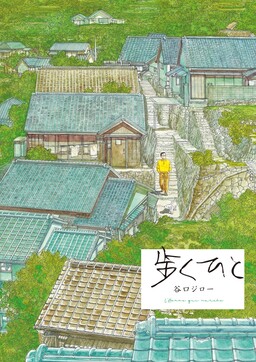
The Walking Man
Yu's review of The Walking Man — a man takes walks through his neighborhood and surrounding areas; Jiro Taniguchi's single-volume manga about the specific quality of attention paid to ordinary things, rendered with exceptional visual detail; perhaps the most peaceful manga in existence.
Slice of Life
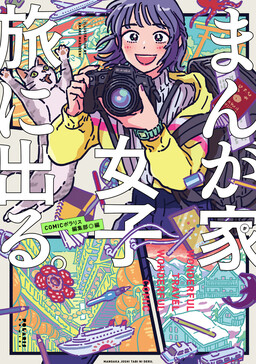
Dog & Scissors
Yu's review of Dog & Scissors — Kazuhito Harumi is shot dead protecting a stranger in a café robbery, and because he refuses to die before finishing his favorite author's last book, he comes back as a dachshund — owned by that exact author, who terrorizes him with scissors.
Slice of Life / Drama
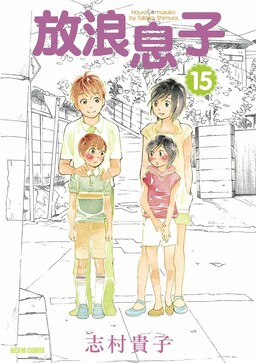
Wandering Son
Yu's review of Wandering Son — Shuichi Nitori is a boy who wants to be a girl; his new friend Yoshino Takatsuki is a girl who wants to be a boy; the manga follows both of them from elementary school through adolescence as they navigate gender identity, friendship, and growing up; a gentle, serious work about transgender experience.

Slice of Life
Sunny
Yu's review of Sunny — at a group home for children whose families cannot take care of them, a broken-down old car called Sunny becomes a private space where the children go to be alone; Taiyo Matsumoto's meditation on childhood longing, on what it means to be left, and on how children find ways to survive what adults do to them.
Slice of Life
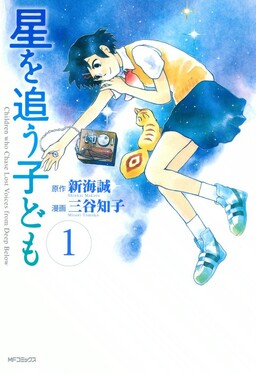
Stargazing Dog
Yu's review of Stargazing Dog — Daddy adopts a puppy named Happie; the manga follows Happie's life with Daddy through family happiness, family collapse, and the road journey that is their final chapter together; narrated from Happie's perspective, the story is exactly as emotionally devastating as its premise suggests.
Slice of Life
Piano Forest
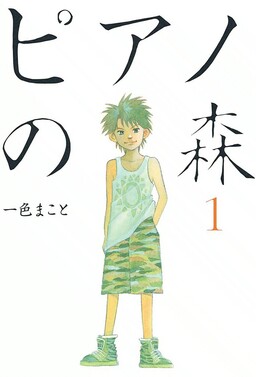
Yu's review of Piano Forest — Kai Ichinose grows up poor in a forest community and has been playing an abandoned piano in the woods since childhood; when the talented but pressured Shuhei Amamiya moves to his town, their friendship and their different relationships with music begin a story about what playing truly means.
Written by
Yu
Manga Enthusiast from Japan
I grew up in Japan and manga literally saved me during a tough time in elementary school. My English isn't perfect, but my love for manga is real — and I want to share it with you.
Disclosure: This post contains affiliate links. As an Amazon Associate, I earn from qualifying purchases at no extra cost to you.