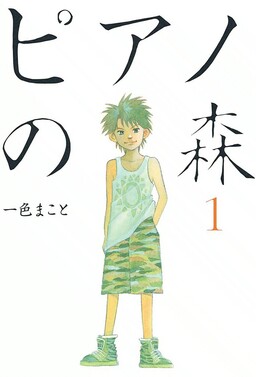
Piano Forest Review: A Boy Who Grew Up with an Abandoned Piano in the Woods Discovers He Has a Gift That No One Expected
by Makoto Isshiki
Read the first volume. If it doesn't hook you, put it down. It'll hook you.
Buy Piano Forest on Amazon →*Affiliate link — I earn a small commission at no extra cost to you.
Quick Take
- One of manga's most serious and beautiful explorations of musical talent — the difference between technical excellence and genuine musical voice is the series' central question
- The class contrast between Kai and Shuhei is handled without sentimentality or simple resolution
- 26 volumes complete; an essential music manga alongside Blue Giant
Who Is This Manga For?
- Readers who want music manga with genuine depth and competition elements
- Anyone interested in classical piano culture and competition portrayed seriously
- Fans of sports manga who want the same developmental arc in musical form
- Readers who want complete long-form slice-of-life with genuine emotional ambition
Content Warnings & Age Rating
Age Rating: T (Teen) Content Warnings: Class and poverty themes depicted seriously; family complexity; intense competition pressure; musical development over years
T rating — appropriate for most readers; the class themes are thoughtful.
Yu's Rating
| Category | Score |
|---|---|
| Story Depth | ★★★★★ |
| Art Style | ★★★★☆ |
| Character Development | ★★★★★ |
| Accessibility for Non-Japanese Readers | ★★★★☆ |
| Reread Value | ★★★★★ |
Story Overview
Kai Ichinose grows up in a poor forest community. His mother works in the sex industry; his life is marked by material limitation and social marginalization. The one constant is an old piano abandoned in the forest — weatherbeaten, technically imperfect — that he has been playing since childhood with no formal training.
Shuhei Amamiya transfers to Kai's school with a Chopin-playing father and years of intensive training. He is technically accomplished and deeply anxious — the weight of expectation has made playing feel like performance rather than music.
Their friendship, and the contrast between Kai's untrained natural gift and Shuhei's trained technical excellence, is the series' foundation. As they both enter the classical music competition world, the question the series pursues is what music is for and what makes it real.
Characters
Kai Ichinose — A protagonist whose social marginalization and musical gift are not cause-and-effect but genuinely separate; his relationship to music is genuinely free in ways that his life circumstances are not.
Shuhei Amamiya — A character whose technical excellence is real and whose anxiety is the cost of it; his development toward finding his own musical voice rather than his father's is the series' complementary character arc.
Art Style
Isshiki's art handles the piano-playing sequences with the visual invention that such scenes require — finding ways to suggest music's emotional content through image, panel rhythm, and character expression.
Cultural Context
Piano Forest ran in Weekly Morning from 1998 to 2015. The classical music competition world — specifically the European-rooted international competition circuit — is depicted with research attention, and the series engages with the genuine debate in classical music between technical reproduction and genuine interpretation.
What I Love About It
Kai's relationship with music before competition. The series spends time with what playing means to someone who has no investment in performing for others — who plays because the playing itself is the point. This is the foundation against which all the competition-world content is measured.
What English-Speaking Fans Say
Western readers describe Piano Forest as essential music manga alongside Blue Giant — specifically noted for the class contrast being treated with genuine complexity, for the musical content being specific rather than decorative, and for the 26-volume arc earning its conclusion. Frequently cited as criminally underread.
Memorable Scene ⚠️ Spoiler Warning
Kai's first international competition performance — where his untrained, specific approach meets the expectations of the classical competition world — is the series' most concentrated statement about what it is arguing about music and about what genuine expression is.
Similar Manga
- Blue Giant — Jazz music with similar depth and developmental arc
- La Corda d'Oro — Classical music school romance in different register
- Kono Oto Tomare — Instrument competition with similar emphasis on genuine feeling
- Kids on the Slope — Music-based character development with similar class-contrast structure
Reading Order / Where to Start
Volume 1 — Kai's childhood, the forest piano, and Shuhei's arrival establish the series' terms.
Official English Translation Status
Kodansha published the complete English series. All 26 volumes available.
Pros & Cons
Pros
- Musical depth is genuine and specific
- Class contrast handled without sentimentality
- 26 volumes earn the arc's conclusion
- Kai is one of manga's most genuinely gifted protagonists
Cons
- Long commitment at 26 volumes
- Classical music context requires some engagement
- Pace varies across the long run
Format Comparison
| Format | Notes |
|---|---|
| Individual Volumes | Kodansha; complete series |
| Digital | Available |
Where to Buy
Read the first volume. If it doesn't hook you, put it down. It'll hook you.
This post contains affiliate links. If you purchase through these links, I may earn a small commission at no extra cost to you. As an Amazon Associate, I earn from qualifying purchases.
*Affiliate link — I earn a small commission at no extra cost to you.
More Manga You Might Like

Slice of Life / Music
Those Snow White Notes
Yu's review of Those Snow White Notes — Setsu Sawamura is a shamisen prodigy whose grandfather, the legendary Matsugorou Sawamura, has just died; unable to play since losing his teacher, Setsu leaves his rural home and arrives in Tokyo, where he must find his own sound separate from his grandfather's influence.

Slice of Life / Drama
Kids on the Slope
Yu's review of Kids on the Slope (Sakamichi no Apollon) — 1966 Sasebo, Kyushu. Kaoru is a lonely classical pianist; Sentaro is a half-American delinquent who plays jazz drums in the basement of a record shop. Their friendship grows through music, the school festival, and a reunion years later at a church.

Slice of Life
Blue Giant Supreme
Yu's review of Blue Giant Supreme — Dai Miyamoto leaves Japan with his tenor sax, lands alone in Munich, and builds a band across Europe. The Europe arc of Shinichi Ishizuka's jazz manga. No English release yet, but the Japanese volumes are out there.

Slice of Life / Music
Blue Giant
Yu's review of Blue Giant — Dai Miyamoto, a Sendai high schooler with no talent and no friends in jazz, decides he will become the greatest jazz saxophonist in the world, moves to Tokyo, and forms the trio JASS with a cocky pianist and a total drumming beginner.

Slice of Life
Blue Giant Explorer
Yu's review of Blue Giant Explorer — Dai Miyamoto lands in Seattle with a tenor sax and a thousand dollars, buys a used Honda, and drives across America building a band from strangers. The third chapter of the Blue Giant saga, complete in 9 volumes, only in Japanese.

Slice of Life
Smile Down the Runway
Yu's review of Smile Down the Runway — Chiyuki Fujito dreams of being a Paris Collection runway model but is told she's too short at 158cm; Ikuto Tsumura dreams of being a fashion designer but can't afford design school; they push each other toward impossible goals; Kotoba Inoya's fashion manga about the gap between dreams and physical reality.
Written by
Yu
Manga Enthusiast from Japan
I grew up in Japan and manga literally saved me during a tough time in elementary school. My English isn't perfect, but my love for manga is real — and I want to share it with you.
Disclosure: This post contains affiliate links. As an Amazon Associate, I earn from qualifying purchases at no extra cost to you.