
Phantom of the Idol Review: A Lazy Idol Gets Possessed by a Dead Idol's Spirit Who Just Wants to Perform One More Time
by Hijiki Isarbi
Read the first volume. If it doesn't hook you, put it down. It'll hook you.
Buy Phantom of the Idol on Amazon →*Affiliate link — I earn a small commission at no extra cost to you.
Quick Take
- A genuinely charming comedy premise executed with consistent warmth — the body-swap dynamic between lazy Yuuya and enthusiastic Asahi creates comedy that never exhausts itself because their personalities are such a clear contrast
- The idol industry setting is depicted with specific detail that rewards readers who enjoy that world
- 9 volumes complete; a rare complete idol comedy with a satisfying ending
Who Is This Manga For?
- Readers who enjoy idol industry manga with supernatural twists
- Anyone who wants comedy based on personality contrast rather than misunderstanding
- Fans of ghost stories with warm rather than horror registers
- Readers who want complete series with genuine ending satisfaction
Content Warnings & Age Rating
Age Rating: T (Teen) Content Warnings: Ghost possession (played for comedy); idol industry pressures depicted; no significant violence or mature content
A T rating appropriate to the light supernatural comedy.
Yu's Rating
| Category | Score |
|---|---|
| Story Depth | ★★★☆☆ |
| Art Style | ★★★★☆ |
| Character Development | ★★★★★ |
| Accessibility for Non-Japanese Readers | ★★★★☆ |
| Reread Value | ★★★★☆ |
Story Overview
Yuuya Niyodo is half of a two-person idol unit whose primary goal is to get fired. He hates performing, refuses to try, and has been baffling the industry with his deliberate mediocrity while somehow remaining employed because his partner Kazuki carries their performances.
Asahi Mogami was an idol who died before she could reach her dreams — she remained as a ghost, attached to the stage where she performed, watching others do what she never finished.
When Asahi possesses Yuuya during a live performance, she finally gets to do what she wanted. His body, her skill and passion: the performance is spectacular. Their agreement — she gets to perform when she needs to; he gets the career benefits — is the series' premise, and the question of what happens when that arrangement isn't enough for either of them is its emotional core.
Characters
Yuuya Niyodo — A protagonist whose laziness is not a character flaw to be overcome but a genuine orientation toward his work — he does not love performing and has never pretended otherwise. His gradual engagement with the question of what he does want is the series' most unexpected development.
Asahi Mogami — Her post-death enthusiasm for performance is the series' primary energy source — she never lost the love that the industry often grinds out of living idols, and being dead has only clarified what she wants.
Kazuki — Yuuya's partner whose awareness of what's happening and his specific feelings about it develop into one of the series' more quietly affecting subplots.
Art Style
The performance sequences are the art's primary showcase — Isarbi draws the moments when Asahi is performing through Yuuya with a specific visual energy that distinguishes them from Yuuya's deliberate lackluster stagecraft. The character designs are clean and expressive.
Cultural Context
Japanese idol culture's specific pressures — the training, the public persona management, the gap between the performed idol and the actual person — give the series its thematic texture. Asahi's ghost represents what idol culture asks performers to sacrifice (personal desire for the performed role), while Yuuya's refusal to perform represents the other extreme.
What I Love About It
The series understands that Asahi's ghost storyline is not primarily about tragedy — it's about unfinished love for something. Her enthusiasm for performing through Yuuya is the series' most joyful element, and the comedy of the contrast between her passion and his indifference never stops being funny even as the warmth deepens.
What English-Speaking Fans Say
Western readers describe Phantom of the Idol as one of the more charming completed idol comedies available — specifically praised for the Yuuya-Asahi dynamic, for the genuine warmth underneath the comedy, and for the anime adaptation (which is praised for bringing the performance sequences to life). The complete run is cited as a virtue.
Memorable Scene ⚠️ Spoiler Warning
The performance sequence where the arrangement between Yuuya and Asahi is tested by circumstances that force him to choose whether to perform on his own — and what that choice reveals about what he has actually been developing over the course of the series — is the series' most emotionally honest chapter.
Similar Manga
- Oshi no Ko — Idol industry with darker supernatural element
- Skip Beat! — Entertainment industry with performance themes
- Kageki Shojo!! — Performance world, different discipline
- Given — Music and performance with emotional depth
Reading Order / Where to Start
Volume 1 — Yuuya's deliberate mediocrity and Asahi's first possession are established immediately.
Official English Translation Status
Kodansha Comics published all 9 volumes. Complete and available.
Pros & Cons
Pros
- Complete 9-volume run with satisfying ending
- Yuuya-Asahi dynamic is a consistently fresh comedy engine
- Idol industry setting is specific and well-observed
- Warmth genuine despite the comedy-first register
Cons
- Idol industry setting may not appeal to all readers
- The supernatural premise is treated lightly — readers wanting horror should look elsewhere
- Some character subplots could use more development given the short run
Format Comparison
| Format | Notes |
|---|---|
| Individual Volumes | Kodansha Comics; complete 9-volume set |
| Digital | Available |
Where to Buy
Read the first volume. If it doesn't hook you, put it down. It'll hook you.
This post contains affiliate links. If you purchase through these links, I may earn a small commission at no extra cost to you. As an Amazon Associate, I earn from qualifying purchases.
*Affiliate link — I earn a small commission at no extra cost to you.
More Manga You Might Like

Slice of Life
Kakushigoto
Yu's review of Kakushigoto by Koji Kumeta — an ecchi manga artist hides his job from his daughter Hime, and a daily gag comedy slowly reveals itself as a father-daughter love story across ten years.
Slice of Life / Comedy
Cells at Work!
Yu's review of Cells at Work! — the cells of a human body are personified as workers in a city. Red Blood Cell AE3803 delivers oxygen, White Blood Cell U-1146 kills pathogens, and a cancer cell asks why he has to die. Educational comedy that quietly breaks your heart.

Slice of Life
Magical Sempai
Yu's review of Magical Sempai — the assistant joins the magic club to fill a club requirement and meets his sempai: a girl who loves magic with genuine passion but suffers from stage fright severe enough that every public performance goes catastrophically wrong.
Slice of Life
Piano Forest
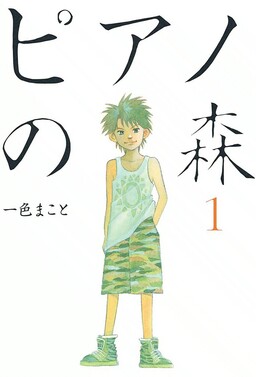
Yu's review of Piano Forest — Kai Ichinose grows up poor in a forest community and has been playing an abandoned piano in the woods since childhood; when the talented but pressured Shuhei Amamiya moves to his town, their friendship and their different relationships with music begin a story about what playing truly means.
Slice of Life / Fantasy
A Witch's Printing Office
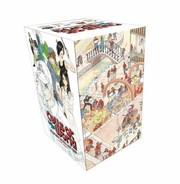
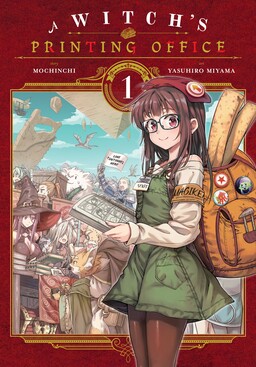
Yu's review of A Witch's Printing Office — Mika is a modern Japanese woman who worked at Comiket (the giant doujinshi convention) and wakes up in a fantasy world where magical festivals share printed pamphlets; using her knowledge of convention organization and printing logistics, she builds a business that transforms how the fantasy world shares information.

Slice of Life / Music
Those Snow White Notes
Yu's review of Those Snow White Notes — Setsu Sawamura is a shamisen prodigy whose grandfather, the legendary Matsugorou Sawamura, has just died; unable to play since losing his teacher, Setsu leaves his rural home and arrives in Tokyo, where he must find his own sound separate from his grandfather's influence.
Written by
Yu
Manga Enthusiast from Japan
I grew up in Japan and manga literally saved me during a tough time in elementary school. My English isn't perfect, but my love for manga is real — and I want to share it with you.
Disclosure: This post contains affiliate links. As an Amazon Associate, I earn from qualifying purchases at no extra cost to you.