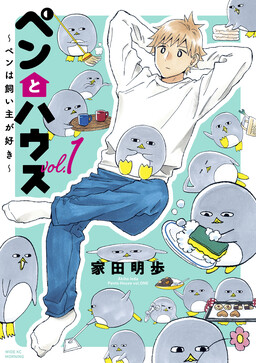
Penguin & House Review: A Penguin Moves In and a Young Salaryman's Life Gets Warmer
by Akiho Ieda
Read the first volume. If it doesn't hook you, put it down. It'll hook you.
Buy Penguin & House on Amazon →*Affiliate link — I earn a small commission at no extra cost to you.
Quick Take
- A cohabitation comedy with a penguin that earns its warmth through specific domestic observation rather than manufactured cuteness
- The salaryman's quiet life and Pen-chan's penguin-specific behavior create comedy that feels grounded rather than absurd
- 4+ volumes in English; one of the most pleasant ongoing slice-of-life reads for readers who want something genuinely calm
Who Is This Manga For?
- Readers who want gentle, warm slice-of-life with no dramatic stakes
- Anyone who finds the idea of sharing their home with a penguin deeply appealing
- Fans of healing manga that works through specific daily observation
- Readers of all ages who want something restorative
Content Warnings & Age Rating
Age Rating: All Ages Content Warnings: None
Genuinely appropriate for all readers.
Yu's Rating
| Category | Score |
|---|---|
| Story Depth | ★★★☆☆ |
| Art Style | ★★★★★ |
| Character Development | ★★★★☆ |
| Accessibility for Non-Japanese Readers | ★★★★★ |
| Reread Value | ★★★★★ |
Story Overview
Pen-chan is a penguin. One day Pen-chan is in a young salaryman's apartment. The series does not explain this in detail. Pen-chan lives there now.
The salaryman — who works long hours, lives alone, and has a life that is organized but a little empty — adjusts to a roommate who cannot talk, leaves fish-related messes, and requires specific attention to be happy. In return, Pen-chan's presence fills the apartment with something the salaryman did not know was missing.
The series is structured around short chapters of daily life: mornings before work, evenings at home, weekends, the small negotiations of shared space between a person and a penguin. Nothing catastrophic happens. The comedy comes from specificity — the specific way a penguin responds to certain situations, the specific ways a person adapts to them.
Characters
The salaryman (Iida-kun) — A protagonist whose initial emotional flatness is not emptiness but the particular quietness of someone who has organized their life around work. His gradual warming — expressed through more attention to Pen-chan, through small changes to his routine — is the series' emotional arc.
Pen-chan — A penguin whose behavior is observed with genuine affection and specificity. Pen-chan is not anthropomorphized beyond penguin nature — the comedy comes from penguin responses to human situations, not from Pen-chan being secretly human.
Occasional supporting characters — Coworkers, neighbors, and others who encounter the salaryman's unusual cohabitation.
Art Style
Ieda's art renders Pen-chan with particular care — the penguin's proportions, movement, and expressiveness within the limits of what penguins can actually express are drawn with loving accuracy. The apartment setting is warm and specific, and the series' color palette has the quality of good afternoon light.
Cultural Context
The "healing manga" genre in Japan — iyashikei — is specifically designed to produce a calming, restorative reading experience. Penguin & House sits squarely in this tradition: nothing terrible happens, the world is essentially safe, and the accumulation of small pleasant moments is the point.
What I Love About It
Pen-chan makes the salaryman's apartment a home. That's the whole series, really. That something as specific and non-human as a penguin could do that — through no intention, just presence — is both funny and quietly true about what company means.
What English-Speaking Fans Say
Western readers describe Penguin & House as one of the most genuinely relaxing manga they've read — consistently cited for the warmth of the premise's execution, for Pen-chan's characterization as a real penguin rather than a penguin-shaped person, and for the effect of reading it at the end of a long day. Frequently described as "exactly what I needed."
Memorable Scene ⚠️ Spoiler Warning
The chapter where Iida-kun realizes he's started looking forward to coming home — not abstractly, but specifically looking forward to what Pen-chan will have been doing while he was at work — is the series' most precise articulation of what has changed in his life.
Similar Manga
- Chi's Sweet Home — Cat cohabitation, all ages, similar warm-domestic texture
- With a Dog AND a Cat, Every Day Is Fun — Pet cohabitation slice-of-life, comedy
- Sweetness & Lightning — Slice-of-life about a salaryman building warmth in a quiet life
- Dungeon Meshi — Different genre, but similar specificity in depicting non-human behavior with accuracy
Reading Order / Where to Start
Volume 1 — Pen-chan's arrival and Iida-kun's adjustment are established from the first chapter.
Official English Translation Status
Kodansha Comics publishes the ongoing English series. 4+ volumes currently available.
Pros & Cons
Pros
- Genuinely calming and restorative reading experience
- Pen-chan is depicted as an actual penguin, not a penguin-person
- Art is warm and precise
- Appropriate for all ages
Cons
- Ongoing with no dramatic arc or resolution
- Low stakes may not satisfy readers wanting narrative
- The penguin premise requires a certain kind of openness
Format Comparison
| Format | Notes |
|---|---|
| Individual Volumes | Kodansha Comics; ongoing in English |
| Digital | Available |
Where to Buy
Read the first volume. If it doesn't hook you, put it down. It'll hook you.
This post contains affiliate links. If you purchase through these links, I may earn a small commission at no extra cost to you. As an Amazon Associate, I earn from qualifying purchases.
*Affiliate link — I earn a small commission at no extra cost to you.
More Manga You Might Like

Slice of Life / Comedy
Wave, Listen to Me!
Yu's review of Wave, Listen to Me! — Minare Koda is a restaurant worker in Sapporo who rants to a radio producer at a bar about her ex-boyfriend; the producer records it and airs it; instead of suing, she agrees to do a radio show; a fast-talking adult comedy about a woman who is genuinely funny and genuinely a mess.

Slice of Life
An Old Man and His Cat
Yu's review of An Old Man and His Cat — a widower named Fuku-san adopts Mofu-chan, a large flat-faced cat that nobody wanted; the series follows their daily life together; Nekomaki's manga about loneliness, companionship, and what a cat can give to someone who needs them.

Slice of Life / Comedy
Grand Blue Dreaming
Yu's review of Grand Blue Dreaming — Iori Kitahara moves to a coastal town expecting a relaxed seaside college life and a diving hobby, but the dive shop above which he lives is run by a club that spends far more time drinking and stripping naked than underwater. A raucous college comedy with real diving woven through the chaos.

Slice of Life
My New Boss Is Goofy
Yu's review of My New Boss Is Goofy — Momose Shinya carries severe anxiety from years under a genuinely terrible boss; at his new job he is placed under Aoyama Keita, a boss whose enthusiasm, sincerity, and accidental wholesomeness begin to undo years of workplace damage.

Slice of Life / Comedy
Is the Order a Rabbit?
Yu's review of Is the Order a Rabbit? (Gochuumon wa Usagi Desu Ka?) by Koi — Cocoa Hoto moves to a European-styled town and ends up boarding at the Rabbit House café, where she meets quiet barista-in-training Chino and a small circle of friends who slowly become family. A CGDCT comfort manga where the house Angora rabbit, Tippy, carries the spirit of Chino's grandfather.
Slice of Life / Comedy
Yotsuba&!
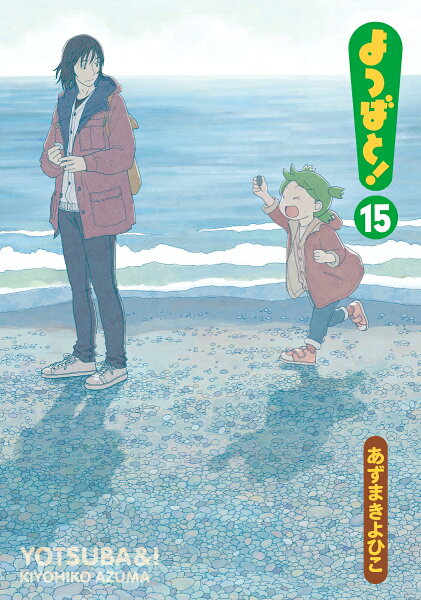
A review of Yotsuba&!, the manga about a green-haired five-year-old experiencing ordinary things for the first time — and the most purely joyful manga I have ever read.
Written by
Yu
Manga Enthusiast from Japan
I grew up in Japan and manga literally saved me during a tough time in elementary school. My English isn't perfect, but my love for manga is real — and I want to share it with you.
Disclosure: This post contains affiliate links. As an Amazon Associate, I earn from qualifying purchases at no extra cost to you.