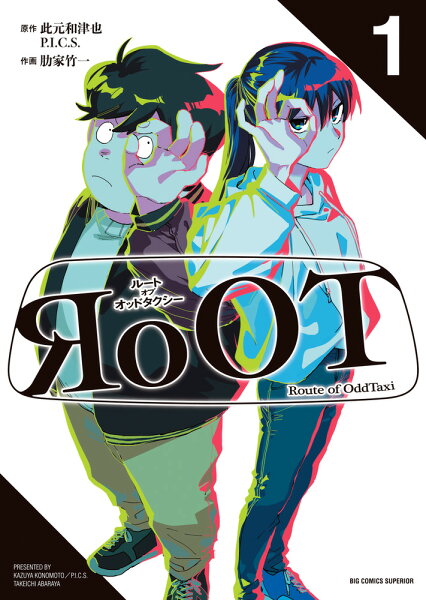
Odd Taxi Manga Review — Every Passenger Has a Secret, and the Walrus Driving the Cab Knows All of Them
by Takeichi Abaraya (art) / Kazuya Konomoto (story)
Read the first volume. If it doesn't hook you, put it down. It'll hook you.
Buy Odd Taxi on Amazon →*Affiliate link — I earn a small commission at no extra cost to you.
I watched Odd Taxi the way most people watch Odd Taxi: in two days, late at night, increasingly unable to put it down. Then I read the manga the year it came out in English. Both versions are exceptional. The anime is probably the better entry point. The manga is the better reread.
This is the rare adaptation of an anime into a manga (rather than the other direction) that justifies its own existence.
Quick Take
- Anthropomorphic Tokyo, a missing girl, a walrus taxi driver, and a structure so precise that every panel matters
- The manga adapts Kazuya Konomoto's original anime; 3 volumes, complete
- Age rating: M (Mature) — adult themes, violence, organized crime; the M rating is earned
What Is the Age Rating for Odd Taxi?
VIZ rates the English manga M (Mature) — 18+. The rating is accurate.
What's in the manga:
- Organized crime: yakuza operations are central; depicted with realism rather than glamour
- Violence: present, sometimes graphic, never gratuitous. The violence has weight and consequence
- Addiction: a key character is dealing with drug addiction; depicted seriously
- Idol industry exploitation: a major subplot involves the dark side of Japanese mobile game / idol culture; depicted with care
- Adult social themes: parasocial relationships, online radicalization, financial debt, mental illness, mid-life loneliness
- Mild sexual content: implied rather than explicit; some adult situations
- Dark comedy: present throughout; the humor is dry and adult
The M rating is the floor. For most 18+ readers: appropriate. For younger readers (16+): possible with awareness; the themes are mature rather than the visuals.
The anthropomorphic animal cast does not soften the content. The series uses the animal design to discuss adult human topics with the slight distance that allows readers to engage with material they might find too direct in fully human form.
Odd Taxi Manga vs Anime: Which Should You Watch/Read First?
This is one of the most-asked questions about the series. The honest answer:
Watch the anime first. Here's why:
- Odd Taxi was originally an anime (P.I.C.S. / OLM, 13 episodes, 2021), written for animation by Kazuya Konomoto. The anime is the primary work.
- The anime is one of the most acclaimed Japanese anime of the early 2020s — won the Anime Awards Best Original Story, multiple critic awards, broad international recognition
- The structural twist works better on first encounter in the anime format because the visual reveals are designed for animation pacing
- The manga adapts the anime faithfully but cannot match the anime's specific use of sound design (the soundtrack is part of the storytelling)
Then read the manga. Here's why:
- The manga adds bonus content not in the anime (some character backstory, additional scenes)
- The manga rewards re-experience after you know the twist — you can pay attention to setup details you missed
- The Neco Kanai art is excellent and provides a different visual register
- 3 volumes; you can read it in an afternoon
For first-time experience: anime first. For deep-dive: manga after.
If you've already seen the anime: yes, the manga is worth reading. If you haven't seen either: watch the anime, then come back to the manga.
What Is Odd Taxi About?
Hiroshi Odokawa is a forty-one-year-old taxi driver in Tokyo. He has no friends, no romantic life, no social media, no hobbies. He has worked the night shift for many years. He has an extraordinary memory — he can recall every passenger he has ever driven, every conversation he has overheard, every detail of every fare.
Odokawa is a walrus.
Everyone in the manga's Tokyo is an anthropomorphic animal of some kind — a specific species rendered as a human-shaped person with that animal's head. This is not commented on. It is just how the city is. The animal designs are deliberate (which species is each character matters), but the characters treat the design as ordinary.
A teenage girl named Yuki Mitsuya has gone missing. The case is on the news. The police have suspects but no leads.
Odokawa picks up passengers each night. Across the manga's three volumes, we meet his recurring fares:
- Goriki — a doctor and Odokawa's only friend
- Kabasawa — a young man addicted to mobile game gacha for an idol character
- Dobu — a yakuza enforcer with debts of his own
- Shibagaki — a yakuza middle manager
- Eiji Kakihana — a divorced salaryman in mid-life crisis
- Taichi Kabasawa's family
- Imai — a teenage boy whose social media identity hides multiple secrets
- Shirakawa — a beautiful young woman whose social media identity hides multiple different secrets
- Yano — a struggling comedian whose career is over
- Two cops — investigating the Yuki Mitsuya case
- Several others
Every one of these characters is connected to Yuki Mitsuya's disappearance. They don't know they're connected. Odokawa, who has been driving all of them around without any of them realizing the others exist, slowly begins to understand the shape of the conspiracy because he is the only person who hears all of their stories.
The three volumes are the unfolding of that conspiracy. The structure is precise. Every storyline interlocks. The missing girl case is not what you initially think it is. The walrus driving the cab is not what you initially think he is.
The ending — which I will not spoil — recontextualizes everything that came before. It is one of the great twists in recent fiction. The recontextualization is not a "gotcha" cheat. The setup is fair. The reveal is earned. The aftermath is what makes Odd Taxi great.
Who Is This Manga For?
- Anime watchers who already loved the Odd Taxi anime
- Mystery thriller readers who value structural precision
- Adult readers willing to engage with mature themes
- Fans of ensemble narratives where every character matters
- Dark comedy enjoyers who like their humor dry
Content Warnings & Age Rating
Age Rating: M (Mature) — 18+ Content Warnings: Organized crime depicted realistically; violence; addiction (specifically gacha addiction and drug addiction); parasocial relationships and the idol industry's exploitative side; mid-life loneliness; some sexual content (implied); dark comedy throughout; references to suicide
The M rating is earned and accurate. The anthropomorphic animal design does not soften the content.
Story Overview
The manga is 3 volumes adapting the 13-episode anime. Structurally:
Volume 1 — Introduction to Odokawa and his recurring fares. The Yuki Mitsuya disappearance is referenced. Multiple character storylines begin in parallel: Kabasawa's gacha addiction, Dobu's yakuza work, Kakihana's mid-life crisis, Imai and Shirakawa's social media games. The connections between these storylines are not yet apparent.
Volume 2 — The connections begin to surface. Odokawa, by virtue of being the common driver, has heard pieces of every story. The Yuki Mitsuya case begins to involve characters we already know. The yakuza plotline intensifies. The audience begins to understand that everyone in Odokawa's cab is part of one larger story.
Volume 3 — The climax. The conspiracy is revealed. The twist about Odokawa's perception (the central structural choice of the work) lands. The fates of every storyline resolve, often in ways that recontextualize their earlier scenes. The ending arrives at the manga's actual emotional center: not the mystery, but Odokawa.
Characters
Hiroshi Odokawa — The walrus protagonist. Forty-one, single, antisocial in a specific way (not depressed; just not interested in performing the social transactions ordinary life demands). His extraordinary memory and his lack of investment in pretending make him a unique mystery-noir protagonist. He sees clearly because he has nothing at stake in not seeing.
Odokawa is funny. The dry humor of the manga is largely his. He responds to dangerous situations with the same flat affect he uses for parking arguments. The manga's tonal balance — comedy and dread interleaved — is built around his perspective.
Goriki — Odokawa's old friend, a doctor with his own quietly complicated life. The closest the manga has to an audience surrogate; provides moments of warmth in an otherwise cold ensemble.
Kabasawa — Young man addicted to gacha for a mobile-game idol named Mitsuya Yuki. (Yes, the same name as the missing teenage girl. This is not accidental.) Kabasawa's parasocial obsession is the manga's clearest engagement with contemporary digital addiction. His arc is one of the most affecting.
Dobu — Yakuza enforcer with personal debts of his own. The series writes Dobu with care; he is not a stock yakuza villain. His relationship with his work and his life is psychologically detailed.
Eiji Kakihana — Divorced salaryman, lonely, looking for connection through online matchmaking. His storyline is the manga's saddest, played without sentiment.
Imai and Shirakawa — Young people whose social media personas have begun to consume their lives. The manga's most pointed contemporary commentary lives in their storylines.
Yano — Failed comedian; his comedy partner is at the center of the Yuki Mitsuya case. Yano's arc is some of the manga's most carefully constructed.
The cops (Daimon and Mitsuya) — Two officers investigating the Yuki Mitsuya disappearance. (Officer Mitsuya is not Yuki Mitsuya. This is also not accidental.)
Art Style
Neco Kanai's manga adaptation art is excellent and slightly different from the anime's character designs. The animals are rendered with more textural detail in the manga; you can see fur, feathers, scale patterns. The Tokyo backgrounds are documentary-precise — specific neighborhoods, real intersections, recognizable landmarks.
The action sequences (which are few but pivotal) are clear. The faces — particularly Odokawa's expressionless walrus face, which has to communicate enormous interior across panels — are remarkably expressive given the constraint Kanai is working with.
Cultural Context
Odd Taxi was originally a 2021 anime by P.I.C.S. and OLM, written by Kazuya Konomoto (writer for stage and comedy in his prior career, novice anime writer). The anime won multiple awards and is considered one of the best original anime of the early 2020s.
The anime was produced for Noitamina (ノイタミナ) — Fuji TV's late-night anime block aimed at adult audiences, also home to Psycho-Pass, Anohana, Banana Fish, Ranking of Kings, and others. Odd Taxi fits Noitamina's profile: adult themes, original story, character-driven, willing to be strange.
The anthropomorphic animal design is doing structural work — I will not spoil what specifically — but is also part of a recognized Japanese tradition (Bojack Horseman comparisons are inevitable but slightly miss the mark; Odd Taxi is more interested in animal-as-archetype than Bojack's animal-as-irony).
The manga adaptation was serialized in Monthly! SpiritsCoMi (a Shogakukan adult-targeted digital manga magazine) and ran 3 volumes. The series is complete.
A live-action film Odd Taxi: In the Woods released in 2022 in Japan, combining the anime footage with new framing material and additional content. It is generally considered a companion piece rather than a full remake.
What I Love About It
The conversations Odokawa has in the cab.
Each chapter of the manga (and each episode of the anime) is largely structured around taxi rides. A character gets in. Odokawa picks them up. They talk on the way to the destination. Sometimes the conversation is about their lives. Sometimes it's about nothing — the weather, traffic, baseball. The destination is where the chapter usually ends; the passenger gets out, Odokawa drives away, the next chapter begins.
What I love is how those conversations work. The passengers are mostly talking to themselves — Odokawa is a stranger, a walrus, someone they will probably never see again, and they say things they wouldn't say to people they know. Confessions. Bragging. Lies. Half-truths. Each character reveals themselves through what they choose to perform for a stranger who is paid to listen and not judge.
Odokawa, in his head, judges. The manga lets us hear his interior. The contrast — the polite professional driver outside, the clear-eyed observer inside — is one of the funniest and saddest dynamics in the work.
Halfway through the series, I realized that Konomoto and Kanai have built the manga's entire structure on this single device. The taxi is the only space in the manga's Tokyo where strangers tell the truth to each other. Or rather, where strangers perform versions of themselves they think they can get away with — and where Odokawa hears them performing. The mystery the manga is solving is not "where is the missing girl." The mystery is "what do people show when they think no one is keeping track."
Odokawa is keeping track. The walrus has been listening this whole time.
I think about this when I am in cabs now. The drivers are not characters. They are people. They are keeping track. Odd Taxi made me kinder to strangers I will never see again.
What English-Speaking Fans Say
Odd Taxi was one of the most-praised anime of 2021 in English-language fan communities. The Anime Awards recognition cemented its critical reputation. The manga adaptation, released in English by VIZ in 2022–2023, was received as a strong companion to the anime — particularly valued by fans who wanted to revisit the story knowing the ending.
The most common comment: the manga is best as a reread after the anime, not as a replacement for it.
The most common criticism: at 3 volumes, the manga is very fast and some readers feel the anime's pacing allows the story to breathe more.
Memorable Scene ⚠️ Spoiler Warning
The final conversation Odokawa has in the taxi.
I will not say who is in the cab. I will not say what they say. What I'll say is that the manga ends with a taxi conversation that retroactively recontextualizes every taxi conversation that came before it. Odokawa has been driving this person around since chapter 1. We have heard their voice. We have heard Odokawa's internal commentary. We have not understood the conversation until the final volume.
What makes the scene work is what Konomoto refuses to dramatize. The reveal arrives quietly. Odokawa's reaction is small. The other character's reaction is also small. The two of them have a conversation that — once you understand who is speaking — is one of the most affecting scenes in recent fiction. They both know. They have both always known. The manga has been waiting for the reader to catch up.
The final pages let Odokawa drive away. The cab continues into the night. The series ends with the walrus still doing his job, still listening, still keeping track. Nothing in the world has changed except the reader's understanding of what we have been watching.
That is the great mystery ending. Not "what happened" but "what was always happening, in plain sight, that we did not see."
Similar Manga / Anime
| Title | Its Approach | How Odd Taxi Differs |
|---|---|---|
| Durarara!! | Ensemble urban Tokyo mystery with interconnected storylines | Durarara is supernatural; Odd Taxi is grounded |
| Beastars | Anthropomorphic animal setting with adult themes | Beastars is more romance-coded; Odd Taxi is more mystery |
| Aggretsuko | Adult Japanese workplace life with animal cast | Aggretsuko is comedic; Odd Taxi is more thriller |
| Pulp Fiction (Tarantino) | Interconnected ensemble storylines | Odd Taxi is closer to Pulp Fiction structurally than to most anime |
Reading Order / Where to Start
Watch the anime first (Crunchyroll, 13 episodes). Then read the manga (3 volumes, in order, start to finish).
If you must start with the manga: volume 1, in order.
Official English Translation Status
VIZ Media published all 3 manga volumes in English in print and digital. The series is complete. The 2021 anime is available with English subtitles on Crunchyroll. The 2022 Odd Taxi: In the Woods film has limited international availability.
Pros & Cons
Pros
- Structurally one of the most precise mystery works in recent fiction
- Odokawa is one of the great original protagonists of the 2020s
- 3 volumes — minimal commitment for the quality
- Reread value is exceptional
- Adult content handled with craft
Cons
- The anime is the primary work; manga is a secondary experience
- 3 volumes is fast; some readers feel rushed
- Adult themes make this inappropriate for younger readers
- The anthropomorphic surface is an acquired taste. It won't land for everyone, especially readers expecting either pure comedy or pure thriller.
Is Odd Taxi (Manga) Worth Reading?
For anime fans: yes, as a companion piece to one of the great recent anime. For new readers: watch the anime first, then come back for the manga. The order matters.
Format Comparison
| Format | Notes |
|---|---|
| Anime (P.I.C.S./OLM, 2021) | 13 episodes; primary work; on Crunchyroll |
| Physical Manga (VIZ) | All 3 volumes available in English |
| Digital Manga | Available via VIZ digital, Kindle |
| Film (Odd Taxi: In the Woods, 2022) | Combines anime footage with new framing material |
Where to Buy
Read the first volume. If it doesn't hook you, put it down. It'll hook you.
This post contains affiliate links. If you purchase through these links, I may earn a small commission at no extra cost to you. As an Amazon Associate, I earn from qualifying purchases.
*Affiliate link — I earn a small commission at no extra cost to you.
More Manga You Might Like

Drama / Thriller
Ningen Konchuki
Ningen Konchuki (The Book of Human Insects) follows Toshiko Tomura, a beautiful and ruthless woman who absorbs the talents of creative people around her — becoming a novelist, then a designer, then an architect — by living with them, learning from them, and discarding them when she's taken everything they have.

Slice of Life
Gambling Apocalypse Kaiji
Yu's review of Gambling Apocalypse Kaiji by Nobuyuki Fukumoto — Kaiji Itou is buried in someone else's debt when a loan shark offers him a way out: board the Espoir and gamble. From restricted rock-paper-scissors to the electrified steel beam crossing to the E-Card game against Tonegawa, this is the gambling thriller that inspired Squid Game.
Slice of Life / Mystery
Hyouka
Yu's review of the Hyouka manga — Hotaro Oreki lives by the motto 'if I don't have to do it, I won't; if I do have to do it, make it quick,' but Eru Chitanda's 'I'm curious!' keeps dragging him into the small mysteries of the Classic Literature Club. Adapted by Task Ohna from Honobu Yonezawa's novels.
Memoir / Slice of Life
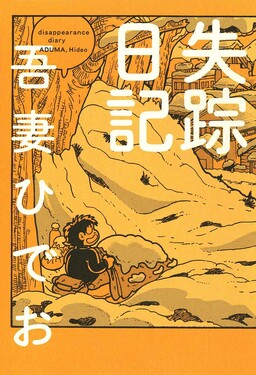
Disappearance Diary
Hideo Azuma was a popular comedy and ero-manga artist in 1970s–80s Japan. He left his life twice without telling anyone — once to live as a vagrant in winter forests, once camped under a Tokyo bridge. He developed severe alcoholism. He drew all of it as a gentle comedy. Disappearance Diary won the 2005 Osamu Tezuka Cultural Prize and the Bungeishunjū Manga Prize. Complete in a single volume, available in English from Fanfare-Ponent Mon.

Slice of Life
Quest for the Missing Girl
Yu's review of Quest for the Missing Girl — a professional mountain guide is hired to find a teenage girl who disappeared in the Japan Alps; Jiro Taniguchi's mountain-search story, combining his exceptional landscape rendering with a character study of someone who understands mountains better than people.
Mystery / Fantasy
Zodiac P.I.
A review of Zodiac P.I. — Natsumi Ando's four-volume shojo mystery about a girl who uses magical zodiac rings to solve supernatural and real-world mysteries, aimed at younger readers but with enough charm to work for older shojo fans.
Written by
Yu
Manga Enthusiast from Japan
I grew up in Japan and manga literally saved me during a tough time in elementary school. My English isn't perfect, but my love for manga is real — and I want to share it with you.
Disclosure: This post contains affiliate links. As an Amazon Associate, I earn from qualifying purchases at no extra cost to you.